
An automatic equalization control method without battery cell voltage sensor
A single voltage, automatic equalization technology, applied in charge equalization circuit, battery circuit device, arrangement of multiple synchronous batteries, etc., can solve the problems of long control cycle, reduced equalization efficiency, multi-resources, etc., to reduce energy waste , The effect of saving control time and reducing system volume
Patent Information
- Authority / Receiving Office
- CN · China
- Patent Type
- Patents(China)
- Current Assignee / Owner
- Publication Date
- 2016-08-31
Smart Images
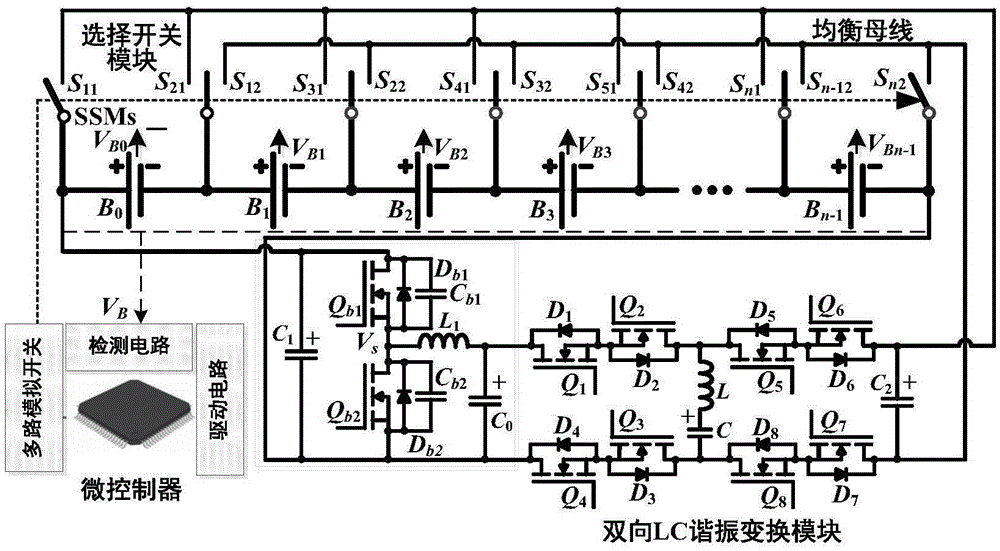
Figure 1 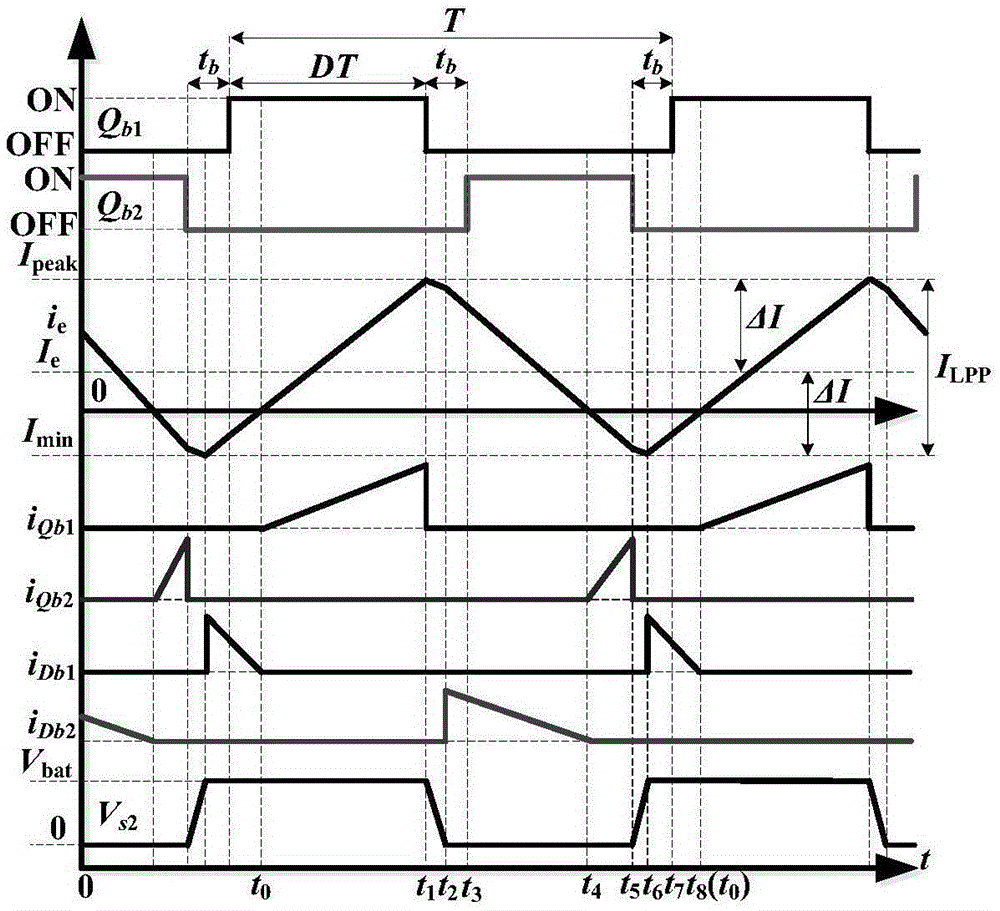
Figure 2 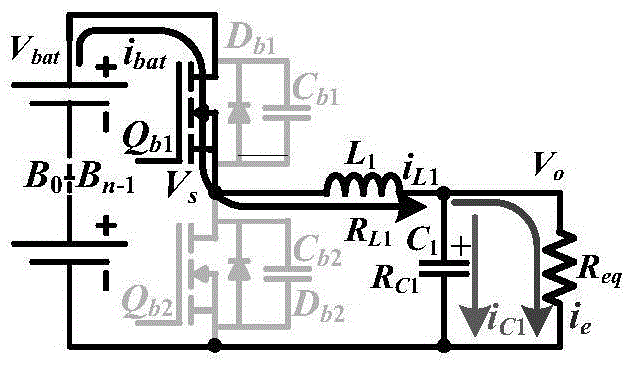
Figure 3
Abstract
Description
technical field
[0001] The invention relates to an automatic equalization control method for a battery-free single voltage sensor. Background technique
[0002] The world is facing an unprecedented energy and environmental crisis, and the worldwide energy shortage and environmental deterioration have attracted the attention of all countries. Electric vehicles have the characteristics of energy saving and environmental protection, which is the key way to solve this major crisis, and has become an inevitable trend in the future development of the automobile industry. As an important part of the world's energy technology revolution and the national new energy strategy, electric vehicles are one of the country's seven strategic emerging industries. Lithium-ion batteries have the advantages of small size, light weight, fast charging speed, and good anti-memory effect compared with nickel-hydrogen and lead-acid batteries. They are widely used as power sources in electric vehicles...
Examples
Embodiment Construction
[0055] The present invention will be further described below in conjunction with the accompanying drawings and embodiments.
[0056] Such as figure 1 As shown, an equalization circuit based on Buck-Boost conversion and bidirectional LC resonant conversion, including microcontroller, balanced bus, Buck-Boost conversion circuit, bidirectional LC resonant conversion circuit, selection switch module, power battery pack and filter capacitor. The circuit realizes the soft switch equalization of battery pack to battery cell (Pack to Cell) or battery cell to battery pack (Cell to Pack) through Buck-Boost transformation and bidirectional LC resonance transformation. The working principle of this circuit is: the microcontroller obtains the average voltage of the cells according to the collected voltage of the battery pack, determines the balanced working mode by comparing the average voltage of the cells with the current balanced cell voltage, and controls the Buck-Boost conversion and ...