
A kind of environment-friendly adhesive for construction and preparation method thereof
A kind of adhesive, environment-friendly technology, applied in the direction of adhesive type, cellulose adhesive, polymer adhesive additive, etc., can solve pollution and other problems, achieve long storage time, high safety, and production process simple effect
Patent Information
- Authority / Receiving Office
- CN · China
- Patent Type
- Patents(China)
- Current Assignee / Owner
- Publication Date
- 2017-01-18
Smart Images
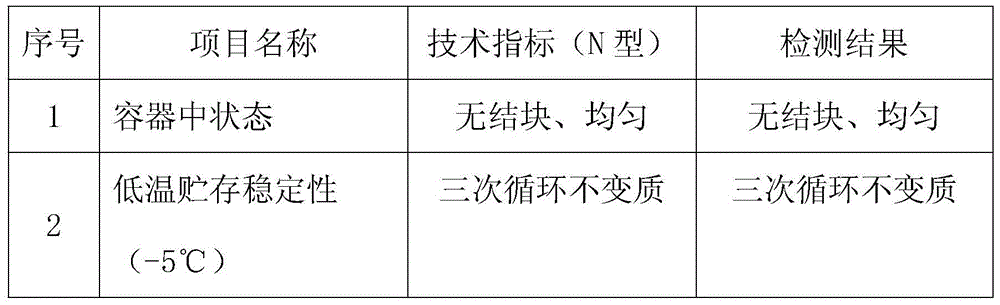
Figure 1 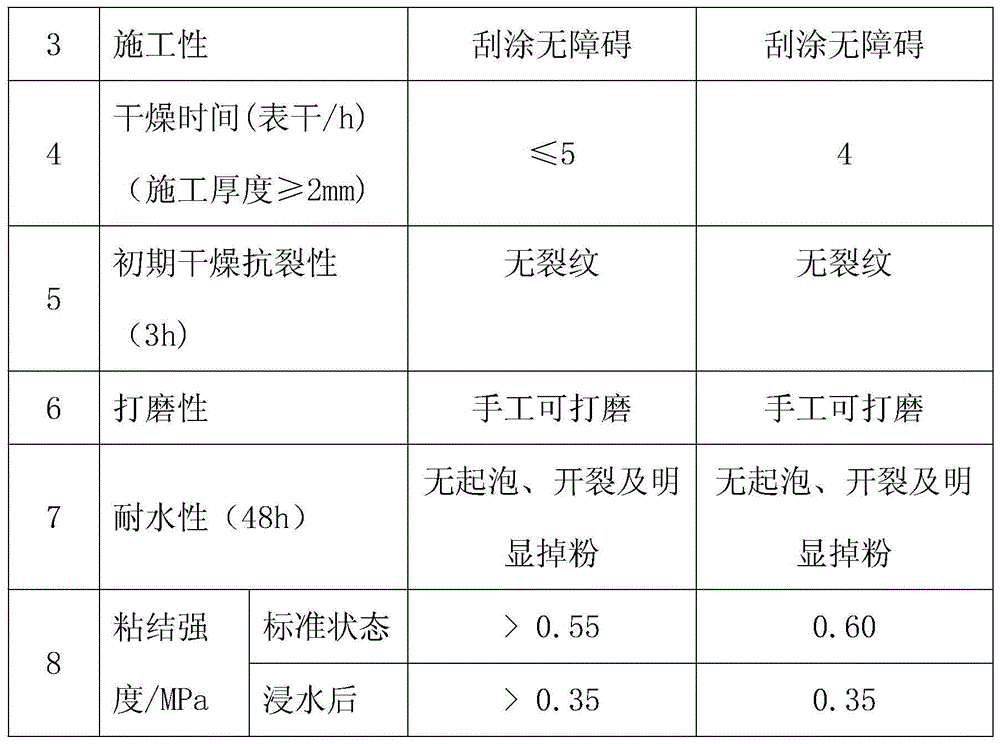
Figure 2
Abstract
Description
technical field
[0001] The invention belongs to the field of chemical industry, and in particular relates to an environment-friendly construction adhesive and a preparation method thereof. Background technique
[0002] In the field of building decoration materials, building adhesives are a very important basic material. It is mainly used for tile bonding, cement-based adhesives, putty adhesive materials for interior and exterior walls, wallpaper and wallpaper adhesives, base materials for general architectural coatings, etc. Most of the wall adhesives with good quality in the domestic market are imported products at present, and their prices are expensive. Most of the domestically produced products use a single adhesive, and there are gaps in its water solubility, stability, and environmental protection. Especially, environmental protection has become the focus of people's attention. The commonly used 801 glue is made by polycondensation reaction of polyvinyl alcohol and f...
Examples
Embodiment 1
[0037] Add 650kg of tap water into the stirred reactor, heat up to 45°C, add 30kg of polyvinyl alcohol, heat while stirring, control the temperature in the kettle at 90-95°C, and keep stirring for 0.5 hours to completely dissolve the polyvinyl alcohol .
[0038] After the polyvinyl alcohol is completely dissolved, cool the temperature in the kettle to 65°C, add 1.2 kg of hydrochloric acid solution with a mass percentage of 30%, and the dropping time is controlled within 15 minutes, then add 3 kg of polyacrylamide and 0.6 kg of sodium polyacrylate respectively, 4kg hydroxypropyl methylcellulose, heat preservation and stirring for 0.5 hours.
[0039] After the heat preservation is over, cool the material temperature in the kettle to 50°C, then add 0.1kg sodium bisulfite, 0.06kg ammonium persulfate, and 3kg urea respectively, and after stirring for 1 hour, slowly add 7.5kg of 5% sodium hydroxide solution , adjust the pH to 7.2, then continue to cool the temperature of the materi...
Embodiment 2
[0041] Add 700kg of tap water into the stirred reactor, heat up to 50°C, add 32kg of polyvinyl alcohol, heat while stirring, control the temperature in the kettle at 90-95°C, keep stirring for 0.5 hours to dissolve the polyvinyl alcohol .
[0042] After the polyvinyl alcohol is completely dissolved, cool the temperature in the kettle to 68°C, add 1.5 kg of hydrochloric acid solution with a mass percentage of 30%, and the dropping time is controlled within 15 minutes, then add 4 kg of polyacrylamide and 0.8 kg of sodium polyacrylate respectively, 5kg hydroxypropyl methylcellulose, heat preservation and stirring for 0.5 hours.
[0043] After the heat preservation is over, cool the temperature of the material in the kettle to 52°C, then add 0.13kg of sodium bisulfite, 0.08kg of ammonium persulfate, and 4kg of urea respectively. After stirring for 1 hour, slowly add 9.5kg of 5% sodium hydroxide solution , adjust the pH to 7.6, then continue to cool the temperature of the material...
Embodiment 3
[0045] Add 750kg of tap water into the stirred reactor, heat up to 48°C, add 36kg of polyvinyl alcohol, heat while stirring, control the temperature in the kettle at 90-95°C, and keep stirring for 0.5 hours to dissolve all the polyvinyl alcohol .
[0046] After the polyvinyl alcohol is completely dissolved, cool the temperature in the kettle to 70°C, add 1.8 kg of hydrochloric acid solution with a mass percentage of 30%, and the dropping time is controlled within 15 minutes, then add 5 kg of polyacrylamide, 1 kg of sodium polyacrylate, and 6 kg of sodium polyacrylate respectively. Hydroxypropyl methylcellulose, heat preservation and stirring for 0.5 hours.
[0047] After the heat preservation is over, cool the temperature of the material in the kettle to 55°C, then add 0.15kg of sodium bisulfite, 0.1kg of ammonium persulfate, and 6kg of urea, and after stirring for 1 hour, slowly add 11.2kg of 5% sodium hydroxide solution , adjust the pH to 7.8, then continue to cool the temp...