
High-efficiency preparation method of p-benzoquinone compounds
A compound, p-benzoquinone technology, applied in the field of preparation of p-benzoquinone compounds, can solve problems such as pollution and equipment corrosion
Patent Information
- Authority / Receiving Office
- CN · China
- Current Assignee / Owner
- Publication Date
- 2015-08-19
- Estimated Expiration
- Not applicable · inactive patent
Smart Images
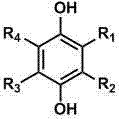
Figure 1 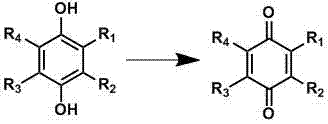
Figure 2 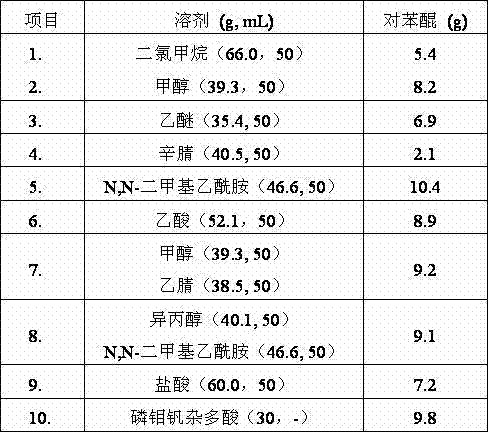
Figure 3
Abstract
Description
technical field
[0001] The invention relates to a method for preparing p-benzoquinone compounds, in particular to a catalyst capable of highly selectively catalyzing hydroquinone compounds to prepare p-benzoquinone compounds in an oxygen-containing atmosphere. Background technique
[0002] P-benzoquinone compounds are a kind of fine chemical raw materials with wide application and high added value. They can be directly used as raw materials in pesticides, dyes and other industries, and can also be used as intermediates in rubber antioxidants, pesticides, dyes, and antioxidants. Synthesis of chemical products such as polymerization inhibitors. For example, p-benzoquinone can be used directly as an antioxidant for rubber, and can also be used as a synthetic intermediate for the synthesis of rubber antioxidants, pesticides, dyes, and polymerization inhibitors for polymer monomers; trimethyl-p-benzoquinone can be used as a vitamin E Synthetic intermediates are also widely use...
Examples
Embodiment 1
[0016] Add hydroquinone (11.0g, 100mmol) and petroleum ether (32.5g, 50mL) into a 250mL two-necked flask, put -10 o Stir well in an ethylene glycol / dry ice bath in C, add lithium chloride (0.04 g, 1.0 mmol) and react in 1 atm air for 24 hours to obtain p-benzoquinone: 10.1 g.
Embodiment 2-5
[0018] Lithium chloride in embodiment 1 is replaced with other alkali / alkaline earth metal compounds, and the influence on result is shown in the following table:
[0019] project Main catalyst (g, mmol) p-Benzoquinone (g) 1. -- 0.5 2. Cesium nitrate (0.19, 1.0) 2.4 3. Calcium oxide (0.06, 1.0) 7.5 4. Barium carbonate (0.20, 1.0) 6.2
Embodiment 6-15
[0021] The sherwood oil in embodiment 1 is replaced with various solvents, and the impact on catalytic result is shown in the following table:
[0022]