
Triphenylethylene derivatives and application thereof
A technology for triphenylethylene and derivatives, which is applied in the field of triphenylethylene derivatives, can solve the problems of low performance of organic light-emitting devices and reduce the luminous efficiency of light-emitting layers, and achieves the effect of simplifying the structure and saving costs.
Patent Information
- Authority / Receiving Office
- CN · China
- Current Assignee / Owner
- Publication Date
- 2015-08-26
Smart Images
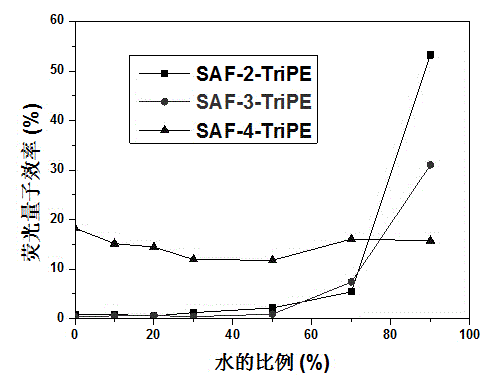
Figure 1 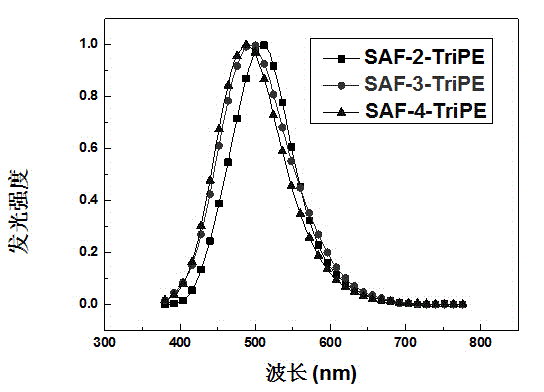
Figure 2 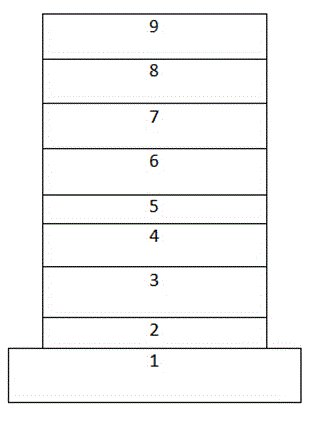
Figure 3
Abstract
Description
technical field
[0001] The invention belongs to the technical field of organic photoelectric materials, and specifically relates to a triphenylethylene-like derivative and its application. Background technique
[0002] Organic electroluminescence is considered to be a new generation of flat panel display technology with excellent development prospects. Compared with inorganic electroluminescent materials, organic electroluminescent materials have the advantages of high luminous efficiency, strong luminous brightness, low energy consumption, low driving voltage, and simple manufacture. Designing and synthesizing organic electroluminescent materials that can meet the requirements of commercialization is attracting widespread attention from all walks of life.
[0003] Organic electroluminescent materials are generally divided into singlet fluorescent dyes and triplet phosphorescent dyes. Singlet fluorescent dyes are widely used in fluorescent devices because they can use their...
Examples
Embodiment 1
[0027] 2.0 g of ring-closed triphenylamine-2-boronate, 2.5 g of (2-bromo-1,1,2-phenyl)triphenylethylene, 3.0 g of tripotassium phosphate, 0.24 g of 2-bicyclohexylphosphine-2' , 6'-dimethoxybiphenyl (S-Phos), 0.1 g of tris(dibenzylideneacetone) dipalladium was dissolved in 120 ml of toluene and 12 ml of distilled water, refluxed under argon protection for 48 hours, cooled, washed with water , extracted with dichloromethane, the organic layer was dried with anhydrous sodium sulfate and spin-dried, passed through the column with a mixture of dichloromethane / petroleum ether, recrystallized with ethanol, and obtained 2.0 g of SAF-2-TriPE after sublimation.
Embodiment 2
[0029] 3.0 grams of ring-closed triphenylamine-3-boronate, 3.75 grams of (2-bromo-1,1,2-phenyl)triphenylethylene, 4.5 grams of tripotassium phosphate, 0.36 grams of S-Phos, 0.15 grams of tri( Dibenzylideneacetone) dipalladium was dissolved in 120 milliliters of toluene and 12 milliliters of distilled water, refluxed under argon protection for 48 hours, washed with water after cooling, extracted with dichloromethane, and the organic layer was dried with anhydrous sodium sulfate and spin-dried, and washed with dichloromethane Methyl chloride / petroleum ether mixture was passed through the column, recrystallized with ethanol, and 1.5 g of SAF-3-TriPE was obtained after sublimation.
Embodiment 3
[0031] 3.0 grams of ring-closed triphenylamine-4-boronate, 3.75 grams of (2-bromo-1,1,2-phenyl)triphenylethylene, 4.5 grams of tripotassium phosphate, 0.36 grams of S-Phos, 0.15 grams of tri( Dibenzylideneacetone) dipalladium was dissolved in 120 milliliters of toluene and 12 milliliters of distilled water, refluxed under argon protection for 48 hours, washed with water after cooling, extracted with dichloromethane, and the organic layer was dried with anhydrous sodium sulfate and spin-dried, and washed with dichloromethane The mixture of methyl chloride / petroleum ether was passed through the column, recrystallized with ethanol, and 1.0 g of SAF-4-TriPE was obtained after sublimation.