
Insulator and method for improving surface electric strength of insulator
A technology of electric strength and insulators, applied in the field of insulators and improving the electric strength along the surface of insulators, can solve problems such as outstanding insulation problems, achieve the effects of improving electric resistance characteristics, easy processing, and improving electric resistance characteristics
Patent Information
- Authority / Receiving Office
- CN · China
- Patent Type
- Applications(China)
- Current Assignee / Owner
- Publication Date
- 2016-03-16
Smart Images
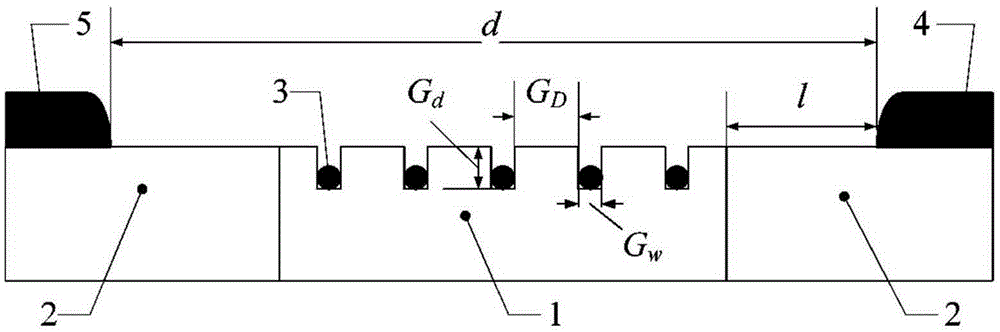
Figure 1 
Figure 2 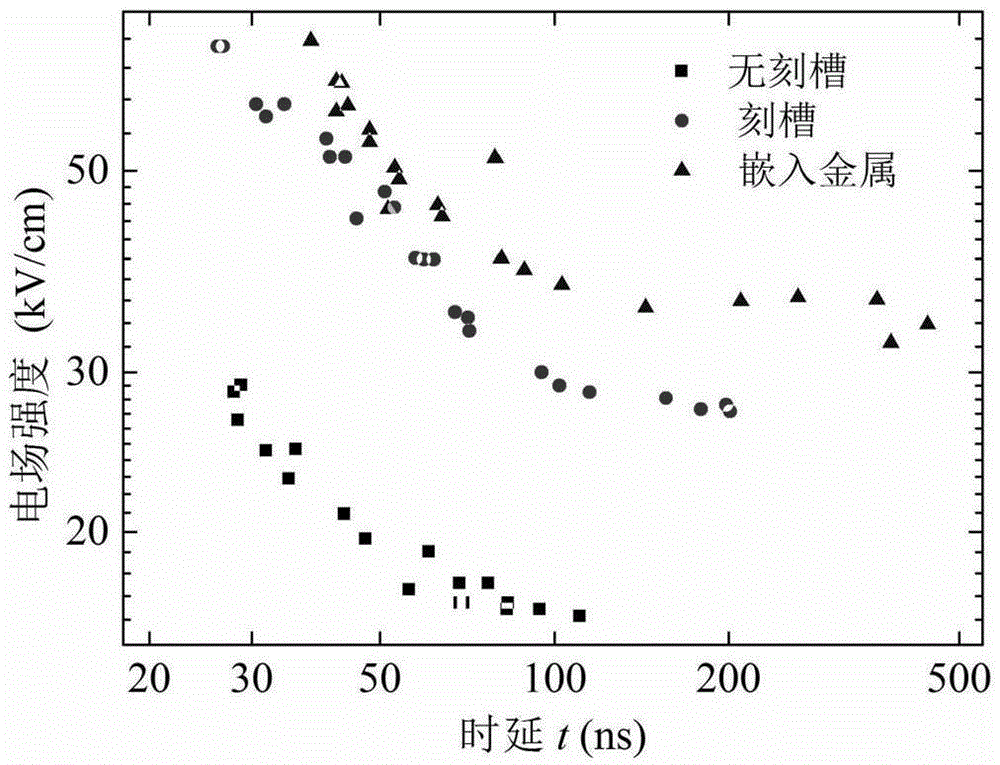
Figure 3
Abstract
Description
technical field
[0001] The invention belongs to the technical field of insulators, in particular to an insulator and a method for improving the electric strength along the surface of the insulator. Background technique
[0002] The insulator will break down along the surface when it is much lower than the breakdown strength of itself and the vacuum gap of the same size. -Alumina ceramic systems usually flashover under an electric field of tens of kV / cm, which seriously restricts the insulation performance of high-voltage vacuum electrical systems. Compared with conventional electric vacuum equipment, the insulation problem of pulse power device is particularly prominent due to the limitation of volume and the requirement of compactness. Improving the electric strength along the surface of insulators has become an unavoidable problem in the development of large-scale pulse power devices, and it is a bottleneck technology that limits the development of pulse power technology....
Examples
Embodiment 1
[0036] The grooved area of the insulator is close to the cathode, that is, when the distance between the grooved area and the cathode is l=0, the time delay characteristics of the flashover of the surface grooved insulator embedded in the metal are as follows image 3 shown. It can be seen from the figure that compared with the case without grooves, the flashover time delay after grooves on the surface of the insulator is greatly improved; when the metal is embedded in the grooves, the flashover time delay is further increased. Table 1 shows the electric field strength corresponding to different flashover time delays under three conditions: no groove on the surface of the insulator, groove near the cathode area, and metal embedded in the groove. When the flashover time delay is 50ns, the flashover field strength of the groove on the surface is 43.4kV / cm, and the flashover field strength of the metal embedded in the groove is 52.2kV / cm. The flashover field strength increased...
Embodiment 2
[0040] The groove position of the insulator is located in the middle area of the electrode, that is, when the distance between the groove area and the cathode is l=5mm, Table 2 shows the three situations of no groove on the surface of the insulator, grooves near the cathode area, and metal embedded in the groove. The electric field strength corresponding to the flashover time delay. When the flashover time delay is 50ns, the flashover field strength of the groove on the surface is 26.7kV / cm, and the flashover field strength of the metal embedded in the groove is 41.0kV / cm. The flashover field strength is increased by 53.5%; when the flashover time delay is 100ns, the flashover field strength of the groove on the surface is 22.3kV / cm, and the flashover field strength of the metal embedded in the groove is 29.8kV / cm, while the groove The flashover field strength of the embedded metal is increased by 33.6% compared with that of the groove.
[0041] Table 2 The groove is locate...
Embodiment 3
[0044] The position of the insulator groove is close to the anode, that is, when the distance between the groove area and the cathode is l = 10mm, Table 3 shows the different flashover conditions under the three conditions of no groove on the surface of the insulator, grooves near the cathode area, and metal embedded in the groove. The electric field strength corresponding to the time delay. When the flashover time delay is 50ns, the flashover field strength of the groove on the surface is 41.9kV / cm, and the flashover field strength of the metal embedded in the groove is 57.4kV / cm. The flashover field strength is increased by 37.0%; when the flashover time delay is 100ns, the flashover field strength of the groove on the surface is 30.1kV / cm, while the flashover field strength of the metal embedded in the groove is 39.0kV / cm, while the groove The flashover field strength of embedded metal is 29.6% higher than that of grooved grooves.
[0045] Table 3 The groove is located in ...