
A preparation method of nano-modified film material for improving polymer insulation surface resistance
A nano-modification, membrane material technology, applied in the coating and other directions, can solve the problems of unstable treatment effect, limited duration of fluorination effect, poor controllability, etc., to achieve excellent adhesion, reduced viscosity, controllable high sex effect
Patent Information
- Authority / Receiving Office
- CN · China
- Patent Type
- Patents(China)
- Current Assignee / Owner
- Publication Date
- 2020-05-22
Smart Images
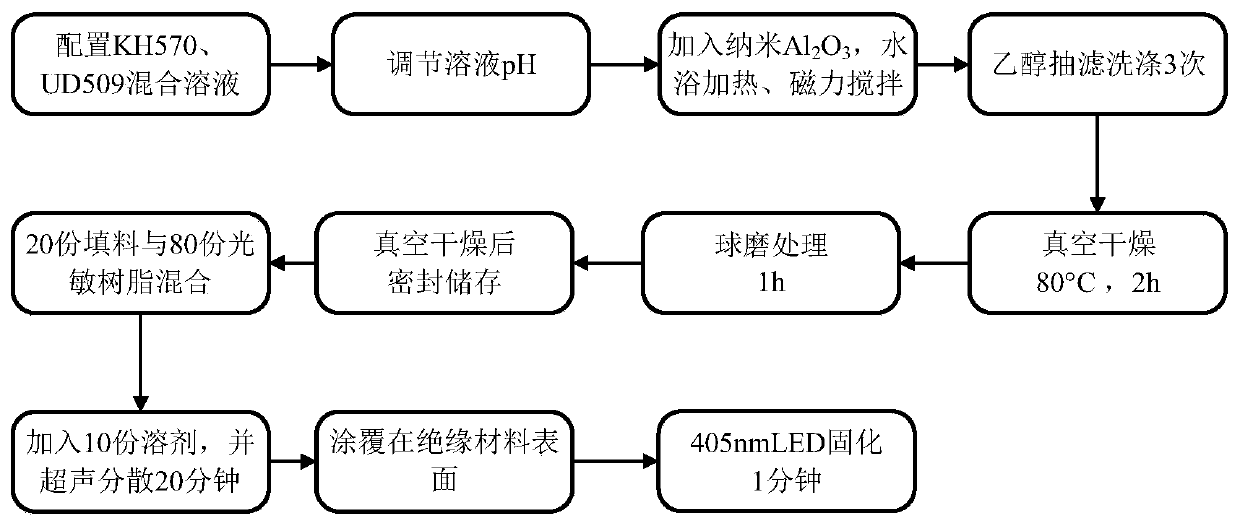
Figure 1 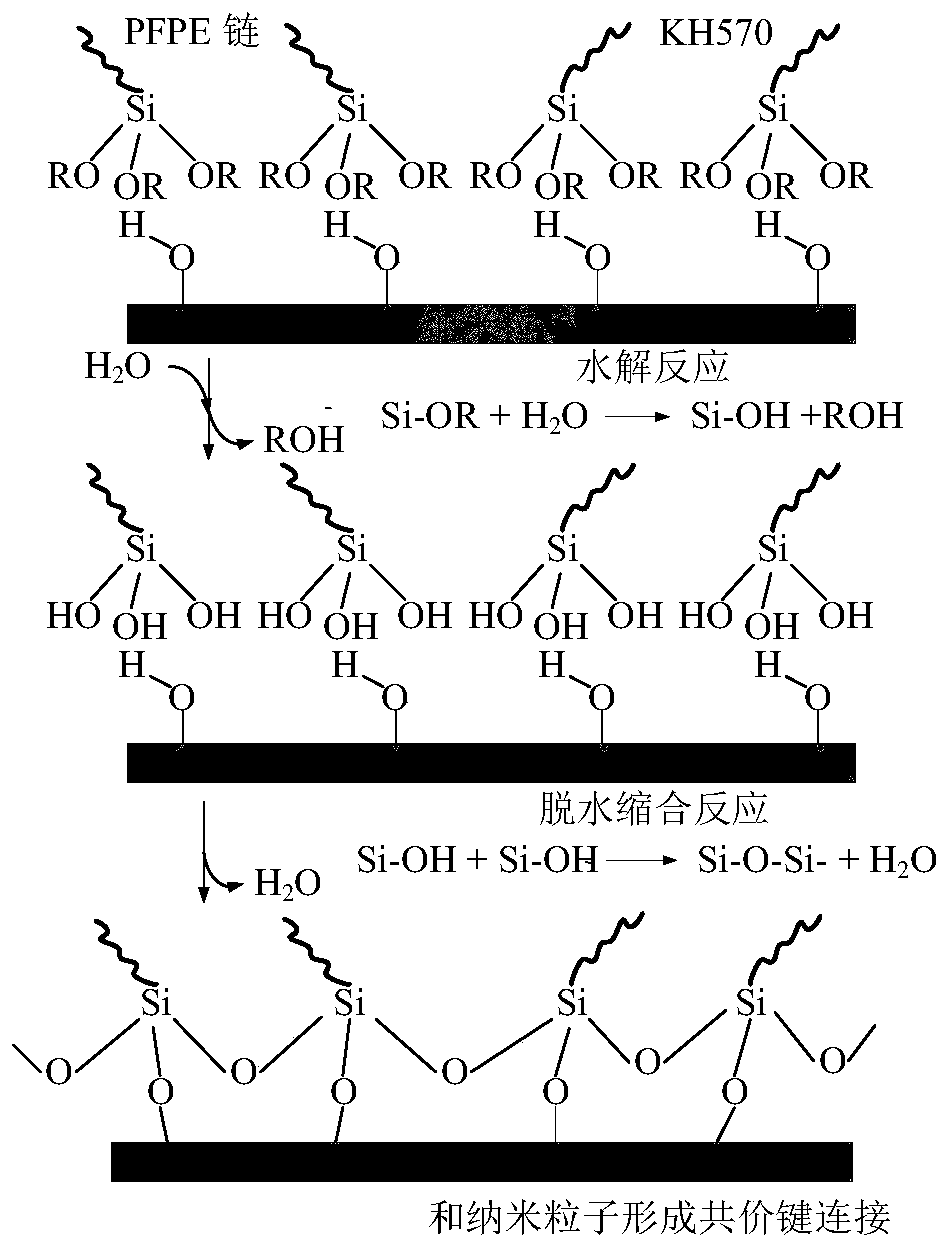
Figure 2 
Figure 3
Abstract
Description
technical field
[0001] The invention belongs to the technical field of material modification, and in particular relates to a method for preparing a nano-particle nano-modified film material for improving the electric resistance along the surface of polymer insulation. Background technique
[0002] For a long time, the overall insulation performance of power equipment and pulse power equipment has been restricted by the dielectric strength along the surface of solid insulation. As an important factor, the surface state of the material has a great impact on the surface flashover characteristics of the material. At present, there are several types of surface treatment technologies at home and abroad to improve the electrical resistance along the surface of insulating materials, such as surface grinding, surface coating treatment, ion implantation, hydrofluoric acid treatment and electron irradiation treatment. These methods can improve the surface resistance of insulating mater...
Examples
preparation example Construction
[0039] see figure 1 , a preparation method of nano-modified film materials for improving polymer insulation surface resistance, firstly through silane coupling, silane-modified perfluoropolyether and KH570 (γ -(methacryloyloxy)propyltrimethoxysilane) grafted onto the surface of the nanoparticle material to prepare a modified nanopowder; then add the modified nanopowder to the photocurable resin according to a certain proportion, After ultrasonic treatment, stirring and solution dispersion, etc., it is evenly coated on the surface of the insulating material by spraying or roller coating, and finally, the rapid curing of the resin is completed by irradiation with an LED ultraviolet light source with a wavelength of 365nm or 405nm; the specific steps are as follows:
[0040] S1. Through silane coupling, graft photocurable KH570 and silane-modified perfluoropolyether onto the surface of nanoparticles such as alumina, silica or zinc oxide, and achieve double Coupling to obtain mod...
Embodiment 1
[0061] Preparation of modified nanoparticles:
[0062] (1) Prepare the solution
[0063] To treat 100g of nano-alumina, first add KH570 with a concentration of 2wt%, then add modified perfluoropolyether with a concentration of 2wt%, and finally add it to 100ml of 95% ethanol to prepare a mixed solution;
[0064] (2) Adjust the pH of the solution
[0065] According to the pH value of the solution corresponding to each group of tests, use glacial acetic acid and 25% ammonia water to adjust the pH of the solution to 5;
[0066] (3) Coupling
[0067] Put the prepared solution into a round bottom flask, heat it to the corresponding temperature of the test plan by using a water bath, add 100g of nano-alumina, and react for 1h under the dispersion mode of magnetic stirring (100r / min). Condensation reflux;
[0068] (4) cleaning
[0069] Wash the nanoparticles multiple times with a suction filter to remove residues that have not undergone a coupling reaction with the surface of th...
Embodiment 2
[0078] Preparation of modified nanoparticles:
[0079] (1) Prepare the solution:
[0080] To treat 100g of nano-alumina, first add KH570 with a concentration of 3wt%, then add modified perfluoropolyether with a concentration of 3wt%, and finally add it to 100ml of 95% ethanol to prepare a mixed solution;
[0081] (2) Adjust the pH of the solution
[0082] According to the pH value of the solution corresponding to each group of tests, use glacial acetic acid and 25% ammonia water to adjust the pH of the solution to 5;
[0083] (3) Coupling
[0084] Put the prepared solution into the round bottom flask, heat it to the corresponding temperature of the test plan by using a water bath, add 100g of nano-alumina, and react for 1.2h under the dispersion mode of magnetic stirring (120r / min). carry out condensation reflux;
[0085] (4) cleaning
[0086] Wash the nanoparticles multiple times with a suction filter to remove residues that have not undergone a coupling reaction with th...