

Preparation method of fluorescent carbon quantum dot
A technology of carbon quantum dots and fluorescence, applied in the field of preparation of fluorescent carbon quantum dots, to achieve the effects of easy scale-up and batch production, cheap raw materials, and large output
Patent Information
- Authority / Receiving Office
- CN · China
- Patent Type
- Applications(China)
- Current Assignee / Owner
- Publication Date
- 2017-05-10
- Estimated Expiration
- Not applicable · inactive patent
Smart Images
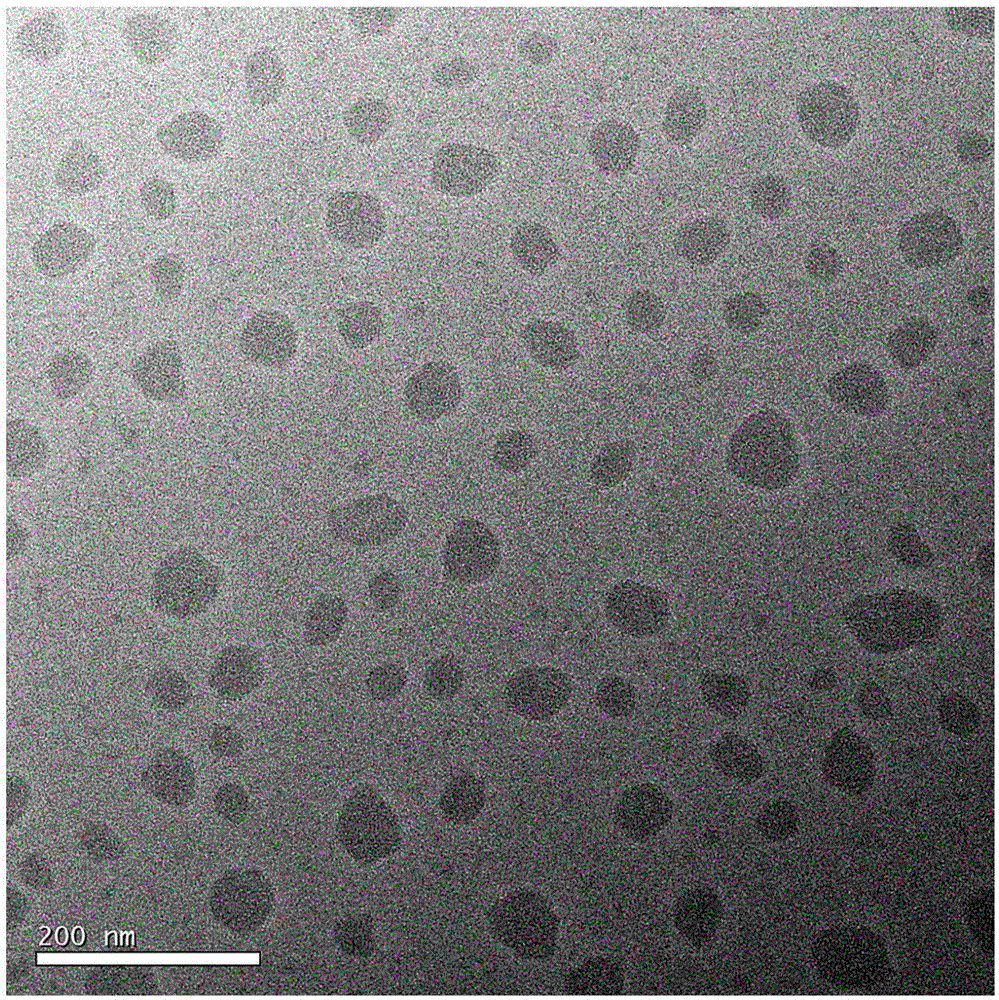
Figure 1 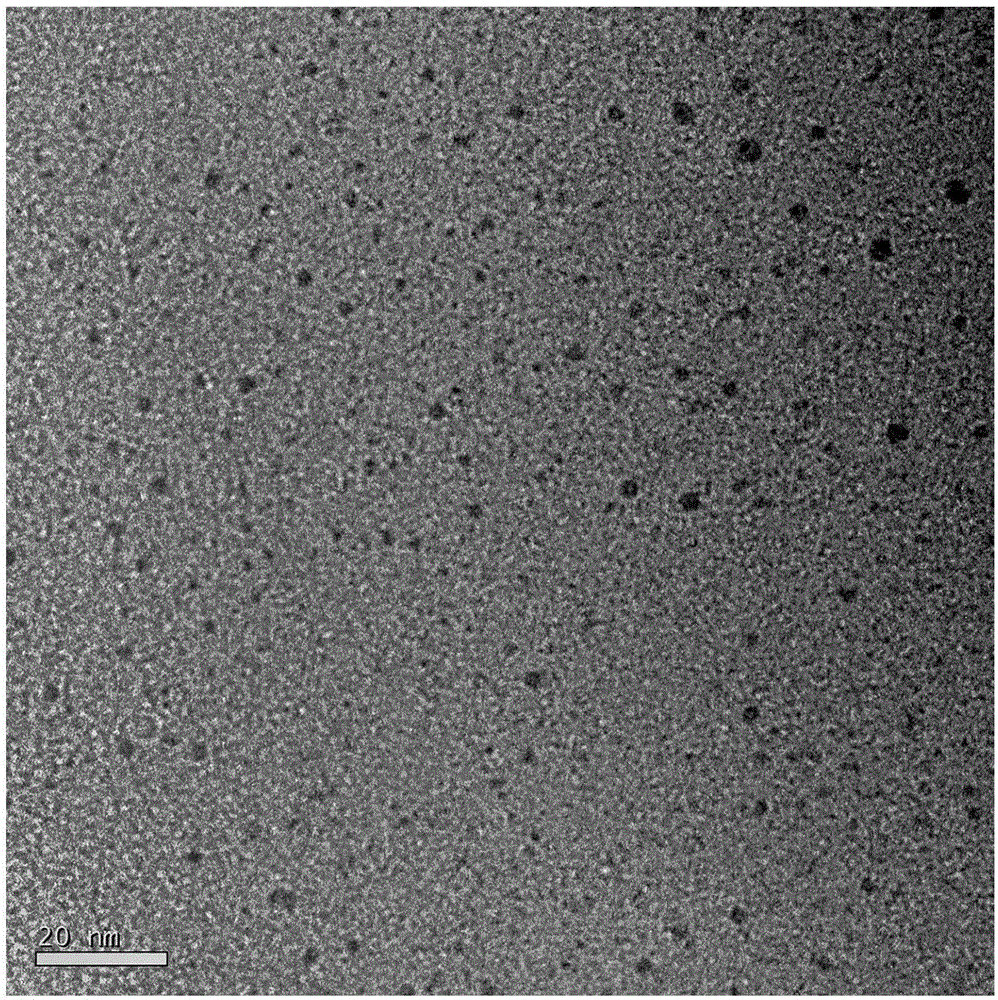
Figure 2 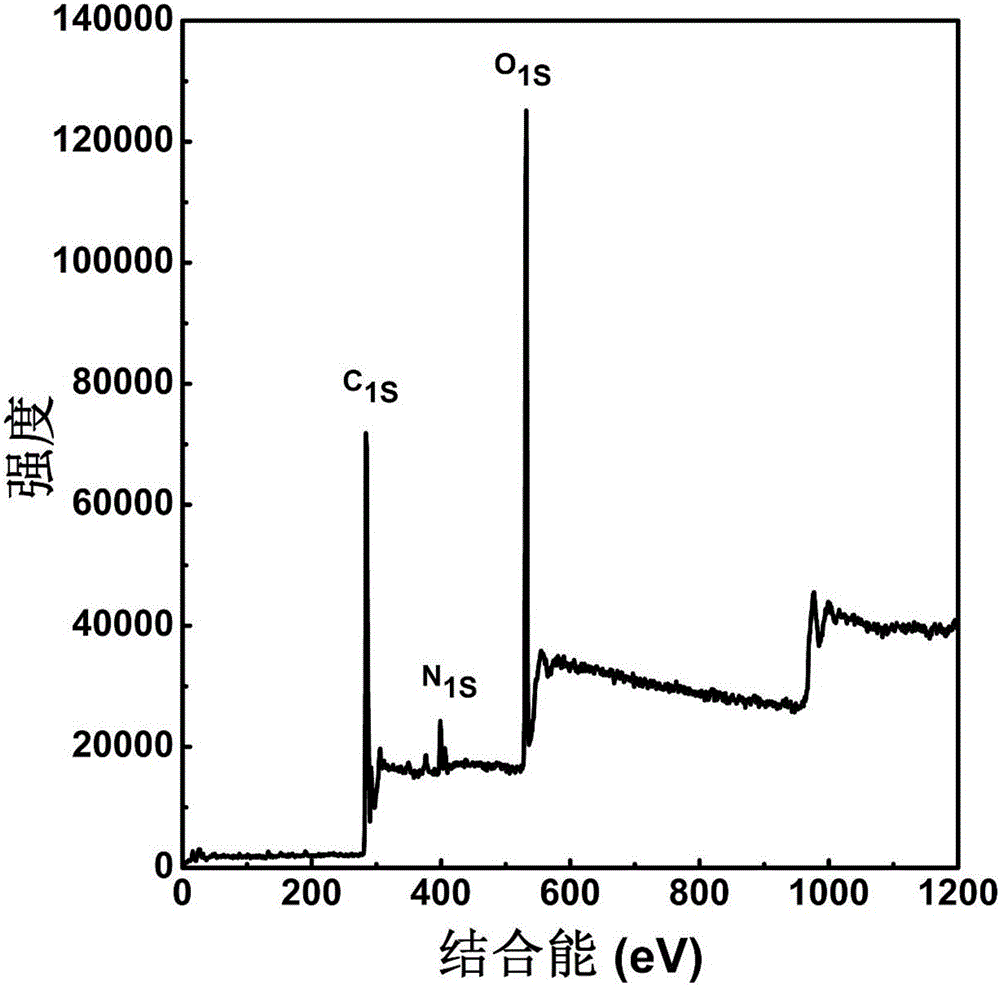
Figure 3
Abstract
Description
technical field
[0001] The invention relates to a method for preparing fluorescent carbon quantum dots, in particular to a method for preparing fluorescent carbon quantum dots by using a simple hydrothermal reaction. Background technique
[0002] Quantum dots have unique quantum confinement effects, surface effects, and small size effects, and have become a hot spot in the research of nanomaterials. As quasi-zero-dimensional nanomaterials, they have been applied in the fields of optical devices, electrical devices, biological imaging, and biological drug loading. Due to the disadvantages of traditional semiconductor quantum dots (such as CdSe, PbTe, CdTe, etc.) and organic dyes, which have cumbersome preparation methods, are expensive, are not environmentally friendly, and are prone to photobleaching, their applications are limited. Therefore, the development of ideal non-toxic and similar properties Alternative nanomaterials and their simple and efficient green preparation ...
Examples
Embodiment 1
[0022] Dry the recovered coffee grounds, weigh 1g of coffee grounds and add 50ml of deionized water, mix ultrasonically for 2h, then put the mixture into a 50ml polytetrafluoroethylene reactor, and react at 170°C for 5h. Cool the reaction kettle at room temperature, filter with filter paper after cooling, centrifuge at 15,000rpm for 5min, and take the supernatant liquid to obtain a completely dispersed carbon quantum dot dispersion, which is golden yellow. After evaporation, the concentration becomes darker and the color is dark brown.
[0023] Such as figure 1 As shown in the TEM photo, the prepared carbon quantum dots are completely dispersed without agglomeration, and the shape is spherical, the particle size is 26.5-73.3nm, and the average particle size is 44.0nm.
Embodiment 2
[0025] Dry the recovered coffee grounds, weigh 3g of coffee grounds and add 50ml of deionized water, mix ultrasonically for 2h, then put the mixture into a 50ml polytetrafluoroethylene reactor, and react at 190°C for 5h. Cool the reaction kettle at room temperature, filter with filter paper after cooling, centrifuge at 15,000 rpm for 5 minutes, and take the supernatant liquid to obtain a completely dispersed dispersion of carbon quantum dots, which is golden yellow. After evaporation, the concentration becomes darker and the color is dark brown.
[0026] Such as figure 2 As shown in the TEM photo, the prepared carbon quantum dots are completely dispersed without agglomeration, and the shape is spherical, with a particle size of 1.1-4.4nm and an average particle size of 2.8nm. Take a certain amount of dispersion liquid of carbon quantum dots and evaporate to dryness at 80°C. Such as image 3 It is the XPS spectrum of carbon quantum dot particle powder. There are C, H, O, a...
Embodiment 3
[0028] Dry the recovered coffee grounds, weigh 3g of coffee grounds and add 50ml of deionized water, mix ultrasonically for 2h, then put the mixture into a 50ml polytetrafluoroethylene reactor, and react at 190°C for 10h. Cool the reaction kettle at room temperature, filter with filter paper after cooling, centrifuge at 15,000rpm for 5min, and take the supernatant liquid to obtain a fully dispersed carbon quantum dot dispersion, which is golden yellow. After evaporation, the concentration becomes darker and the color is dark brown.
[0029] The prepared carbon quantum dots are completely dispersed without agglomeration, the shape is spherical, the particle size is 2.2-4.6nm, and the average particle size is 3.4nm. Such as Figure 5 As shown, the prepared carbon quantum dot dispersion liquid has an obvious emission peak in the visible light band under the excitation of 650-900 nm. The emission peak is red-shifted with the increase of the excitation wavelength, which is an exc...