
Cation-type anti-swelling clay stabilizer containing N-heterocyclic quaternary ammonium salt and synthesis method thereof
A quaternary ammonium salt cation and clay stabilizer technology, applied in chemical instruments and methods, drilling compositions, organic chemistry, etc., can solve the problem of reducing formation permeability, limiting application range, clay stabilizer temperature and salt resistance To achieve good compatibility, low cost, and strong reservoir adaptability
Patent Information
- Authority / Receiving Office
- CN · China
- Patent Type
- Applications(China)
- Current Assignee / Owner
- Publication Date
- 2017-06-20
Smart Images
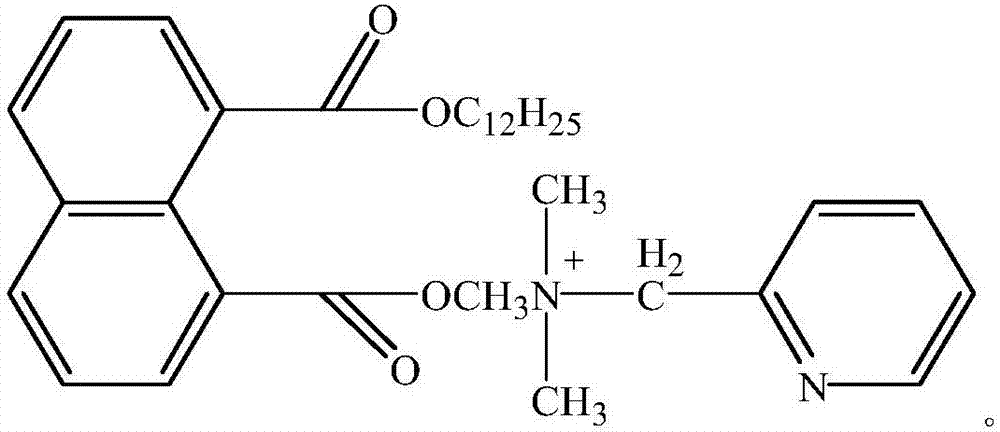
Figure 1 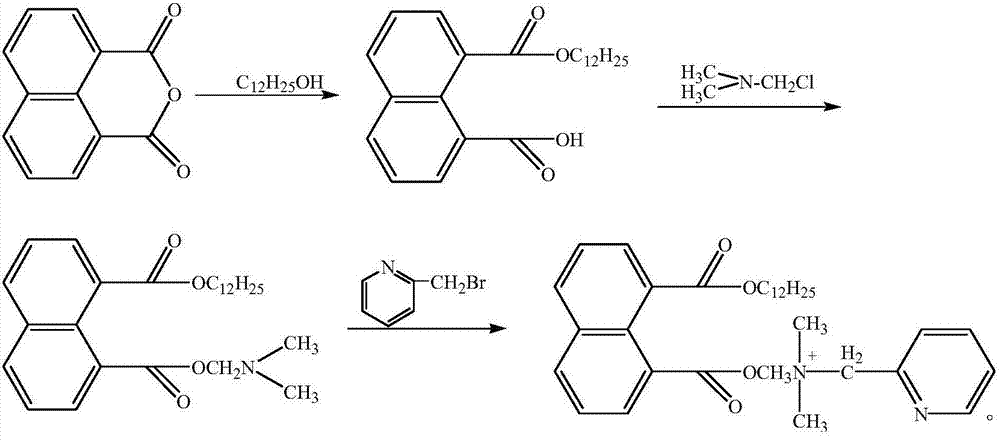
Figure 2 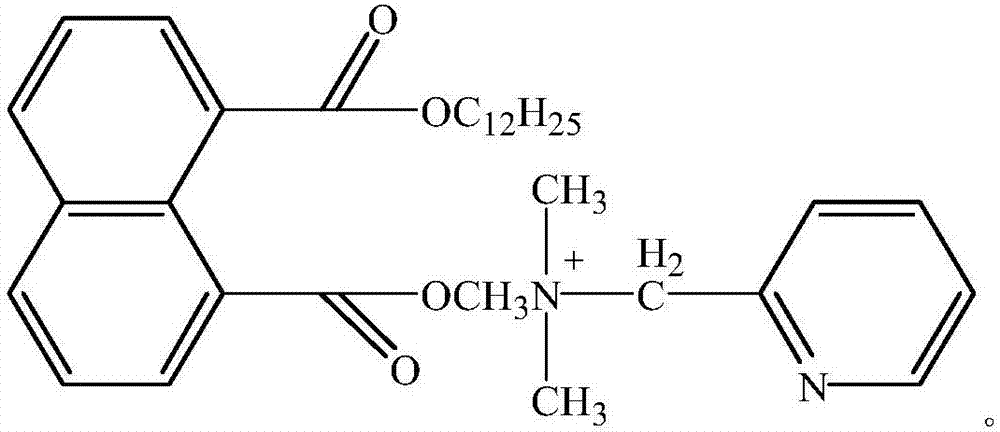
Figure 3
Abstract
Description
technical field
[0001] The invention relates to the field of petroleum exploitation, in particular to an N-containing heterocyclic quaternary ammonium salt cationic anti-swelling clay stabilizer and a synthesis method thereof. Background technique
[0002] The formation contains a certain amount of clay minerals, mainly kaolinite, montmorillonite, illite and chlorite. These clays will swell when they encounter water or water-based substances during water injection, acidification, and fracturing, and then further disperse (such as montmorillonite, chlorite) or directly disperse (such as kaolinite, illite) into diameters. Fine particles smaller than 10 μm. Under normal circumstances, from the upper layer to the lower layer, the content of montmorillonite in oil-bearing reservoirs decreases, the content of illite increases, kaolinite disappears at a certain depth, and chlorite is mainly distributed in deep layers. Most of these clay minerals have a layered structure composed ...
Examples
Embodiment 1
[0026] Example 1: Clay Stabilizer C 1 and its preparation method
[0027] (1) Clay Stabilizer C 1 The composition, components and molecular formula are as follows:
[0028] Clay Stabilizer C 1 It is obtained by reacting naphthalene anhydride, n-dodecyl alcohol, 2-(dimethylamino)chloromethane hydrochloride and 2-bromomethylpyridine in a molar ratio of 1:1:1.1:0.8, and its molecular formula is as follows:
[0029]
[0030] (2) Clay Stabilizer C 1 The synthesis method is as follows:
[0031] ① Add 1 mol of naphthalene anhydride and 1 mol of n-dodecyl alcohol into a four-neck flask, heat to 75°C, stir at 300 rpm, and react for 0.5 h, then add 2972.7 g of n-heptane, react for 5 h, then cool down To room temperature, stirred for 15min to obtain dodecyl naphthalene half ester solution;
[0032] ②Add 1.1 mol of 2-(dimethylamino)methane chloride hydrochloride to the dodecyl naphthalene anhydride half ester solution, react while stirring, the stirring rate is 400rpm, the reacti...
Embodiment 2
[0035] Example 2: Clay Stabilizer C 2 and its preparation method
[0036] (1) Clay Stabilizer C 2 The composition, components and molecular formula are as follows:
[0037] Clay Stabilizer C 2 It is obtained by reacting naphthalene anhydride, n-dodecyl alcohol, 2-(dimethylamino)chloromethane hydrochloride and 2-bromomethylpyridine according to the molar ratio of 1:1.1:1.2:1.5. Its molecular formula is as follows:
[0038]
[0039] (2) Clay Stabilizer C 2 The synthesis method is as follows:
[0040] ① Add 1 mol of naphthalene anhydride and 1.1 mol of n-dodecyl alcohol into a four-neck flask, heat to 78°C, stir at 400rpm, and react for 0.6h, then add 3256.3g of n-heptane, react for 6h, then Cool to room temperature, stir for 18min to obtain dodecyl naphthalene half ester solution;
[0041] ②Add 1.2 mol of 2-(dimethylamino)methane chloride hydrochloride to the dodecyl naphthalene anhydride half-ester solution, react while stirring, the stirring rate is 500rpm, the reaction...
Embodiment 3
[0044] Example 3: Clay Stabilizer C 3 and its preparation method
[0045] (1) Clay Stabilizer C 3 The composition, components and molecular formula are as follows:
[0046] Clay Stabilizer C 3 It is obtained by reacting naphthalene anhydride, n-dodecyl alcohol, 2-(dimethylamino)chloromethane hydrochloride and 2-bromomethylpyridine according to the molar ratio of 1:1.3:1.3:1.2. Its molecular formula is as follows:
[0047]
[0048] (2) Clay Stabilizer C 3 The synthesis method is as follows:
[0049] ① Add 1 mol of naphthalene anhydride and 1.3 mol of n-dodecyl alcohol into a four-neck flask, heat to 80°C, stir at 330 rpm, and react for 0.8 h, then add 3954.5 g of n-heptane for 7 h, then Cool to room temperature, stir for 21min to obtain dodecyl naphthalene half ester solution;
[0050] ②Add 1.3 mol of 2-(dimethylamino)methane chloride hydrochloride to the dodecyl naphthalene anhydride half-ester solution, react while stirring, the stirring rate is 420rpm, the reaction ...