
An aggregate gradation design method for improving the strength of cement emulsified asphalt mixture
A technology of cement emulsified asphalt and design method, which is applied in the direction of climate change adaptation, cohesive pavement paved on site, roads, etc., which can solve the problem of limited constraints, aggregate gradation that cannot meet engineering requirements, and difficult control of gradation curves Problems such as smoothness and continuity, to achieve the effect of less control variables and simple operation
Patent Information
- Authority / Receiving Office
- CN · China
- Patent Type
- Patents(China)
- Current Assignee / Owner
- Publication Date
- 2019-04-23
Smart Images
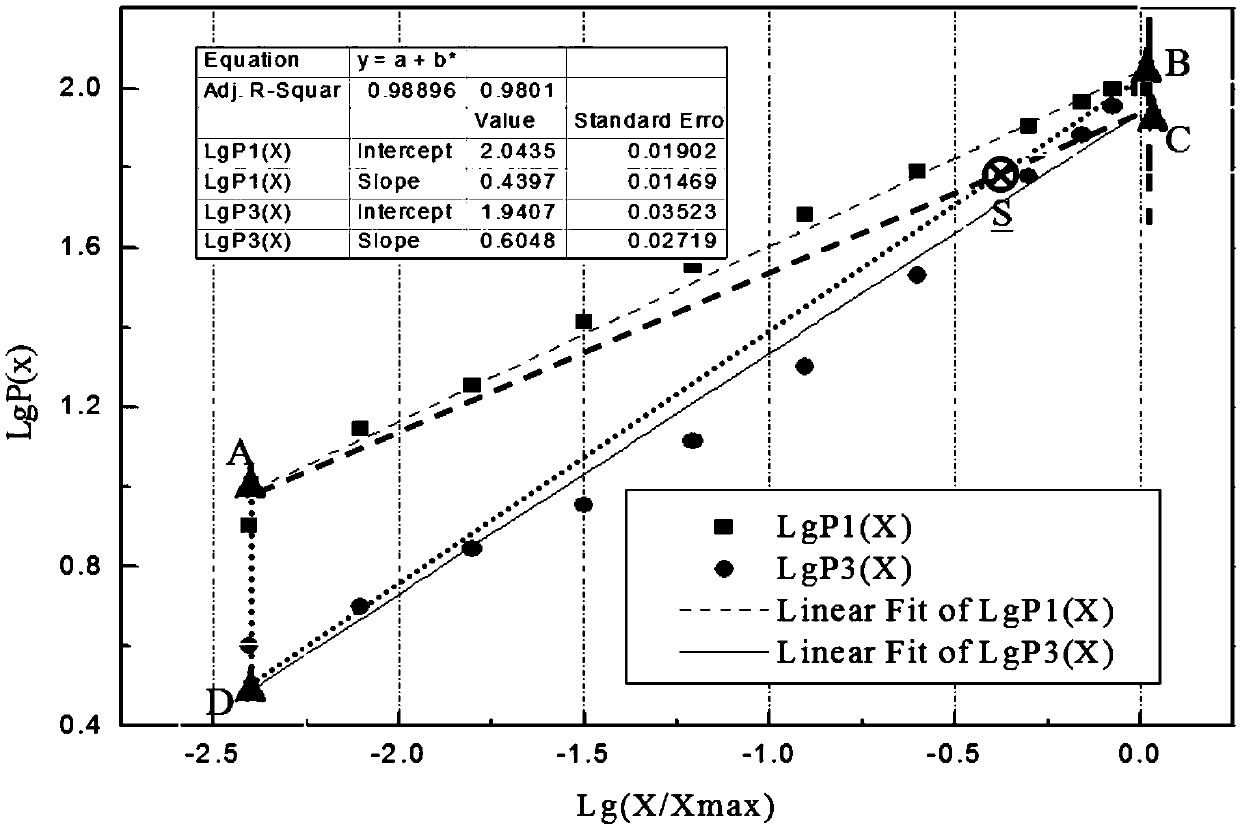
Figure 1 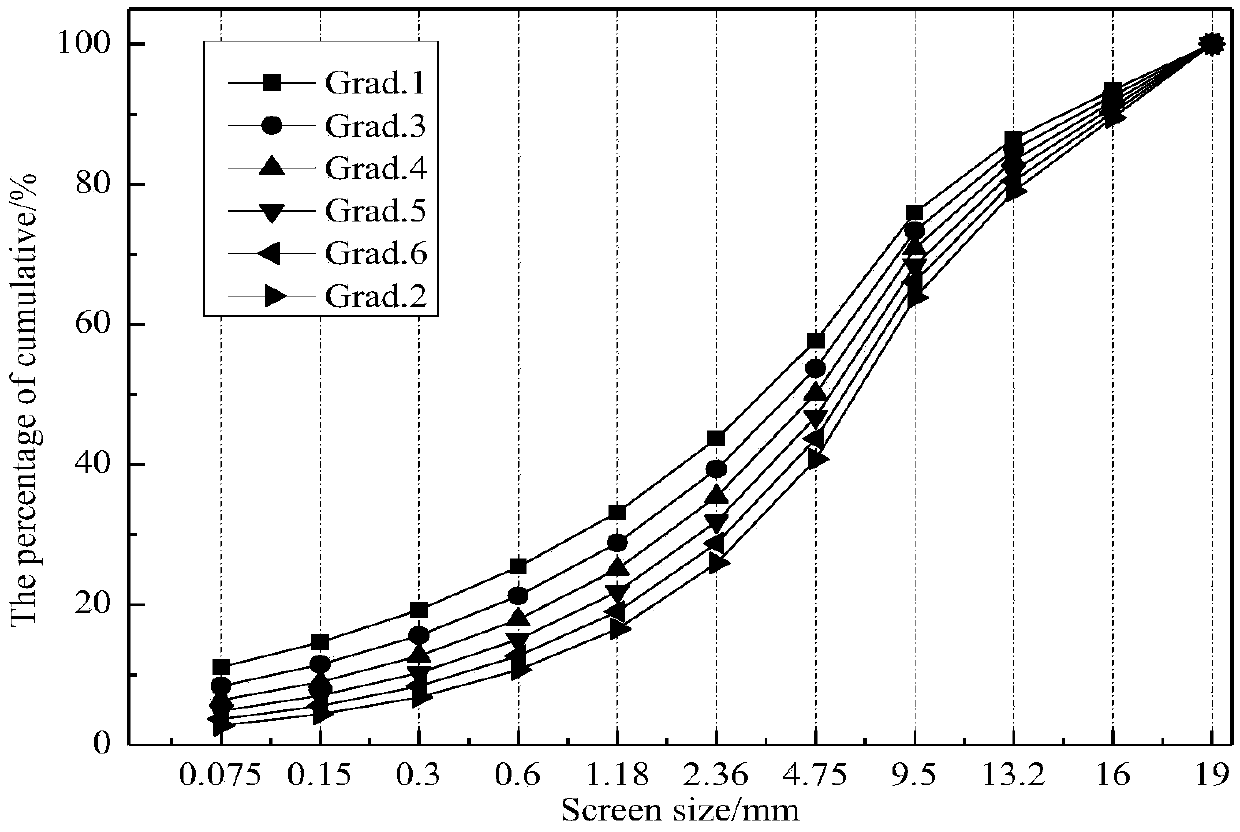
Figure 2 
Figure 3
Abstract
Description
technical field
[0001] The invention belongs to the field of road engineering materials, in particular to an aggregate gradation design method for improving the strength of cement emulsified asphalt mixture. Background technique
[0002] Cement emulsified asphalt mixture is a heterogeneous, multi-level (macro, micro, meso) and multi-phase (solid, liquid, gas) composite material, which is widely used in roads, railways, oil well engineering and construction Material.
[0003] Cement emulsified asphalt mortar contains a lot of water, which has a great influence on the growth of the initial strength of the mixture. Aggregate is one of the important components of cement emulsified asphalt mixture, which occupies more than three-quarters of the volume space in the mixture, acts as a skeleton, and has a significant impact on the performance of the mixture. According to the mode of interaction between aggregates, the mixture types can be divided into suspension-dense structure, s...
Examples
Embodiment 1
[0024] The emulsified asphalt mixture gradation design method of this embodiment comprises the following steps:
[0025] (1) In this embodiment, AC-16 is taken as an example, and the n value is taken as 5. The upper limit of the gradation corresponding to the multi-stage sieve size, the sieve size at each level and the lower limit of the gradation corresponding to the sieve size at each level are shown in Table 1;
[0026] (2) Use the fractal theory to calculate the gradation cumulative pass percentage P(x) and x / x max Take double logarithms respectively (X is the sieve hole size, x max is the maximum sieve hole size), the results are shown in Table 1;
[0027] Table 1 Aggregate Grading (AC-16)
[0028]
[0029] (3) Use the least squares method to perform the best linear fitting on the gradation curve (the upper and lower limits of AC-16) under the logarithmic coordinates to obtain straight line 1 and straight line 2, and make a vertical line at the largest and smallest s...
Embodiment 2
[0056] Design an AC-16 type aggregate gradation according to the principle of the trial algorithm, and then verify the difference in performance between the gradation designed by this method and the gradation designed by the method of the present invention. The advantages of the design gradation of the present invention are described.
[0057] This embodiment adopts trial algorithm, and the obtained results are shown in Table 6.
[0058] 9.5-16mm: 4.75-9.5mm: 2.36-4.75mm: 0-2.36mm: mineral powder = 28:24:18:25:5. The test materials are the same as in Example 1, and the mass ratio of emulsified asphalt:cement:limestone aggregate is 96:36:1164. The results of related performance experiments are shown in Table 7.
[0059] Table 6 synthetic gradation
[0060]
[0061] Table 7 The parameter index of synthetic graded mixture
[0062]