
Application of titanium boride for chemically trapping polysulfides in lithium-sulfur batteries to prepare cathode materials for lithium-sulfur batteries
A lithium-sulfur battery and polysulfide technology, applied in the direction of battery electrodes, boron/boride, metal boride, etc., to achieve the effects of improving utilization, inhibiting shuttle effect, and high specific capacity
Patent Information
- Authority / Receiving Office
- CN · China
- Patent Type
- Patents(China)
- Current Assignee / Owner
- Publication Date
- 2019-10-22
Smart Images
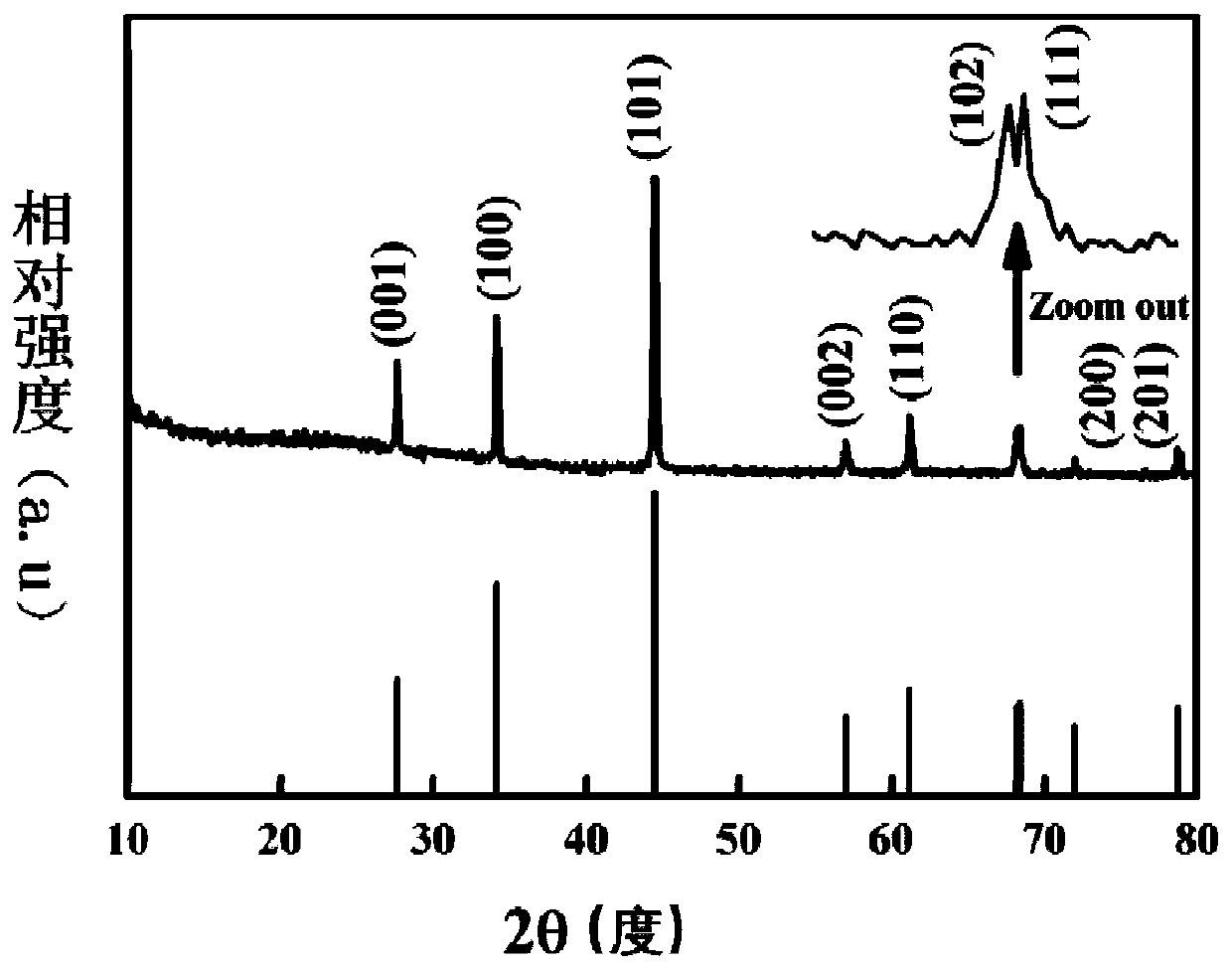
Figure 1 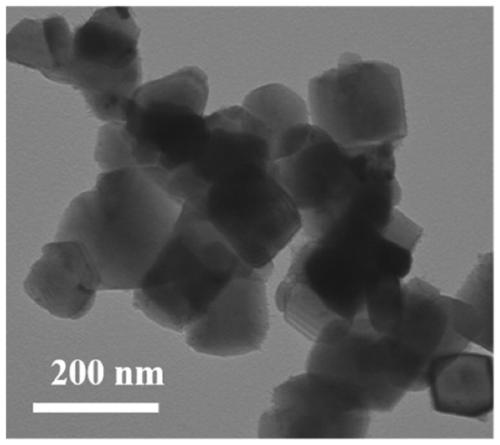
Figure 2 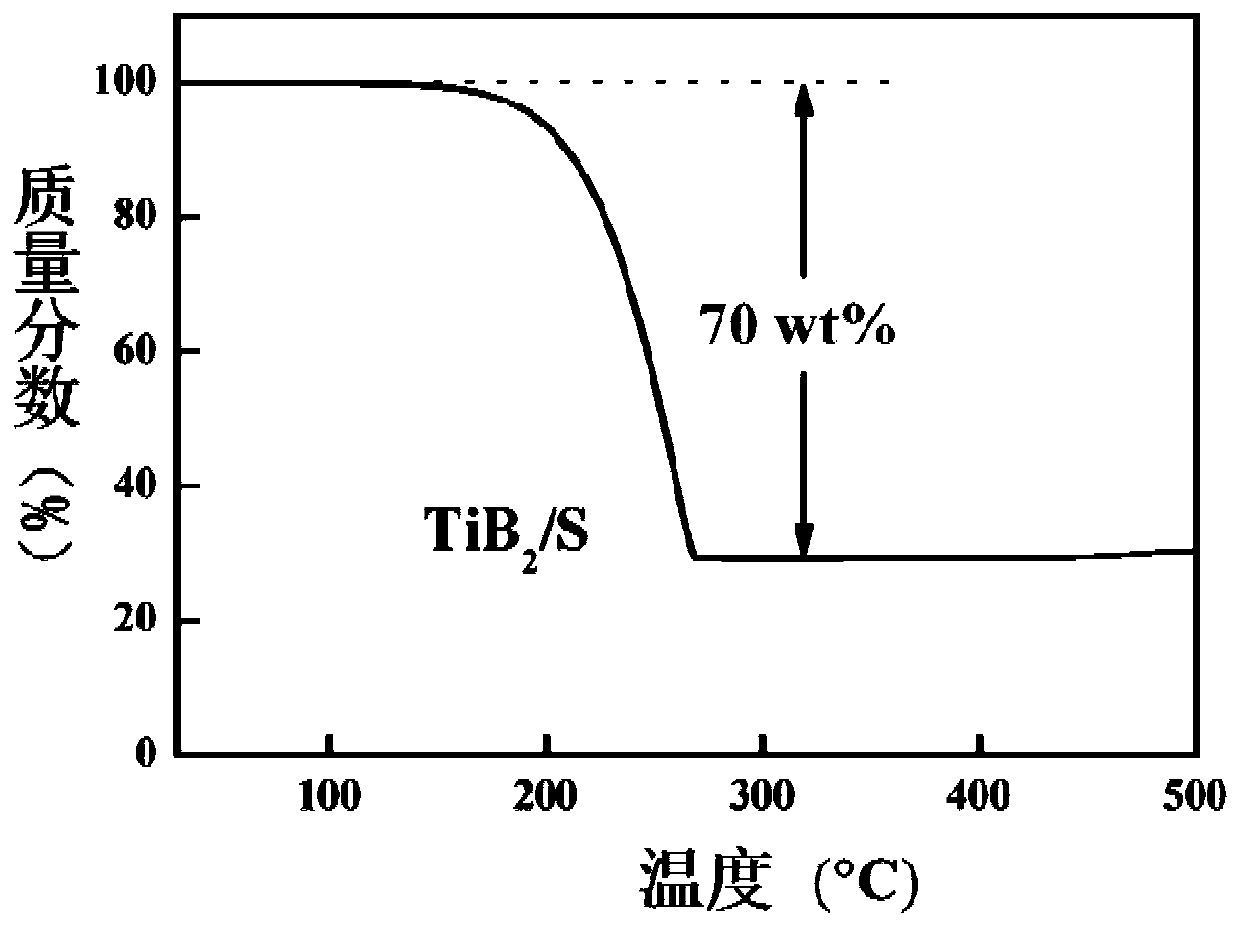
Figure 3
Abstract
Description
technical field
[0001] The invention relates to a titanium boride used for chemically trapping polysulfides in a lithium-sulfur battery, a preparation method and application thereof, and belongs to the technical field of lithium-sulfur battery materials. Background technique
[0002] Due to the low energy density and high cost, the current commercial lithium-ion batteries cannot meet high-power applications, especially in the fields of smart grid and electric vehicles. Lithium-sulfur batteries are 3-5 times the energy density of lithium-ion batteries. At the same time, the advantages of sulfur in the earth's crust, such as abundant reserves, low price, and environmental friendliness, make it one of the most promising secondary batteries for the next generation. However, the actual application of lithium-sulfur batteries is faced with problems such as short cycle life, low Coulombic efficiency, low utilization of active materials, and serious self-discharge phenomenon, which ...
Examples
Embodiment 1
[0044] A titanium boride used for chemically trapping polysulfides in lithium-sulfur batteries, the microscopic appearance of the titanium boride is nanoparticles with a particle size of about 200nm; the titanium boride is a hexagonal crystal phase, and boron atoms are inserted into the A hexagonal structure is formed in the gaps between titanium atomic layers.
[0045] The above-mentioned preparation method of titanium boride used for chemically trapping polysulfides in lithium-sulfur batteries comprises the following steps:
[0046] Hand-grind 1.2g of titanium dioxide, 4.32g of magnesium powder, and 0.3g of boron powder with a mortar for 0.5h, mix them evenly, add them into a stainless steel iron kettle, then add 2.7mL of deionized water, seal it, and put it in an oven at 150°C Thermal reaction for two hours; the reacted product was stirred with 1mol / L hydrochloric acid for 12 hours, then suction filtered, washed with deionized water and ethanol three times respectively to r...
Embodiment 2
[0059] A preparation method of titanium boride used for chemically trapping polysulfides in lithium-sulfur batteries, the preparation steps are as described in Example 1, the difference is that the hydrothermal reaction time is 4 hours, and the others are consistent with Example 1.
[0060] The application of the above-mentioned titanium boride to prepare the positive electrode material of lithium-sulfur battery, the preparation method is as described in Example 1.
Embodiment 3
[0062] A preparation method for titanium boride used in lithium-sulfur batteries to chemically trap polysulfides, the preparation steps are as described in Example 1, the difference is that the amounts of titanium dioxide, magnesium powder, boron powder, and deionized water are respectively 1.36g , 4.9g, 0.34g, 3.06mL, others are consistent with Example 1.
[0063] The application of the above-mentioned titanium boride to prepare the positive electrode material of lithium-sulfur battery, the preparation method is as described in Example 1.