
Immobilizing method for micro-molecular ligand containing secondary amine and/or tertiary amine groups
A technology of small molecule ligands and tertiary amine groups, applied in chemical instruments and methods, organic compounds/hydrides/coordination complex catalysts, organic chemistry, etc., can solve problems such as weak interactions and difficult fixation, and achieve Fixing method simple effect
Patent Information
- Authority / Receiving Office
- CN · China
- Current Assignee / Owner
- Publication Date
- 2018-09-28
Smart Images
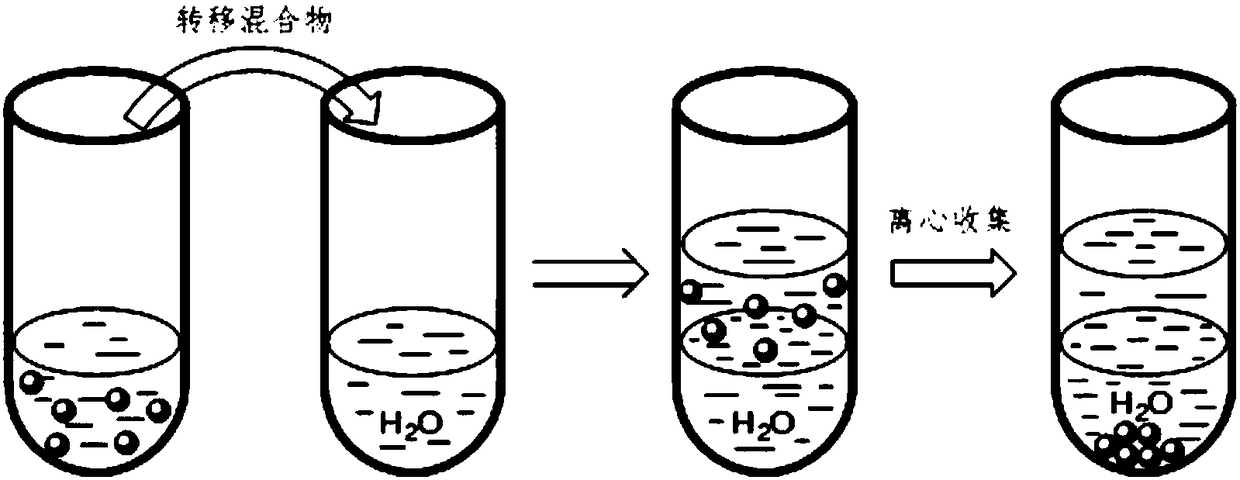
Figure 1 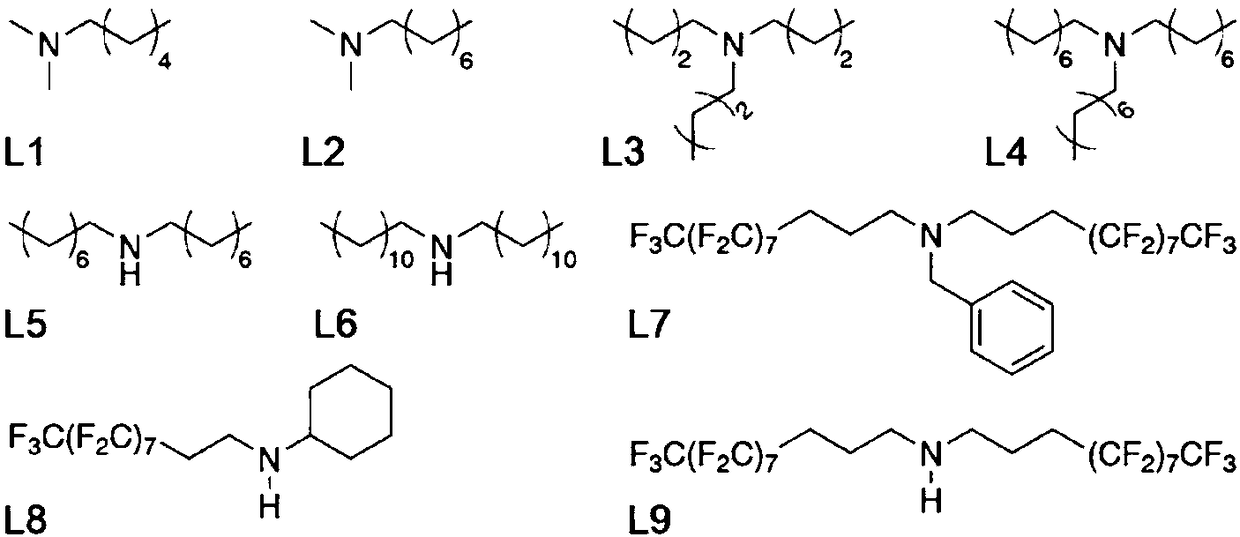
Figure 2 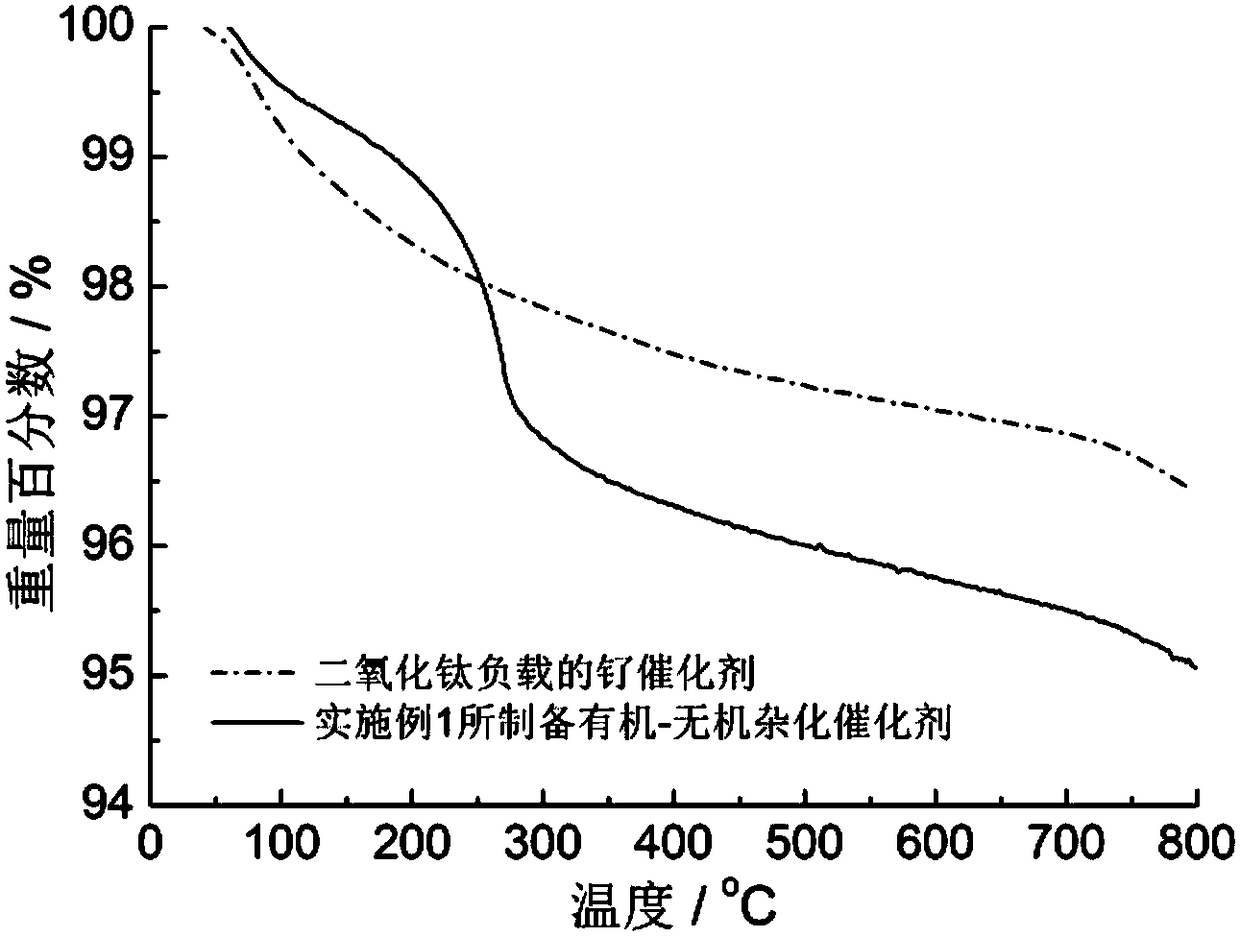
Figure 3
Abstract
Description
technical field
[0001] The invention belongs to the field of chemical industry, and in particular relates to a method for immobilizing small molecule ligands containing secondary and / or tertiary amine groups. Background technique
[0002] Transition metal nanoparticles are widely used in the field of catalysis due to their high specific surface area and good reusability. For example, gold nanoparticles, platinum nanoparticles, etc. can be used as catalysts for alcohol oxidation reactions. Although heterogeneous catalysts have good stability and reusability, in order to achieve high conversion, the catalytic reaction needs to be carried out under severe conditions such as high temperature, which leads to a great reduction in the selectivity of the primary alcohol oxidation reaction. Therefore, it is urgent to find a suitable method to effectively prevent the further oxidation of the product of the alcohol oxidation reaction.
[0003] In general, metal nanoparticles without ...
Examples
Embodiment 1
[0025] Weigh 39 mg small molecule ligand L1 (see attached figure 2 ) into a reaction flask filled with 6mL of ethyl acetate, vigorously stirred until completely dissolved, and 300 mg of titanium dioxide-loaded ruthenium catalyst was added to the above reaction flask. After maintaining stirring for 2 hours, the mixture was transferred to a centrifuge tube containing 6 mL of water. Centrifuge at 3000 rpm for 20 minutes, collect the centrifuged solid and wash it with deionized water, and finally vacuum-dry the product at room temperature for 24 hours to obtain an organic-inorganic hybrid catalyst.
[0026] figure 1 Schematic diagram of the immobilization method for small molecule ligands containing secondary and / or tertiary amine groups. image 3 For the thermogravimetric analysis curve of the organic-inorganic hybrid catalyst prepared in the above examples in air, as the temperature increases, the organic components are continuously oxidized and decomposed, and finally only t...
Embodiment 2
[0028] Weigh 27mg small molecule ligand L2 (see attached figure 2 ) into the reaction flask filled with 6mL ethyl acetate, stirred vigorously until completely dissolved, and added 648mg of titanium dioxide-supported ruthenium catalyst in the above-mentioned reaction flask. After maintaining stirring for 6 hours, the mixture was transferred to a centrifuge tube containing 6 mL of water. Centrifuge at 5000 rpm for 30 minutes, collect the centrifuged solid and wash it with deionized water, and finally vacuum-dry the product at room temperature for 36 hours to obtain an organic-inorganic hybrid catalyst.
[0029] Thermogravimetric analysis showed that the content of the small molecule ligands in the organic-inorganic hybrid catalyst prepared in the above examples was 1.0 wt%.
Embodiment 3
[0031] Weigh 75mg small molecule ligand L3 (see attached figure 2 ) was added to the reaction flask filled with 6mL of n-pentane, vigorously stirred until completely dissolved, and 300mg of titanium dioxide-supported ruthenium catalyst was added in the above-mentioned reaction flask. After maintaining stirring for 2 hours, the mixture was transferred to a centrifuge tube containing 6 mL of water. Centrifuge at 5000 rpm for 30 minutes, collect the centrifuged solid and wash it with deionized water, and finally vacuum-dry the product at room temperature for 24 hours to obtain an organic-inorganic hybrid catalyst.
[0032] Thermogravimetric analysis showed that the content of the small molecule ligand in the organic-inorganic hybrid catalyst prepared in the above example was 1.2 wt%.