
A kind of hyperbranched polysiloxane fluorescent material and preparation method
A polysiloxane and fluorescent material technology, applied in luminescent materials, chemical instruments and methods, etc., can solve the problems of weak fluorescence intensity and low quantum yield, and achieve high quantum yield, good biodegradability, and abundant synthesis. effect of the method
Patent Information
- Authority / Receiving Office
- CN · China
- Patent Type
- Patents(China)
- Current Assignee / Owner
- Publication Date
- 2021-01-05
- Estimated Expiration
- Not applicable · inactive patent
Smart Images
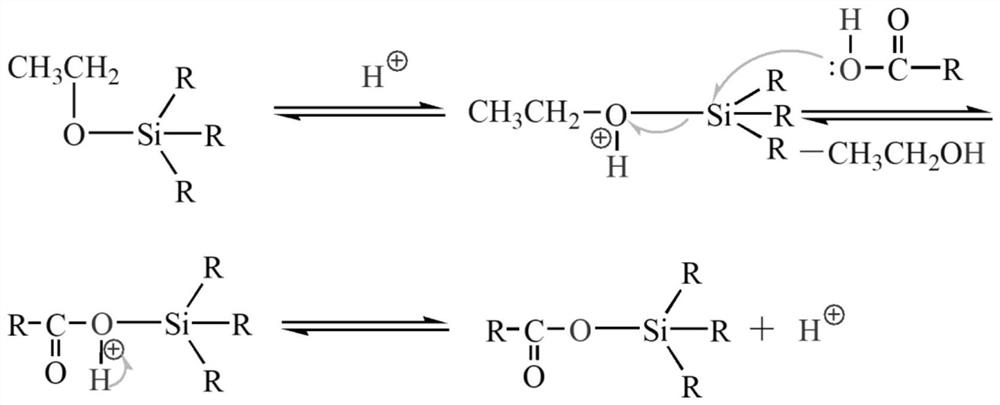
Figure 1 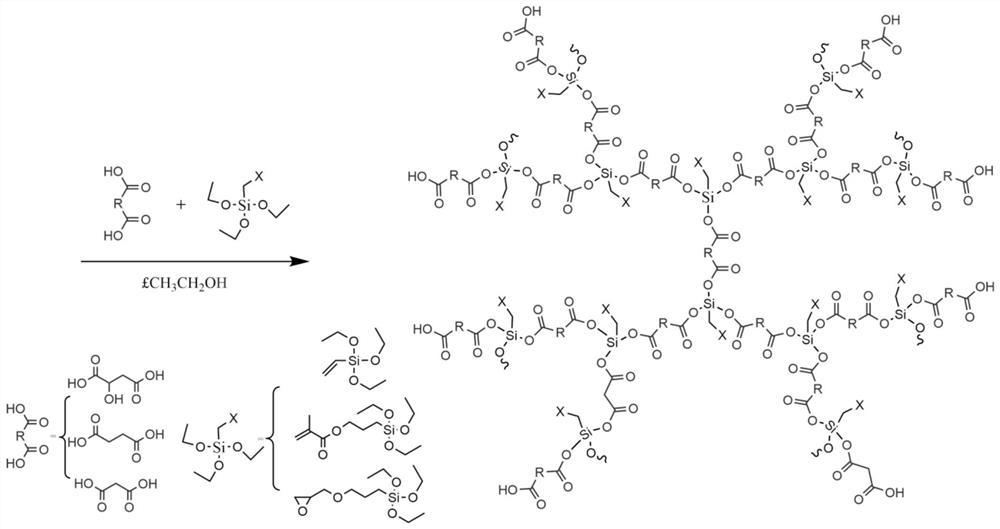
Figure 2 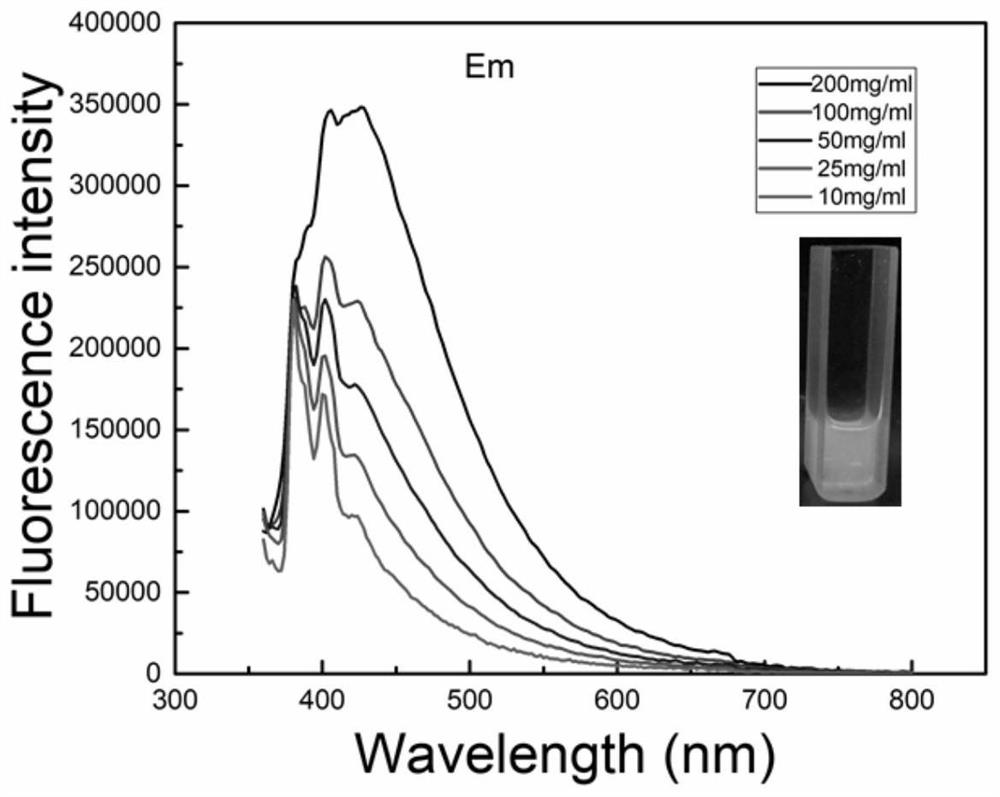
Figure 3
Abstract
Description
technical field
[0001] The invention belongs to the field of polymer luminescent materials, and relates to a hyperbranched polysiloxane fluorescent material and a preparation method. Background technique
[0002] Hyperbranched polysiloxane has the advantages of low viscosity, high temperature resistance, and functionalization, which has attracted extensive attention of researchers. At present, the traditional methods for synthesizing hyperbranched polysiloxane mainly include hydrosilylation and polycondensation, but these two methods have some obvious defects. For example, the process is complicated, expensive catalysts are needed, and the hydrolysis of siloxane is easy to cause gel, etc. These defects limit its industrial application. Therefore, it is necessary to find a simple, catalyst-free synthetic method to prepare hyperbranched polysiloxanes. Niu et al [Macromol. Rapid communication, 2016, 37: 136-142; Polym. Chem. 2016, 7: 3747-3755]. Using different types of diol...
Examples
example 1
[0025] First, add malonic acid and methacryloxypropyltriethoxysilane into a three-necked round-bottomed flask at a molar ratio of 2:1, heat, feed nitrogen, stir, and slowly heat up to 85-130°C. When the system becomes clear and transparent, raise the temperature to 110-150°C. After a period of reaction, distillates will be produced, and continue the reaction until the distillation temperature drops below 30°C. When no distillates are produced, the reaction will stop and the reaction will be lowered to room temperature. , to obtain carboxy-terminated hyperbranched polysiloxane.
example 2
[0027] First, add malonic acid and 3-glycidyl etheroxypropyl triethoxysilane in a molar ratio of 2:1 into a three-necked round-bottomed flask, heat, blow in nitrogen, stir, and slowly heat up to 85-130°C , when the system becomes clear and transparent, the temperature is raised to 110-150°C. After a period of reaction, distillate is produced, and the reaction is continued until the distillation temperature drops below 30°C. When no distillate is produced, the reaction stops and drops to At room temperature, carboxyl-terminated hyperbranched polysiloxane can be obtained.
example 3
[0029] First, add succinic acid and vinyltriethoxysilane in a molar ratio of 2:1 into a three-necked round-bottomed flask, heat, blow in nitrogen, stir, and slowly heat up to 85-130°C, when the system becomes clear and transparent After that, the temperature is raised to 110-150°C. After a period of reaction, distillates are produced, and the reaction is continued until the distillation temperature drops below 30°C. When no distillate is produced, the reaction stops, and the carboxyl-sealed product can be obtained when the temperature is lowered to room temperature. terminal hyperbranched polysiloxane.