

A hairiness detection method based on the fusion of maximum entropy and dbscan
A detection method and maximum entropy technology, which can be used in image analysis, image enhancement, instruments, etc., to solve problems such as inability to accurately calculate hairiness length and incomplete hairiness extraction.
Patent Information
- Authority / Receiving Office
- CN · China
- Patent Type
- Patents(China)
- Current Assignee / Owner
- Publication Date
- 2019-11-19
Smart Images
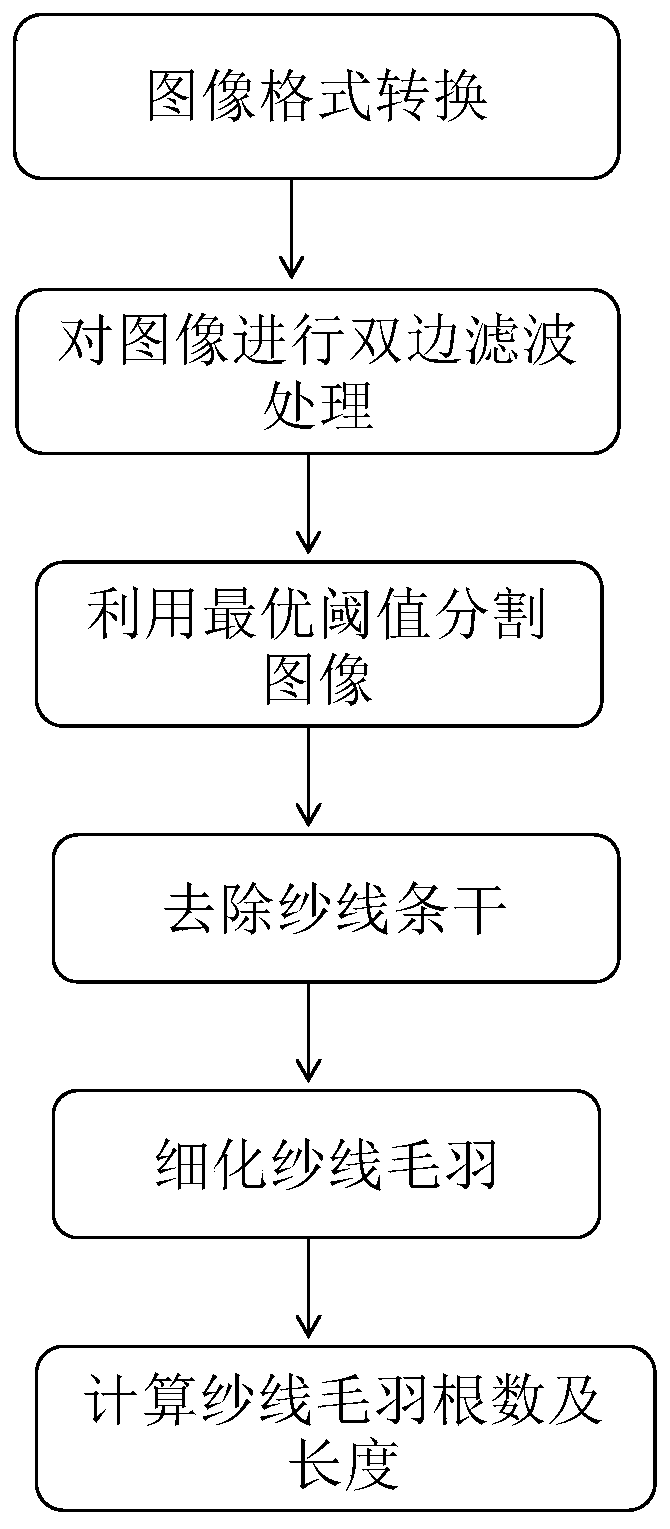
Figure 1 
Figure 2 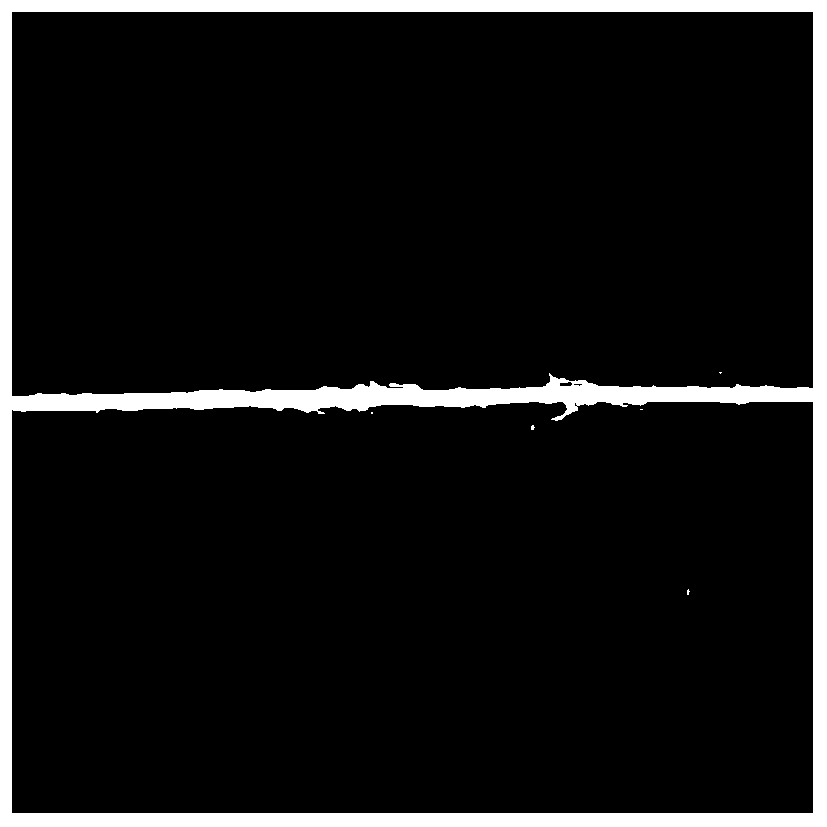
Figure 3
Abstract
Description
technical field
[0001] The invention belongs to the technical field of textile detection, and in particular relates to a hairiness detection method based on the fusion of maximum entropy and DBSCAN. Background technique
[0002] Hairiness can affect the appearance and feel of the yarn and the final textile. For example, the distribution of hairiness on two weft yarns is different, which will cause a difference in the degree of reflection, thereby forming a rung on the cloth surface; uneven hairiness will lead to uneven dyeing, excessive hairiness The place where there is less color is darker, and the color where there is less is lighter, resulting in color difference; the yarn with more hairiness is easy to be rubbed and pilled during processing, thereby reducing the quality of the textile. To form high-quality textiles, it is fundamental to produce high-quality yarns. Therefore, the detection and evaluation of yarn appearance quality plays a decisive role in improving the q...
Examples
Embodiment
[0076] A hairiness detection method based on the fusion of maximum entropy and DBSCAN, specifically implemented according to the following steps:
[0077] Step 1, scale the yarn image to be detected to 256×256 pixels, and convert it to single-channel BMP format;
[0078] Step 2, performing bilateral filtering on the yarn image obtained after step 1;
[0079] Specifically: take each pixel in the yarn image as the target pixel in turn, mark the coordinates of each target pixel as (i, j), and mark the coordinates of the pixels in the neighborhood of each target pixel as (k, l), according to the pixel value f(k,l) of the pixel point in the neighborhood of each target pixel point, the pixel value g(i,j) of each target pixel point after filtering is obtained, as shown in formula (1):
[0080]
[0081] In formula (1), ω(i, j, k, l) is the weighting coefficient, and its calculation formula is shown in formula (2):
[0082]
[0083] In formula (2), σ d and σ r Both are smooth...