
Microorganism-graphene combined treatment method for pig farm breeding wastewater
A technology of joint treatment of aquaculture wastewater, applied in the field of water pollution control, can solve the problems of low removal rate of nitrogen and phosphorus, high energy consumption in operation, poor removal effect, etc., and achieve the effect of strong adsorption capacity
Patent Information
- Authority / Receiving Office
- CN · China
- Patent Type
- Applications(China)
- Current Assignee / Owner
- Publication Date
- 2019-06-07
Smart Images
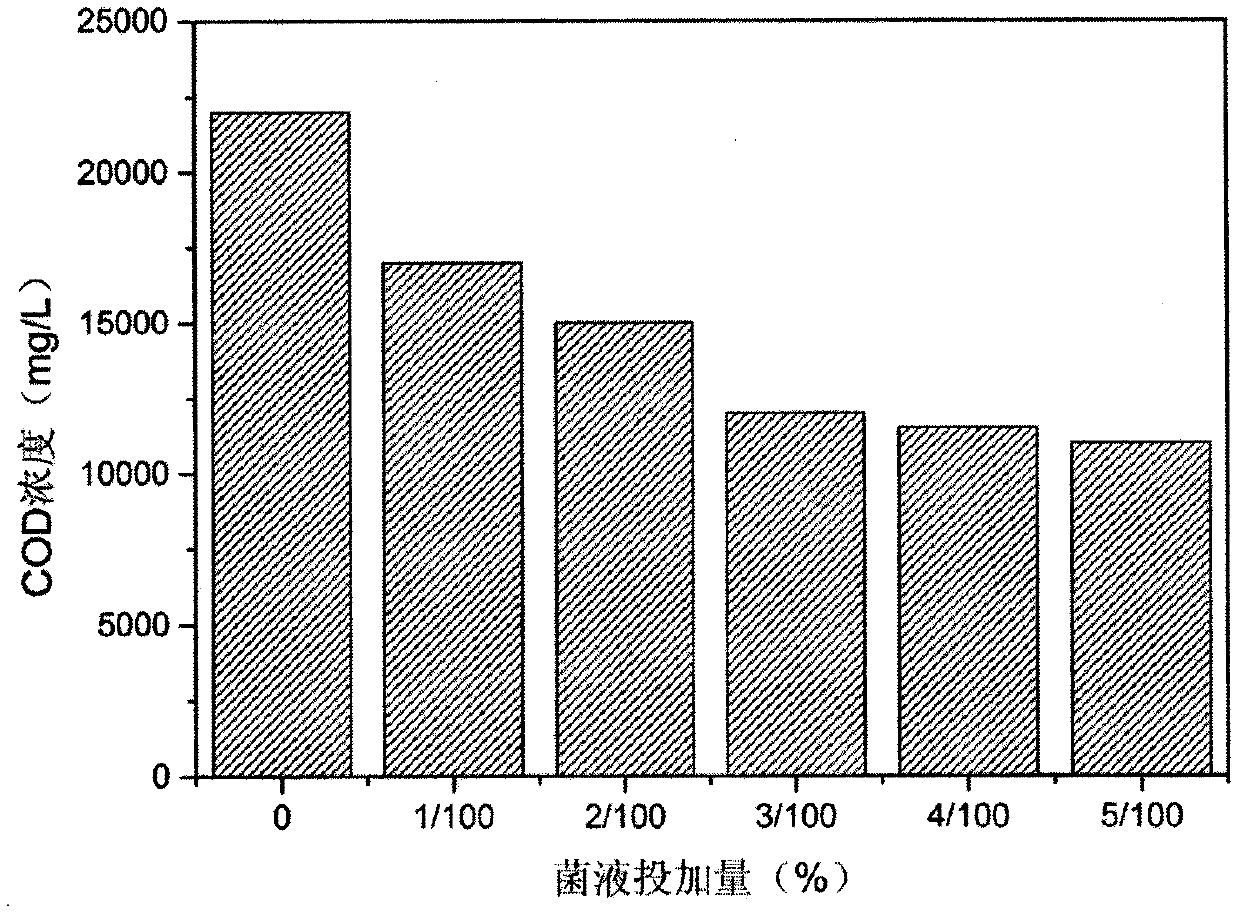
Figure 1 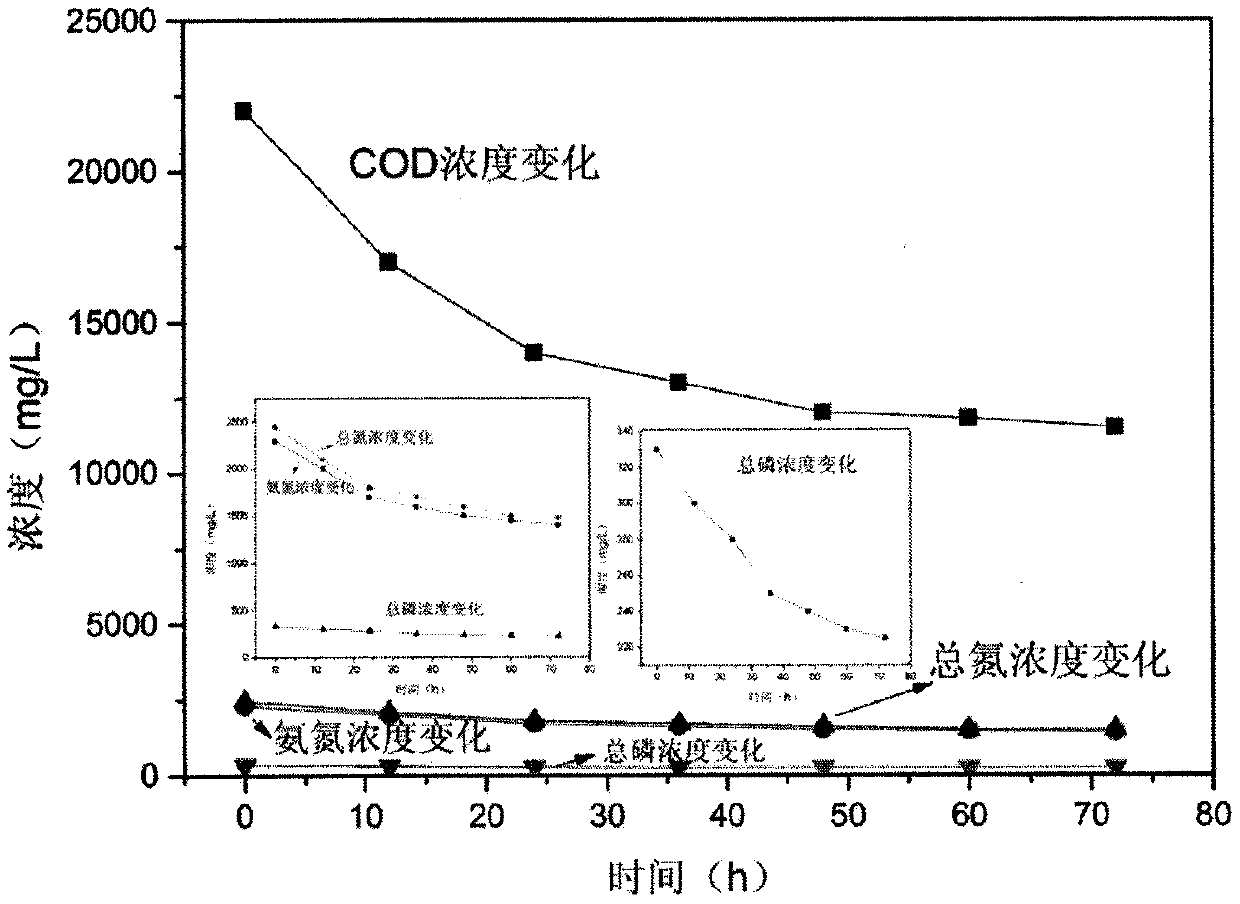
Figure 2 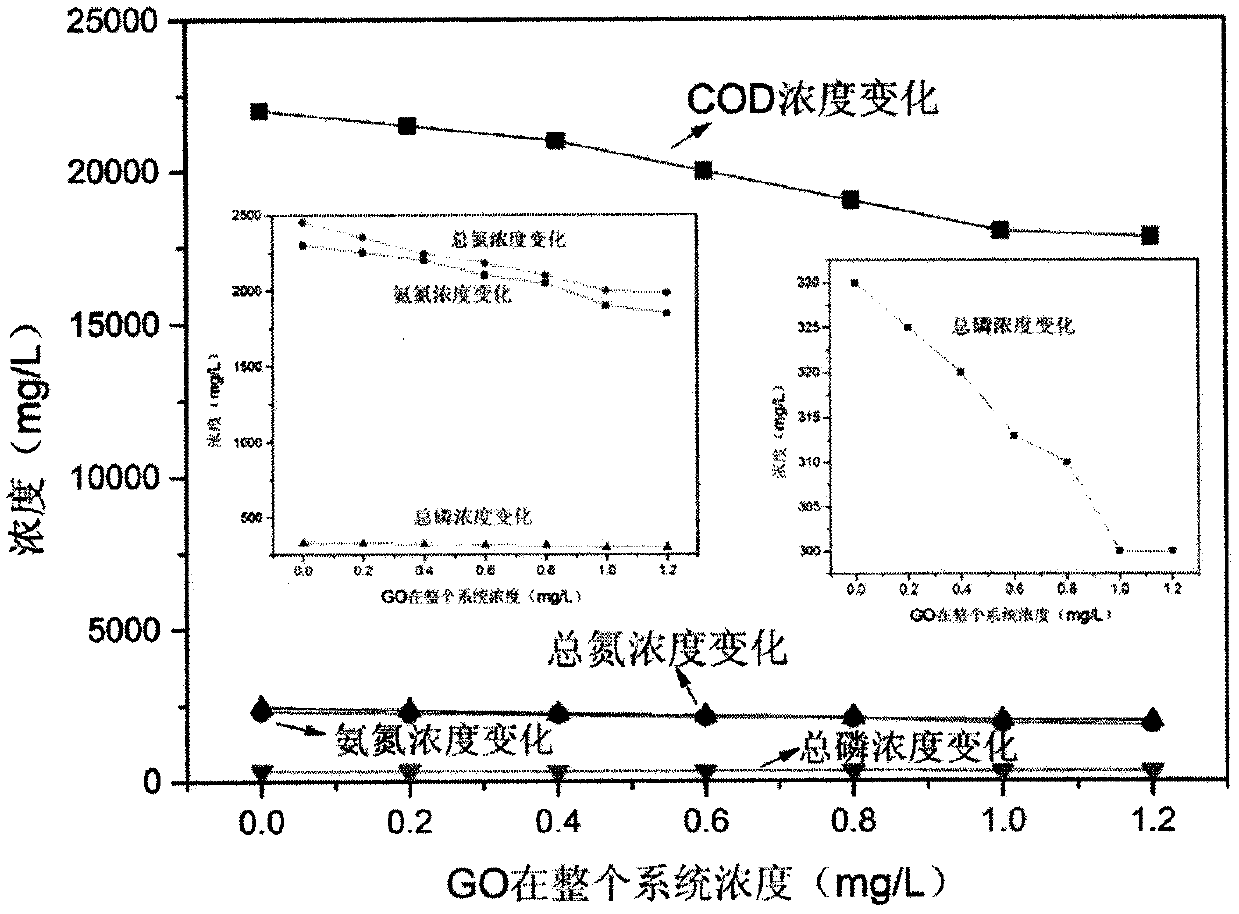
Figure 3
Abstract
Description
Technical field:
[0001] The invention relates to an efficient treatment method for pig farm wastewater, in particular to a method for removing high-concentration COD, ammonia nitrogen, total nitrogen and total phosphorus in pig farm wastewater by using microorganisms and nanomaterials (graphene), which belongs to water pollution control technology field. Background technique:
[0002] Pig farm wastewater is mainly urine, residual feces, residues and flushing water produced during pig raising. The characteristics of pig farm wastewater are: high concentration of organic matter, high suspended solids, high ammonia nitrogen, etc., accompanied by odor. The basic indicators of a pig farm’s breeding wastewater in the field are: OD concentration is 20000-25000mg / L, ammonia nitrogen concentration is 2000-2250mg / L, total nitrogen concentration is 2500-3000mg / L, and total phosphorus concentration is 300-350mg / L. Livestock and poultry breeding pollution is an important source of non-...
Examples
Embodiment 1
[0030]Shake Pseudomonas flava WD-3 from the LB medium newly inoculated from the solid medium in a constant temperature shaker at 25°C for 12 hours, so that Pseudomonas flava WD-3 is in the logarithmic phase, and then according to the volume ratio of the bacterial solution to the pig farm wastewater 1 %, 2%, 3%, 4%, 5% dosage, taking the COD concentration of pig farm wastewater as a typical evaluation factor, to evaluate the optimal dosage of Pseudomonas flava WD-3. Such as figure 1 As shown, under the conditions of 1%, 2%, 3%, 4%, and 5% of the bacterial solution dosage, the COD removal rates were 22.7%, 31.8%, and 45.5% when the COD concentration was no longer changed. , 47.7% and 50%, according to the change of COD concentration, figure 1 The change trend and the actual dosage of bacteria solution selected 3% as the optimal dosage of Pseudomonas flava WD-3.
Embodiment 2
[0032] Add Pseudomonas flava WD-3 with a volume ratio of 3% of the bacterial solution to the pig farm wastewater at different times, and monitor the changes in the concentrations of COD, ammonia nitrogen, total nitrogen, and total phosphorus every 12 hours to determine the concentration of Pseudomonas flava WD. Best reaction time of -3. Such as figure 2 As shown, the concentration of COD, ammonia nitrogen, total nitrogen and total phosphorus showed a gradually decreasing trend with time, and the removal rates of COD at 12h, 24h, 36h, 48h, 60h and 72h were 22.7%, 36.4%, 40.9%, 45.5% %, 46.4% and 47.7%; the removal rates of ammonia nitrogen at 12h, 24h, 36h, 48h, 60h and 72h were 13.0%, 26.1%, 30.4%, 34.8%, 36.9% and 39.1%; total nitrogen at 12h, 24h , 36h, 48h, 60h and 72h removal rates were 14.3%, 26.5%, 30.6%, 35.0%, 38.8% and 39.6%; total phosphorus removal rates at 12h, 24h, 36h, 48h, 60h and 72h were 9.1%, 15.2%, 24.2%, 27.3%, 30.3%, and 31.8%. According to the changes...
Embodiment 3
[0034] The concentrated GO solution was added to the pig farm wastewater, so that the concentration of GO in the whole system was 0.2, 0.4, 0.6, 0.8, 1.0, 1.2mg / L, and the optimal reaction concentration of the GO solution was determined. Such as image 3 As shown, the concentrations of COD, ammonia nitrogen, total nitrogen and total phosphorus showed a trend of decreasing gradually with the increase of GO concentration, and the removal rates of COD were 2.3 %, 4.5%, 9.1%, 13.6%, 18.2%, 19.0%; the removal rates of ammonia nitrogen at GO concentrations of 0.2, 0.4, 0.6, 0.8, 1.0, 1.2m8 / L were 2.2%, 4.3%, 8.7% respectively , 10.9%, 17.4%, 19.6%; the removal rates of total nitrogen at GO concentrations of 0.2, 0.4, 0.6, 0.8, 1.0, and 1.2 mg / L were 4.1%, 8.6%, 11.0%, 14.3%, and 18.4%, respectively , 19.2%; the removal rates of total phosphorus at GO concentrations of 0.2, 0.4, 0.6, 0.8, 1.0, and 1.2 mg / L were 1.5%, 3.0%, 5.2%, 6.1%, 9.1%, and 9.1%, respectively. According to the ...