
Refrigerating or heat pump system with jetting gas-liquid separation heat exchange
A heat pump system, gas-liquid separation technology, applied in refrigerators, refrigeration components, refrigeration and liquefaction, etc., can solve the problems of high energy consumption and low efficiency, and achieve the effect of improving performance, improving heat exchange capacity, and solving low efficiency
Patent Information
- Authority / Receiving Office
- CN · China
- Current Assignee / Owner
- Publication Date
- 2019-10-01
Smart Images
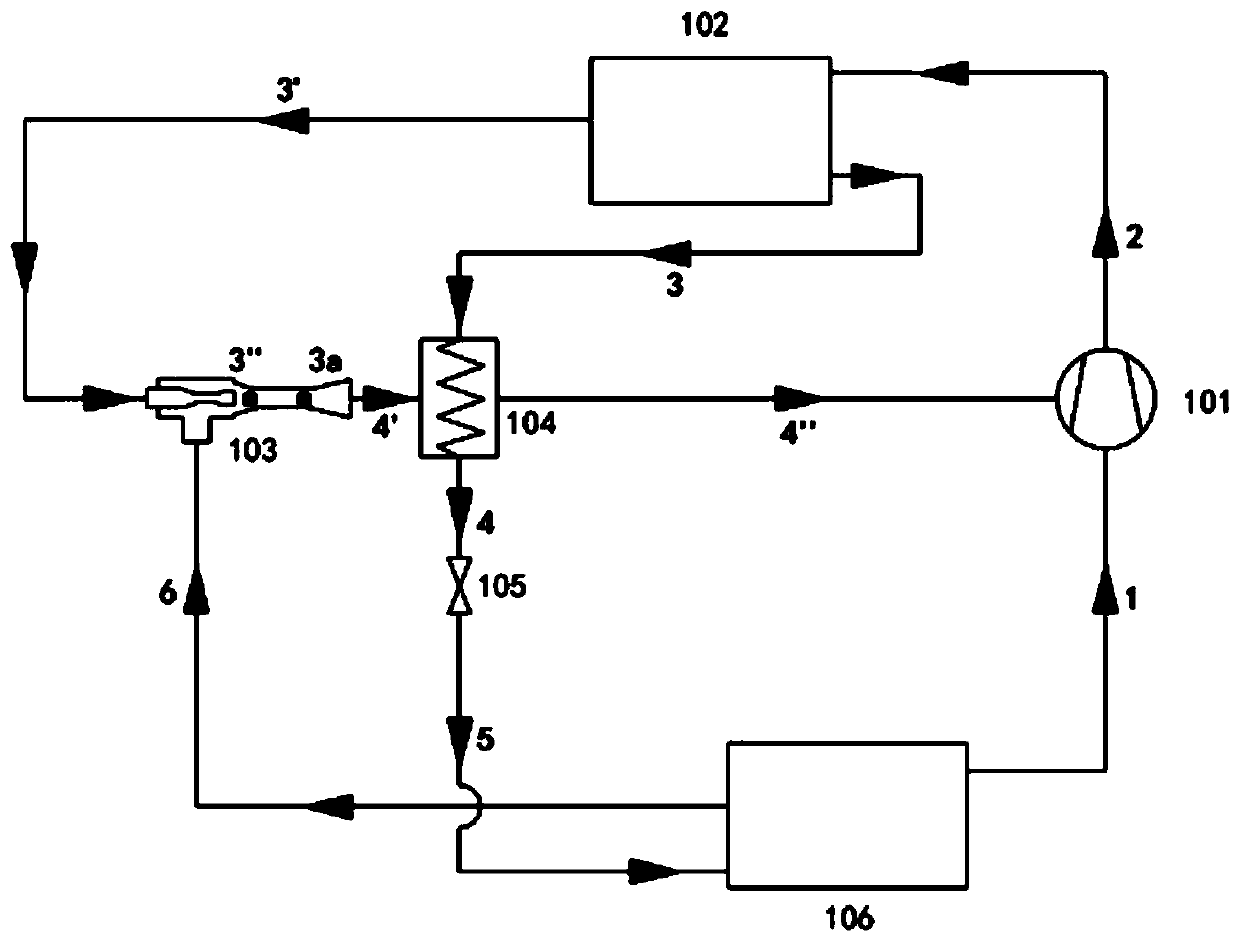
Figure 1 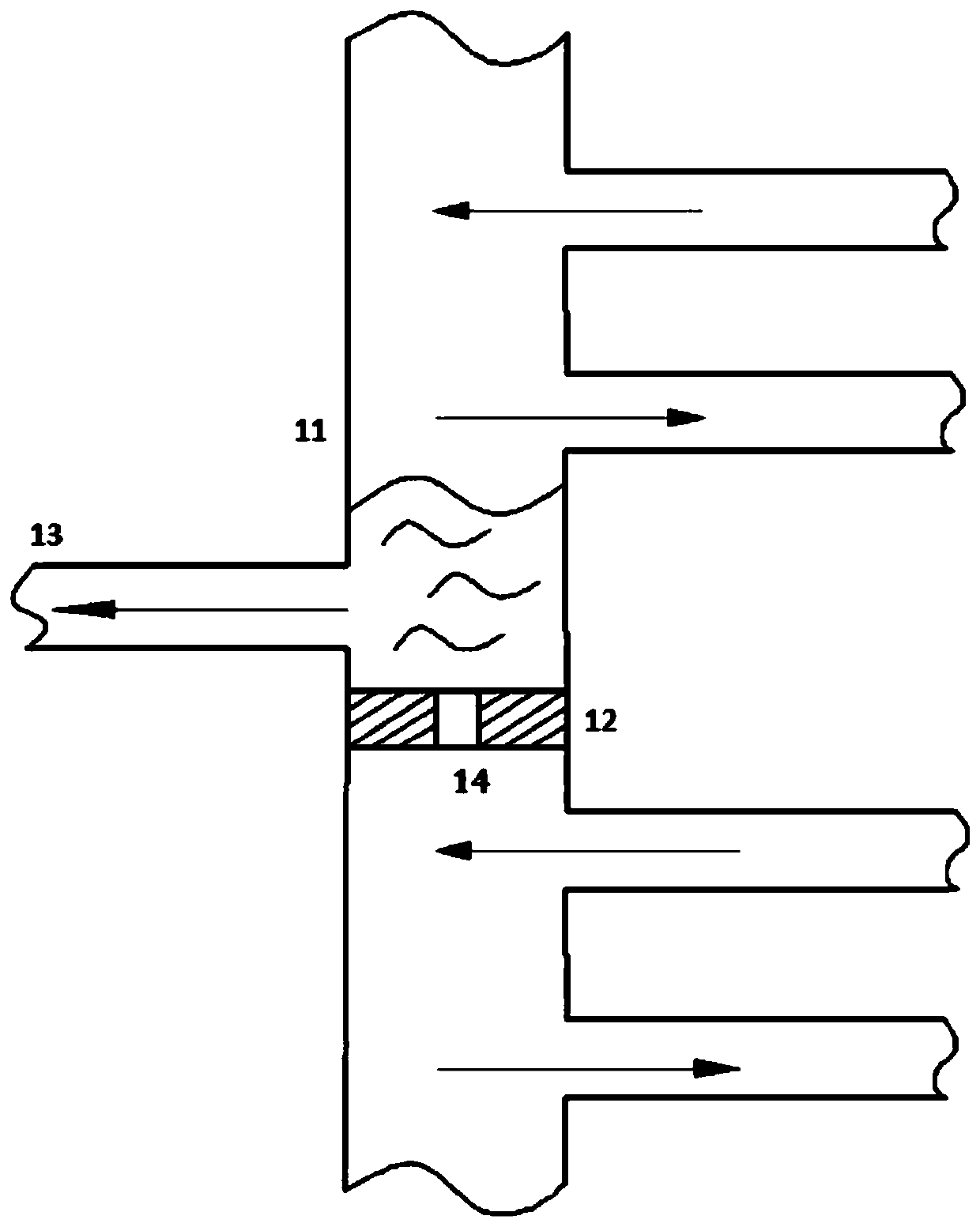
Figure 2 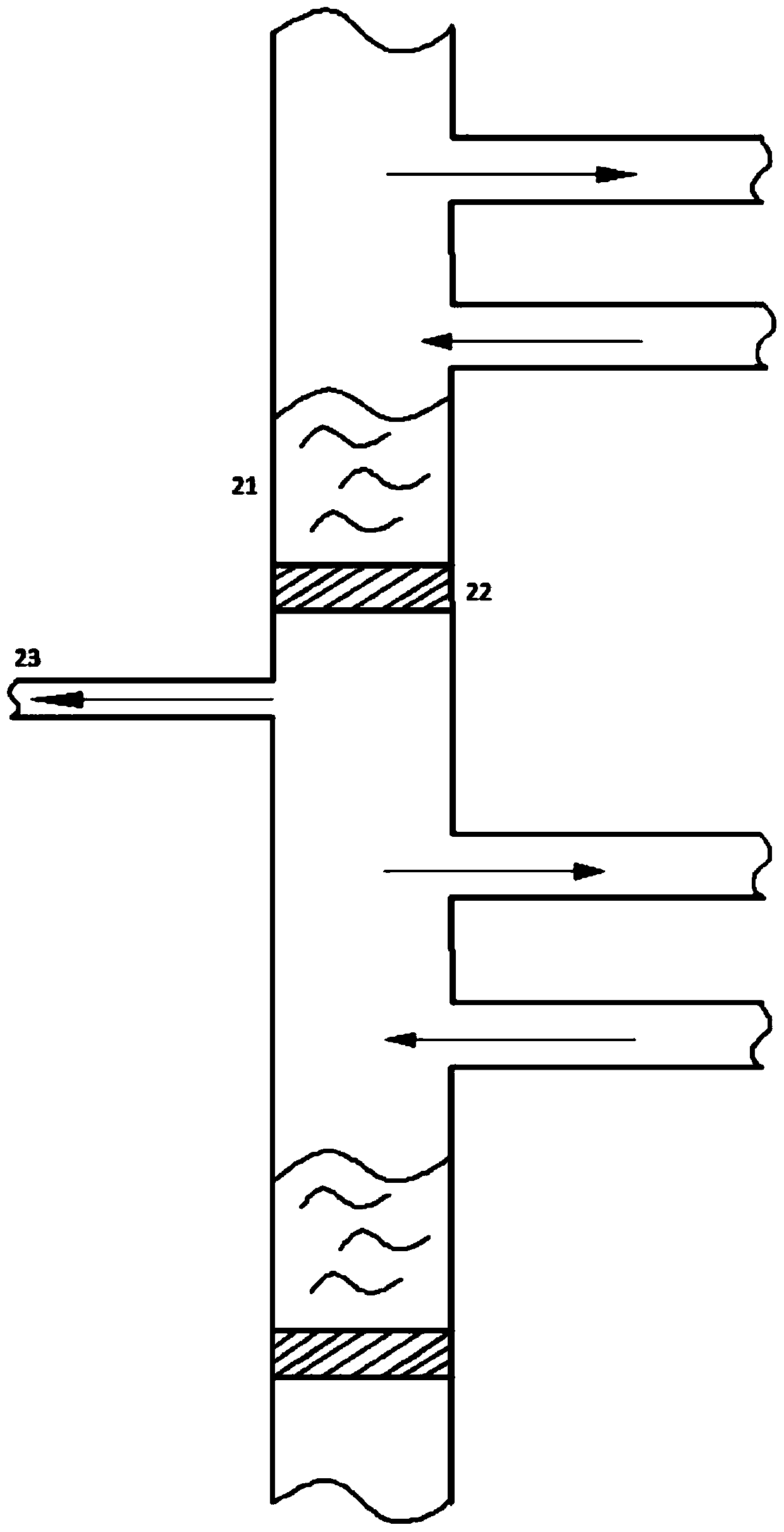
Figure 3
Abstract
Description
technical field
[0001] The present application relates to the technical field of heat exchange, and in particular to a refrigeration or heat pump system with injection gas-liquid separation heat exchange. Background technique
[0002] Heat exchange technology is becoming more and more mature. The working principle of heat pump and refrigeration system is the same. Taking refrigeration system as an example, it generally consists of four parts: compressor, condenser, throttling element, and evaporator. Its working process is: low-temperature and low-pressure liquid refrigerant (such as Freon), first absorbs heat from a high-temperature heat source (such as normal-temperature air) in an evaporator (such as an air-conditioning indoor unit) and vaporizes into low-pressure steam. Then the refrigerant gas is compressed into a high-temperature and high-pressure vapor in the compressor, and the high-temperature and high-pressure gas is cooled and condensed into a high-pressure liquid...
Examples
Embodiment Construction
[0033] The technical solutions of the present application will be clearly and completely described below in conjunction with the accompanying drawings. Apparently, the described embodiments are some of the embodiments of the present application, not all of them. Based on the embodiments in this application, all other embodiments obtained by persons of ordinary skill in the art without making creative efforts belong to the scope of protection of this application.
[0034] In the description of this application, it should be noted that the terms "center", "upper", "lower", "left", "right", "vertical", "horizontal", "inner", "outer" etc. The indicated orientation or positional relationship is based on the orientation or positional relationship shown in the drawings, and is only for the convenience of describing the present application and simplifying the description, rather than indicating or implying that the referred device or element must have a specific orientation, use a spec...