

A kind of preparation method of sulfonated microporous polymer with high temperature resistance and high gas permeability for fuel cell and platinum-carbon composite membrane
A microporous polymer and fuel cell technology, applied in electrical components, battery electrodes, circuits, etc., to achieve the effects of easy scale-up production, high conductivity, and simple synthesis process
Patent Information
- Authority / Receiving Office
- CN · China
- Patent Type
- Patents(China)
- Current Assignee / Owner
- Publication Date
- 2022-04-29
Smart Images
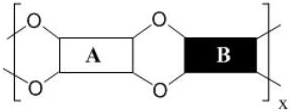
Figure 1 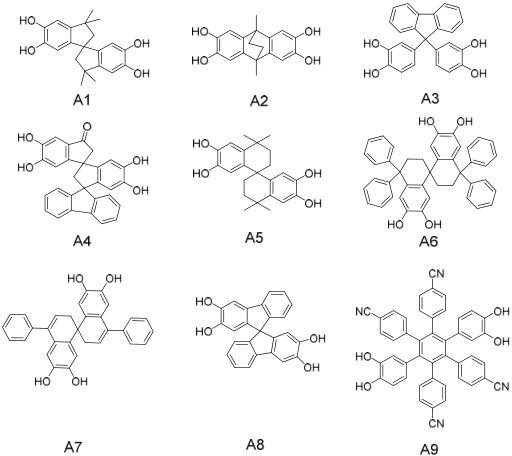
Figure 2 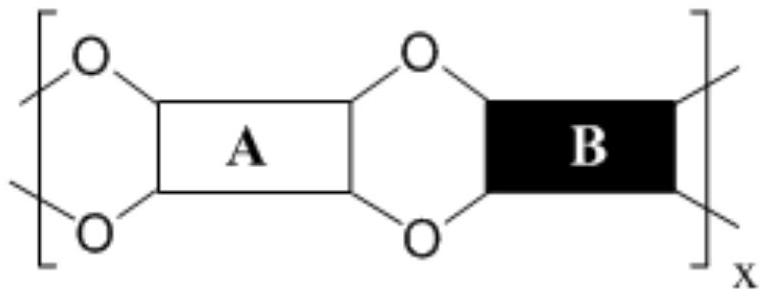
Figure 3
Abstract
Description
technical field
[0001] The invention relates to the field of preparation of fuel cell membrane electrodes, in particular to a preparation method of a fuel cell high-temperature-resistant and highly gas-permeable sulfonated microporous polymer and a platinum-carbon composite membrane thereof. Background technique
[0002] A fuel cell is a power generation device that directly converts chemical energy in fuel and oxidant into electrical energy with high efficiency (50-70%) and environmental friendliness through electrochemical reaction without combustion. Proton exchange membrane fuel cell (PEMFC) has become the fastest growing technology in recent years due to its high energy conversion rate, high power density, environmental friendliness, quick startup at room temperature, no electrolyte loss, easy water discharge, and long life. A type of fuel cell.
[0003] The core component of PEMFC is the membrane electrode (MEA), which is generally composed of proton exchange membrane...
Examples
Embodiment 1
[0031] (1) Preparation of sulfonated self-porous polymers. A four-neck flask equipped with a stirrer, a thermometer and an adapter was placed in a constant temperature oil bath. In a nitrogen atmosphere, the anhydrous K 2 CO 3 (120mmol, 16.5852g), tetrahydroxy monomer A1 (60mmol, 20.4252g), tetrafluoromonomer B1 (60mmol, 18.6114g) and anhydrous DMF (390mL) were added in a four-necked flask, first stirred at room temperature for 1 hours, and then reacted at 80°C for 2 hours. After the reaction, cool to room temperature, add distilled water, filter to obtain a filter cake, wash the filter cake with methanol and distilled water successively, and vacuum-dry to constant weight to obtain sulfonated microporous polymer powder.
[0032] (2) Preparation of sulfonated self-porous polymer mixture. The dried polymer powder was dissolved in NMP to form a polymer solution with a solid content of 8 wt.%. Then use a 0.45 μm filter membrane to filter, that is, the sulfonated self-micropor...
Embodiment 2
[0035] (1) Preparation of sulfonated self-porous polymers. A four-necked flask equipped with a stirrer, a thermometer and an adapter was placed in a constant temperature oil bath. In a nitrogen atmosphere, the anhydrous K 2CO 3 (120mmol, 16.5852g), tetrahydroxy monomer A2 (60mmol, 17.9004g) and tetrafluoromonomer B2 (60mmol, 21.615g) and anhydrous DMF (405mL) were added in the four-necked flask, first stirred at room temperature for 2 hours, and then reacted at 100°C for 5 hours. After the reaction, cool to room temperature, add distilled water, filter to obtain a filter cake, wash the filter cake with methanol and distilled water successively, and vacuum-dry to constant weight to obtain sulfonated microporous polymer powder.
[0036] (2) Preparation of sulfonated self-porous polymer mixture. The dried polymer powder was dissolved in DMF to form a polymer solution with a solid content of 9 wt.%. Then use a 0.45 μm filter membrane to filter, that is, the sulfonated self-mi...
Embodiment 3
[0039] (1) Preparation of sulfonated self-porous polymers. A four-necked flask equipped with a stirrer, a thermometer and an adapter was placed in a constant temperature oil bath. In a nitrogen atmosphere, the anhydrous K 2 CO 3 (120mmol, 16.5852g), tetrahydroxy monomer A3 (60mmol, 22.9452g), tetrafluoromonomer B3 (60mmol, 21.615g) and anhydrous DMF (446mL) were added in the four-necked flask, first stirred at room temperature for 1 hours, and then reacted at 150°C for 12 hours. After the reaction, cool to room temperature, add distilled water, filter to obtain a filter cake, wash the filter cake with methanol and distilled water successively, and vacuum-dry to constant weight to obtain sulfonated microporous polymer powder.
[0040] (2) Preparation of sulfonated self-porous polymer mixture. The dried polymer powder was dissolved in tetrahydrofuran to prepare a polymer solution with a solid content of 6 wt.%. Then use a 0.45 μm filter membrane to filter, that is, the sulf...