
A Human-Machine Hybrid Intelligent Cooperative Follow-up Control Method for Keeping the Driver in the Loop
A technology for drivers and autonomous vehicles, applied in the field of driver-in-the-loop human-machine co-driving control, can solve the problems of high attention level, driver troubles, expensive sensors, etc., and achieve the effect of small operation load
Patent Information
- Authority / Receiving Office
- CN · China
- Patent Type
- Patents(China)
- Current Assignee / Owner
- Publication Date
- 2022-03-11
Smart Images
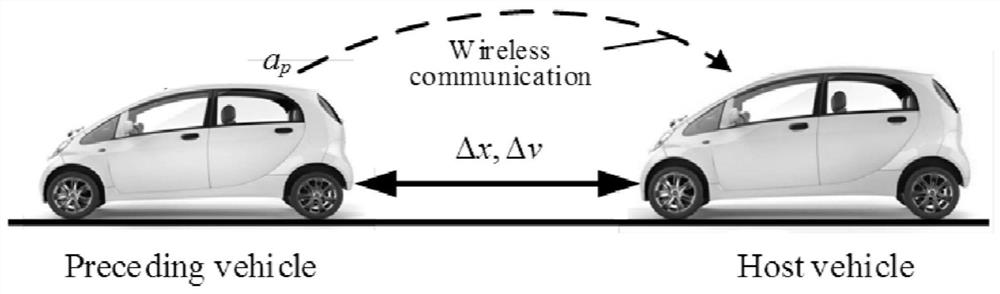
Figure 1 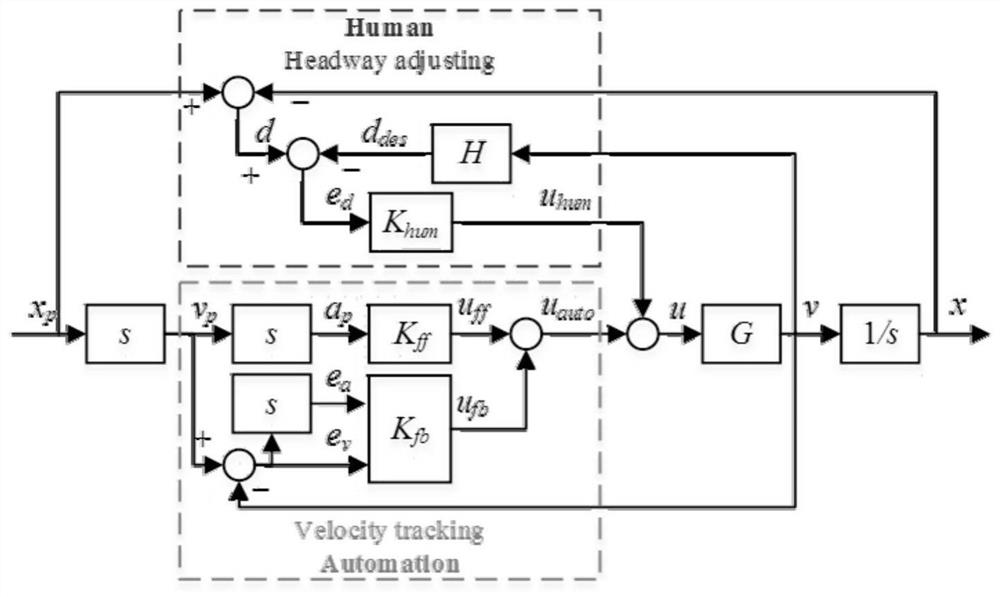
Figure 2 
Figure 3
Abstract
Description
technical field
[0001] The invention belongs to the field of human-machine co-driving of smart cars, especially for the longitudinal follow-up control task of smart cars. Stability, safety and comfort. Background technique
[0002] At present, the problems of driver absence and safety takeover have become the main problems faced by autonomous driving at this stage, and have attracted extensive attention from relevant scholars all over the world. Human-machine co-driving is a feasible technical means to improve the stability, safety and comfort of smart cars by giving full play to the respective advantages of man and machine.
[0003] The existing research on human-machine co-driving can be roughly divided into three categories according to the method of human-machine collaboration. The first category is to detect the driver's status in real time by installing corresponding sensors to ensure that the driver can safely take over the vehicle when the automatic driving system ...
Examples
Embodiment 1
[0102] Such as Figure 1-2 A human-machine hybrid intelligent collaborative car following control method for keeping the driver in the loop is shown, comprising the following steps:
[0103] Step 1: Define the configuration, follow-up tasks and scenarios of the autonomous driving vehicle
[0104] The self-driving car is equipped with high-precision actuators and sensors. The front car and the main car are in the same lane, and the following self-driving car can obtain real-time acceleration information of the front car through wireless communication. p ; At the same time, the self-driving vehicle obtains the relative inter-vehicle distance △x and relative vehicle speed △v between the two vehicles through the sensor;
[0105] Step 2: Construct vehicle longitudinal dynamics model
[0106] Considering the influence of factors such as vehicle inertia, engine torque, air resistance and ground friction, construct the vehicle longitudinal speed v(t), acceleration a(t), and jerk acc...