
Lower limb recovery exercise equipment for neurology department
A kind of exercise equipment and neurology technology, applied in the field of medical neurology, can solve the problems of uncoordinated movement, adjustment, and the inability to use it for patients of different heights
Patent Information
- Authority / Receiving Office
- CN · China
- Patent Type
- Applications(China)
- Current Assignee / Owner
- Publication Date
- 2021-05-11
Smart Images
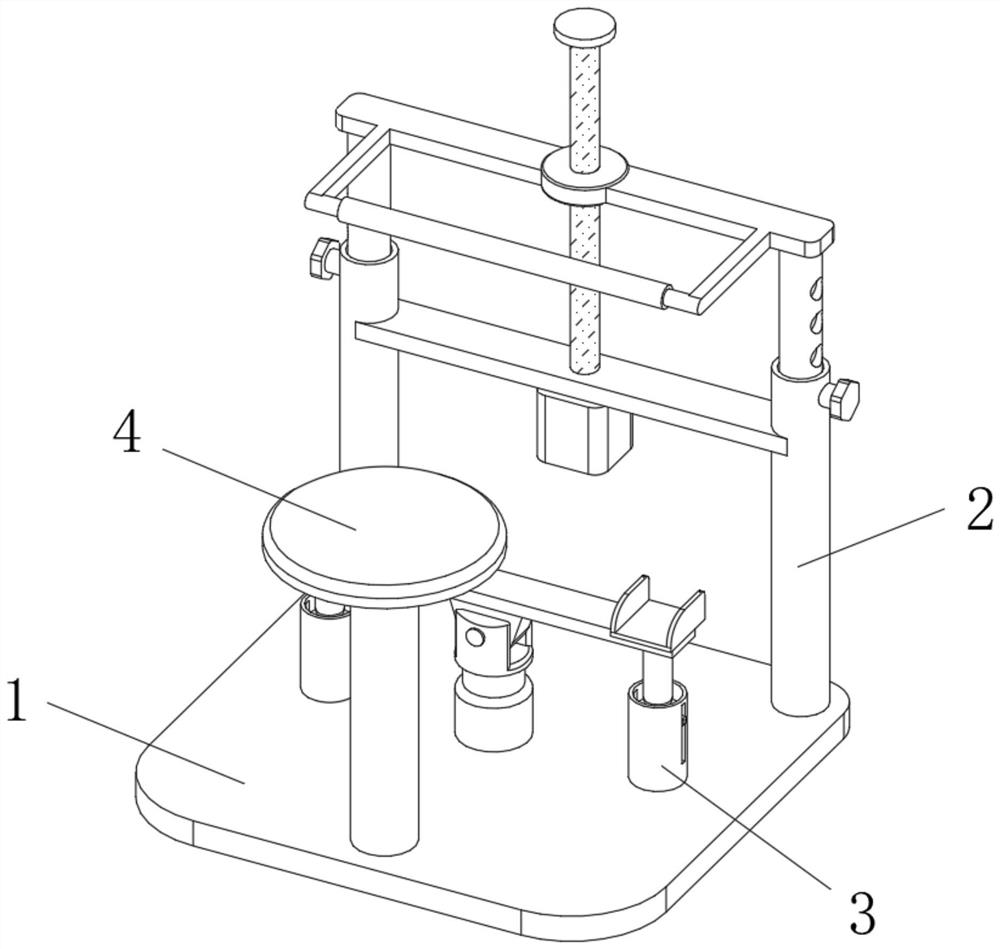
Figure 1 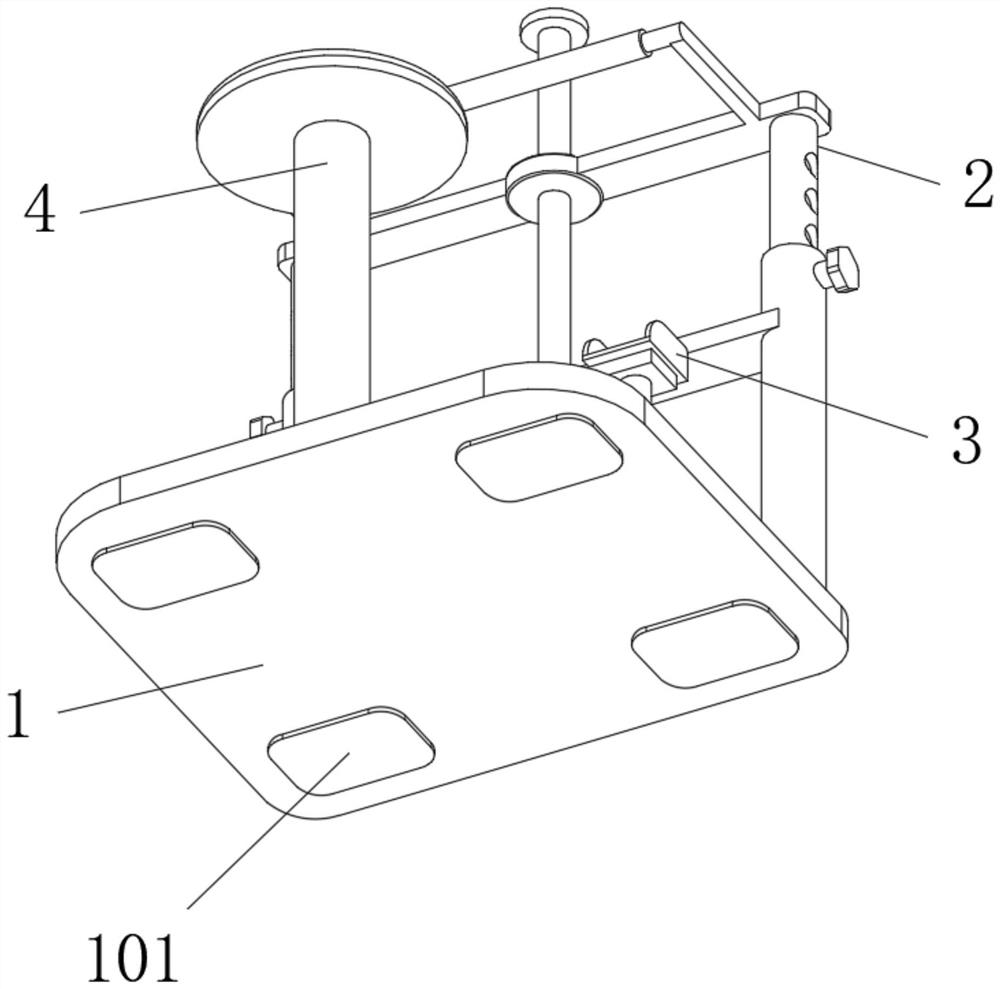
Figure 2 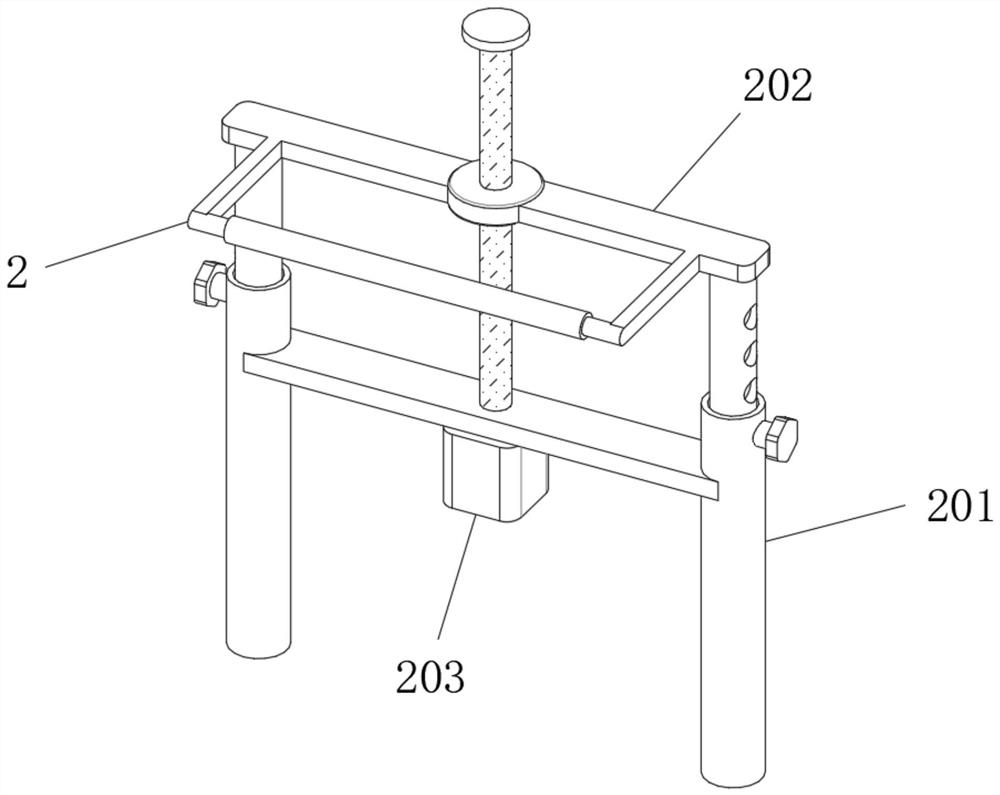
Figure 3
Abstract
Description
technical field
[0001] The invention relates to the technical field of medical neurology, in particular to a lower limb recovery exercise device for neurology. Background technique
[0002] Department of Neurology, mainly diagnoses and treats cerebrovascular diseases (cerebral infarction, cerebral hemorrhage), migraine, brain inflammatory diseases (encephalitis, meningitis), myelitis, epilepsy (convulsions), Parkinson's, epilepsy, cerebral palsy, ataxia , torsional cramp, autism, senile dementia, nervous system degenerative disease, metabolic disease and genetic disease, trigeminal neuralgia, sciatic neuropathy, peripheral neuropathy (numbness and weakness of limbs) and myasthenia gravis and other neurological diseases, diseases of neurological patients It is more common in symptoms such as dyskinesia and incoordination of limb movement. Therefore, it is necessary to restore the lower limbs of the patient. However, the lower limb recovery exercise equipment used in neurology...
Examples
Embodiment 1
[0028] Such as Figure 1-2 As shown, a lower limb recovery exercise device for neurology of the present invention includes a base 1, a support mechanism 2, an exercise mechanism 3 and a stool 4;
[0029] Among them, such as Figure 1-3 As shown, the supporting mechanism 2 includes two limiting components 201, supporting components 202 and adjusting components 203, the supporting component 202 is fixedly installed at the position above the two limiting components 201, and the adjusting component 203 is fixed Installed between the two limiting components 201 and corresponding to the position of the supporting component 202;
[0030] Among them, such as Figure 1-4 As shown, the limit assembly 201 includes a limit support 2011, a limit support 2012, several fixing holes 2013 and a fixing pin 2014, the limit support 2011 is fixedly connected to the top of the placement base 1 , the limit post 2012 is slidably arranged on the inner wall of the limit support tube 2011, a pluralit...
Embodiment 2
[0041] Such as Figure 1-2 As shown, the difference between this embodiment and Embodiment 1 lies in that the four corners of the bottom of the base 1 are fixedly connected with placing pads 101 , and the placing pads 101 are rubber anti-skid pads.
[0042] By adopting the above technical solution, a rubber anti-slip pad is provided on the bottom of the base 1, which greatly increases the stability of the device, thereby ensuring the safety of the patient's exercise, and further improving the practicability of the device.
Embodiment 3
[0044] Such as Figure 1-2 As shown, the difference between this embodiment and embodiment 2 is that the edge of the board surface of the stool 4 is designed in an arc shape, and the board surface is covered with a sponge pad that matches it.
[0045] By adopting the above technical scheme, the patient can sit on the bench for exercise during preliminary exercise, and adding a sponge pad on the bench increases the comfort of the patient when sitting on it.