
Differential humidity sensor based on substrate integrated waveguide doublere-input resonant cavities
A substrate-integrated waveguide and humidity sensor technology, applied in the field of sensors, to achieve the effect of improving sensing sensitivity
Patent Information
- Authority / Receiving Office
- CN · China
- Patent Type
- Applications(China)
- Current Assignee / Owner
- Publication Date
- 2021-12-03
Smart Images
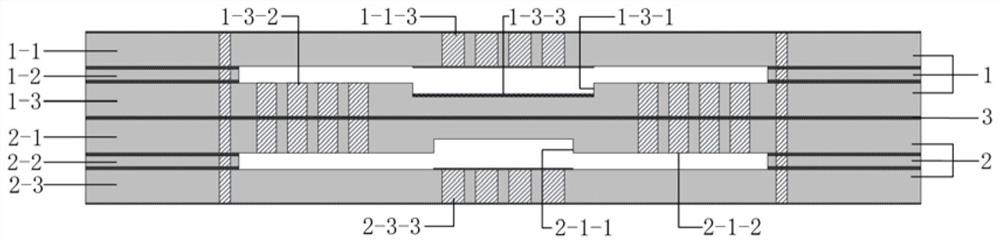
Figure 1 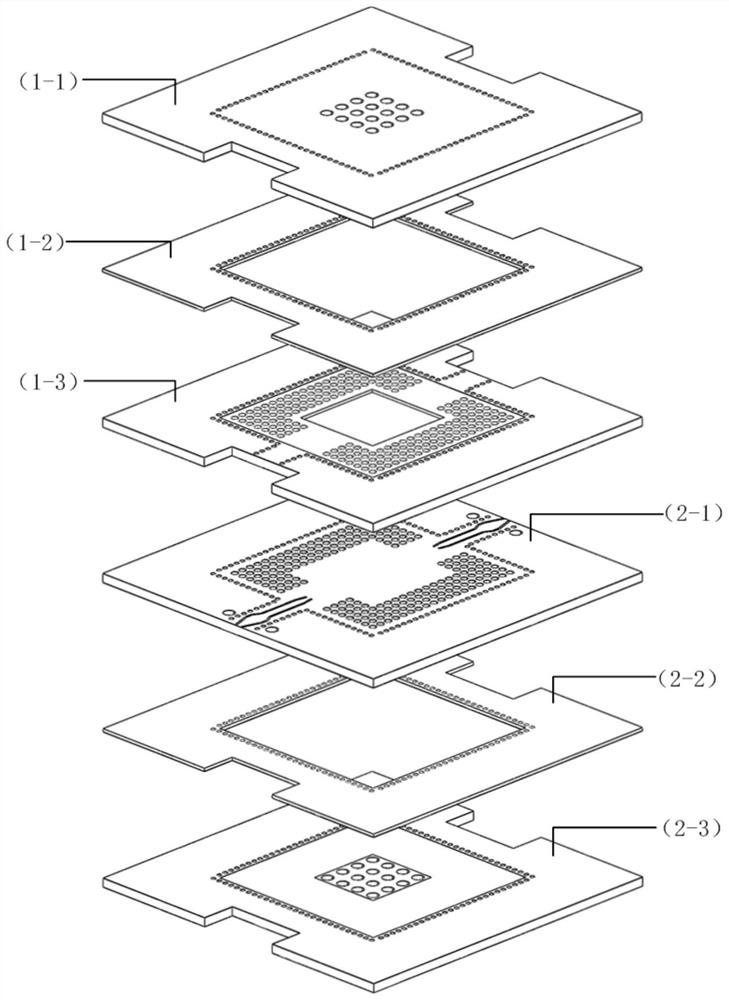
Figure 2 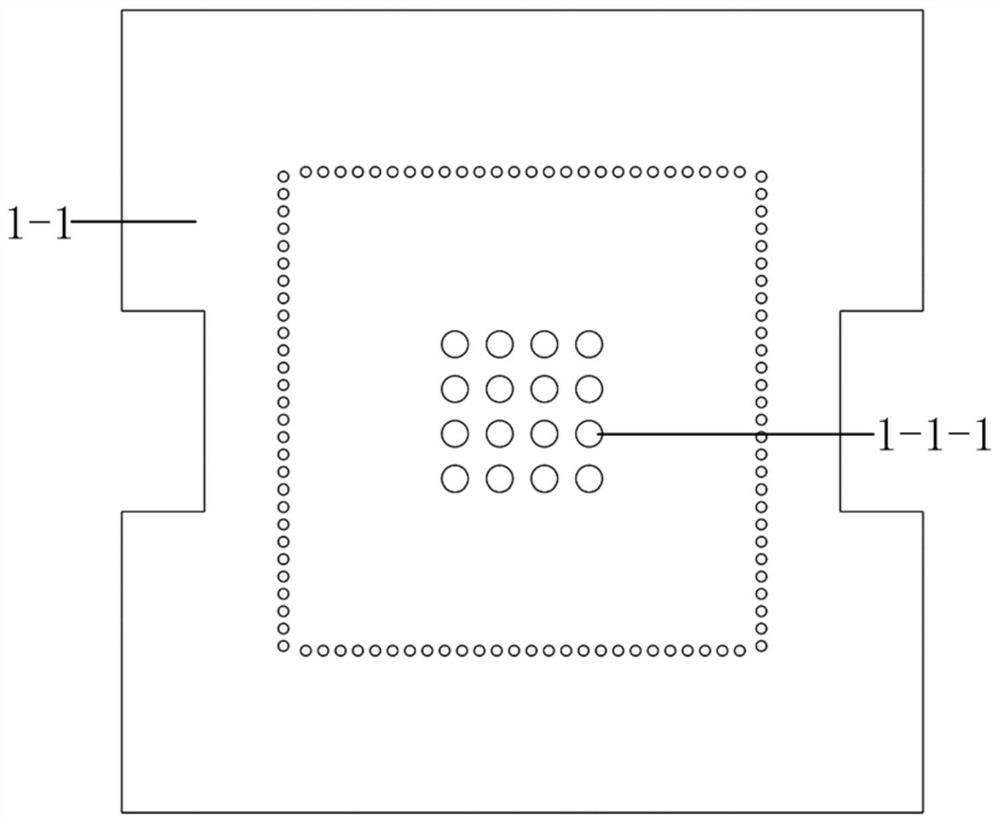
Figure 3
Abstract
Description
technical field
[0001] The invention belongs to the field of sensors, in particular to a microwave passive sensor suitable for detecting air relative humidity. Background technique
[0002] Humidity is an important indicator in environmental quality monitoring. Humidity detection is of great significance in various laboratory and industrial applications, such as electronic equipment manufacturing, food processing, medical storage, pharmaceutical manufacturing, and large-scale equipment operation. higher requirements. Therefore, the development of high-performance humidity sensors has high practical value in many fields.
[0003] Traditional humidity sensors such as resistive sensors, capacitive sensors, and piezoelectric sensors work at relatively low frequencies and cannot be directly applied to modern radio frequency sensing and detection systems. In order to solve this problem, researchers have proposed the design scheme of microwave passive humidity sensor in recent ye...
Examples
Embodiment Construction
[0038] In order to better describe the design process and purpose, the present invention will be further described below in conjunction with the embodiments and accompanying drawings:
[0039] Such as figure 1 As shown in Figure 7(a) and Figure 7(b), the differential humidity sensor based on the substrate-integrated waveguide dual-entry resonant cavity proposed by the present invention includes two resonant cavities stacked up and down and two sections of "coplanar waveguide + strip shape line" feeder (3).
[0040] The upper resonance cavity (1) is composed of an upper dielectric substrate (1-1), an intermediate dielectric substrate (1-2) and a lower dielectric substrate (1-3). The lower resonance cavity (2) is composed of an upper dielectric substrate (2-1), an intermediate dielectric substrate (2-2) and a lower dielectric substrate (2-3). Each dielectric substrate has a three-layer structure of a top metal layer, an intermediate dielectric layer and a bottom metal layer. ...