
Injectable hemostatic cryogel for promoting tissue regeneration and preparation method and application thereof
A tissue regeneration and crystal glue technology, which can be used in applications, pharmaceutical formulations, surgery, etc., can solve the problems of high reactivity and toxicity limit applications, and achieve the effects of promoting wound healing, simple synthesis steps, and cheap and easy-to-obtain raw materials.
Patent Information
- Authority / Receiving Office
- CN · China
- Patent Type
- Applications(China)
- Current Assignee / Owner
- Publication Date
- 2021-12-28
Smart Images
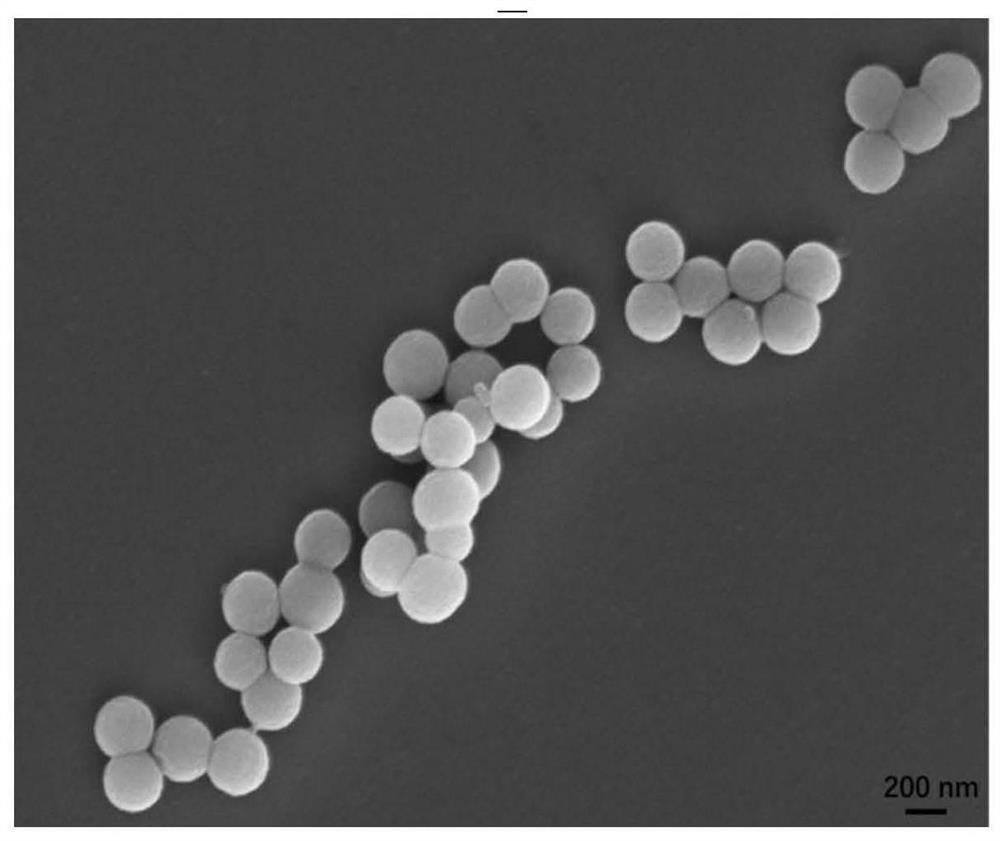
Figure 1 
Figure 2 
Figure 3
Abstract
Description
technical field
[0001] The invention belongs to the technical field of biomedical materials, and in particular relates to an injectable hemostatic gel for promoting tissue regeneration, a preparation method and application thereof. Background technique
[0002] Bleeding complications from trauma, surgery, congenital disorders, or drug-induced blood disorders result in significant morbidity and mortality. Hemorrhage has been reported to be responsible for more than 30% of traumatic mortality. Therefore, timely hemostasis is of great significance in emergency situations such as battlefields, operations, and car accidents. In these emergencies, rapid hemostasis cannot be achieved by the body's hemostatic mechanisms alone. Appropriate hemostatic agents are therefore needed to promote, enhance, compensate or mimic the natural mechanisms of hemostasis. Non-compressive bleeding accounts for 50% of deaths from bleeding. In the battlefield, wounds caused by bullets, bombs, and ex...
Examples
Embodiment 1
[0038] 1 mL of ammonia solution, 20 mL of absolute ethanol and 45 mL of deionized water were stirred at room temperature for 20 minutes. Then, 5 mL of dopamine hydrochloride solution with a concentration of 50 mg / mL was quickly added to the above mixed solution. After 1 minute, the solution color changed to pale yellow. After vigorous stirring at room temperature for 20 hours, the resulting solution turned dark brown. Finally, polydopamine nanoparticles were obtained by centrifugation and washed three times with deionized water. The product is detected by scanning electron microscopy as nanospheres with a particle size of about 200nm to 300nm, such as figure 1 shown.
Embodiment 2
[0040] 1.5 mL of ammonia solution, 20 mL of absolute ethanol and 40 mL of deionized water were stirred at room temperature for 30 minutes. Then, 4 mL of dopamine hydrochloride solution with a concentration of 40 mg / mL was quickly added to the above mixed solution. After 1 minute, the solution color changed to pale yellow. After vigorous stirring at room temperature for 12 hours, the resulting solution turned dark brown. Finally, polydopamine nanoparticles were obtained by centrifugation and washed three times with deionized water. Its physical and chemical properties are similar to Example 1.
Embodiment 3
[0042] Stir 0.5 mL of ammonia solution, 20 mL of absolute ethanol, and 30 mL of deionized water at room temperature for 10 minutes. Then, 6 mL of dopamine hydrochloride solution with a concentration of 20 mg / mL was quickly added to the above mixed solution. After 1 minute, the solution color changed to light yellow. After vigorous stirring at room temperature for 24 hours, the resulting solution turned dark brown. Finally, polydopamine nanoparticles were obtained by centrifugation and washed three times with deionized water. Its physical and chemical properties are similar to Example 1.
[0043] Preparation of oxidized dextran