
Method for preparing mono dispersed micrograde polymer microsphere
A micron-scale, polymer technology, applied in the field of preparation of monodisperse micron-scale polymers, can solve the problems of difficult to obtain monodisperse polymer microspheres, small particle size of microspheres, large heat consumption, etc., to avoid secondary Nucleation and process requirements are simple, and the effect of improving monodispersity
Patent Information
- Authority / Receiving Office
- CN · China
- Patent Type
- Applications(China)
- Current Assignee / Owner
- Publication Date
- 2006-12-13
- Estimated Expiration
- Not applicable · inactive patent
Smart Images
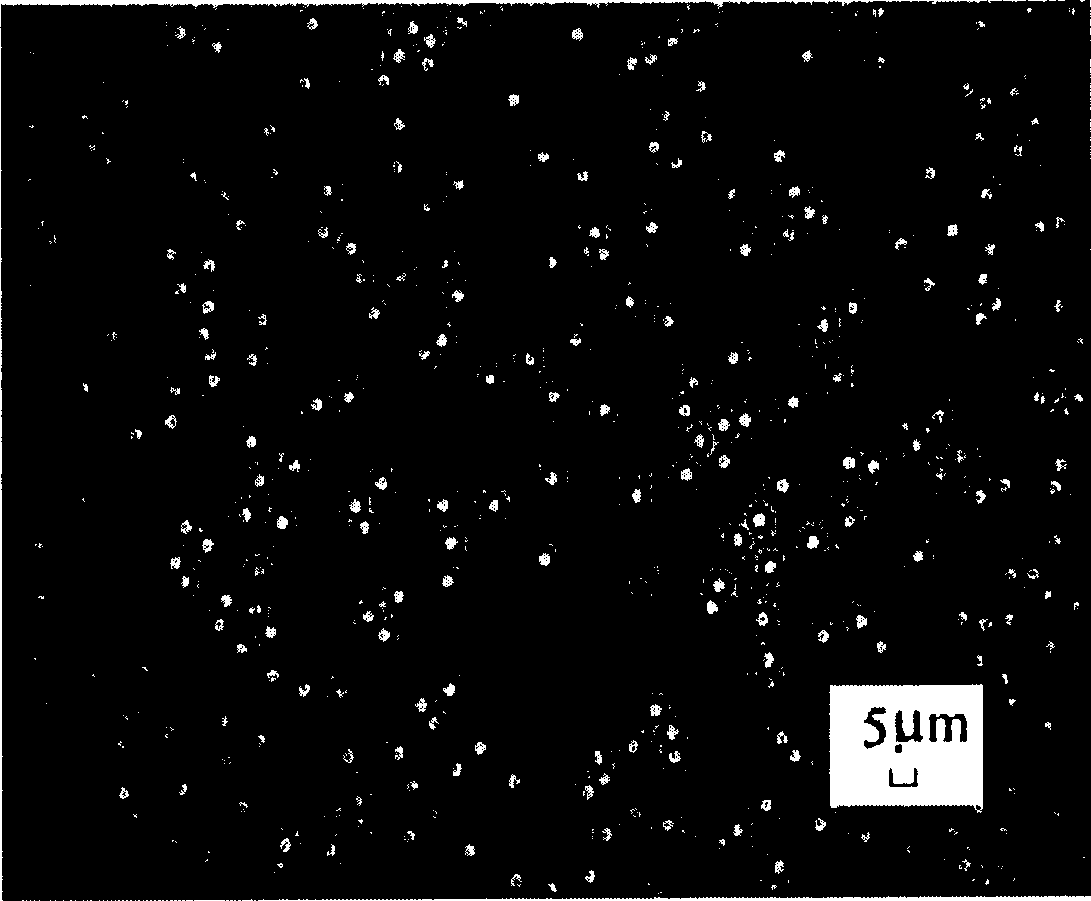
Figure 1 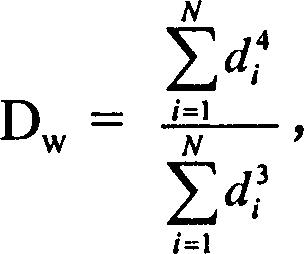
Figure 2 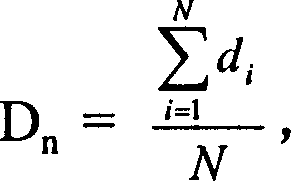
Figure 3
Abstract
Description
technical field
[0001] The invention relates to a preparation technology of a monodisperse micron-scale polymer, and the microsphere can be applied to the fields of standard metering, chromatographic packing, chemical analysis and the like. Background technique
[0002] Due to its special size requirements and wide application, monodisperse microspheres have been studied a lot on their preparation methods, and the preparation methods involved are also various. For monodisperse microspheres with a size of micron, the usual preparation methods are seed swelling polymerization and dispersion polymerization. The main disadvantage of seed swelling polymerization is that the process cycle is long and the steps are complicated. The dispersion polymerization method can obtain monodisperse polymer microspheres by one-step process, so it has attracted people's attention.
[0003] People such as Huang Wenqiang of Nankai University (patent application number: 200410072867.4) adopt the...
Examples
Embodiment 1
[0027] In a 250mL four-necked reaction flask with a condenser, add 60g of absolute ethanol, 30g of styrene, 0.3g of AIBN, and 1.2g of PVP K-30 to form a transparent solution. Pass N 2 After 15 minutes, the reaction system was heated to raise the temperature to 70°C. When the temperature rises to 70°C, start timing. After the reaction was carried out for 1 hour, 1 mL of a 10 g / L ethanol solution of p-benzoquinone was added. The reaction was continued for 12 hours and stopped. Separate the obtained emulsion with a centrifuge, remove the supernatant, add ethanol and water to wash, repeat several times, and finally dry the product at low temperature to obtain a polymer microsphere sample with a particle size of 3.6 μm and a dispersion coefficient of 1.10. Good dispersion. SEM photo see figure 1 .
Embodiment 2
[0029] In a 250mL four-necked reaction flask with a condenser, add 60g of 95% ethanol, 15g of styrene, 0.2g of AIBN, and 0.6g of PVP K-30 to form a transparent solution. Pass N 2 After 15 minutes, the reaction system was heated to raise the temperature to 75°C. start the timer. After the reaction was carried out for 2 hours, 0.5 mL of a 10 g / L ethanol solution of p-benzoquinone was added. The reaction was continued for 12 hours and stopped. Separate the obtained emulsion with a centrifuge, remove the supernatant, add ethanol and water to wash, repeat several times, and finally dry the product at low temperature to obtain a polymer microsphere sample with a particle size of 3.1 μm and a dispersion coefficient of 1.04. Good dispersion.
Embodiment 3
[0031] In a 250mL four-necked reaction flask with a condenser, add 60g of anhydrous methanol, 20g of methyl methacrylate, 0.2g of AIBN, and 1.0g of PVP K-30 to form a transparent solution. Pass N 2 After 15 min, the reaction temperature was raised to 70 °C. Start timing, and after the reaction has been carried out for 2 hours, add 1 mL of a 10 g / L ethanol solution of p-benzoquinone. After the reaction was continued for 12 hours, the reaction was stopped. Centrifuge the obtained emulsion, remove the supernatant, add ethanol and water to wash, repeat several times, and finally dry the product at low temperature to obtain a polymer microsphere sample with a particle size of 2.4 μm, a dispersion coefficient of 1.02, and a monodisperse it is good.