
Writing brush calligraphy character seach method
A calligraphy character and calligraphy technology, applied in the field of digital image retrieval, can solve problems such as difficult identification, no unified template, and difficulty in labeling calligraphy characters
Patent Information
- Authority / Receiving Office
- CN · China
- Patent Type
- Applications(China)
- Current Assignee / Owner
- Publication Date
- 2007-02-28
- Estimated Expiration
- Not applicable · inactive patent
Smart Images
Figure 1 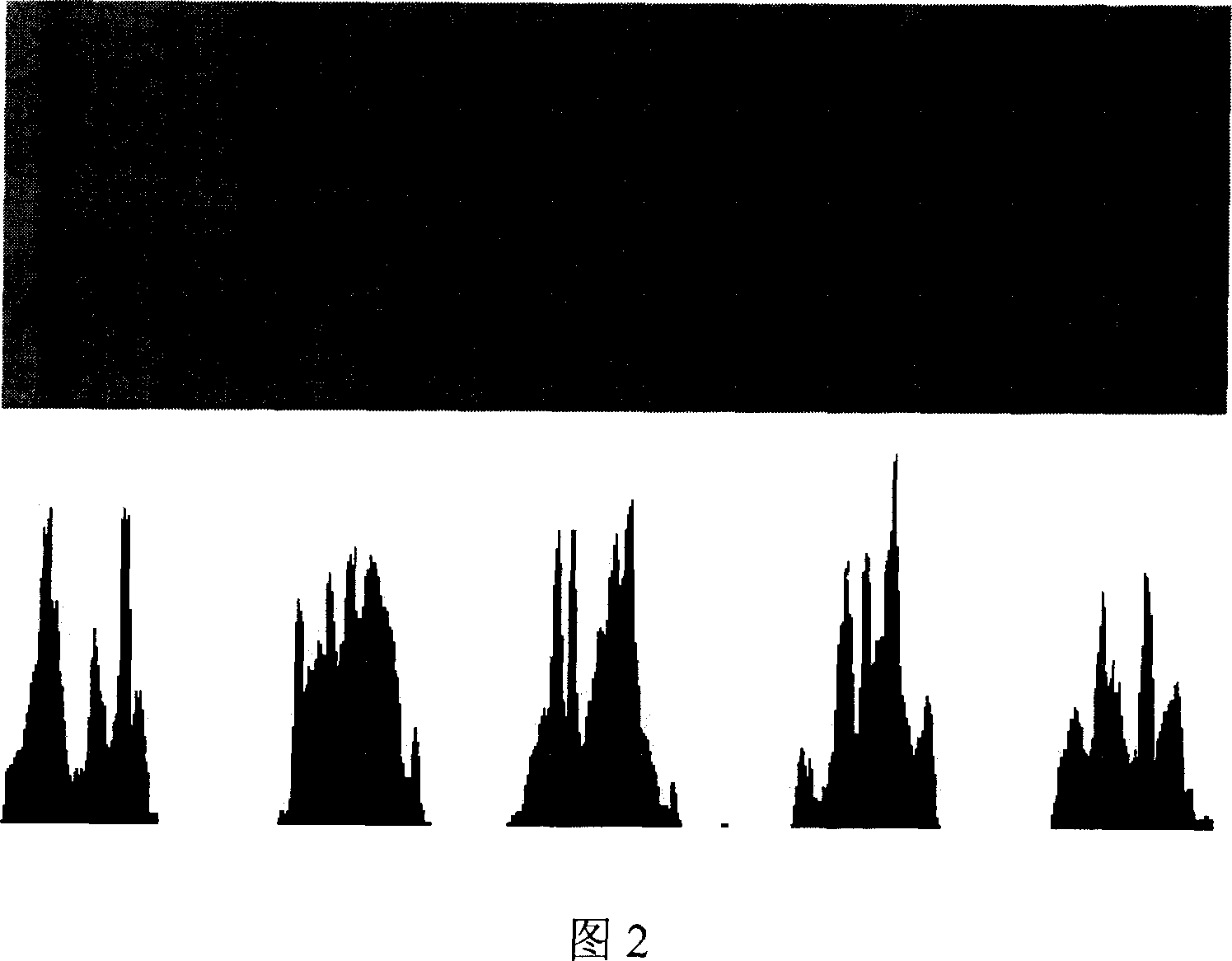
Figure 2 
Figure 3
Abstract
Description
technical field
[0001] The invention relates to digital image retrieval, in particular to a brush calligraphy character retrieval method. Background technique
[0002] The 5,000-year culture of the Chinese nation has left many excellent calligraphy works, such as Wang Xizhi's "Lanting Collection Preface" and Yan Zhenqing's "Duobao Pagoda". Each of these original works is unique, previously existing on paper, silk, or stone, and is protected because of its fragility, stored in a museum, and the public is not allowed to browse at will. The digitization and network storage of calligraphy works provide a second storage medium for historical calligraphy works, which helps the masses to appreciate and understand national culture conveniently. Therefore, calligraphy works are an important part of the digital library project with Chinese characteristics. However, at present, the retrieval function of calligraphy works on the Internet is only for retrieval of marked metadata inform...
Examples
Embodiment 1
[0106] (1) First carry out vertical projection to the page image of the digitized calligraphy work scanned, as shown in Fig. 2; then carry out horizontal projection. Calculate the minimum bounding box of calligraphy characters according to the projection gap, as shown in Figure 2, and a single calligraphy character image segmented along the minimum bounding box, as shown in Figure 4;
[0107] (2) calligraphic word image normalization size is the image of 45 * 45 pixel points, the image after binarization normalization;
[0108] (3) Type identification of calligraphy works, identifying calligraphy works as "calligraphy" or "tuobei": the purpose is to identify which color is the color of calligraphy characters and which color is the background color, so as to extract the correct features; Draw a scanning line on the edge of the word, count the number of colors on the scanning line, then the number of background colors is much greater than the number of foreground colors. Theref...
Embodiment 2
[0118] (1) same as embodiment 1 from step 1 to step 7;
[0119] (2) Fig. 12 is the retrieval result that submits a zigzag image that imports from disk;
[0120] (3) Figure 13 shows clicking the small icon on the bottom right side of the word "Zhi" in the first row and first column of the search results, and a new window pops up to browse the page of the original work where the calligraphy character is located;
Embodiment 3
[0122] (1) same as embodiment 1 from step 1 to step 7;
[0123] (2) Fig. 14 draws a sketch of the word "言" with the mouse, and submits it as a sample;
[0124] (3) Figure 15 is the retrieval result after submitting the simplified diagram of the word "言" in Figure 14 as a sample;
[0125] (4) Figure 16 shows clicking the small icon on the bottom right side of the word "言" in the last row and last column of the retrieval results in Figure 15, and a new window pops up to browse the page of the original work where the calligraphy character is located.