
Dual-basket self-centering rotational device for treatment of arterial occlusive disease with infinitely adjustable cutting size
a self-centering, cutting-size technology, applied in the field of dual-basket self-centering rotational devices for treating arterial occlusive disease, can solve the problems of ineffective angioplasty or stenting, increased risk of vascular injuries, and increased risk of plaque dissection
Patent Information
- Authority / Receiving Office
- US · United States
- Patent Type
- Patents(United States)
- Current Assignee / Owner
- Publication Date
- 2019-07-23
Smart Images
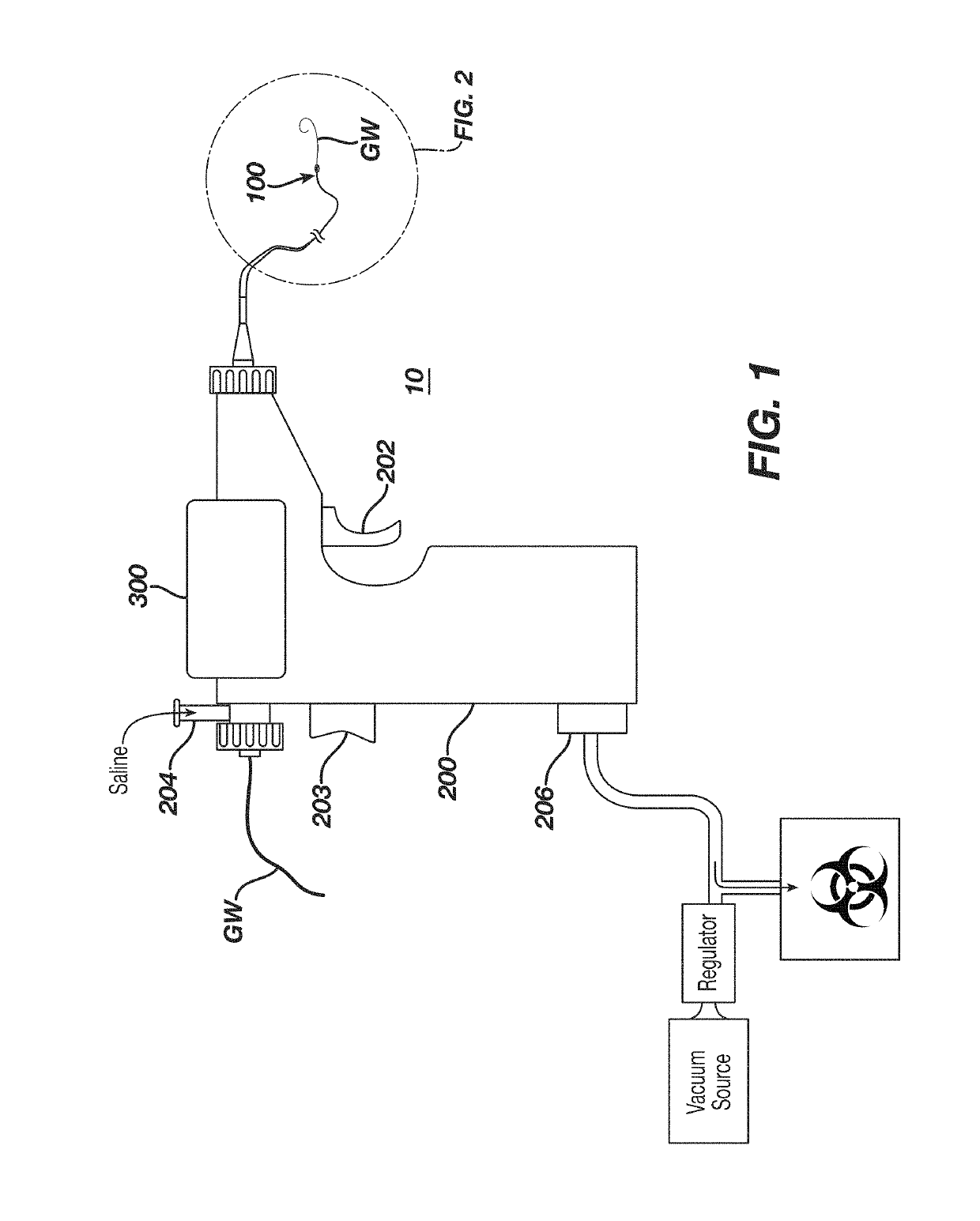
Figure 1 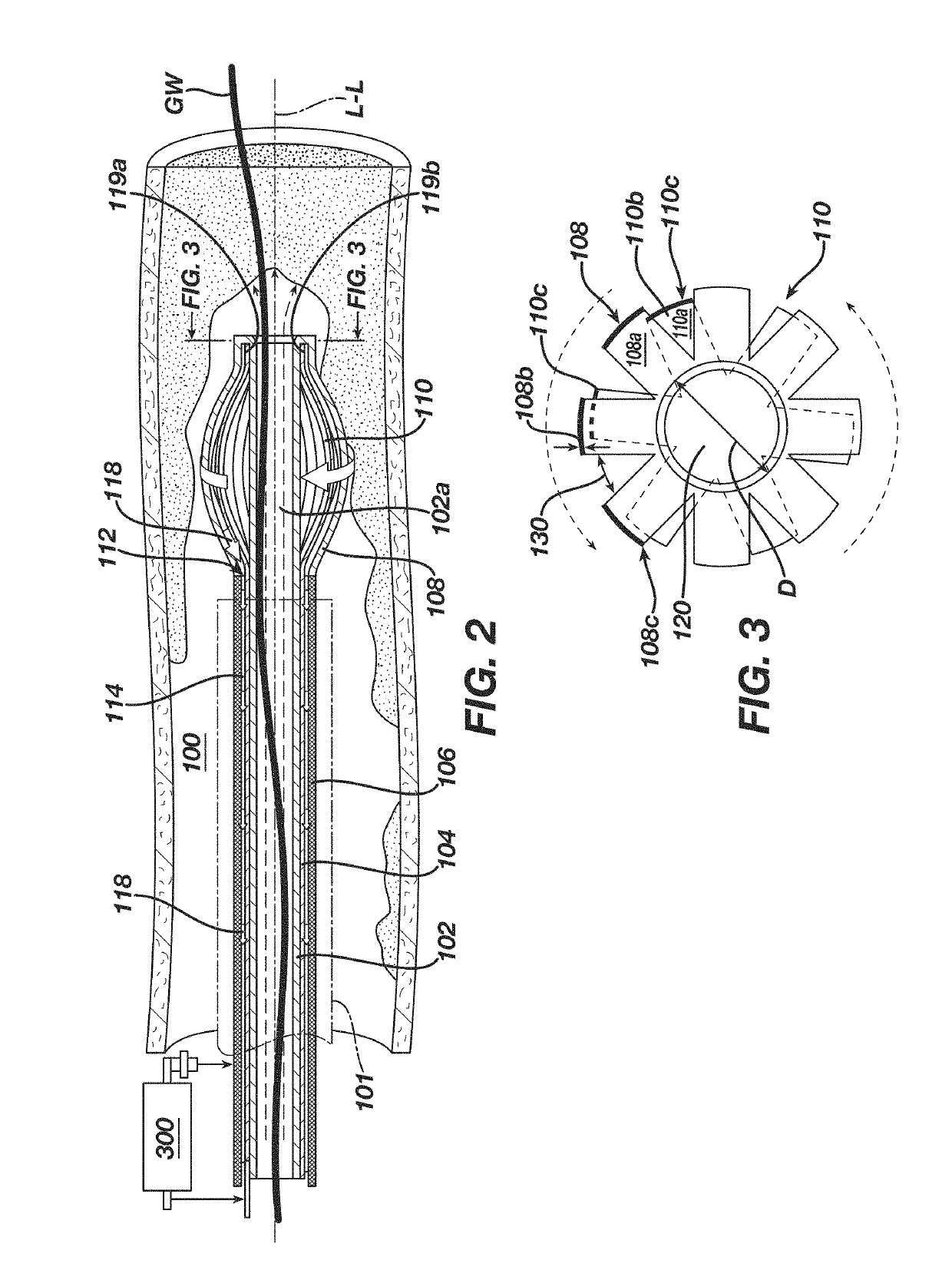
Figure 2 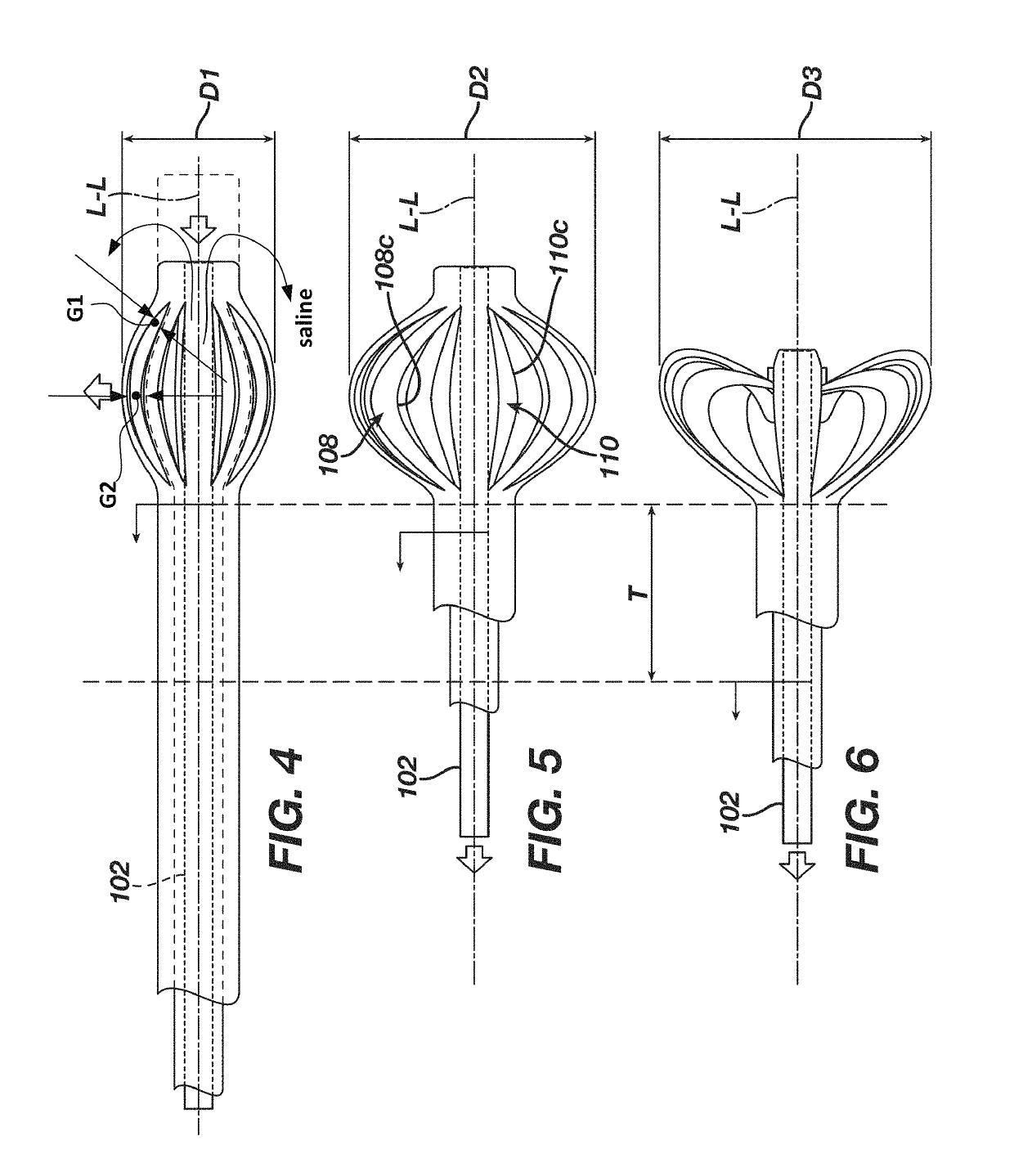
Figure 3
Abstract
Description
BACKGROUND
[0001] For certain arterial diseases (e.g., peripheral arteries including the iliac, femoral, popliteal and tibial arteries) where plaques have built up onto the internal surface of blood vessel walls or thrombus in some cases (i.e., arterial occlusive disease), it is known to use a variety of techniques to improve blood flow through these vessels including, for example, angioplasty, stents or atherectomy. Angioplasty or stenting is believed to be ineffective when plaques may include irregular, loose or calcified deposits as these techniques simply compress the plaques further into the blood vessel walls with the attendant risk of vascular injuries. Atherectomy, on the other hand, where the plaque is physically removed, is believed to be more effective for calcified, fibrotic, as well as soft or longer lesions or lesions involving side branches in the peripheral arteries. The benefit of atherectomy is believed to arise from a reduction of plaque burden on the arterial wall ...
Examples
Embodiment Construction
[0021]The following detailed description should be read with reference to the drawings, in which like elements in different drawings are identically numbered. The drawings, which are not necessarily to scale, depict selected embodiments and are not intended to limit the scope of the invention. The detailed description illustrates by way of example, not by way of limitation, the principles of the invention. This description will clearly enable one skilled in the art to make and use the invention, and describes several embodiments, adaptations, variations, alternatives and uses of the invention, including what is presently believed to be the best mode of carrying out the invention.
[0022]As used herein, the root terms “distal” or “proximal” are referenced in relation to a user in which “distal” indicates that certain parts or components are further away to the user and “proximal” indicates that certain parts or components are closer to the user. It is noted that the terms “about” or “a...