
Method for operating a hearing device and hearing device
a hearing device and hearing technology, applied in the field of operation of hearing devices and hearing devices, can solve the problems of greatly underdeveloped orientation activity in humans, and achieve the effects of reducing the size of the electrode array, ensuring the suitability of the hearing device and the method for everyday use, and ensuring the accuracy of measurement of muscle activity
Patent Information
- Authority / Receiving Office
- US · United States
- Patent Type
- Patents(United States)
- Current Assignee / Owner
- Publication Date
- 2020-03-31
Smart Images
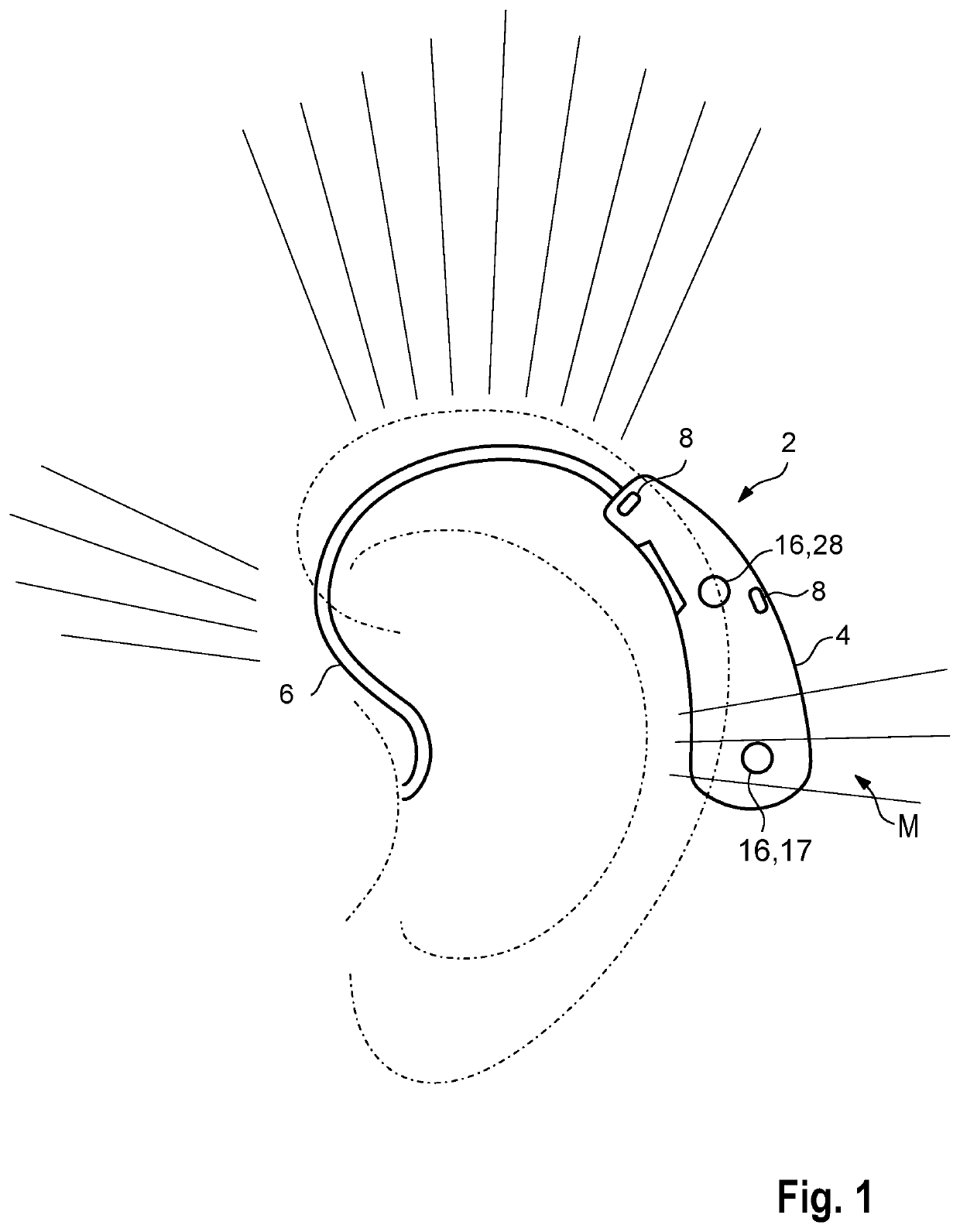
Figure 1 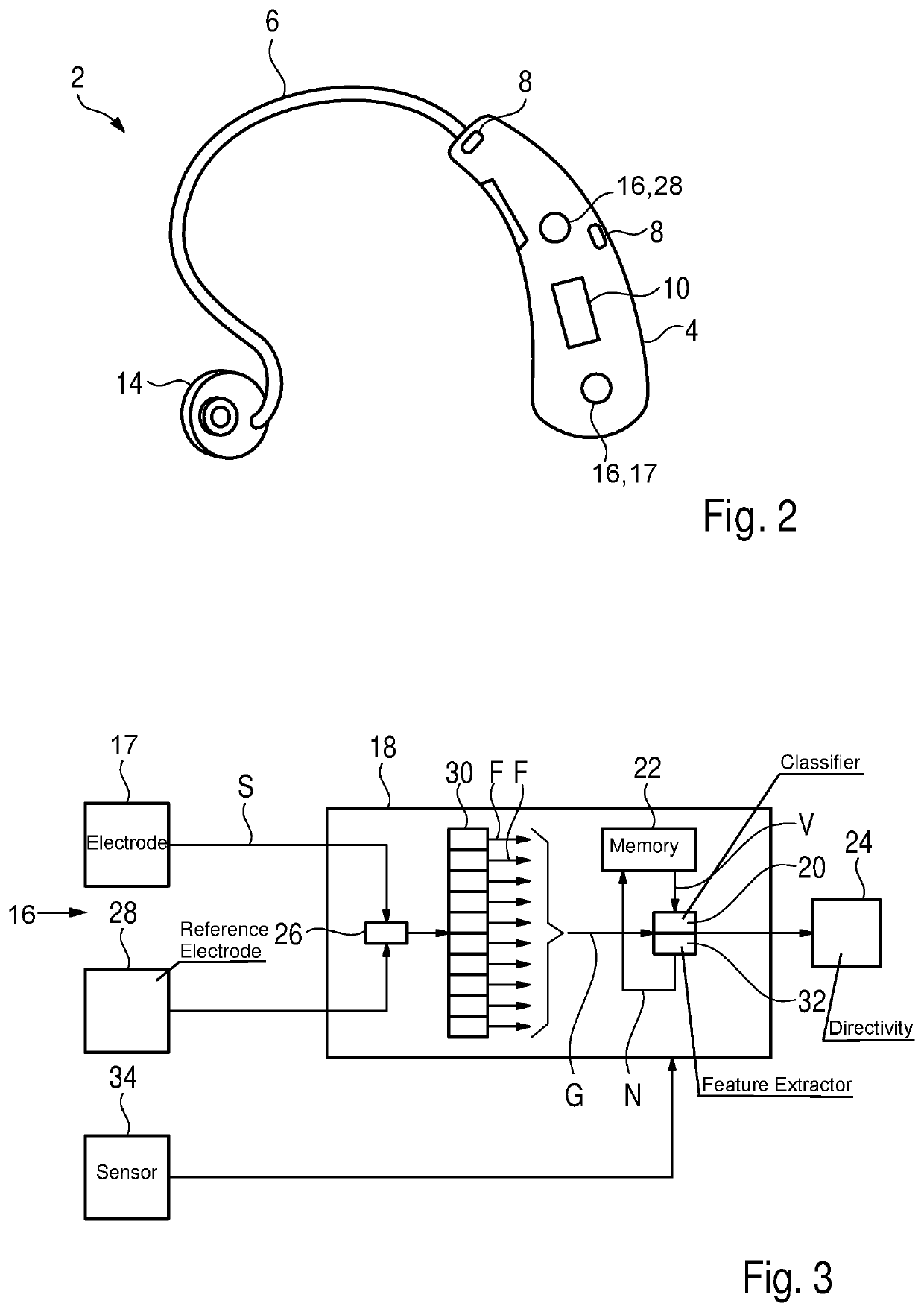
Figure 2 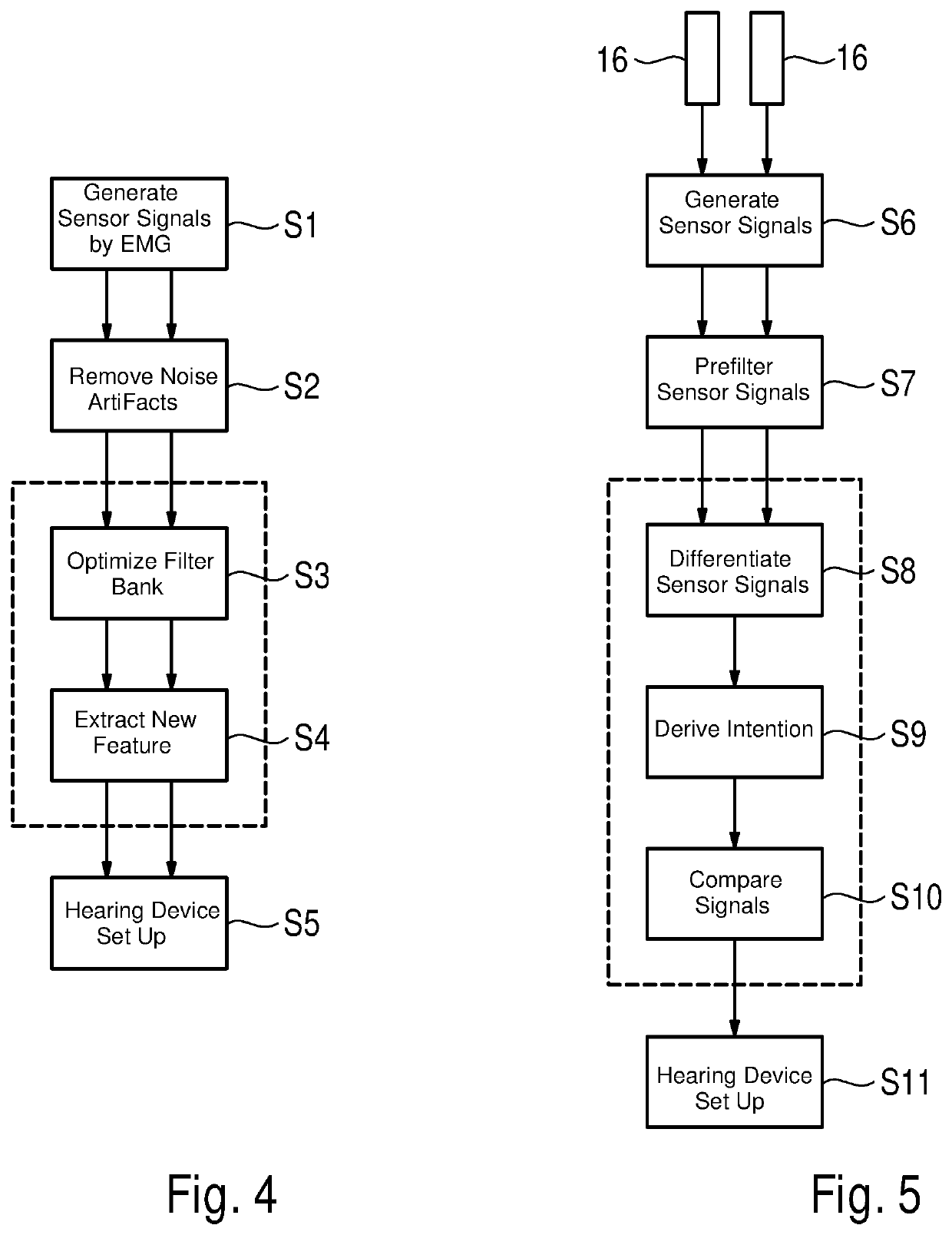
Figure 3
Abstract
Description
CROSS-REFERENCE TO RELATED APPLICATION
[0001] This application claims the priority, under 35 U.S.C. § 119, of German application DE 10 2017 214 164.6, filed Aug. 14, 2017; the prior application is herewith incorporated by reference in its entirety.BACKGROUND OF THE INVENTIONField of the Invention
[0002] The invention relates to a method for operating a hearing device and to a corresponding hearing device.
[0003] A hearing device generally serves to reproduce a sound signal in the direction of a user's ear. The hearing device is worn for this purpose in or on the ear and has a receiver via which a sound is output. A hearing device is especially used to care for a hearing-impaired user. Such a hearing device usually has a number of microphones for receiving sound signals from the environment, and a signal processing unit that appropriately modifies the received sound signals, in particular amplifies them, and then forwards them to the receiver for output.
[0004] The benefit of such a hearing ...
Examples
Embodiment Construction
[0091]Referring now to the figures of the drawings in detail and first, particularly to FIG. 1 thereof, there is shown a hearing device 2, which is worn behind an ear 0 of a user (not otherwise shown). The hearing device 2 is shown in more detail in FIG. 2. The hearing device 2 here is a BTE hearing device, with a housing 4 worn behind the ear 0, from which a sound tube 6 extends into the ear canal. The hearing device 2 also has a number of microphones 8 that record sound signals from the user's environment. These sound signals are then modified, and in particular amplified, by a control unit 10, and are then output via a receiver 12. From the receiver 12, the modified sound signals then pass through the sound tube 6 into the ear 0. For the secure holding of the sound tube 6, an earpiece 14, which is inserted into the ear canal, is attached to the end of the tube.
[0092]The hearing device 2 is operated by a method in which electromyography (EMG for short) is carried out, muscle activ...