
Source-consistent techniques for predicting absolute perceptual video quality
a technology of absolute perceptual video and source consistency, applied in the field of video technology, can solve the problems of inability to accurately predict the visual prohibitively time-consuming manual verification, and the inability to accurately predict the quality of decoded video content, etc., to achieve meaningful comparison and effective optimization operations
Patent Information
- Authority / Receiving Office
- US · United States
- Patent Type
- Patents(United States)
- Current Assignee / Owner
- Publication Date
- 2020-10-06
Smart Images
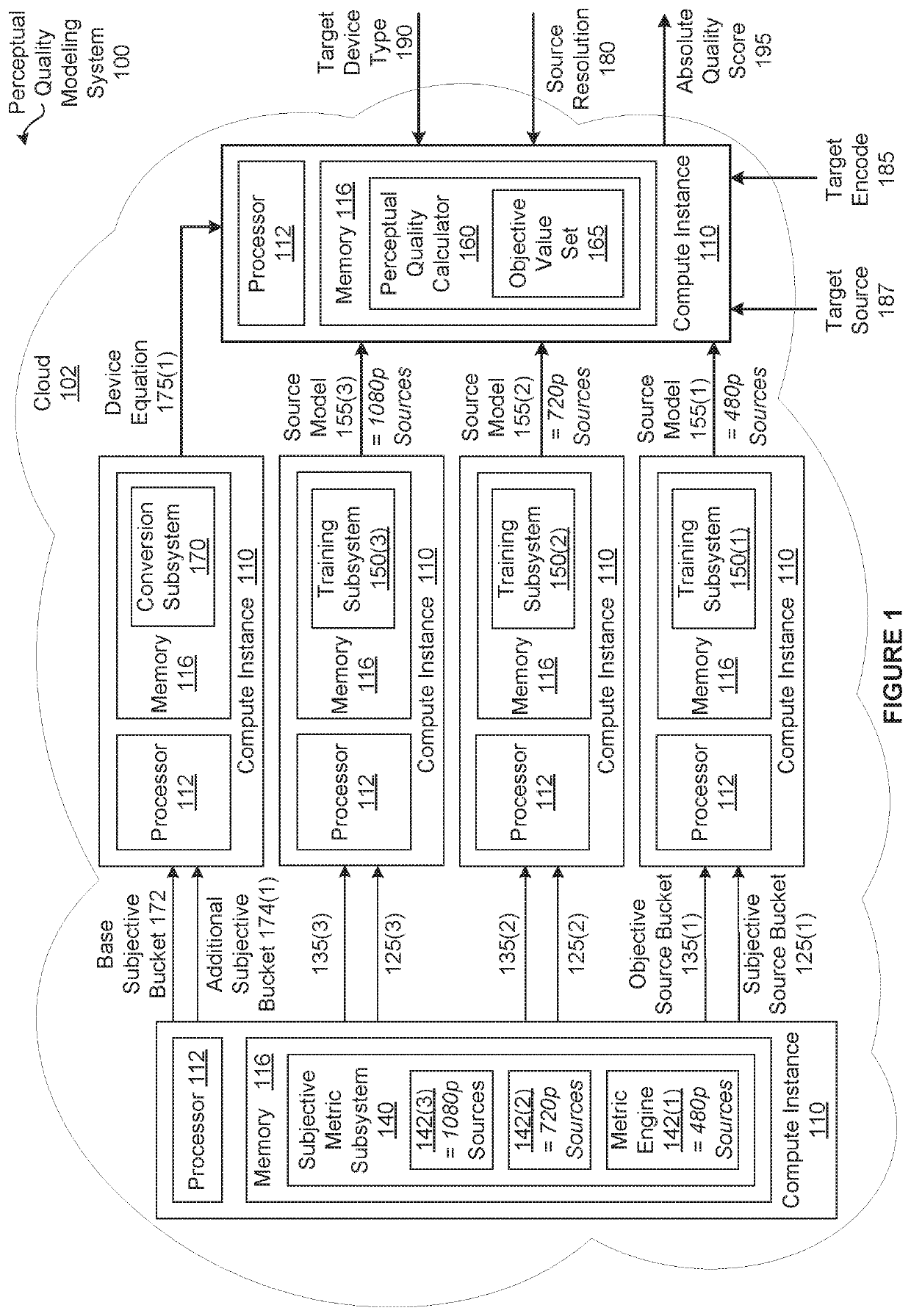
Figure 1 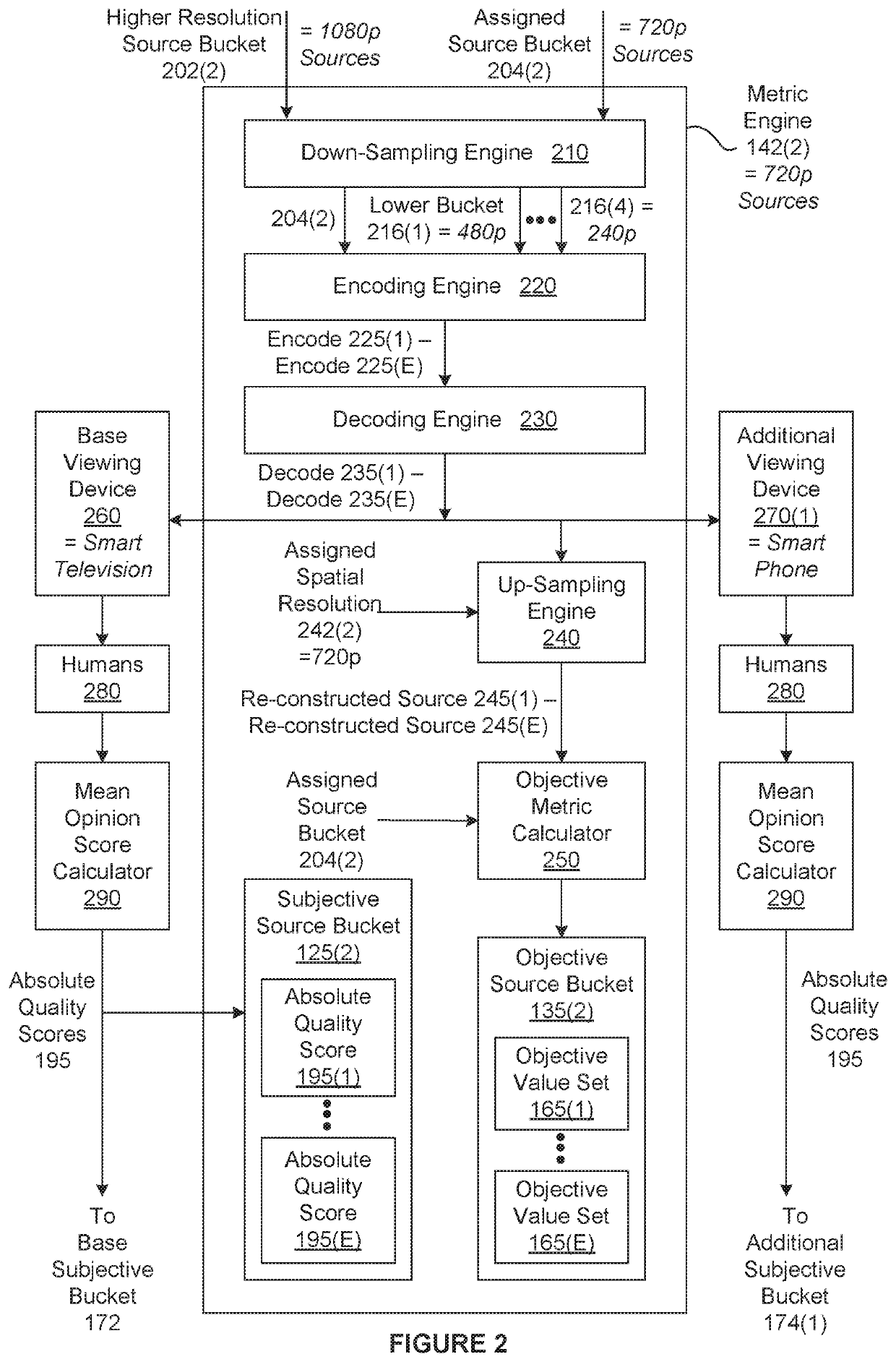
Figure 2 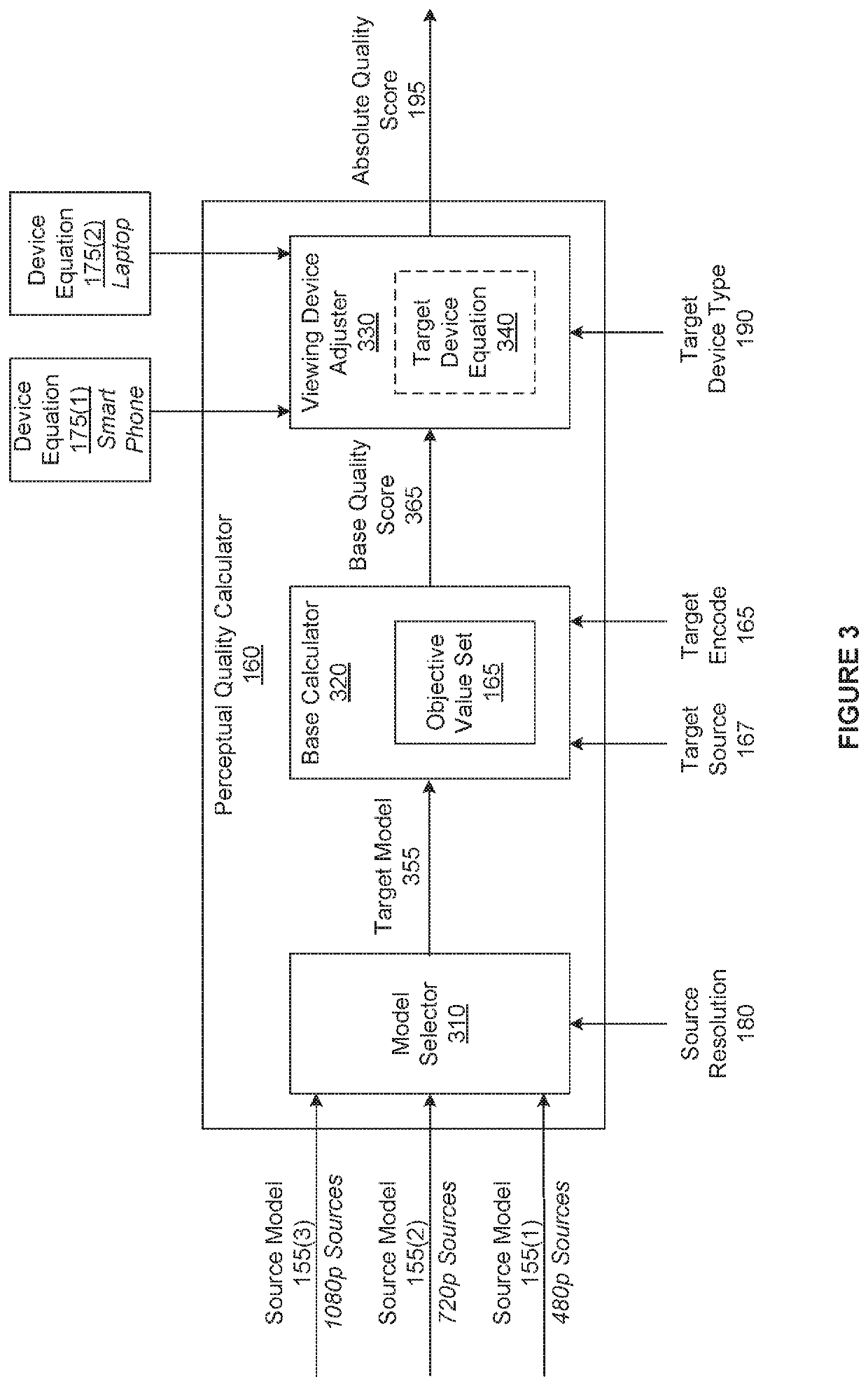
Figure 3
Abstract
Description
CROSS-REFERENCE TO RELATED APPLICATIONS
[0001] This application claims priority benefit of the United States Provisional Patent Application titled, “SOURCE-CONSISTENT AND PER-DEVICE VIDEO QUALITY ASSESSMENT,” filed on Dec. 12, 2016 and having Ser. No. 62 / 432,870. The subject matter of this related application is hereby incorporated herein by reference.BACKGROUND OF THE INVENTIONField of the Invention
[0002] Embodiments of the present invention relate generally to video technology and, more specifically, to source-consistent techniques for predicting absolute perceptual video quality.Description of the Related Art
[0003] Efficiently and accurately encoding source video content is critical for real-time delivery of high-quality video content. Because of variations in encoded video content quality, it is desirable to implement quality controls to ensure that the visual quality of decoded video content derived from the encoded video content is acceptable. Manually verifying the visual quality...
Examples
Embodiment Construction
[0016]In the following description, numerous specific details are set forth to provide a more thorough understanding of the present invention. However, it will be apparent to one of skilled in the art that the present invention may be practiced without one or more of these specific details.
[0017]In sum, the disclosed techniques may be used to efficiently and reliably predict an absolute quality score for encodes derived from sources. Initially, for each of any number of different spatial resolutions, a training subsystem trains a corresponding source model based on training sources having the spatial resolution. For an encode derived from a source having a particular spatial resolution, the source model corresponding to the spatial resolution associates an objective value set for the encode and absolute quality score for the encode viewed on a base viewing device. For each of any number of additional device types, a conversion subsystem generates a corresponding device equation base...