
Method and kit for detecting resistance to anitviral drugs
a technology of anitviral drugs and kits, which is applied in the field of methods and kits for detecting resistance to anitviral drugs, can solve the problems of inability to cure this disease, hiv virus rapid development of resistance to a wide variety, and labor-intensive and time-consuming assays for phenotypic resistance analysis, etc., and achieves rapid detection of drug resistance, not labor-intensive, and reliable results
Patent Information
- Authority / Receiving Office
- US · United States
- Patent Type
- Applications(United States)
- Current Assignee / Owner
- Publication Date
- 2005-08-04
- Estimated Expiration
- Not applicable · inactive patent
Smart Images
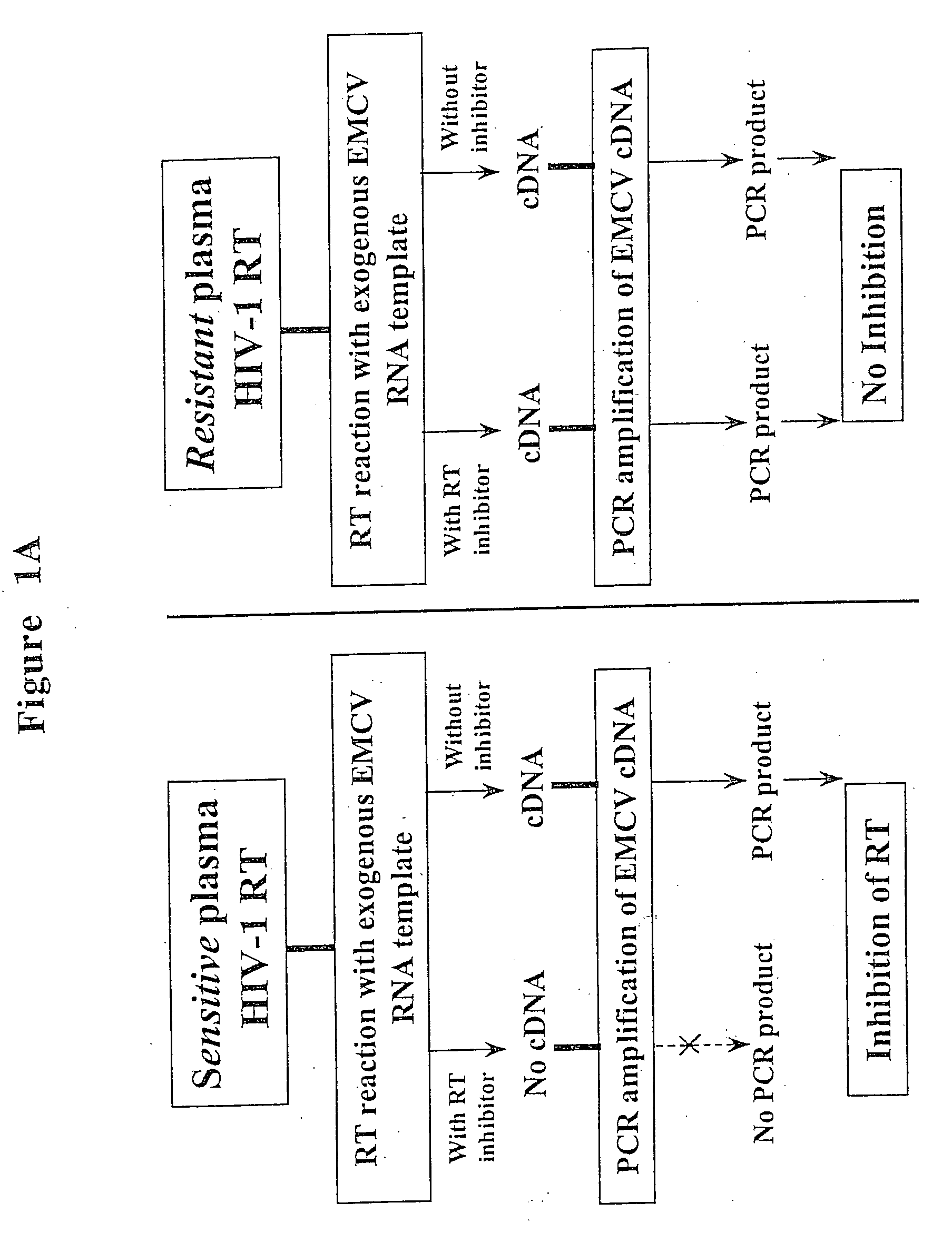
Figure 1 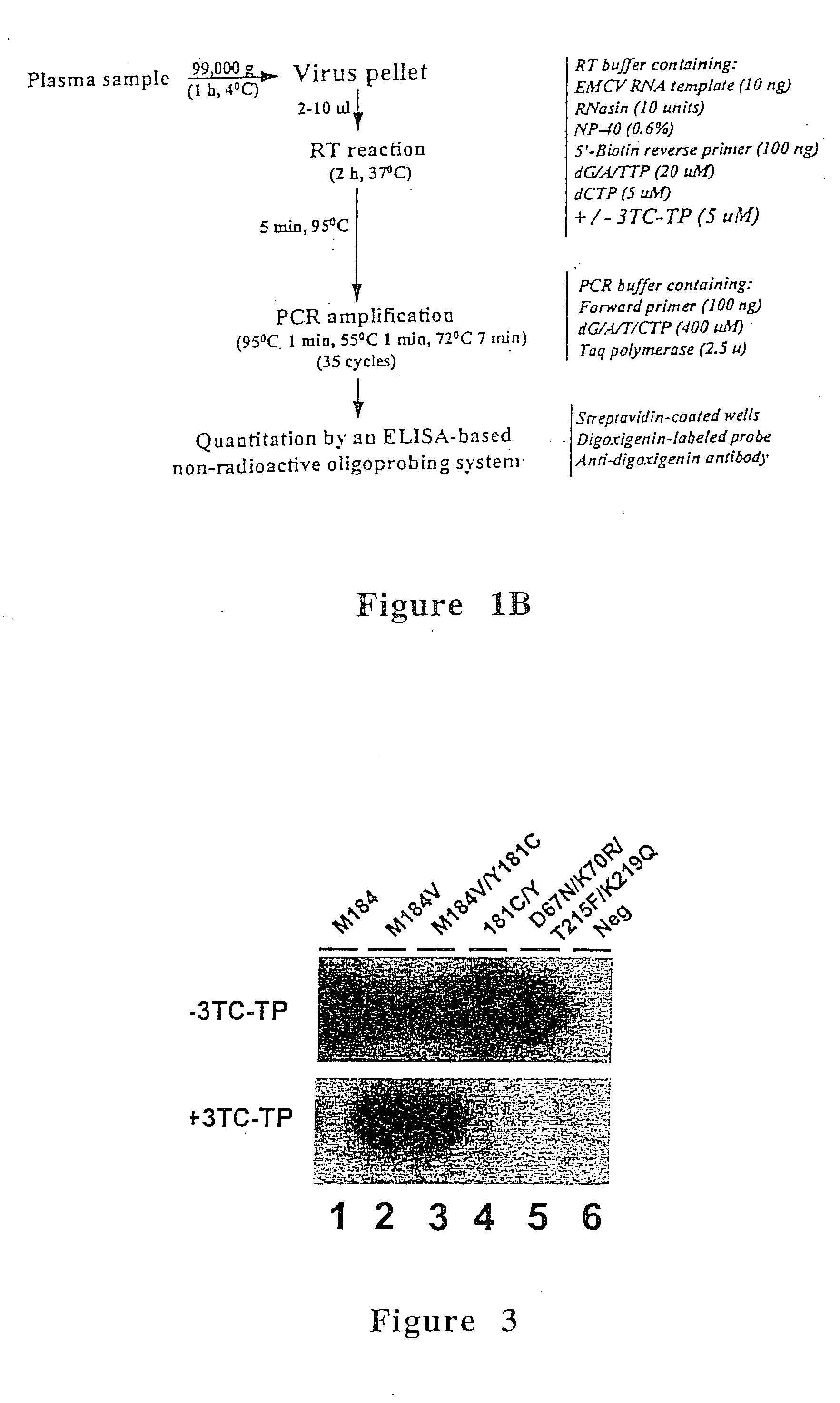
Figure 2 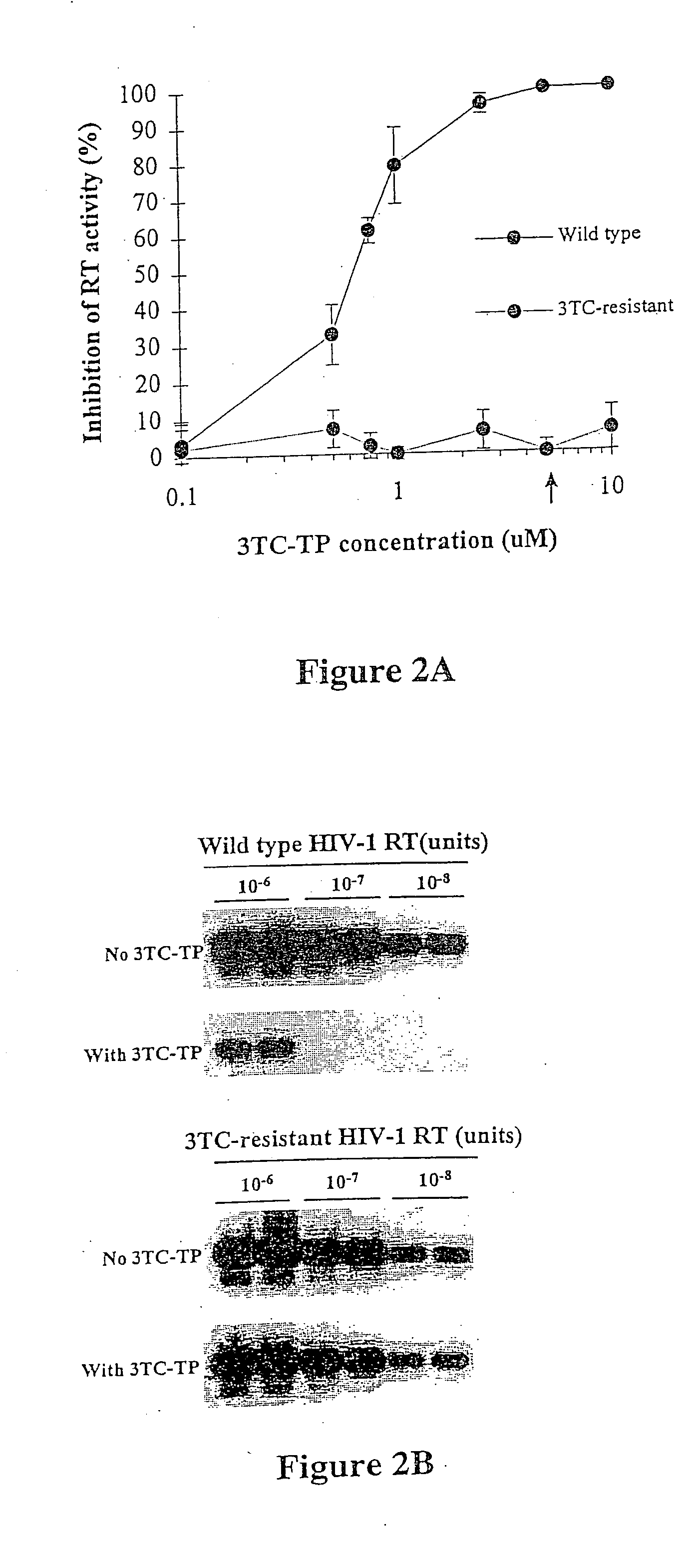
Figure 3
Abstract
Description
[0001] This application claims benefit of priority of U.S. application Ser. No. 09 / 719,906 filed Jun. 18, 2000, which is incorporated herein by reference in its entirety and which was a national phase application of PCT Application Serial No. PCT / US99 / 13957, filed Jun. 18, 1999, which claimed priority to U.S. Provisional Application Ser. No. 60 / 090,051, filed Jun. 19, 1998.
[0002] This invention was made by the Centers for Disease Control and Prevention, an agency of the United States Government. The government may have certain rights in this invention.TECHNICAL FIELD
[0003] The present invention relates in general to assays for detecting resistance of a retrovirus to reverse transcriptase inhibitor therapies and / or to characterizing the nature of the resistance. More specifically, in one aspect, the invention relates to non-culture, polymerase chain reaction-based phenotypic assays for detecting antiviral drug-resistant reverse transcriptase activity in a sample from a patient infec...
Examples
example 1
Determination of Phenotypic Resistance to 3TC
[0074] This example describes the use of a rapid nonculture-based assay for the analysis of phenotypic resistance to 3TC in plasma HIV-1. The assay, referred to as the Amp-RT assay, was based on the direct analysis of the susceptibility of plasma HIV-1 reverse transcriptase to inhibition by 3TC-TP. The assay successfully detected phenotypic resistance to 3TC in plasma samples from 3TC-treated patients. Resistance to 3TC in HIV-1 reverse transcriptase carrying mutations associated with multi nucleoside analog resistance (MNR) was also identified.
Materials and Methods
[0075] The phenotypic assay used in this example was based on the analysis of the susceptibility of HIV-1 reverse transcriptase activity from plasma to inhibition by 3TC-TP. Susceptibility of plasma reverse transcriptase to 3TC-TP was determined based on the level of inhibition produced by 3TC-TP, and was measured by running quantitative assays in the presence and absence ...
example 2
Determination of Phenotypic Resistance to Nevirapine
[0098] This example describes the use of a nonculture-based assay for the rapid analysis of phenotypic resistance to nevirapine in HIV-1 from plasma. The assay is based on the direct analysis of the susceptibility of plasma HIV-1 RT to inhibition by nevirapine. The assay used in this example was the PCR-based Amp-RT described in Example 1.
Materials and Methods
[0099] Susceptibility of plasma RT to nevirapine was determined based on the level of inhibition produced by the drug and was measured by running quantitative Amp-RT reactions in the presence and absence of nevirapine.
[0100] For culture supernatant, 10 μl were used directly in the Amp-RT assay. For plasma testing, a volume of 100 μl was clarified by centrifugation at 10,000 g for five minutes and then ultracentrifuged at a fixed angle at 99,000 g for 1 hour at 4° C. The viral pellet was resuspended in 100 μl of RT buffer (50 mM Tris-HCl, 50 mM KCl, 10 mM MgCl2). Ten micro...
example 3
Rapid Phenotypic Assay for Detecting Multiple Nucleoside Analog Reverse Transcriptase Inhibitor-Resistant Human Immunodeficiency Virus Type 1 in Plasma
[0121] Zidovudine (AZT) and other nucleoside analog reverse transcriptase inhibitors (NRTIs) like zalcitabine and didanosine used for treatment of persons infected with human immunodeficiency virus type 1 (HIV-1) can select for viruses with Q151M and other associated mutations (i.e., A62V, S68G, V751, F77L, F116Y) in the reverse transcriptase (RT) enzyme. These mutations confer resistance to multiple nucleoside analogs, thereby compromising the efficacy of this class of drugs. Therefore, recognition of this is important in the effective prevention, treatment and / or amelioration of HIV infection. Specifically, failure to recognize the presence of the resistant species in the infected host (i.e., patient) allows prolonged use of drugs and therapies that are no longer the optimally effective therapy or treatment. Thus, an ability to rec...