
Polypropylene composition for air quenched blown films
Patent Information
- Authority / Receiving Office
- US · United States
- Current Assignee / Owner
- Publication Date
- 2007-03-08
- Estimated Expiration
- Not applicable · inactive patent
Smart Images
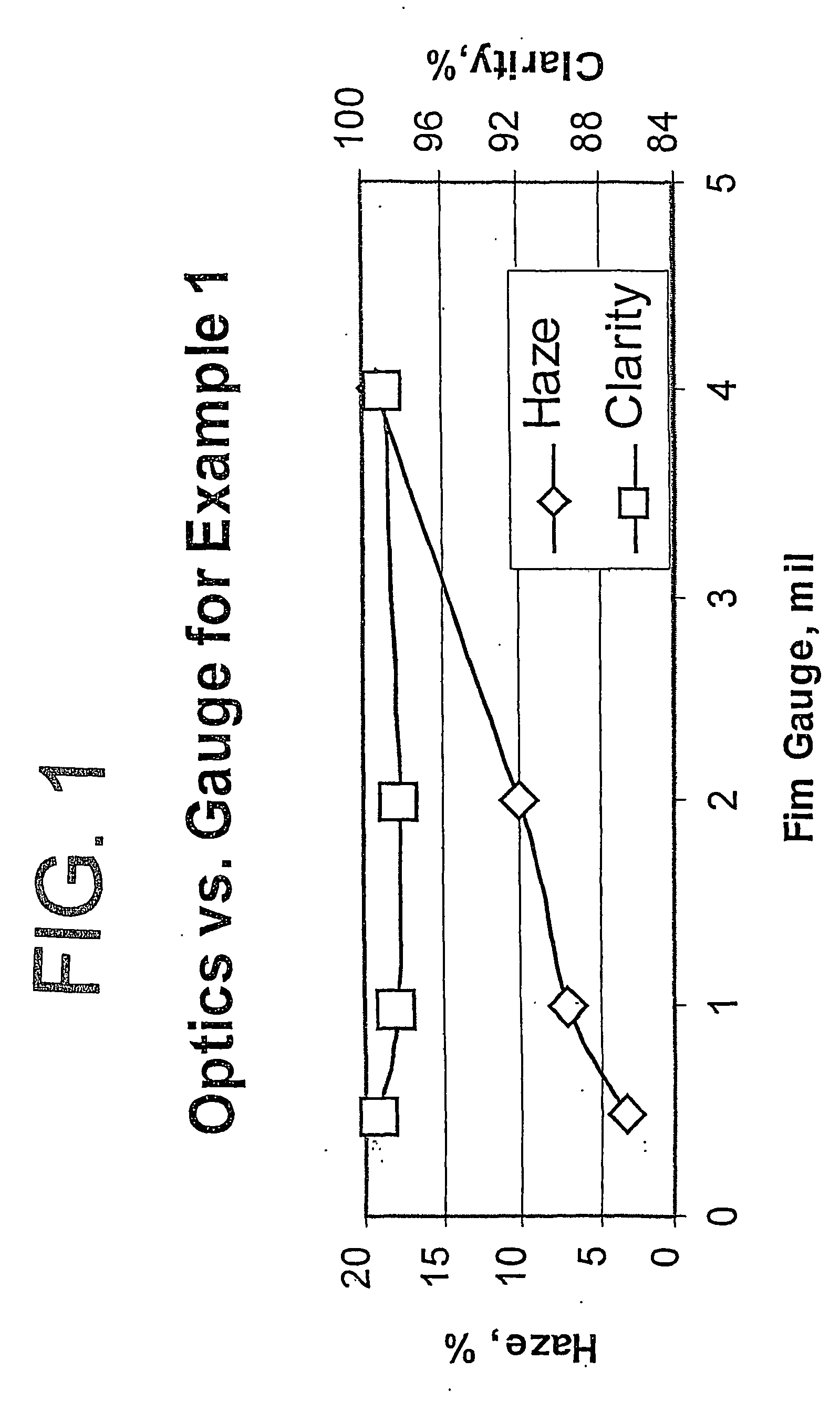
Figure 1 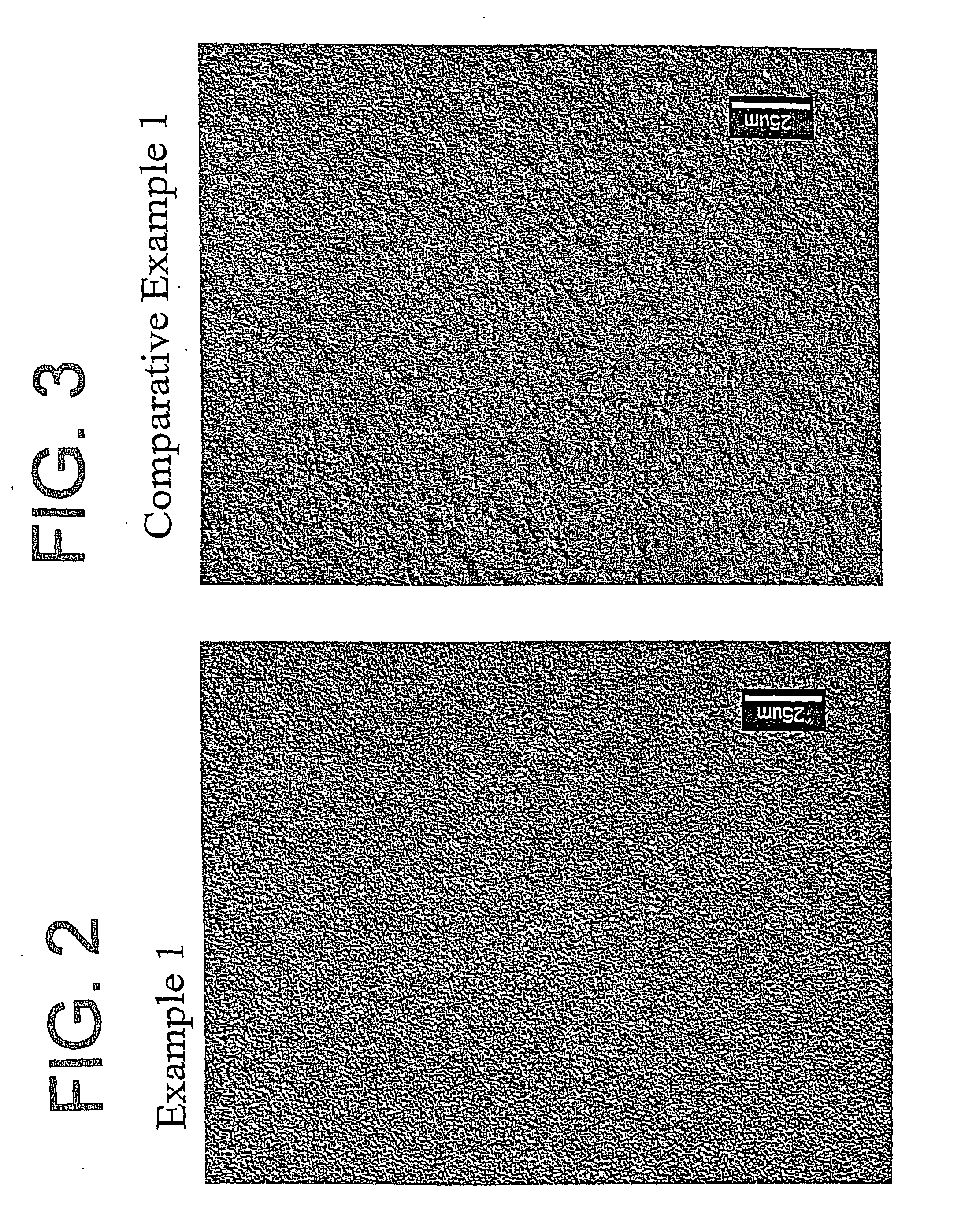
Figure 2 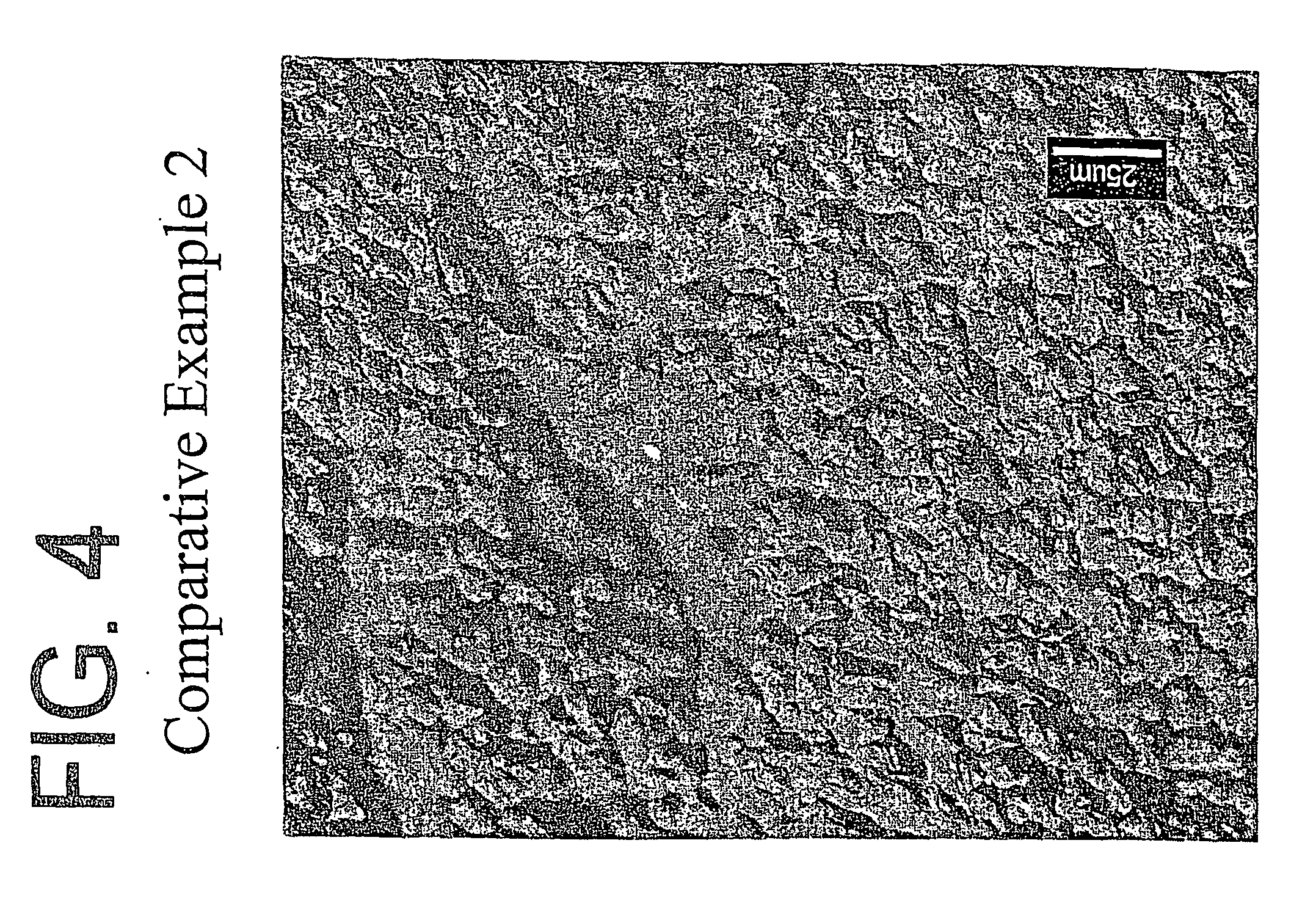
Figure 3
Abstract
Description
[0001] This invention relates to polyolefins, more particularly relating to high crystalline propylene-based polymer compositions suitable for manufacturing films using air quenched blown film production methods, methods for making such films and the films made from such polymers. BACKGROUND
[0002] Currently, blown films are made predominantly from ethylene polymers. There are references to blowing films of propylene polymers, but none are observed to be commercially successful. Historically it was believed that the low melt strength of propylene polymers inhibited production of blown film with such polymers at commercially feasible rates on standard equipment used for processing polyethylene. Therefore, there has been a desire to increase the melt strength of propylene-based polymers to enhance the ability to manufacture air quenched blown films with such polymers.
[0003] The most common method for increasing the melt strength of propylene-based polymers has been to utilize higher ...
Examples
example 1
[0078] A polypropylene homopolymer, Example 1, having the properties of Tables 1 and 2, is produced in a single, continuous bulk phase (condensed propylene) stirred tank reactor. A Ziegler-Natta catalyst, which includes a titanium catalytic active metal species supported on a magnesium chloride support, which is commercially available as Toho Series C, Group JC and may be purchased from Toho Titanium Ltd., is suspended in Kaydol white mineral oil, purchased from Witco, at 38 wt. % and stored in a stirred catalyst feed tank. The suspended catalyst is pumped directly into a nominal 25,000 gallon continuous, stirred tank reactor which is filled to approximately ⅔ capacity with liquid propylene. The desired temperature of the reactor is 65-68° C. controlled by condensing propylene vapor in a separate set of heat exchangers and returning the liquid stream to the reactor along with the non-condensable fraction. An external alkoxysilane donor, which is commercially available from Degussa-H...
examples 2-8
[0098] A homopolymer of propylene, is produced in a single, continuous bulk phase (condensed propylene) loop reactor. A Ziegler-Natta catalyst, which includes a titanium catalytic active metal species supported on a magnesium chloride support, which is commercially available as Toho series C, group JC, is suspended in Kaydol white mineral oil, available from Witco, and stored in a stirred catalyst feed tank. The suspended catalyst is pumped directly into a nominal 150 gallon continuous, pumped loop reactor. The desired temperature of the reactor is 70-76° C., controlled with an external cooling jacket on the loop reactor. An external alkoxysilane donor, which is commercially available from Degussa-Huels, [(CH2)4CH]2Si(OMe)2 (and is often referred to as D-Donor) diluted with hexane as appropriate to facilitate flow control, is fed continuously to the reactor in tile amount needed to reduce the xylene extractable fraction to less than 1%, measured as described above. The target concen...
examples 1a
, 1B, AND 2 THROUGH 8
[0101] The resin for Examples 1a and 1b is the same as the resin used for Example 1, described earlier. The resins for Examples 2-8 are made as described above in the section entitled “Polymers for the Films of Table 7 (Examples 2-8).” All the films of Table 7 are made in a similar manner to the monolayer films of Tables 3, 4, and 5, except, a 40 mil die gap is utilized instead of the 70 mil die gap. The results obtained during the film blowing and the physical properties of the films are indicated in Table 7.
TABLE 7Monolayer Extruded Blown FilmsExamplesExampleExample1a1b2345678Total Film1 mil2 mil1 mil1 mil2 mil1 mil2 mil1 mil1 milThicknessMaximum165.8165.7131.8130.3131.2122.1123.8150.4133.3output rateSpecific8.88.87.06.97.06.56.68.07.1Output ratelb / inch diecircumferenceNucleator / ClarifierNA-11NA-11NA-21:Millad 3988MilladNoneNoneNA-11:Millad 3988additive850 ppm850 ppm850 ppm850 ppm3988850 ppm2000 ppm(ppm)850 ppm1% CD-266276217978291412276904220495288697222423...