
Intelligent buffer and related applications
Patent Information
- Authority / Receiving Office
- US · United States
- Current Assignee / Owner
- Publication Date
- 2007-06-14
- Estimated Expiration
- Not applicable · inactive patent
Smart Images
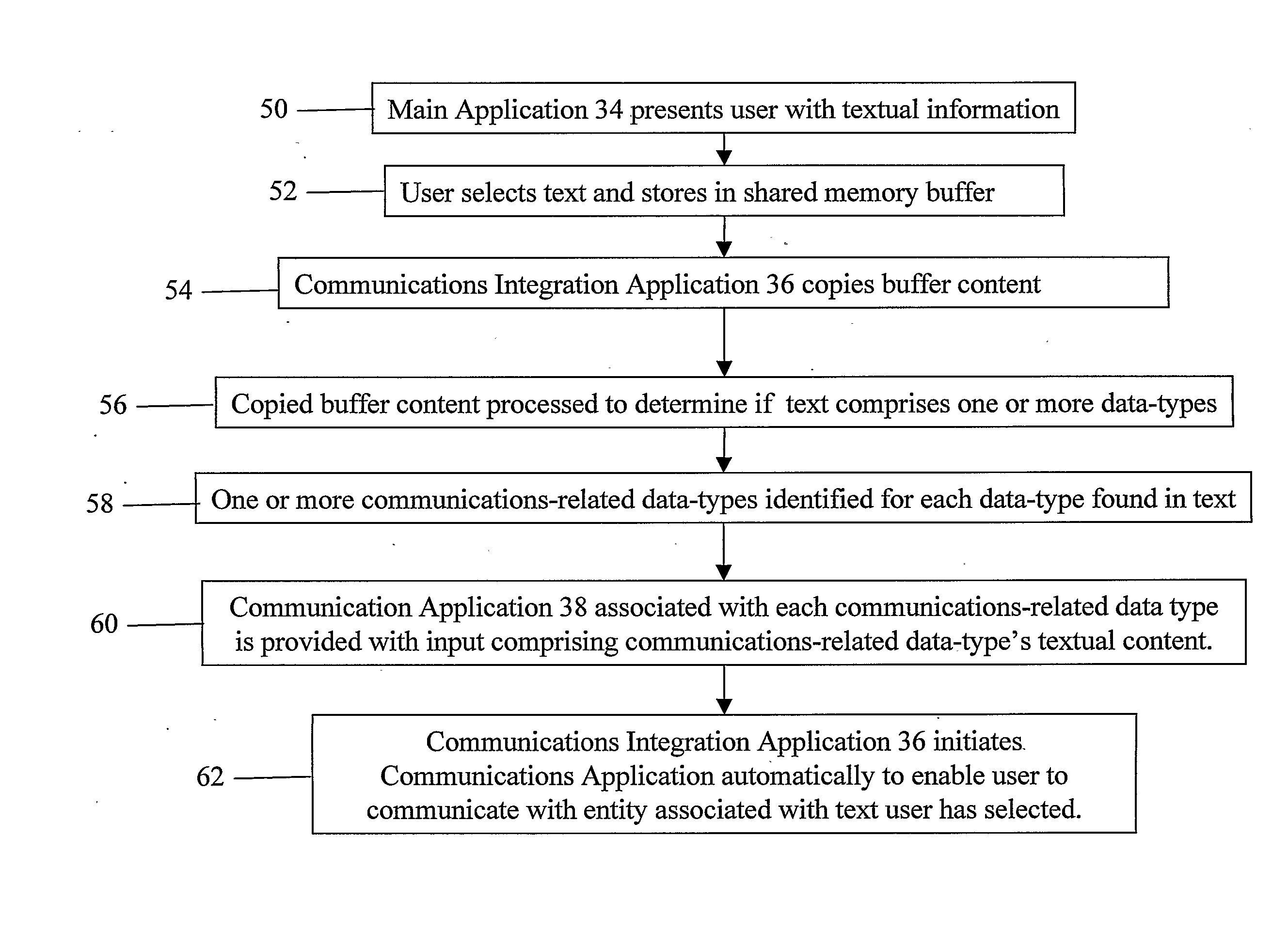
Figure 1 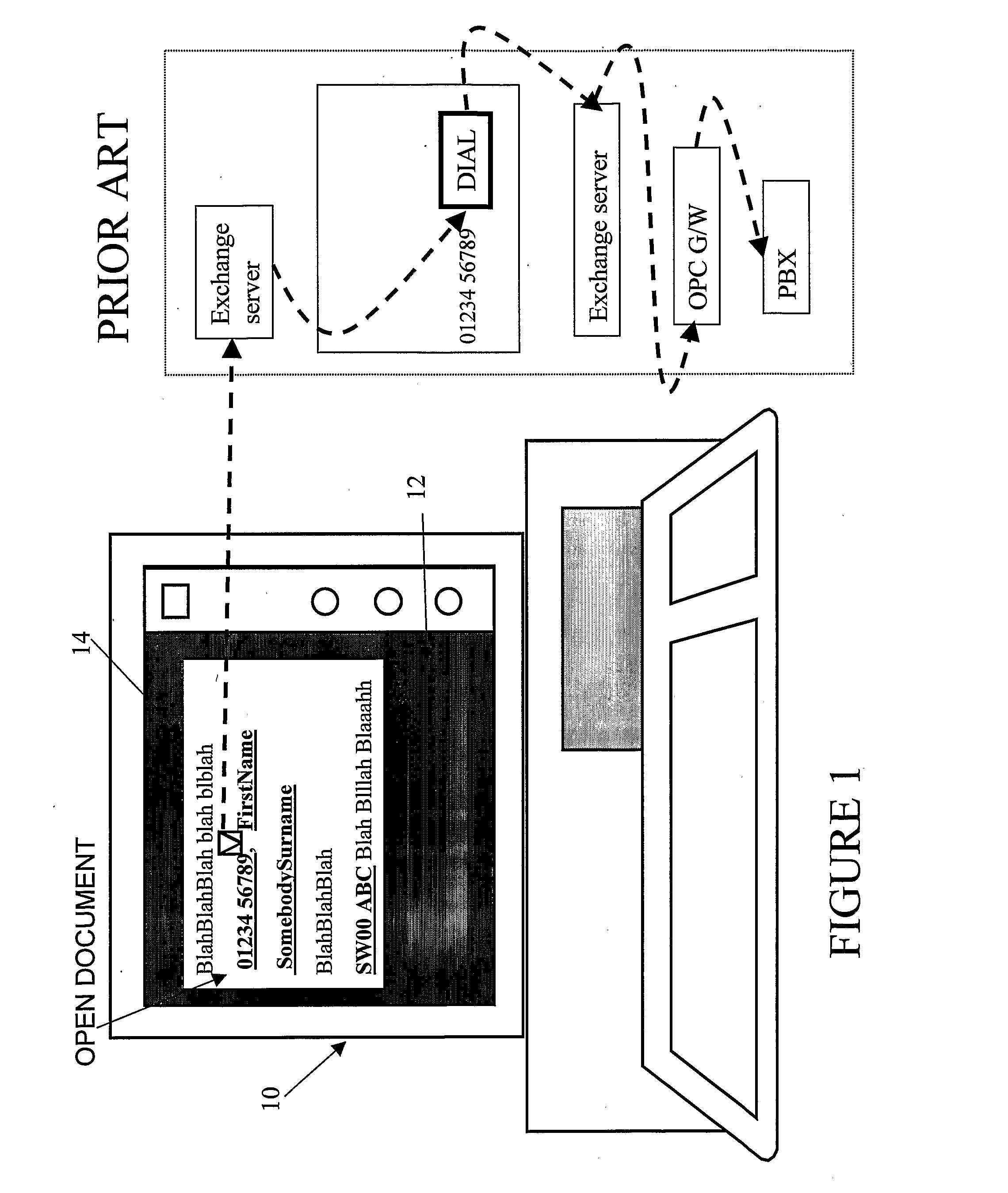
Figure 2 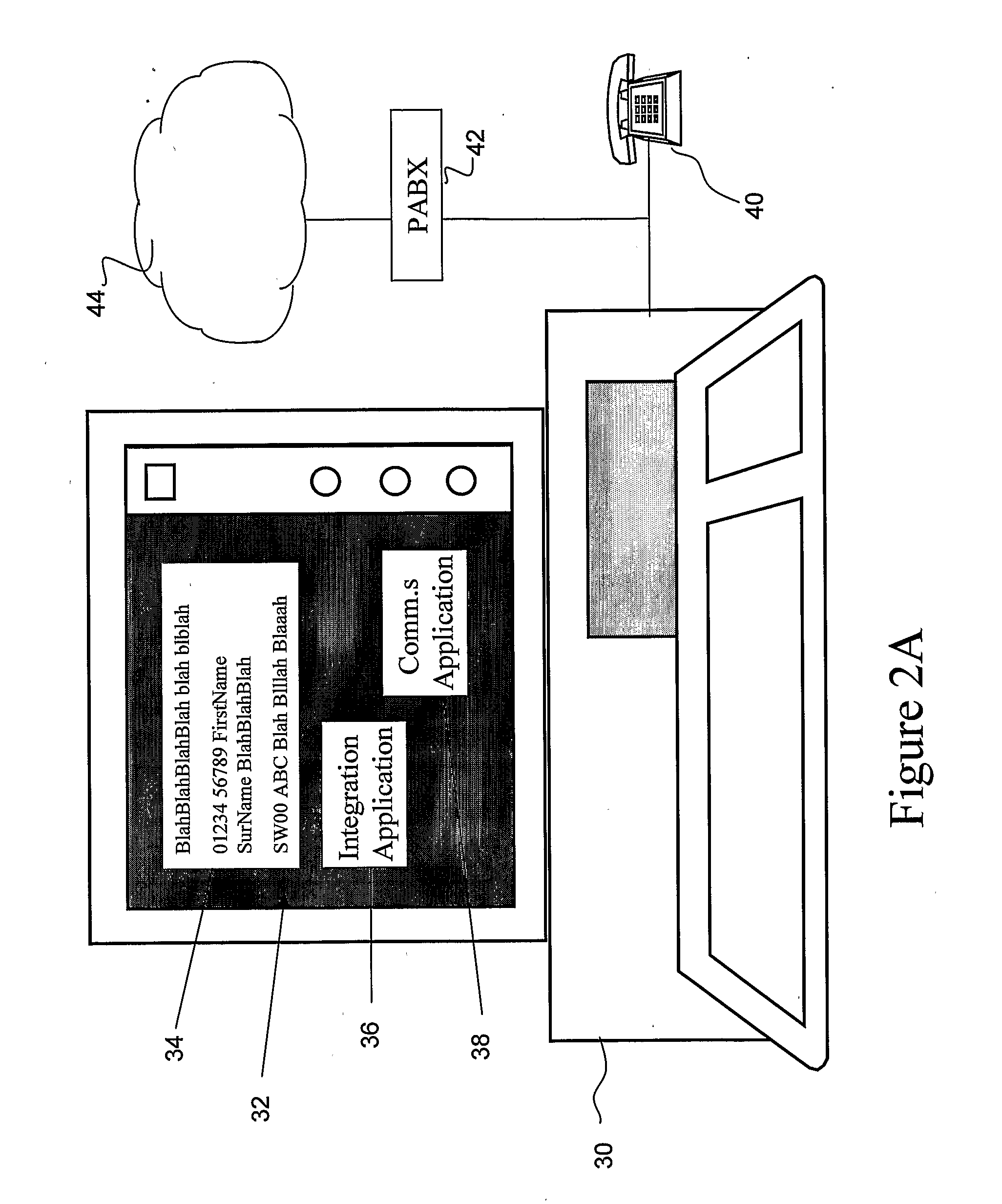
Figure 3
Abstract
Description
[0001] The present invention relates to an intelligent buffer and related applications. In particular, but not exclusively, the invention relates to a method of communication which uses an intelligent buffer reader to automatically extract information copied by a user to a buffer to enable the information extracted to be shared between different applications arranged to run on the user's computer. The extracted information is then processed to determine one or more appropriate modes of communication with one or more entities, for example by automatically emailing an entity or dialling the telephone number of an entity in a computer-telephony environment.
[0002] Whilst the intelligent buffer can be used in a computer-telephony environment, it is not limited thereto. However, several mechanisms to facilitate communication in a computer-telephony environment are already known in the art. For example, U.S. Pat. No. 6,594,357, “System and method of registering the identity of a telephone...
Examples
Embodiment Construction
[0126] For example, consider the textual information displayed in main application 34 as shown in FIG. 2a and FIG. 2b, which is as follows:
[0127]“BlahBlahBlah blah blblah
[0128] 01234 56789, FirstName
[0129] SomebodySurname
[0130] BlahBlahBlah
[0131] SW00 ABC Blah Blllah Blaaahh”
[0132] The user selects text, preferably text comprising a portion of the document generally significantly less than the entire document contents open in the main application. As shown in FIG. 2b, for example, “01234 56789” is shown selected by the dotted rectangle and this text is the only text copied to a shared memory store application (not shown).
[0133] The communication integration application 36 then extracts the text “01234 56789” from the shared buffer into its own memory. Once extracted where the text is then processed in a first stage to determine what data-types are present in text copied by the user into the buffer. The technique used to determine what data-types are present in the text can be ...