
Culvert inlet protection device
Patent Information
- Authority / Receiving Office
- US · United States
- Current Assignee / Owner
- Publication Date
- 2007-07-05
- Estimated Expiration
- Not applicable · inactive patent
Smart Images
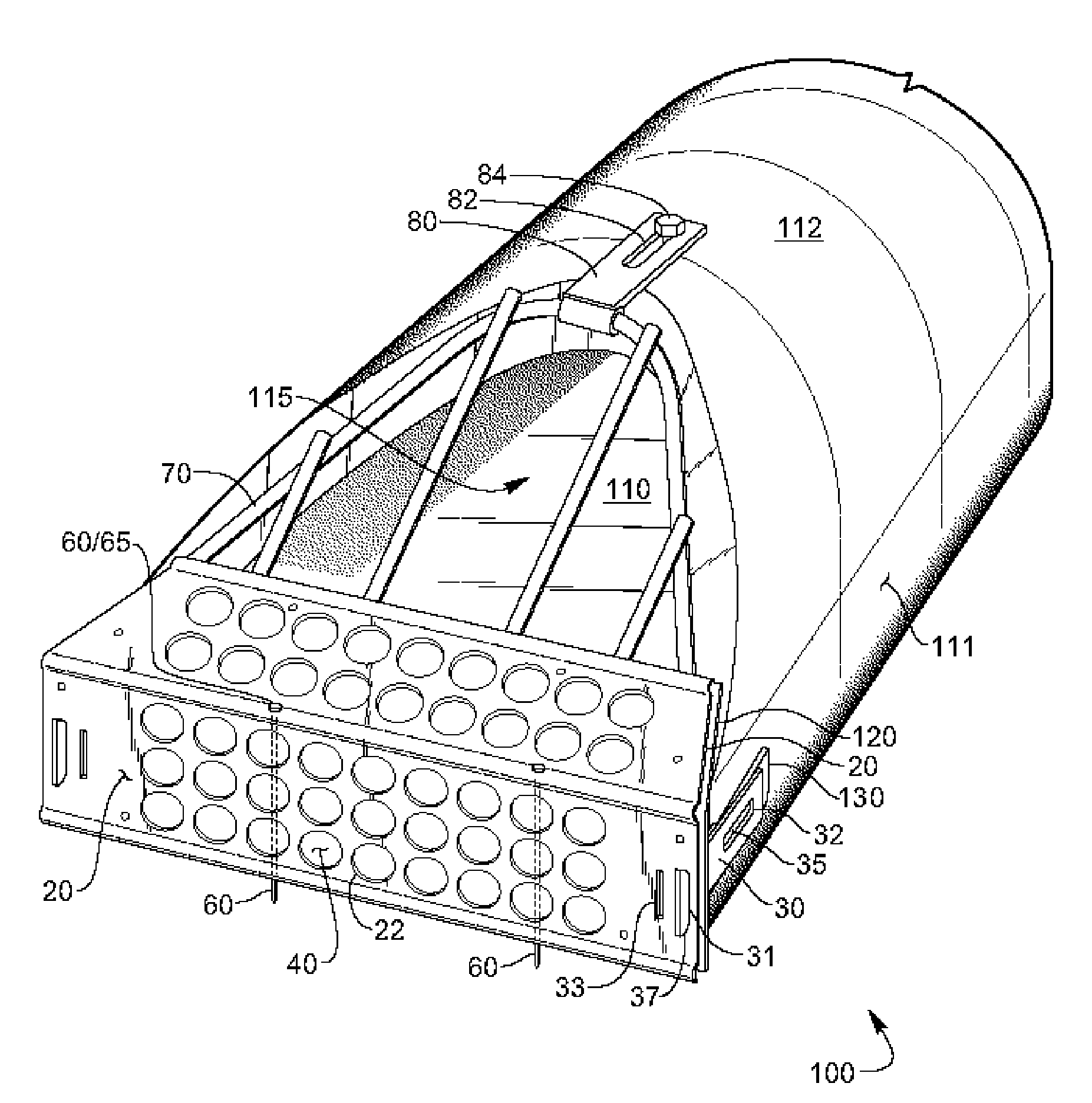
Figure 1 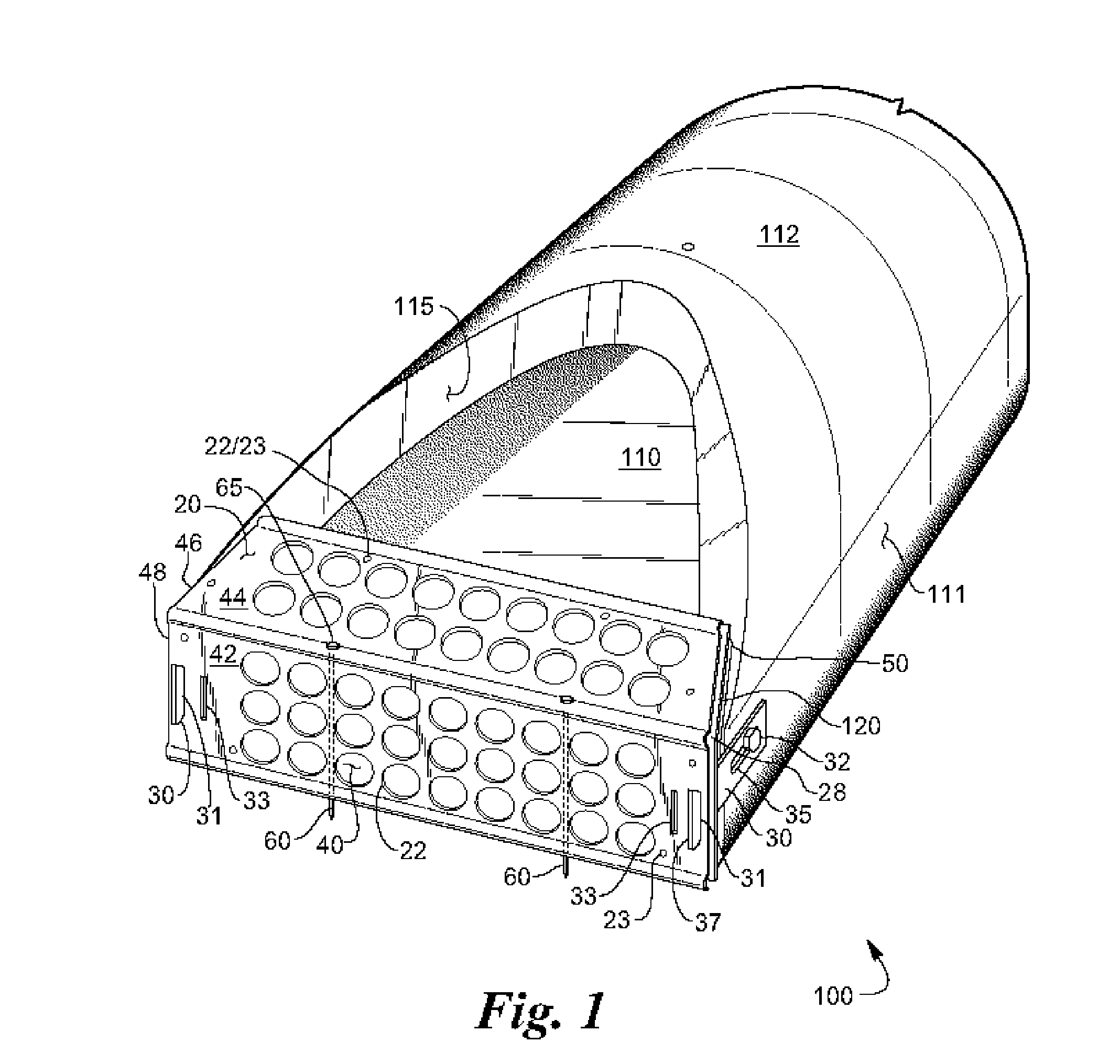
Figure 2 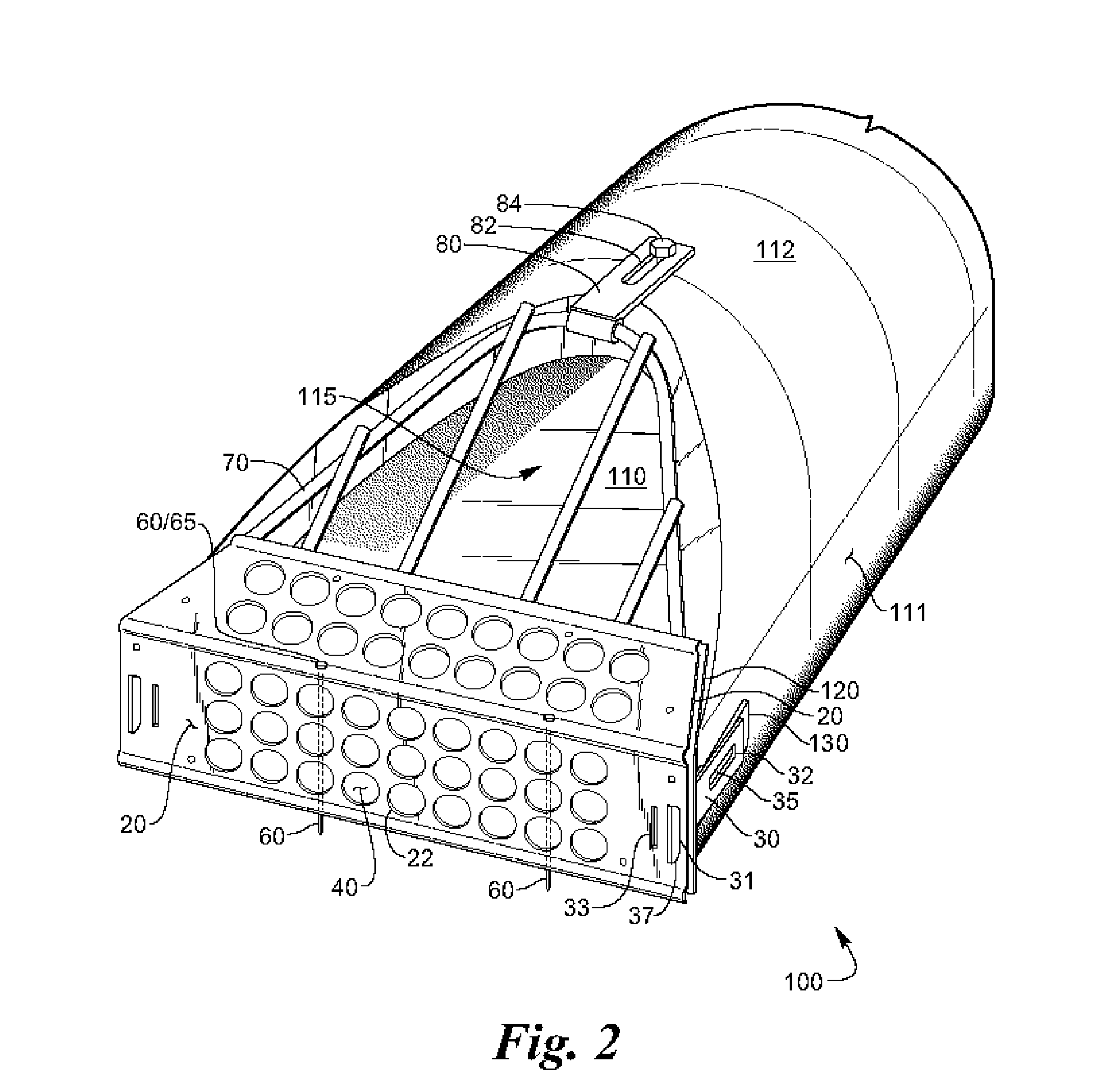
Figure 3
Abstract
Description
BACKGROUND OF THE INVENTION
[0001] 1. Field of the Invention
[0002] This invention relates to pollution control devices for removing litter, sediments, salts and chemicals from water flowing through culverts and for preventing clogging of culverts.
[0003] 2. Description of the Related Art
[0004] It has been the practice to place bales of hay or stones around the mouth of a culvert to slow down water flows and act as a barrier for litter and sediment. This method requires a substantial area around the mouth of the culvert and depending on the placement of the stones or hay, may not block all of the flow of water so as to not stop all litter or sediment from flowing past the barrier. Further, over time the barrier may shift, causing flows of water to carry litter and sediment past the barrier and into the culvert. Further, oils, salts or chemicals detrimental to the environment may be able to flow through the culvert and escape into the environment.
[0005] Another method of preventing litter an...
Examples
Embodiment Construction
[0019]A culvert 100 with a typical shape and opening is shown in the figures. The culvert 100 shown has a flat bottom base 110 with upstanding walls 111 at each side of the base and a curved dome portion 112 covering the culvert. The mouth 115 is cut at an angle though the dome 112 and straight up and down at the walls 111 and has a flat bottom base 110. The culvert may be made out of almost any material, such as concrete, plastic, metal or fiberglass. The culvert 100 may have any cross-sectional shape, but typically has an angled cut open top portion to the mouth.
[0020]In FIG. 1 the culvert 100 has mouth 115 partly covered by a barrier comprising barrier plates 20, 120 which are made from a sheet of material having a plurality of apertures 22. The barrier plates 20, 120 are riveted together by rivets 23 and have a filter material 40 sandwiched therebetween. The barrier plates 20, 120 are attached to the mouth 115 of the culvert 100 so that it covers on the order of ⅔ of the height ...