
Compositions and methods for immunotherapy
Patent Information
- Authority / Receiving Office
- US · United States
- Current Assignee / Owner
- Publication Date
- 2007-12-20
- Estimated Expiration
- Not applicable · inactive patent
Smart Images
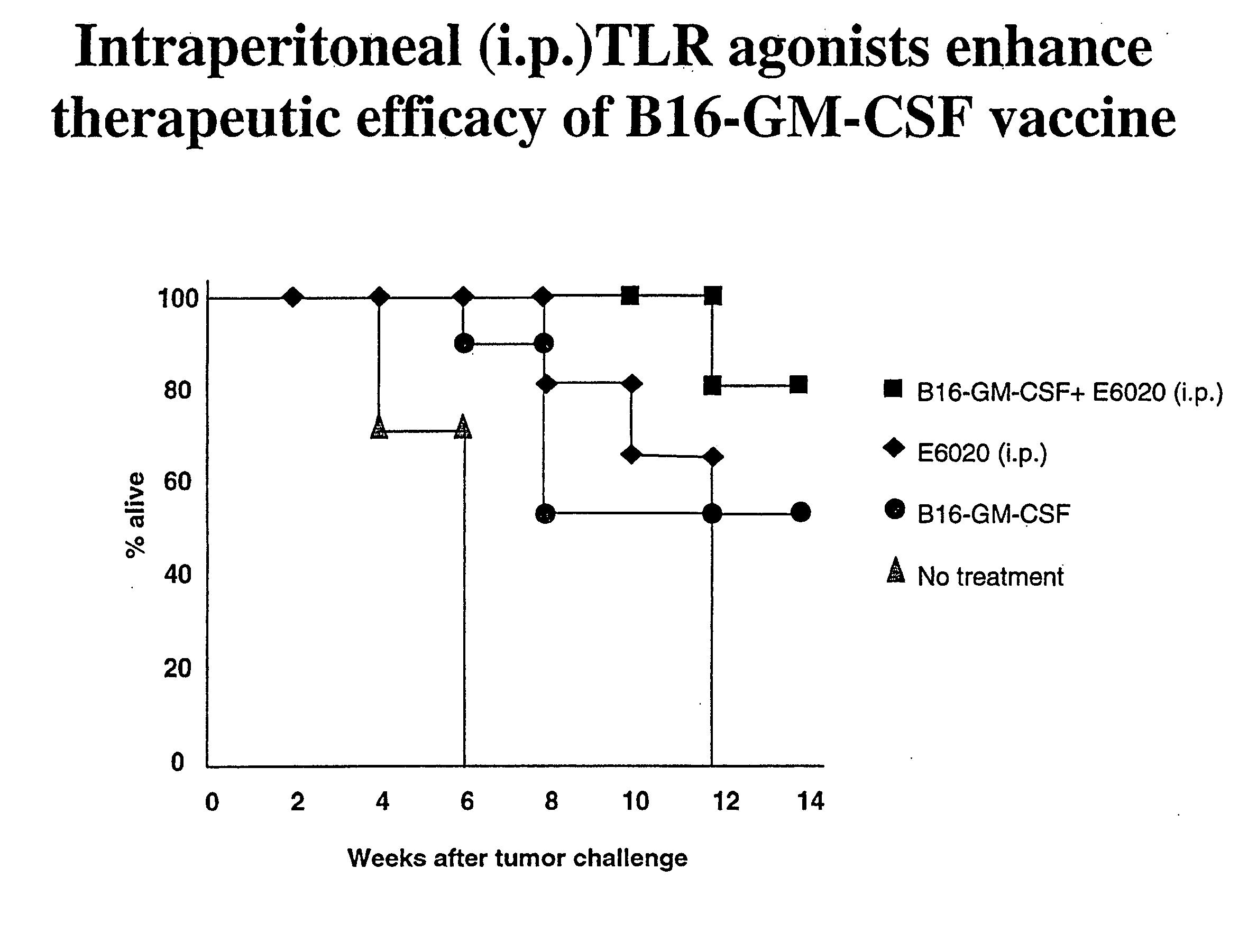
Figure 1 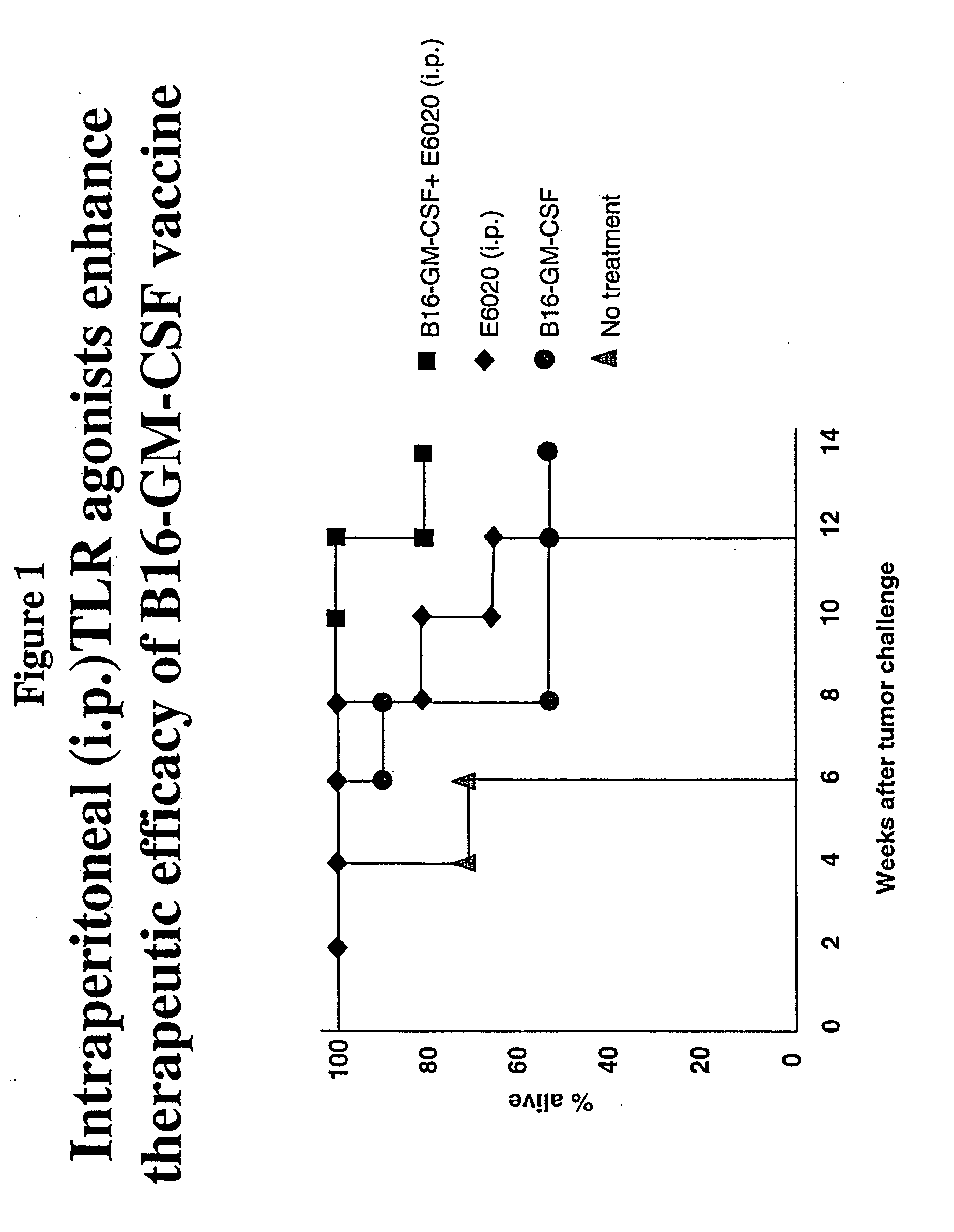
Figure 2 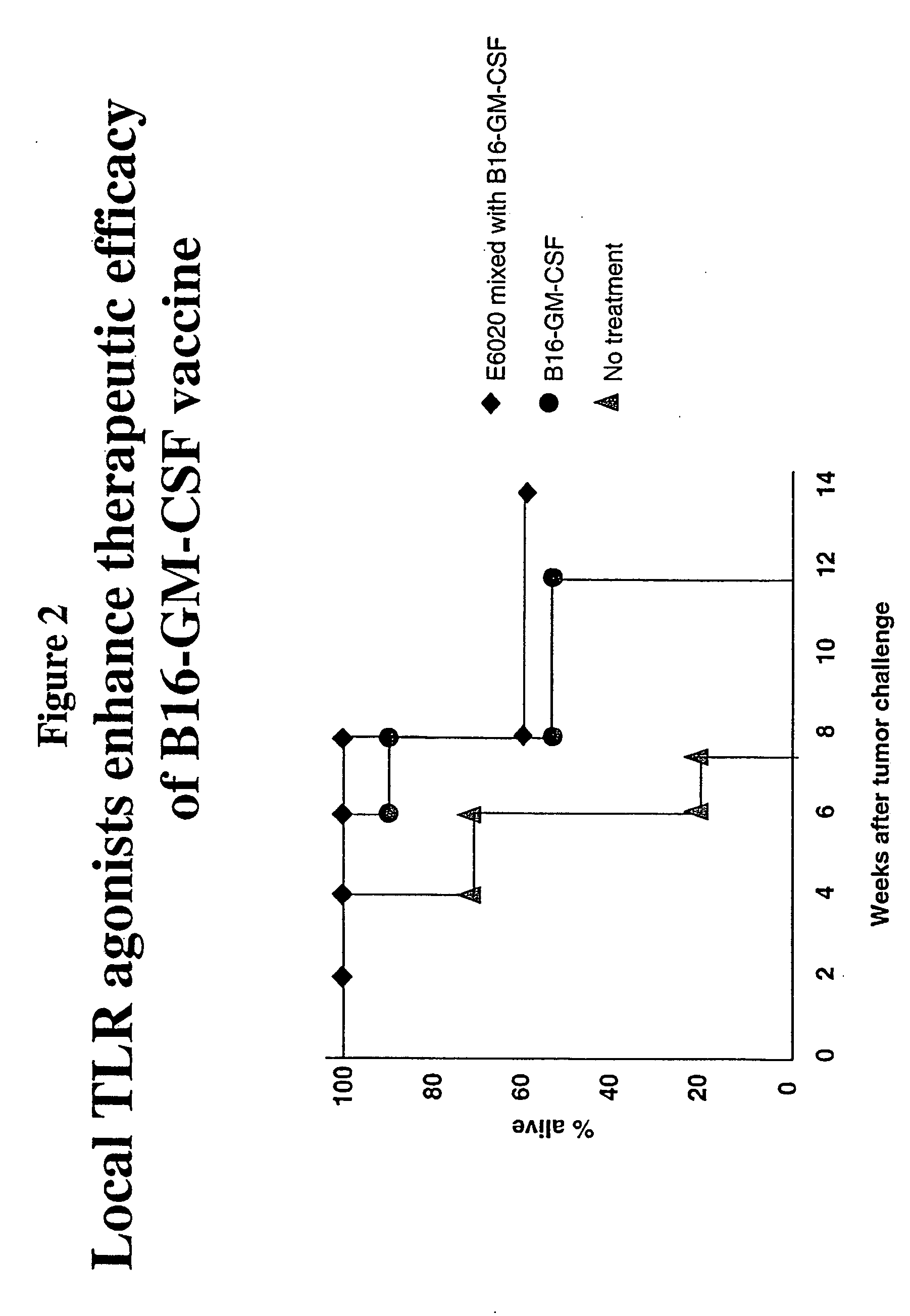
Figure 3
Abstract
Description
RELATED APPLICATIONS
[0001] This application claims priority to U.S. patent application Ser. No. 11 / 411,332, filed Apr. 26, 2006, which claims the benefit under 35 USC 119(e) of U.S. provisional patent application 60 / 674,680, filed Apr. 26, 2005, the contents of which are incorporated herein by reference in their entirety.FIELD OF THE INVENTION
[0002] The invention provides compositions and methods for immunotherapy. 1. BACKGROUND OF THE INVENTION
[0003] Cancer immunotherapy involves the use of compositions and methods to elicit and enhance an individual's own immune system against cancerous cells, or infections that predispose to cancer. Cancer vaccines function by triggering the immune system to mount a response to an antigen (e.g., typically a protein, peptide, or carbohydrate) that is introduced into the body in a non-carcinogenic form and triggers the body to confer immunity or obtain a long-lived “memory” immune response. See, e.g., Kast, Peptide-Based Cancer Vaccines, Landes ...
Examples
example 1
Intraperitoneal Administration of a TLR Agonist Enhances Therapeutic Efficacy of a Vaccine
[0232] To determine the effect of a TLR4 agonist E6020 (ER-804057) when administered with a cancer vaccine, a mouse model using melanoma cells was used. In these experiments, mice were injected intraperitoneally with a cancer vaccine, e.g., granulocyte-macrophage colony stimulating factor (GM-CSF) secreting tumor cells and E6020, which is a TLR-4 (Toll-like receptor-4) agonist. The mouse model used B6 mice (C57BL / 6 mice) that were engrafted subcutaneously with 1×10⁶ syngeneic B16F10 murine melanoma cells. Three days after tumor cell inoculation, the mice were either (1) vaccinated subcutaneously (s.c.) with 1×10⁶ B16F10 tumor cells that were genetically modified to stably express and secrete murine GM-CSF (B16-GM-CSF cells); (2) vaccinated intraperitoneally (i.p.) with E6020; or (3) were treated with a combination of s.c. GM-CSF cell vaccination and i.p. E6020. The GM-CSF cell vaccination and ...
example 2
Local Administration of a TLR Agonist Enhances the Therapeutic Efficacy of a Cancer Vaccine
[0234] The effect of E6020 on treatment of B6 mice that were engrafted subcutaneously with 1×10⁶ syngeneic B16F10 murine melanoma cells was also examined to determine the effect of local administration of a TLR agonist on therapeutic efficacy of a cancer vaccine. When tumors became palpable, the mice were injected intratumorally with GM-CSF cells alone, or in combination with E6020 (about 3-10 μg). Survival of the animals was monitored.
[0235] It was found that the population of animals treated intratumorally with a combination of GM-CSF cells and E6020 had increased survival compared to animals that were untreated or treated with GM-CSF cells alone (FIG. 2).
example 3
MUC-1 / E6020 Vaccine Therapeutic Effects
[0236] To test the effects of a MUC-1 vaccine with E6020 adjuvant for treating inflammatory bowel disease (IBD) and subsequent development of colon adenocarcinoma, an engineered mouse strain that lacks the IL-10 gene and expresses transgenic human MUC1 was used. Such mice spontaneously develop intestinal inflammation resembling IBD followed by colon adenocarcinoma. These data were presented and published in Beatty et al., AACR Annual Meeting 2006, Washington D.C., Apr. 4, 2006.
[0237] In these experiments, mice were immunized intranasally with 30 mg / nare of Tn MUC100mer (HGVTSAPDTRPAPGSTAPPA)×5, SEQ ID NO:1) and 3 mg of E6020. Animals were vaccinated at about 4.5 weeks and boosted at about 6.5 weeks and 9 weeks.
[0238] MUC1 IL-10− / − mice treated with vaccine and E6020 had delayed onset of IBD compared to control mice (untreated mice) or mice treated with vaccine only, or did not develop IBD during the period of the experiment (FIG. 3). Mice tr...