
Separation Methods
a technology of chromatographic separation and inulin, which is applied in the direction of separation process, cation exchanger material, peptide, etc., can solve the problem that the use of charged inulins as chromatographic separation aids has not been reported
Patent Information
- Authority / Receiving Office
- US · United States
- Current Assignee / Owner
- Publication Date
- 2008-02-07
- Estimated Expiration
- Not applicable · inactive patent
Smart Images
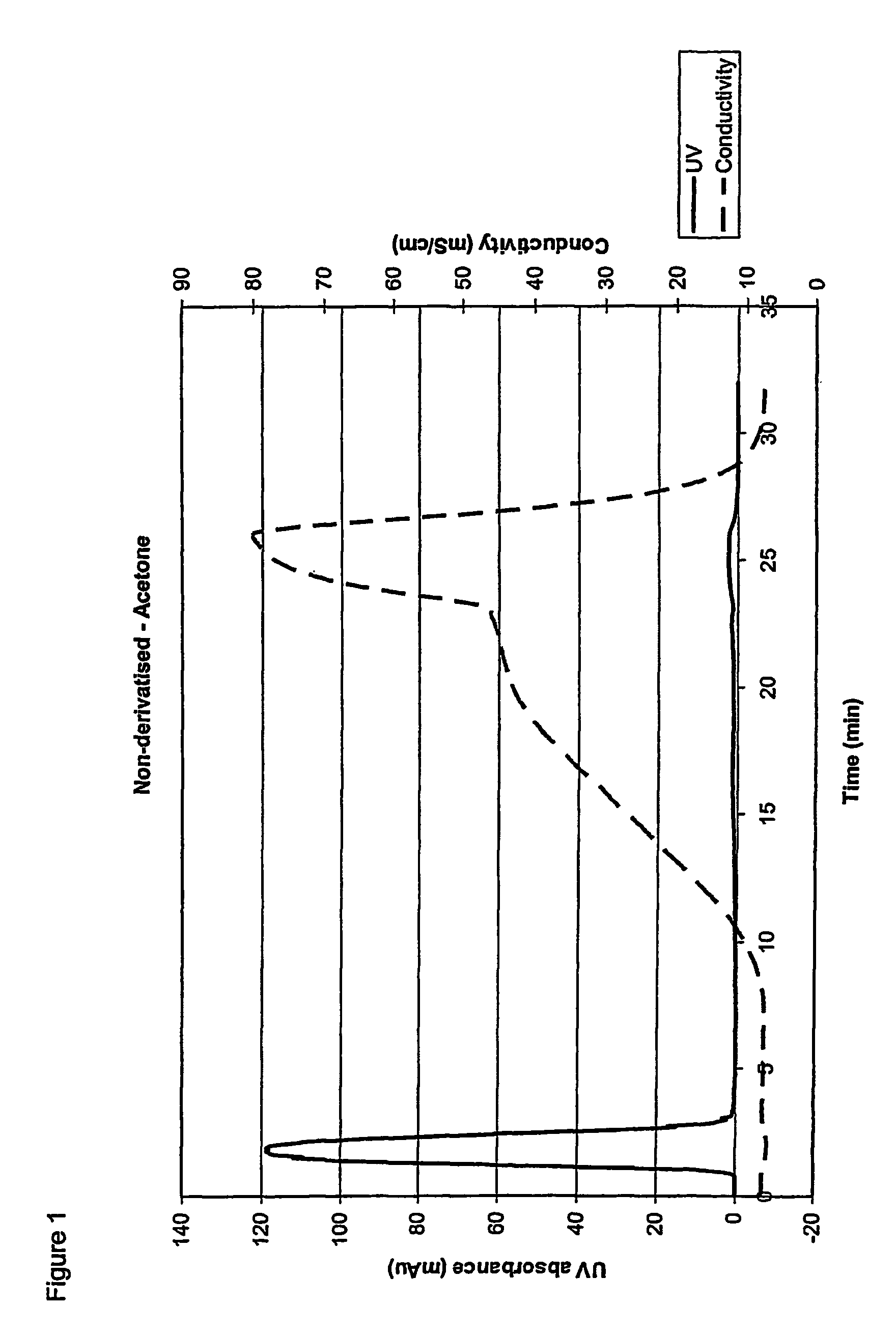
Figure 1 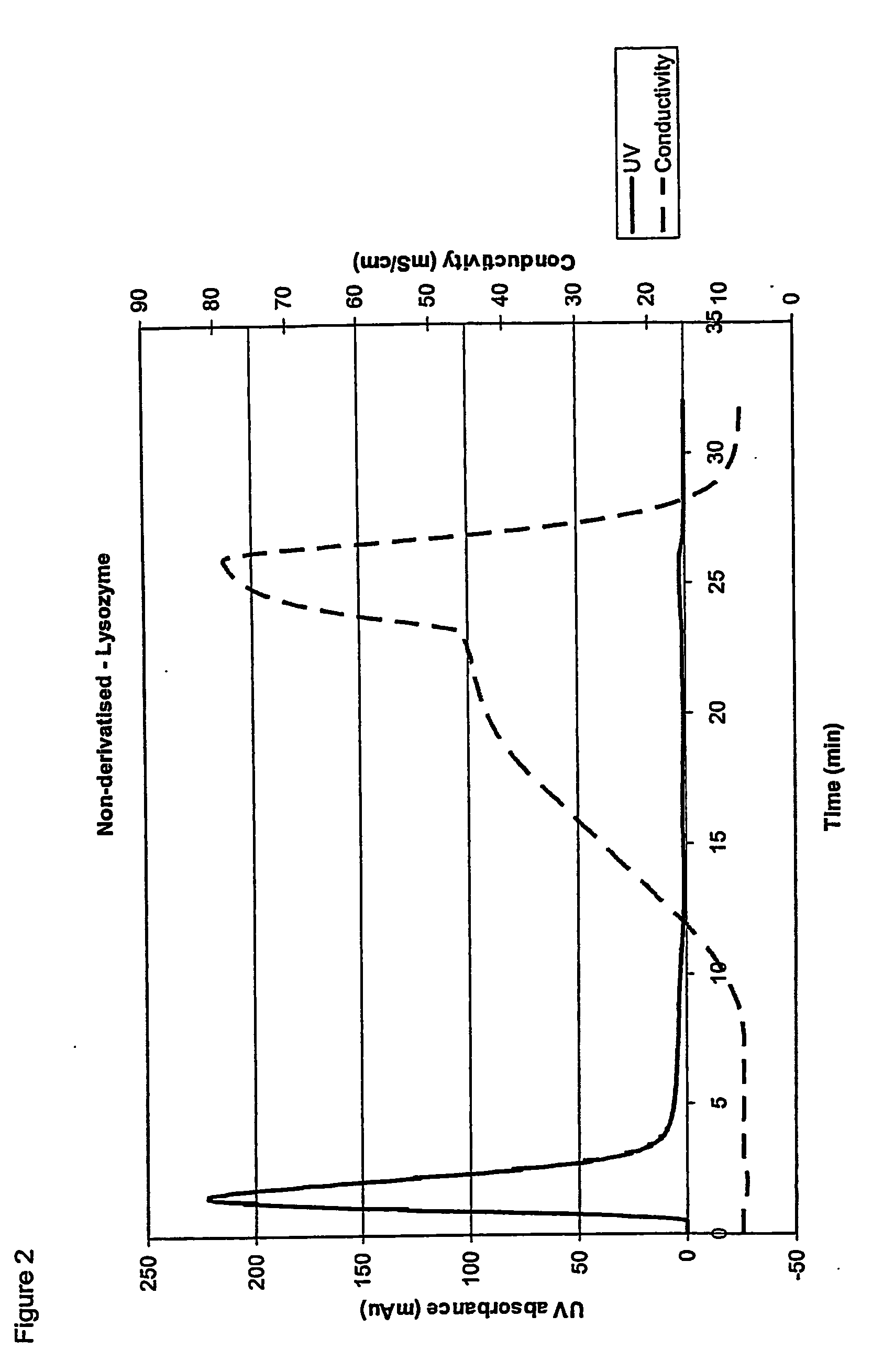
Figure 2 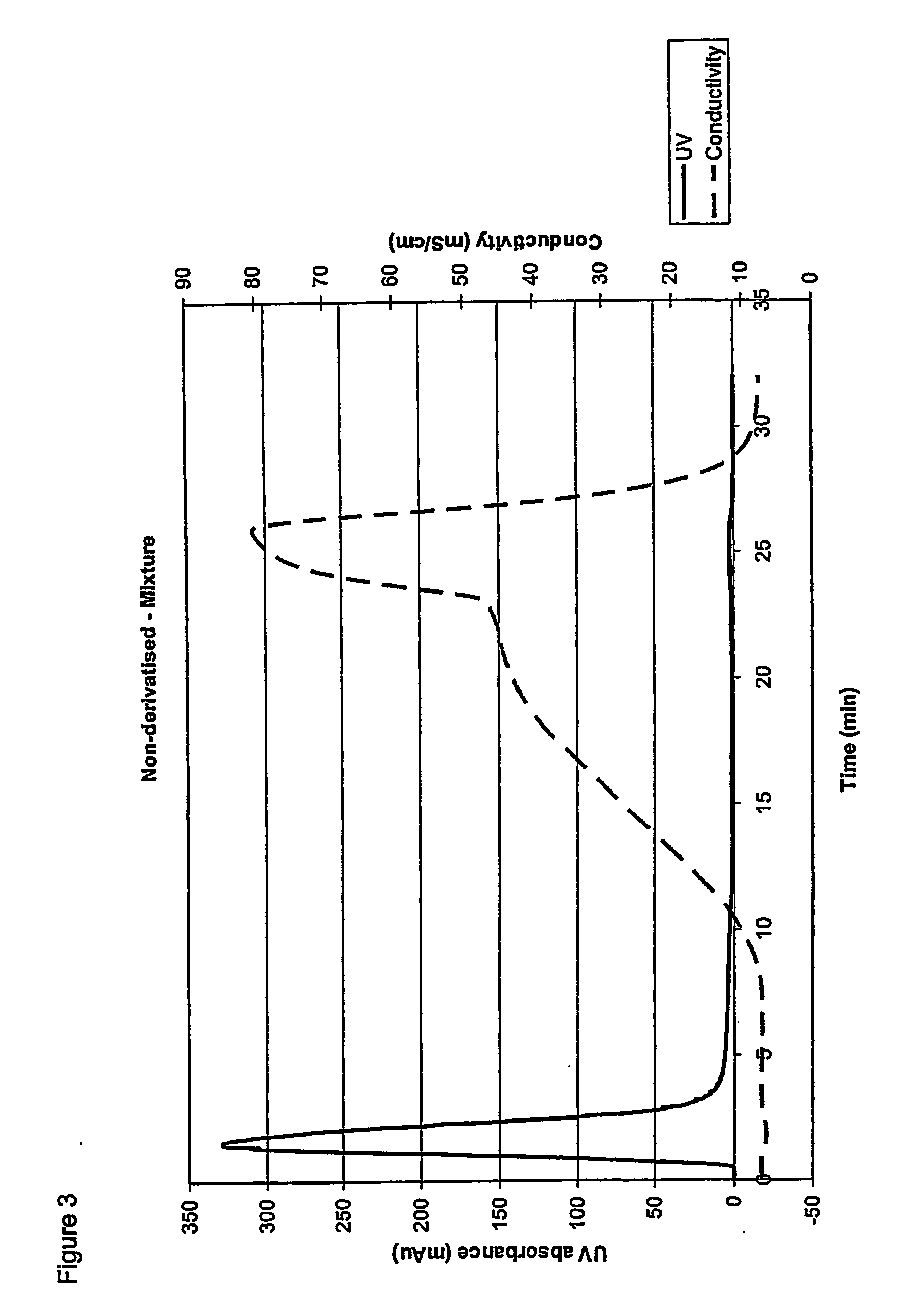
Figure 3
Abstract
Description
[0001] The invention relates to separation methods for separation, purification and isolation of molecules, based on hydrophobic interaction chromatography and on mixed-mode hydrophobic interaction / ion exchange chromatography.BACKGROUND TO THE INVENTION
[0002] Liquid chromatography is a commonly used protein purification technique due to its high capacity and selectivity. The technique depends upon the interactions of macromolecules in solution with a packed bed of a chromatography matrix. Interactions between the macromolecules and chromatography matrix may be based on size, charge, hydrophobicity or a more specific type of interaction (e.g. antibody—antigen binding). This leads to four broad classes of chromatography; size exclusion (gel permeation), ion exchange, hydrophobic interaction and affinity.
[0003] Ion exchange is the most commonly used method for the preparative scale purification of proteins, polypeptides, nucleic acids and other charged biomolecules (Bonnerjera et al., 198...
Examples
example 1
Method 1—Separation of a Strongly Hydrophobic Protein
[0074]A running buffer (mobile phase) is selected with a pH below the pI of the protein so that the protein carries a positive charge. Purification of the protein is achieved using a negatively charged sugar polymer carboxymethyl beta-cyclodextrin and a positively charged chromatography matrix (anion exchanger). Traditionally it would not be possible to retain a positively charged protein on a positively charged matrix. However, in this method, a solution of a negatively charged sugar polymer is injected through the column prior to introduction of the protein solution. The sugar polymer binds to the chromatography matrix, temporarily derivatising the surface. This derivatised surface is capable of hydrophobic interaction with protein molecules. The protein(s) to be separated are then injected through the column. An elution is performed. The elution method can be an isocratic elution (no salt gradient) in which retention time on th...