
Thermal transfer ribbon
a technology of thermal transfer ribbon and transfer ribbon, which is applied in the direction of thermal imaging, inking apparatus, transportation and packaging, etc., can solve the problems of counterfeiters or diverters being difficult to detect, the product from one market to another and the concealment security device cannot be immediately detected with human senses
Patent Information
- Authority / Receiving Office
- US · United States
- Patent Type
- Applications(United States)
- Current Assignee / Owner
- Publication Date
- 2008-04-17
- Estimated Expiration
- Not applicable · inactive patent
Smart Images
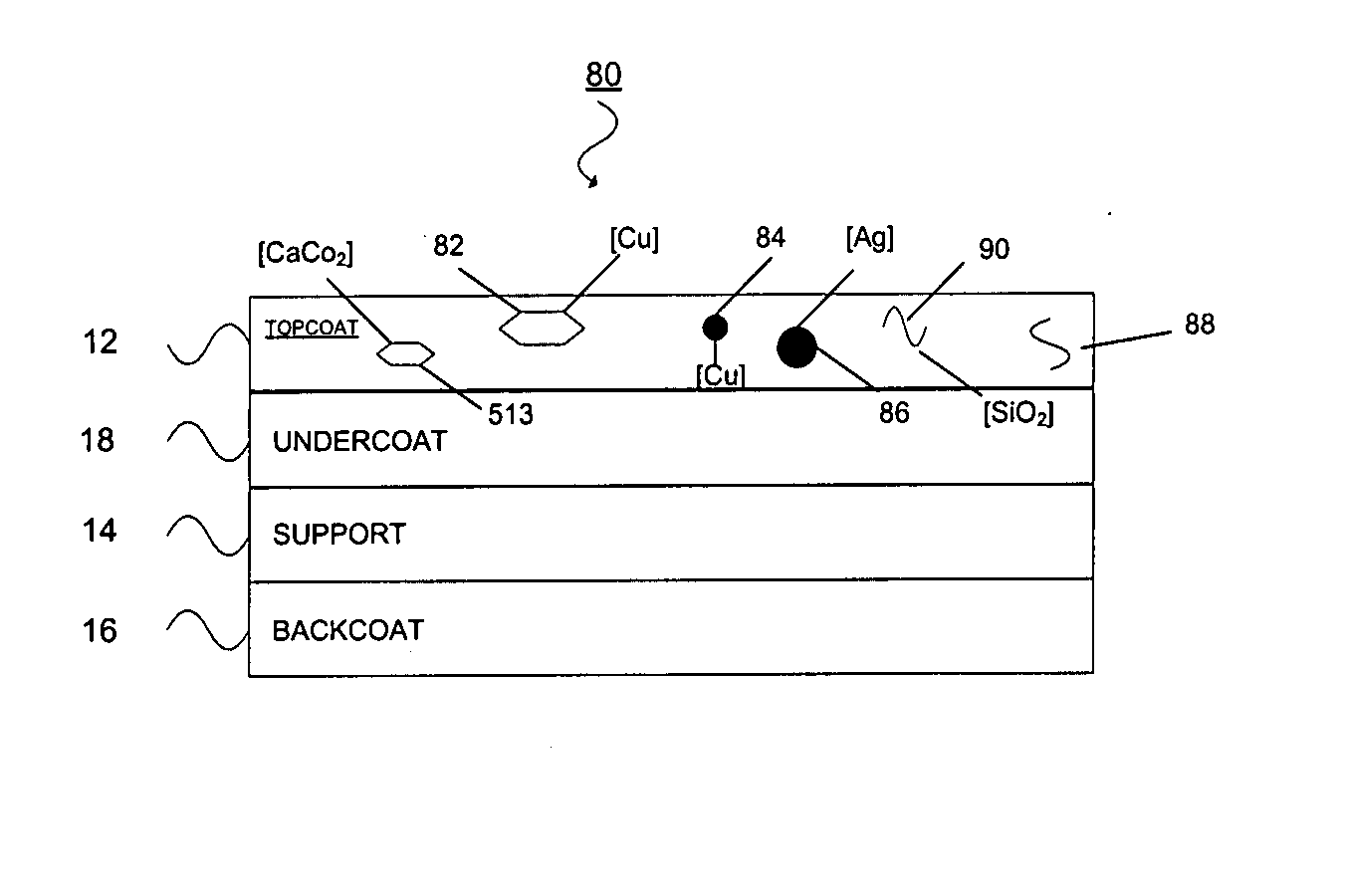
Figure 1 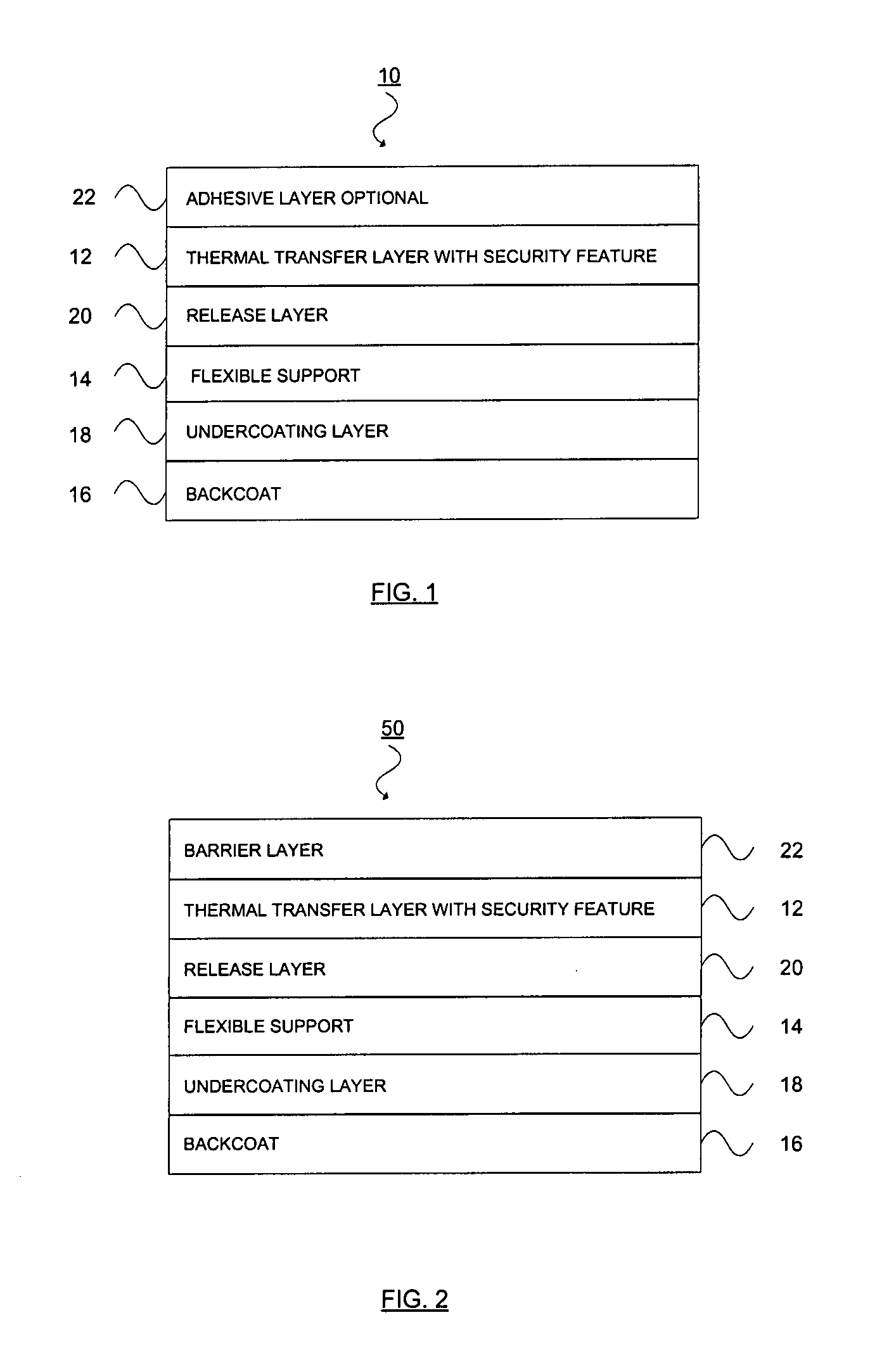
Figure 2 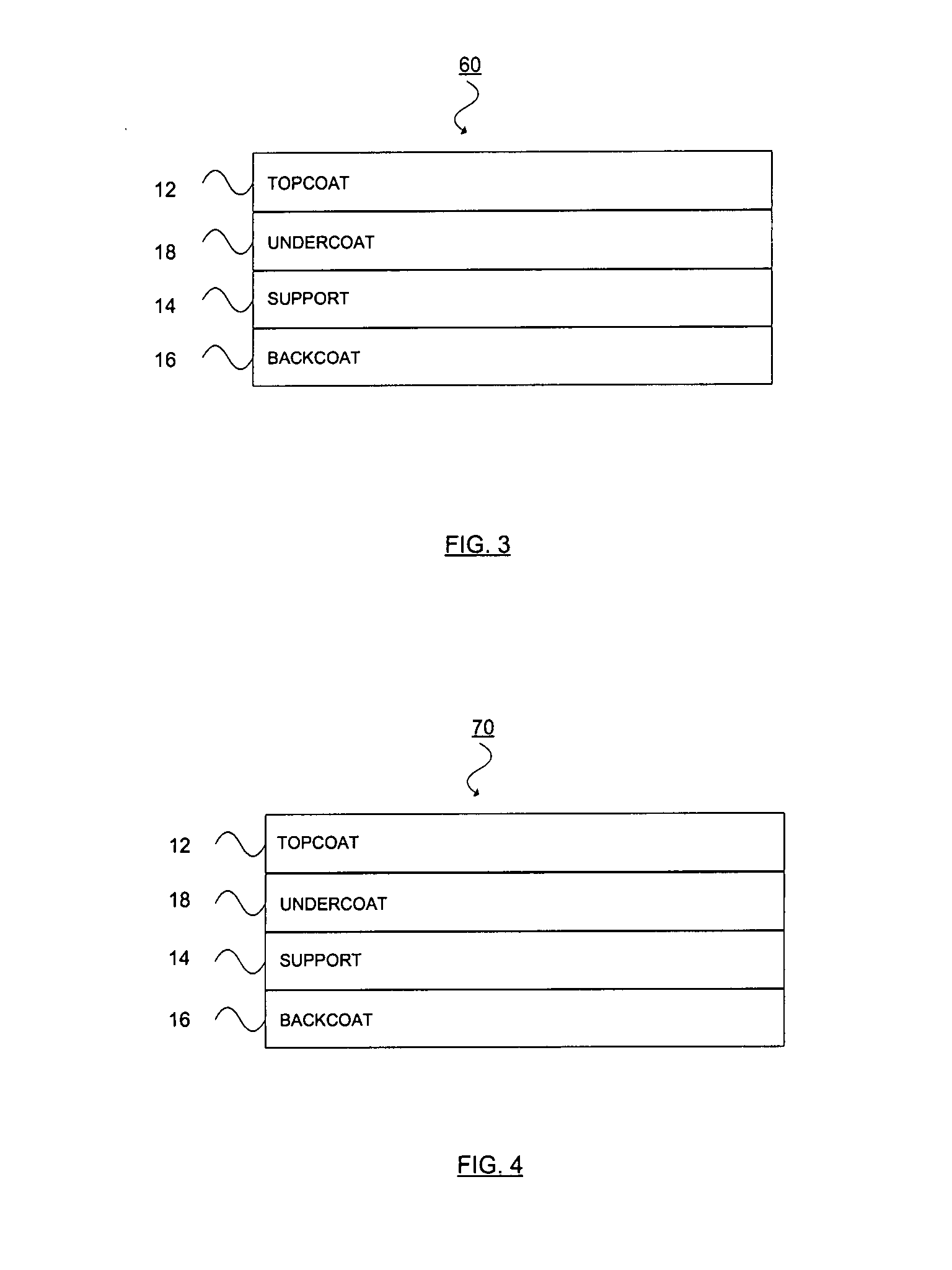
Figure 3
Abstract
Description
CROSS-REFERENCE TO RELATED PATENT APPLICATIONS
[0001] This patent application claims priority based upon U.S. patent application 60 / 840,732, filed on Aug. 29, 2006. The entire disclosure of this provisional patent application is hereby incorporated by reference into this specification.FIELD OF THE INVENTION
[0002] A thermal transfer ribbon adapted to print an overt, covert or forensic level security mark onto a substrate. BACKGROUND OF THE INVENTION
[0003] U.S. Pat. No. 6,174,400 of Krutak et al. describes near infrared fluorescent security thermal transfer printing and marking ribbons. In this patent, the “prior art” is discussed, and it is disclosed that “ . . . thermal transfer ribbons incorporating invisible marking compound which are not visible to the unaided human eye . . . ” are not known. In such patent, the inventors disclose that, with regard to the infrared preferred embodiment (in which a near infrared fluorescer [NIFR] is incorporated into an ink composition), “When th...
Examples
example 1
[0247] This example illustrates the preparation of a thermal transfer ribbon that contains an essentially colorless photochromic dye that, upon exposure to 400 nanometer ultraviolet light or sunlight, becomes brightly colored and fades back to colorless when removed from the source of radiation. In addition, the thermal transfer layer of the ribbon of this example is comprised of an invisible ultraviolet fluorescing pigment with an excitation wavelength of 365 nanometers that, when exposed to this wavelength, fluoresces with an intense, bright color until removed from the source of radiation. Additionally, such thermal transfer layer also is comprised of taggant material that is incorporated in low concentrations and designed to be detectable by reader assemblies specific to the composition of the taggant. In particular, for this example, an up-shifting phosphor taggant and infrared laser detector were selected. The infrared laser detector signals only the presence of the taggant in...
example 2
[0252] A solution “A” was made by mixing 41.77 grams of solvent-grade 2-butanone and 28.13 grams solvent-grade toluene and heating the mixture to 70 degrees Celsius. After reaching this temperature, 8.7 grams of VY200 co-polyester (purchased from Bostik) and 1.68 grams Dynapoll 411 polyester (purchased from Degussa Corp, 65 Challenger Rd., Ridgefield, N.J.) were added and stirred until completely dissolved. To this solution were added 1.16 grams of 382 ES-HMW bisphenol-A fumarate polyester (purchased from Reichhold Chemical, Triangle Research Park, North Carolina); and 17.36 grams of BR87 polymethylmethacrylate (purchased from Dianal America Corporation) was added and stirred until completely dissolved and then cooled to room temperature.
[0253] An ink was prepared by mixing 59.21 grams of Solution “A,” 0.42 grams of Solsperse 24000 dispersant (purchased from Noveon, Inc. Cleveland, Ohio) and 27.74 grams of an advanced optical effect pigment Dynacolor BG (Englehard Corp., Appearance...
example 3
[0256] In this example a solution “B” was made by dissolving 6.58 grams of KeyFluor Red IR dye (Keystone Aniline Corp, Chicago, Ill.) in 94.32 grams of 2-butanone. Solution “B” was then added at 11.50 grams to 87.0 grams of the solution “A” described in Example 1 and stirred until homogenous. To this ink were then added 1.5 grams of an up-converting phosphor LUC-O-08 (Lorad Chemical Corporation, St. Petersburg, Fla.). Fifty grams of ceramic media were added to the ink, and the ink was allowed to roll on a ball mill roller for 30 minutes to aid in homogeneity. The media was then filtered out of the ink, and an ink ribbon was coated and printed as described in Example 1.
[0257] The thermally printed colored images of this example displayed three different effects. First noted was an optically variable change in visual color from blue to green when the angle of viewing the image was changed from 180 degrees to 90 degrees in normal lighting conditions, as described in Example 2. Second ...