
Ear canal hologram for hearing apparatuses
a hearing apparatus and hologram technology, applied in the field of recording equipment, can solve the problems of high cost of scanners, requiring a complex system adjustment, and almost exclusively based scanners, and achieve the effect of high-quality hologram
Patent Information
- Authority / Receiving Office
- US · United States
- Current Assignee / Owner
- Publication Date
- 2008-06-05
- Estimated Expiration
- Not applicable · inactive patent
Smart Images
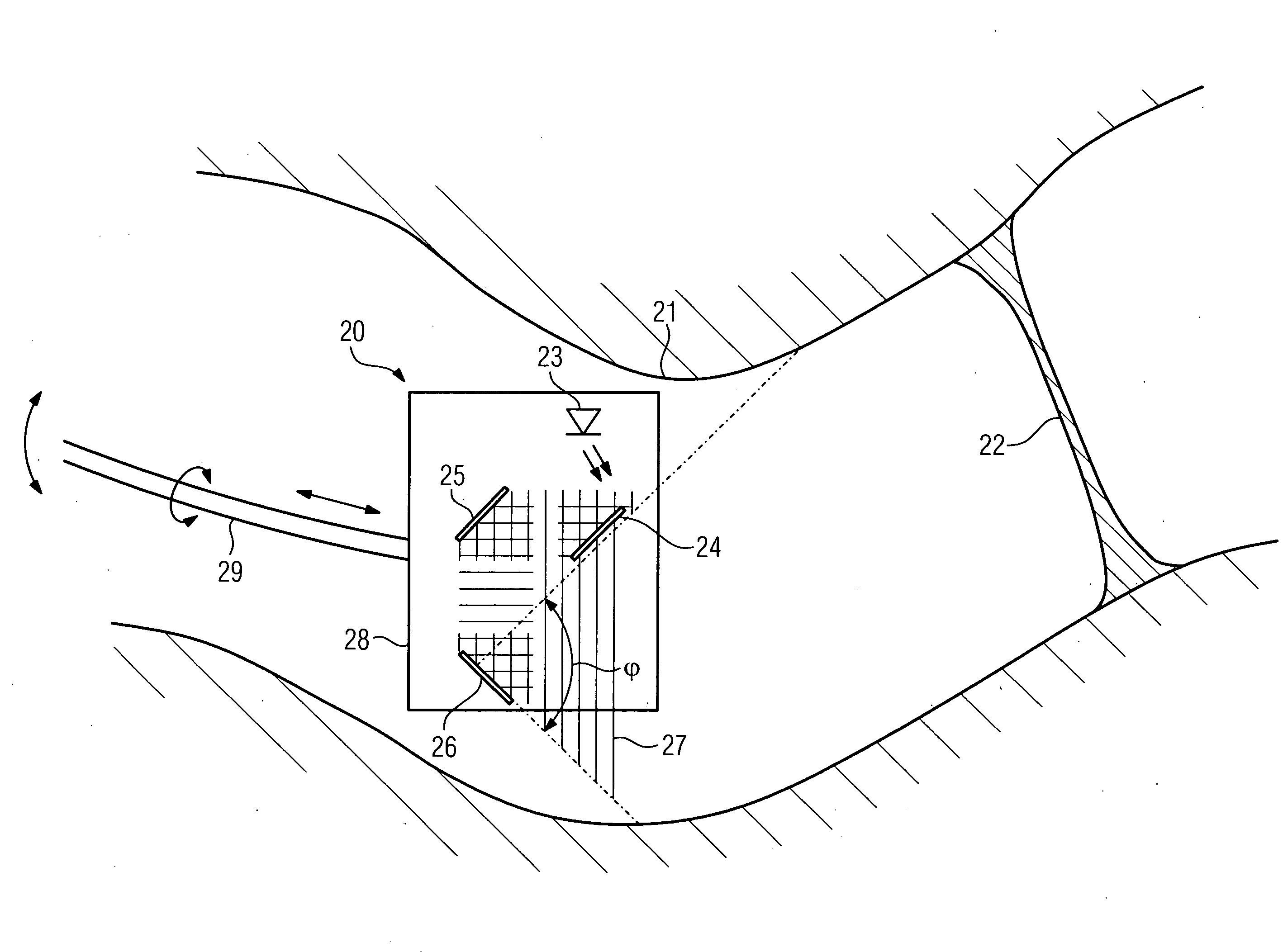
Figure 1 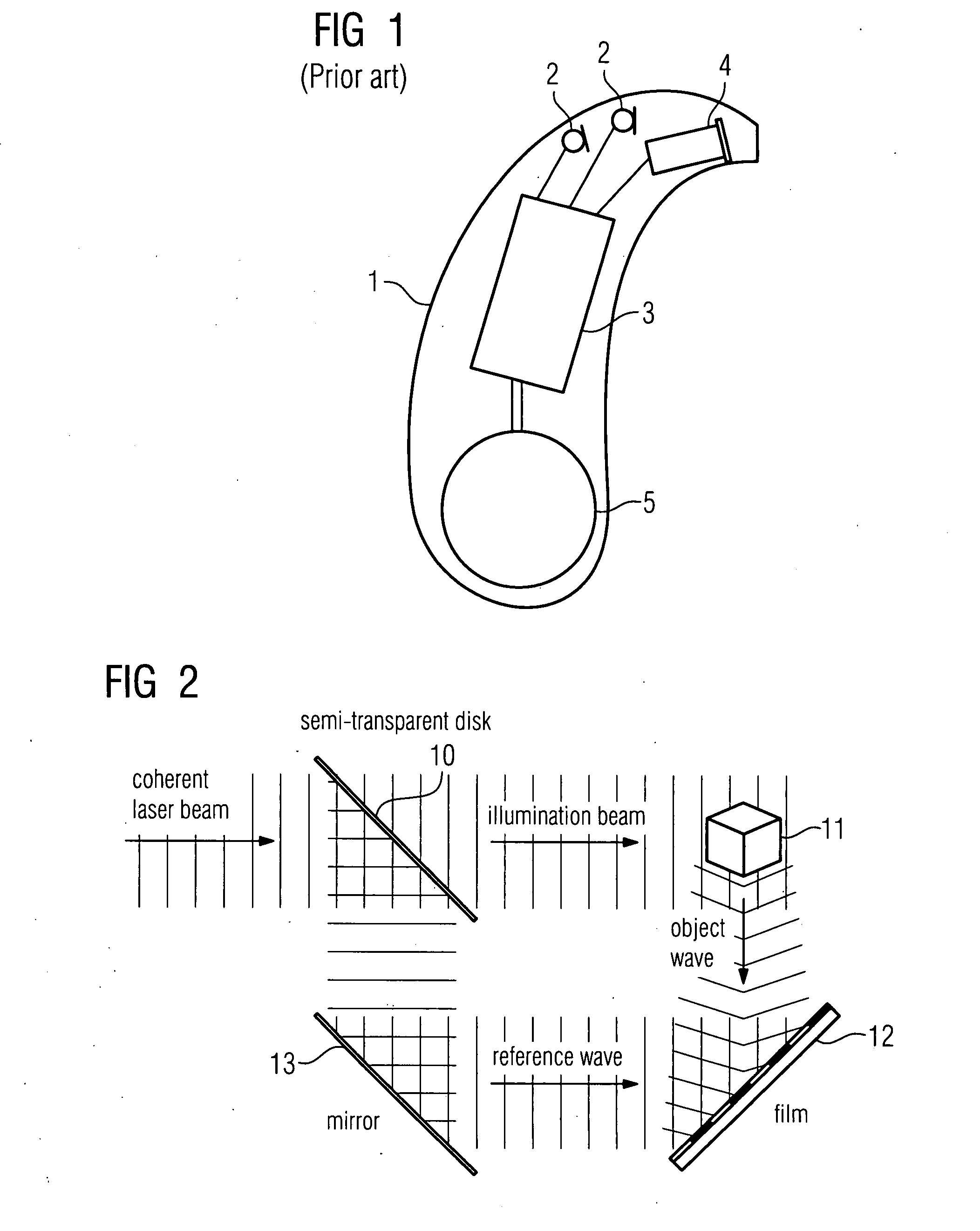
Figure 2 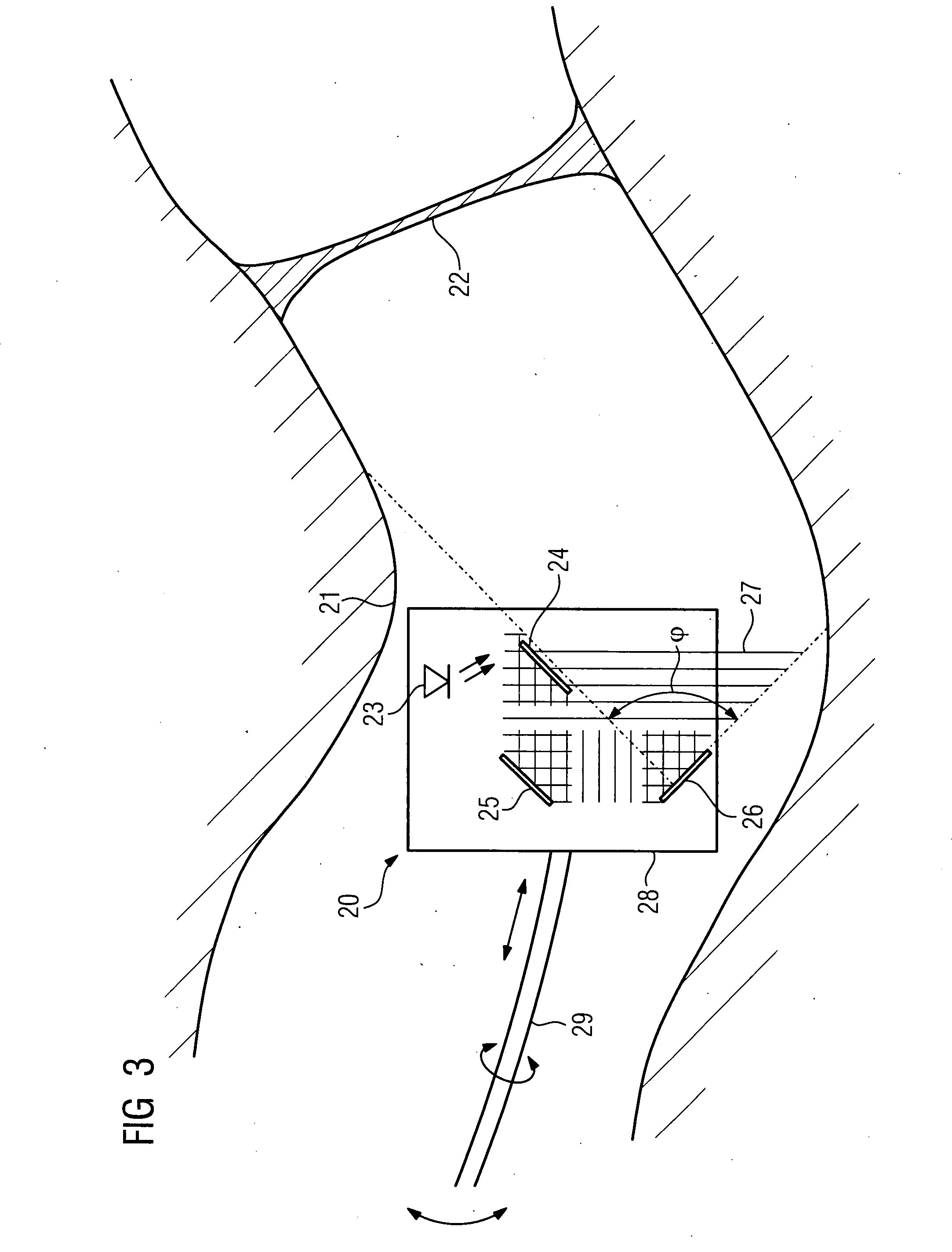
Figure 3
Abstract
Description
CROSS REFERENCE TO RELATED APPLICATIONS
[0001] The present application claims the benefit of the provisional patent application filed on Dec. 4, 2006, and assigned application No. 60 / 872,762, which is incorporated by reference herein in its entirety.FIELD OF THE INVENTION
[0002] The present invention relates to a recording apparatus for recording the spatial structure of at least one part of an ear canal or ear impression. The present invention also relates to a facility for producing a housing shell or an otoplastic for a hearing apparatus as well as a corresponding recording method and a production method. Hearing apparatus is understood here to mean in particular a hearing device, but also a headset, headphones or suchlike.
[0003] Hearing devices are wearable hearing apparatuses used to assist the hard-of-hearing. To meet the numerous individual requirements, different designs of hearing device are provided, such as behind-the ear (BTE) hearing devices, in-the-ear (ITE) hearing devices...
Examples
Embodiment Construction
[0025]The exemplary embodiment illustrated in more detail below represents a preferred embodiment of the present invention. The principle behind holography is however first explained in brief on the basis of FIG. 2, in order to gain a better understanding of the structure of the inventive device in accordance with FIG. 3.
[0026]In accordance with FIG. 2, a coherent laser beam is sent to a semi-transparent disk 10 in order to obtain a hologram. One part of the laser beam penetrates the semi-transparent disk and forms an illumination beam, which strikes the object 11, here the ear canal or the ear impression. One part of the illumination beam is reflected onto the object 11 and forms an object wave, which hits a film 12. At the same time, one part of the coherent laser beam is deflected for this purpose by the semi-transparent disk onto a mirror 13 and from there further onto the film 12 as a reference source. The object wave overlaps the reference wave on the film 12, thereby resultin...