
Mechanical scanner
a scanner and mechanical technology, applied in the field of mechanical scanners, can solve problems such as the increase in the mass of the wafer holder, and achieve the effect of reducing the mass
Patent Information
- Authority / Receiving Office
- US · United States
- Patent Type
- Applications(United States)
- Current Assignee / Owner
- Publication Date
- 2008-06-19
- Estimated Expiration
- Not applicable · inactive patent
Smart Images
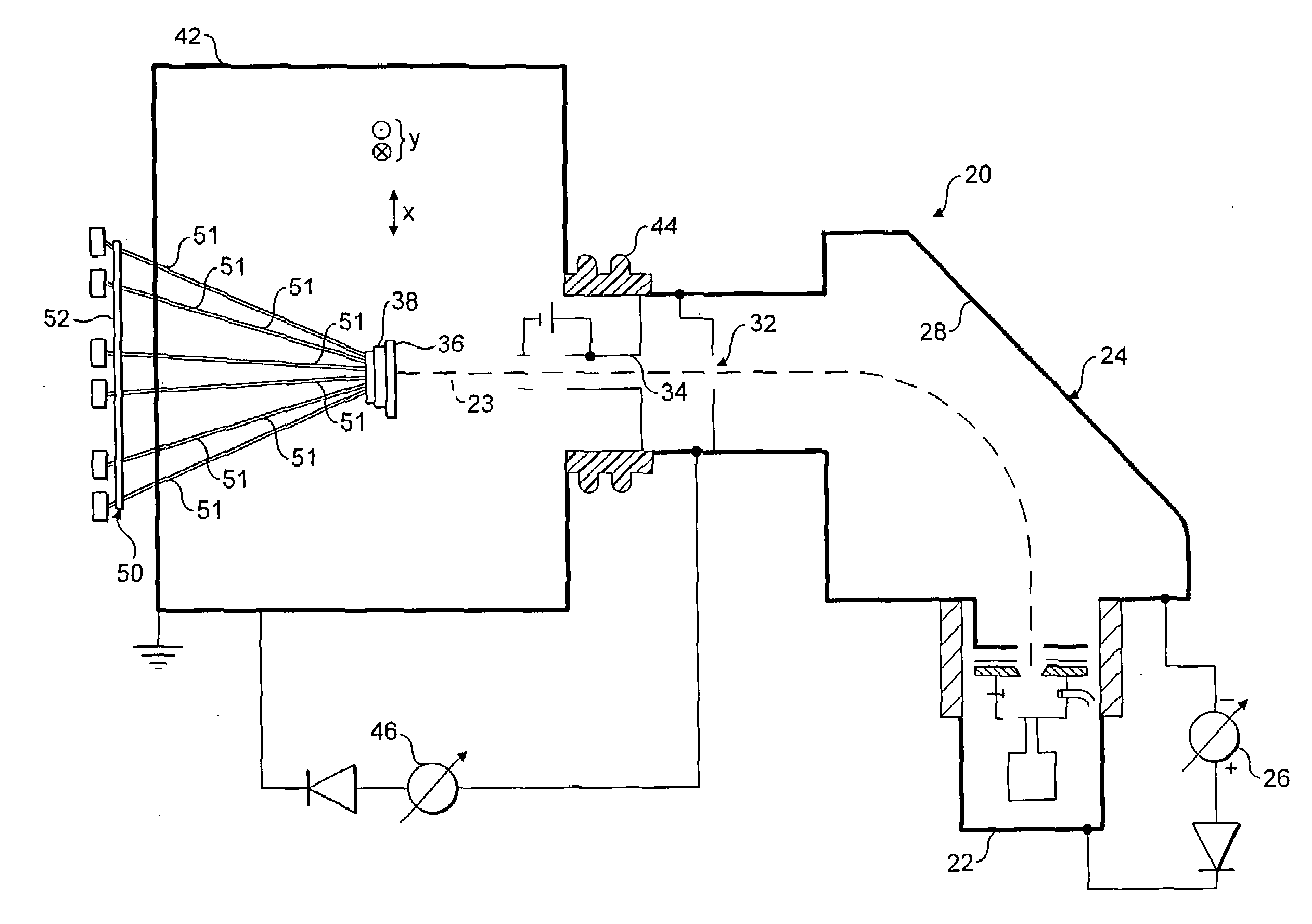
Figure 1 
Figure 2 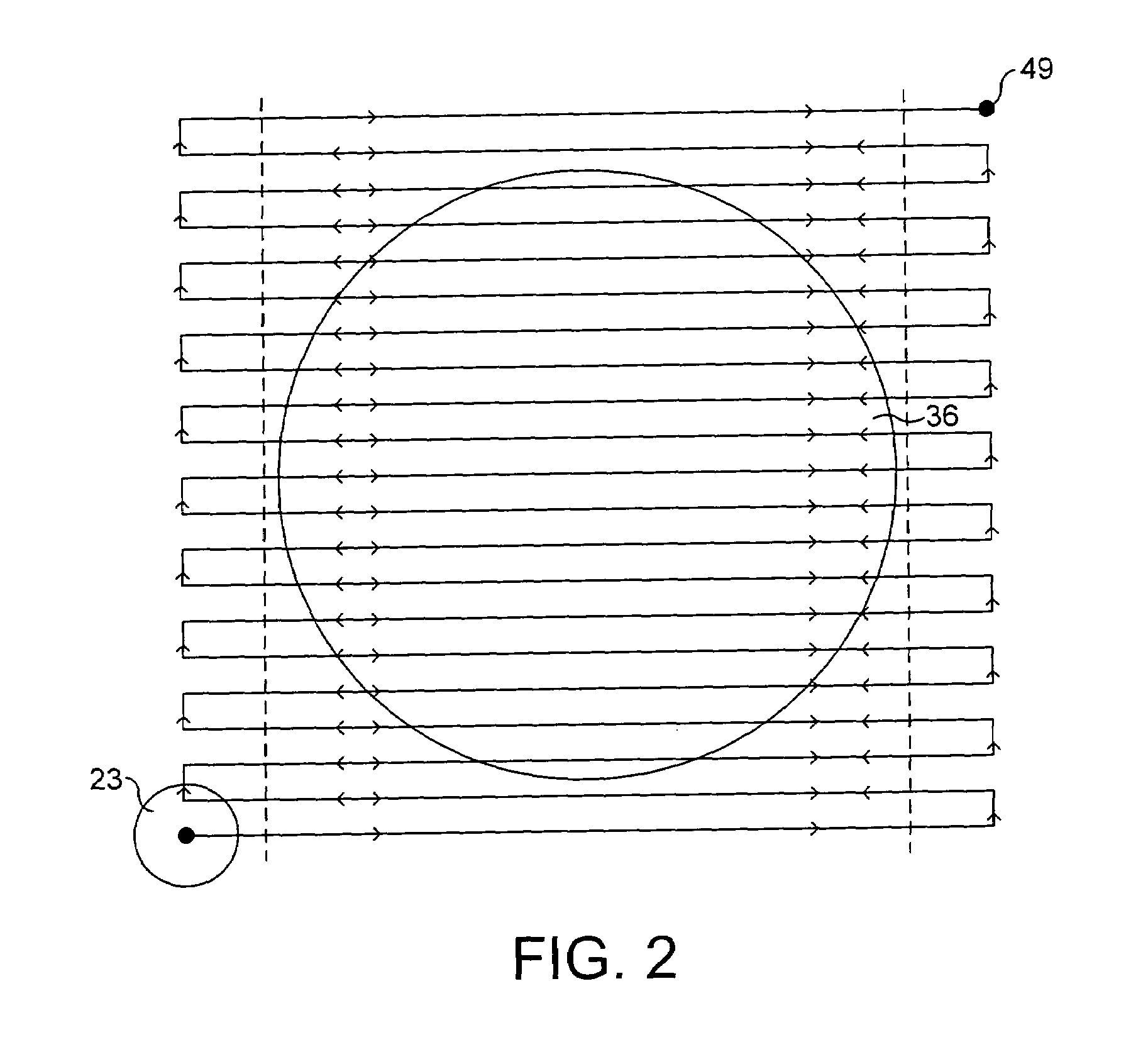
Figure 3
Abstract
Description
FIELD OF THE INVENTION
[0001] The present invention relates to a mechanical scanner, and in particular a mechanical scanner for ion implantation of a substrate.BACKGROUND OF THE INVENTION
[0002] Ion implanters are commonly used in the manufacture of semiconductor products for implanting ions in semiconductor substrates to change the conductivity of the material in predefined regions. Ion implanters generally include an ion beam generator for generating a beam of ions, a mass analyser for selecting a particular specie of ions in the ion beam and means to direct the ion beam onto a target substrate. To allow uniformity of ion implantation typically an ion beam is scanned across the surface of a substrate. As such, the cross sectional area of the ion beam is typically less than the surface area of the substrate, which necessitates traversal of the ion beam over the substrate in a one or two-dimensional scan so that the ion beam covers the whole surface of the substrate. Three two dimension...
Examples
Embodiment Construction
[0034]FIG. 1 shows a typical ion implanter 20 comprising an ion beam source 22 such as a Freeman or Bernas ion source that is supplied with a pre-cursor gas for producing an ion beam 23 to be implanted into a wafer 36. The ions generated in the ion source 22 are extracted by an extraction electrode assembly. A flight tube 24 is electrically isolated from the ion source 22 and a high-tension power supply 26 supplies a potential difference therebetween.
[0035]The potential difference between the flight tube 24 and the ion source 22 causes positively charged ions to be extracted from the ion source 22 into the flight tube 24. The flight tube 24 includes a mass-analysis arrangement comprising a mass-analysing magnet 28 and a mass-resolving slit 32. Upon entering the mass-analysis apparatus within the flight tube 24, the electrically charged ions are deflected by the magnetic field of the mass-analysis magnet 28. The radius and curvature of each ion's flight path is defined, through a con...