
Patrol function used in flash storage controller to detect data errors
Patent Information
- Authority / Receiving Office
- US · United States
- Current Assignee / Owner
- Publication Date
- 2009-07-02
Smart Images
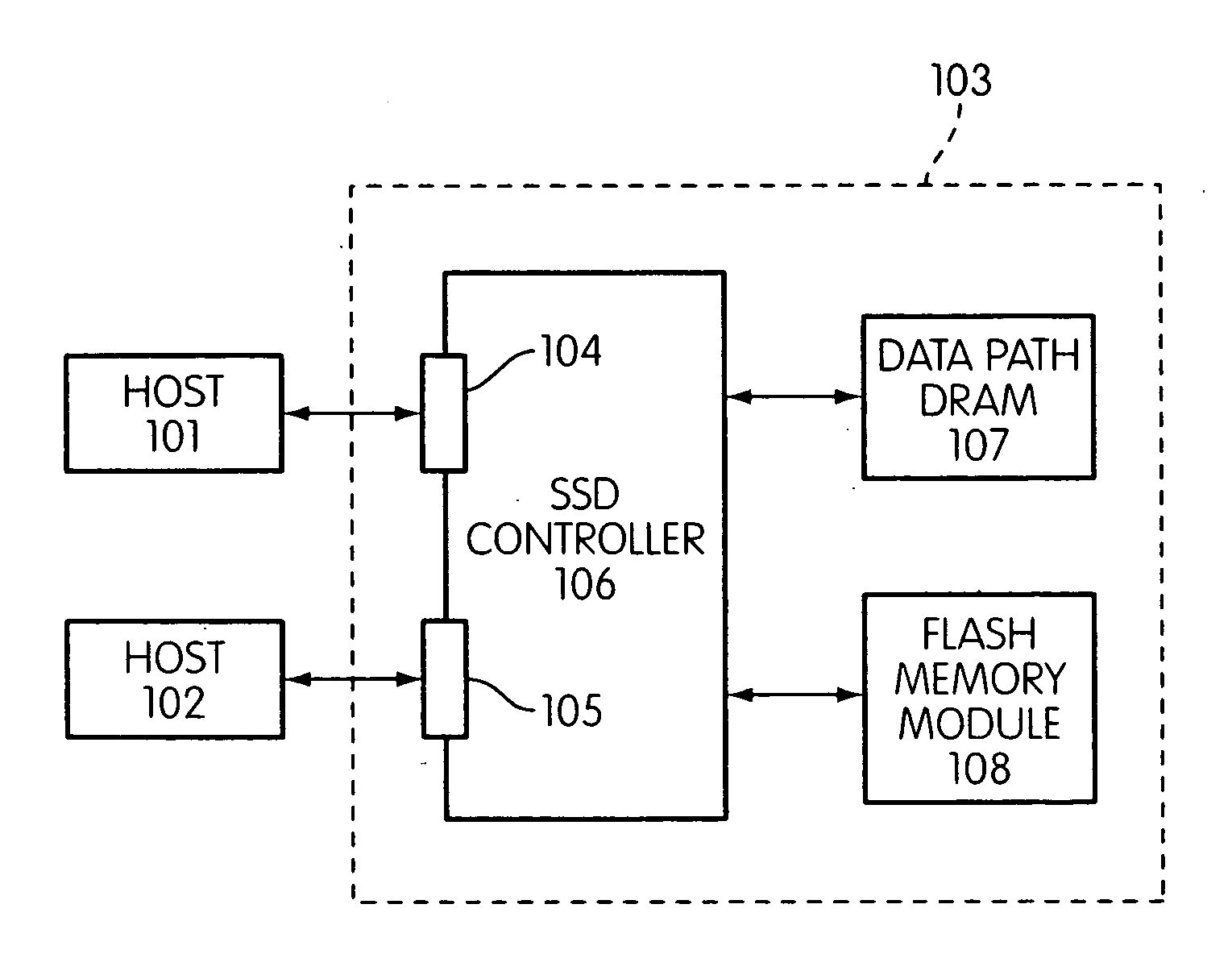
Figure 1 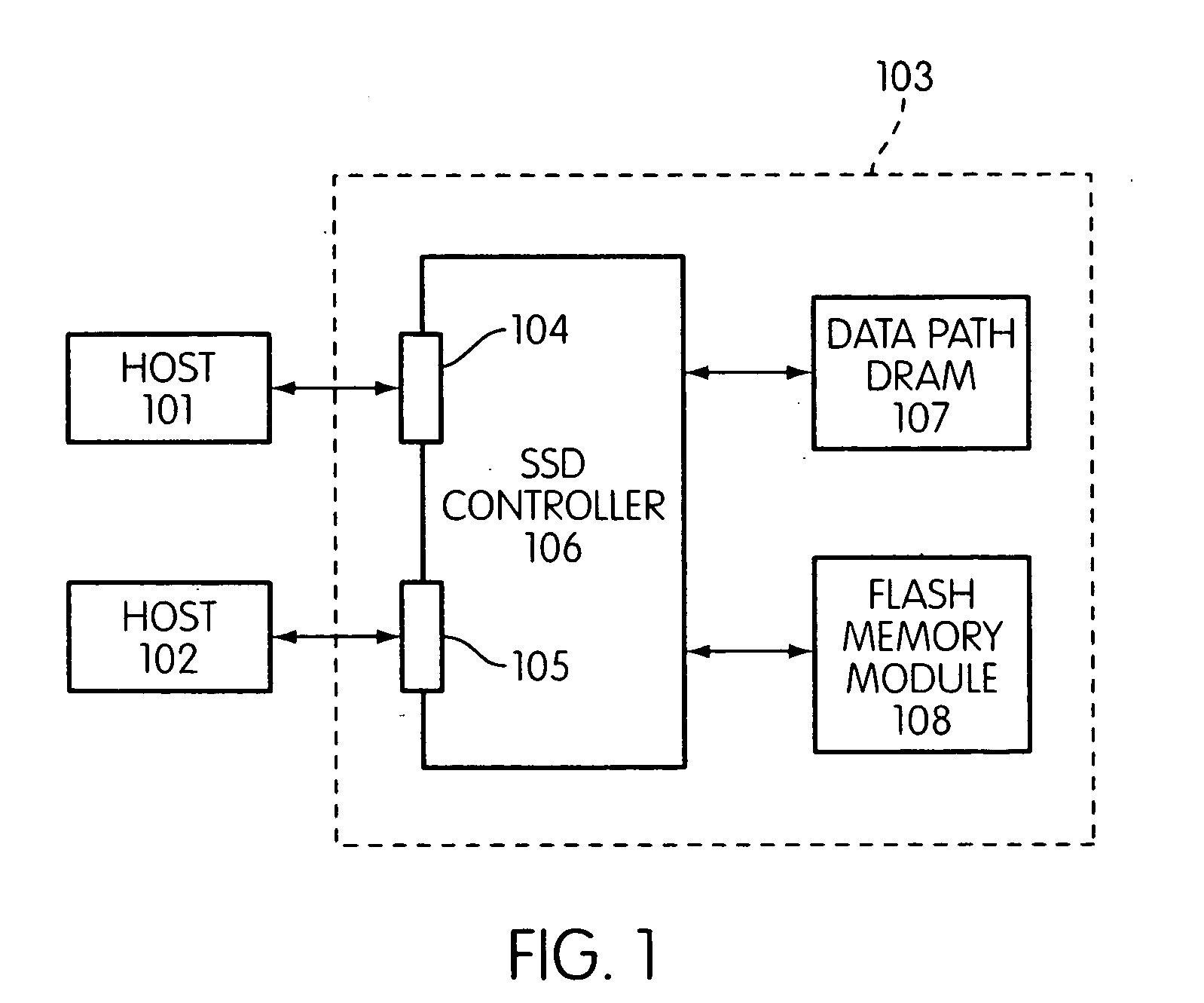
Figure 2 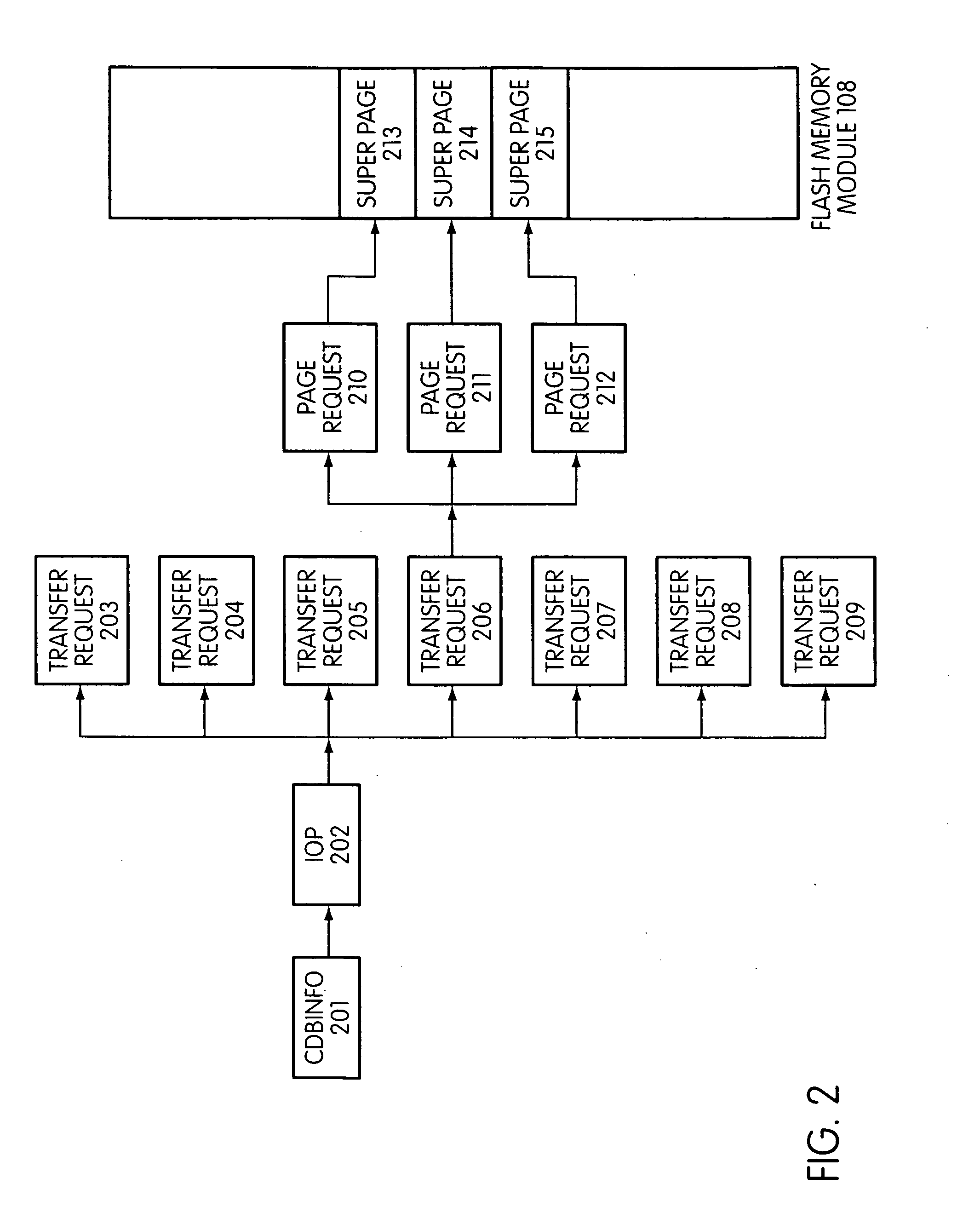
Figure 3
Abstract
Description
CROSS-REFERENCE TO RELATED APPLICATIONS
[0001] This application claims priority to U.S. Provisional Patent Application No. 61 / 017,123 filed Dec. 27, 2007, the disclosure of which is incorporated herein by reference, as if fully stated here, for all purposes.
[0002] The present application contains subject matter related to the subject matter in the following copending patent applications: U.S. patent application Ser. No. M-17228-01 US, filed on even date herewith and entitled “System and Method for Performing Host Initiated Mass Storage Commands Using a Hierarchy of Data Structures;” U.S. patent application Ser. No. M-17228-02 US, filed on even date herewith and entitled “Flash Memory Controller Having Reduced Pinout;” U.S. patent application Ser. No. M-17228-03 US, filed on even date herewith and entitled “Multiprocessor Storage Controller;” U.S. patent application Ser. No. M-17228-04 US, filed on even date herewith and entitled “Storage Controller for Flash Memory Including a Crossbar...
Examples
Embodiment Construction
I. Overview.
[0071]A. System Overview.
[0072]In the currently preferred embodiment, the system described herein is designed to operate with various enterprise-level mass storage protocols, including SAS (“Serial Attached SCSI”), FC (“Fibre Channel”) and FC-AL (“Fibre Channel Arbitrated Loop), all of which are based on the Small Computer Systems Interface (“SCSI”), and Serial ATA (“SATA”) protocols. These protocols are highly familiar to those of ordinary skill in the art, and will not be further described herein. Except where particular protocols are called out, the systems and methods disclosed herein do not depend on the particular protocol being used and are designed to operate correctly with all of them. Moreover, these systems and methods may be adapted for use with other similar protocols, either currently in use or not yet developed, including protocols designed for enterprise-level applications as well as protocols designed for other applications, such as end-user.
[0073]As a m...