
Dynamic master/slave configuration for multiple expansion modules
a technology of expansion modules and master/slave configuration, applied in the field of expansion modules, can solve problems such as negative impact on the processing speed of the system, and the processing efficiency
Patent Information
- Authority / Receiving Office
- US · United States
- Patent Type
- Patents(United States)
- Current Assignee / Owner
- Publication Date
- 2009-09-08
- Estimated Expiration
- Not applicable · inactive patent
Smart Images
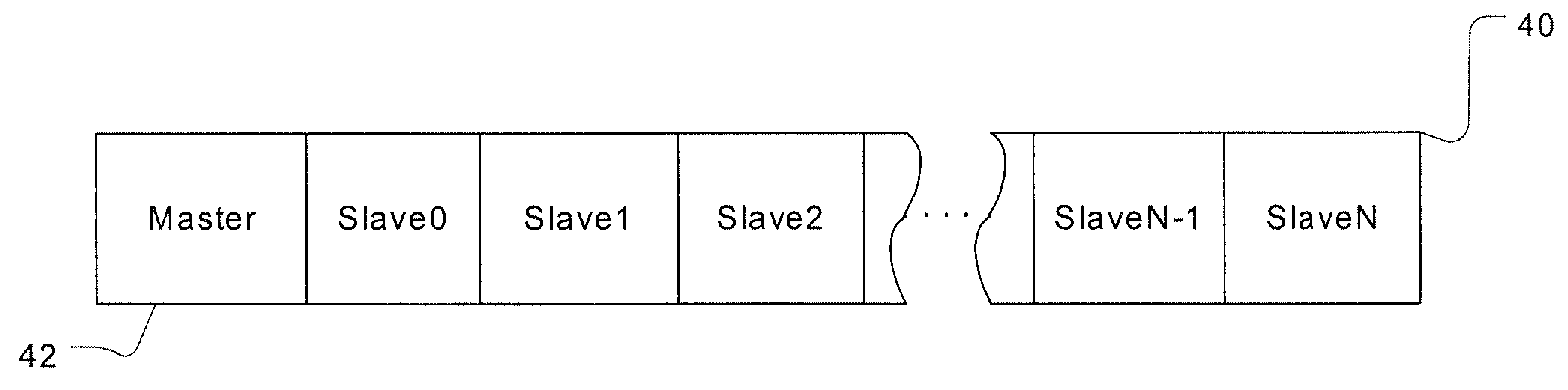
Figure 1 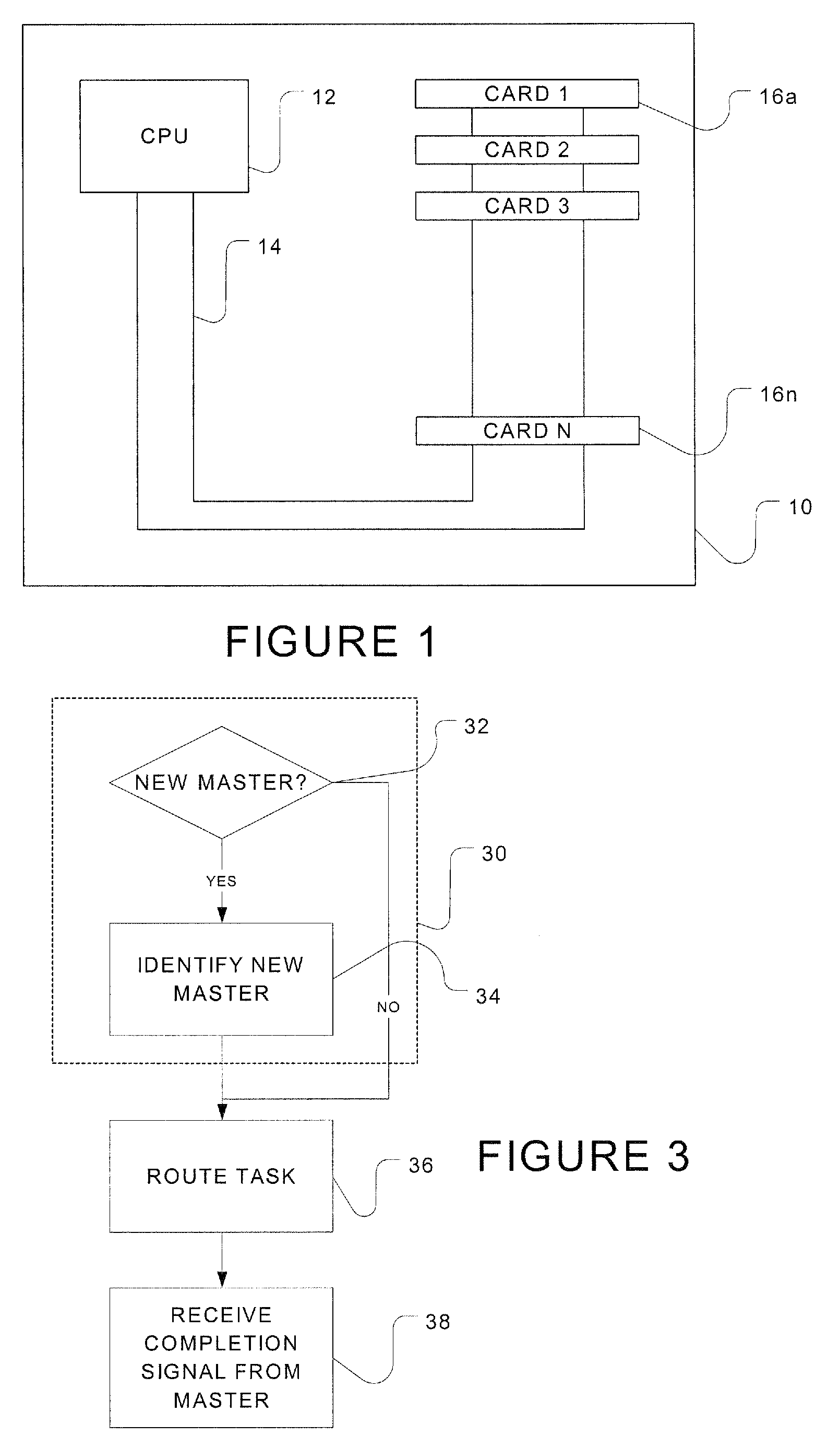
Figure 2 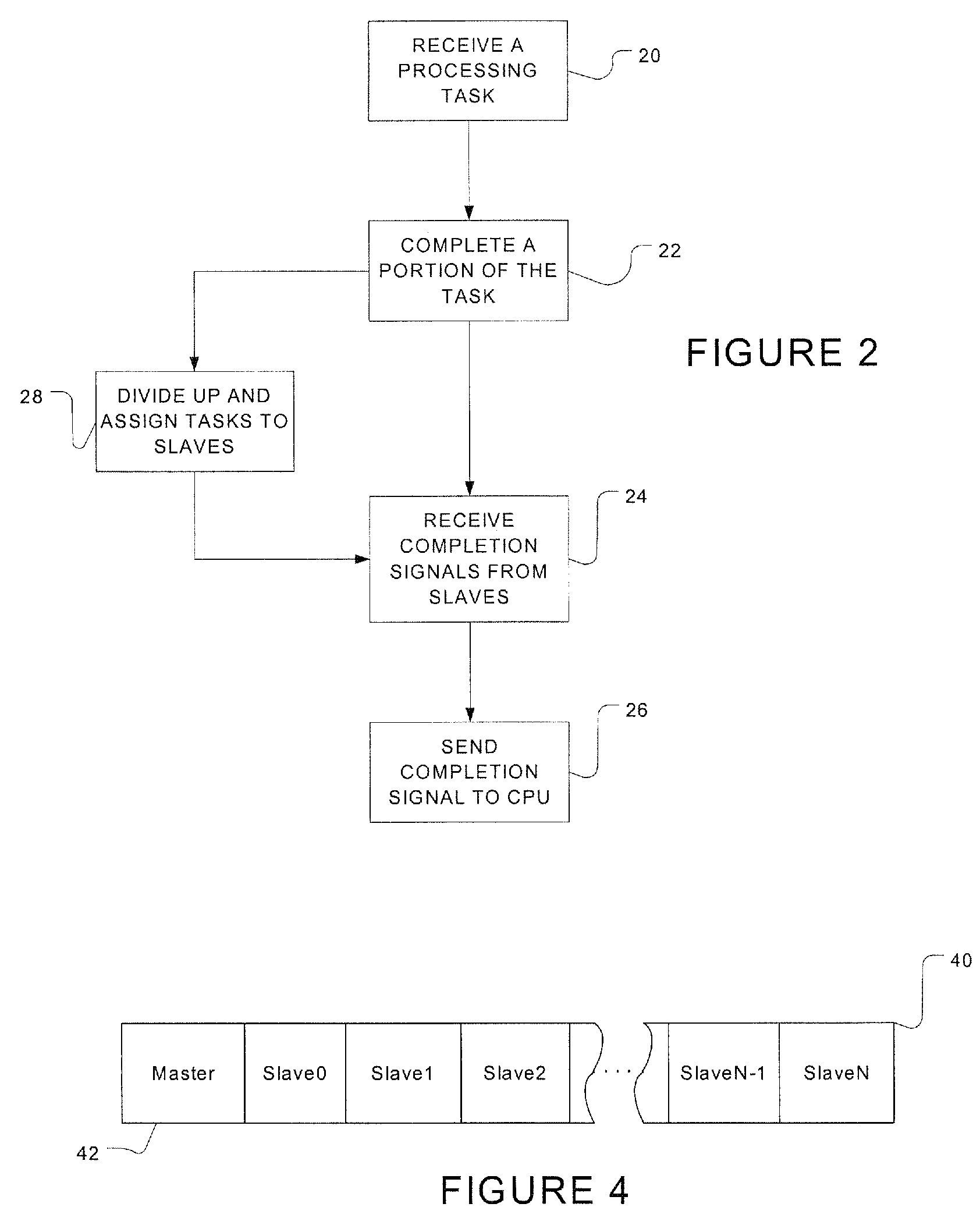
Figure 3
Abstract
Description
[0001] This application is a division of and claims priority to prior application Ser. No. 09 / 963,184 filed Sep. 25, 2001, now U.S. Pat. No. 7,152,125 which issued Dec. 19, 2006.BACKGROUND
[0002] 1. Field
[0003] This disclosure relates to expansion modules used in computing systems, more particularly to techniques to manage modules configurations.
[0004] 2. Background
[0005] Typical computer systems, such as personal computers, have moved to a more modular architecture, with components that can be easily added and removed. In many instances, these components are on modules, relatively small printed circuit boards with a connector on one end. Alternatively, they may be wired directly into the main system board or ‘motherboard.’ These modules, whether insertable or wired, will be referred to here as expansion modules. The connector allows the module to be ‘plugged in’ to the main processor board along a communication bus that allows the component on the module to communicate with the main proc...
Examples
Embodiment Construction
[0015]FIG. 1 shows a block diagram of a computing system having several expansion modules, in accordance with the invention. The computing system 10 may be any type of system with a central processing unit, such as a personal computer, a network server, or a portable device, as examples and may have a dedicated purpose, such as a digital music player or be a multipurpose device such as a personal computer (PC).
[0016]Similarly, the expansion modules 16a-16n may be any type of expansion module, including those that add extra components to the system such as modems, or those that expand current capabilities, such as providing extra memory. The designator ‘n’ as used here merely indicates an arbitrary number of expansion modules. The limitation on the number of expansion modules is only limited by the capability of the CPU to communicate with them and the capacity of the computing system to physically include them.
[0017]The CPU 12 and the various expansion modules 16a-16n communicate ac...