
Method of manufacturing edge glued laminated panels and edge glued laminated panels manufactured according to said method
Patent Information
- Authority / Receiving Office
- US · United States
- Current Assignee / Owner
- Publication Date
- 2011-01-20
- Estimated Expiration
- Not applicable · inactive patent
Smart Images
Figure 1 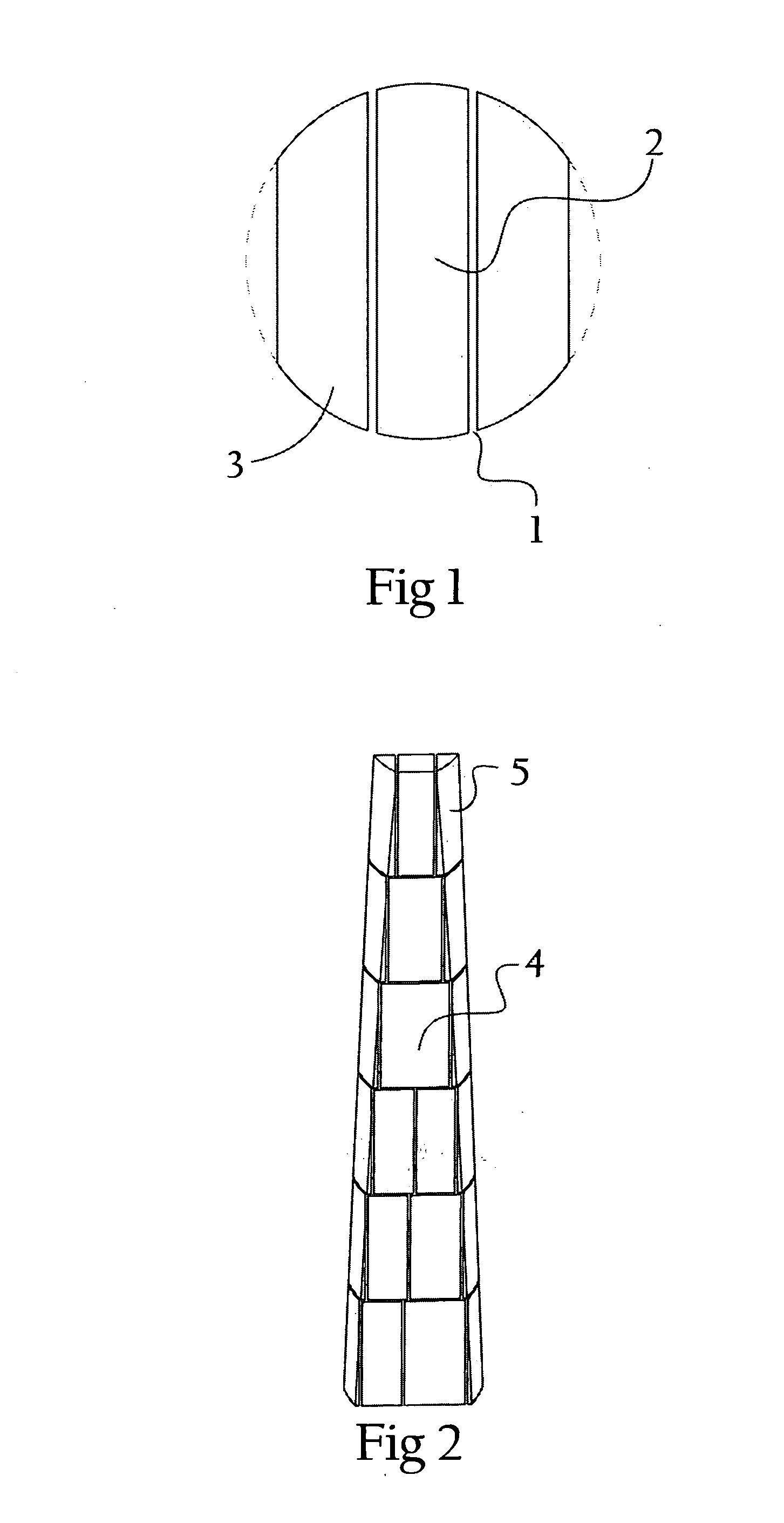
Figure 2 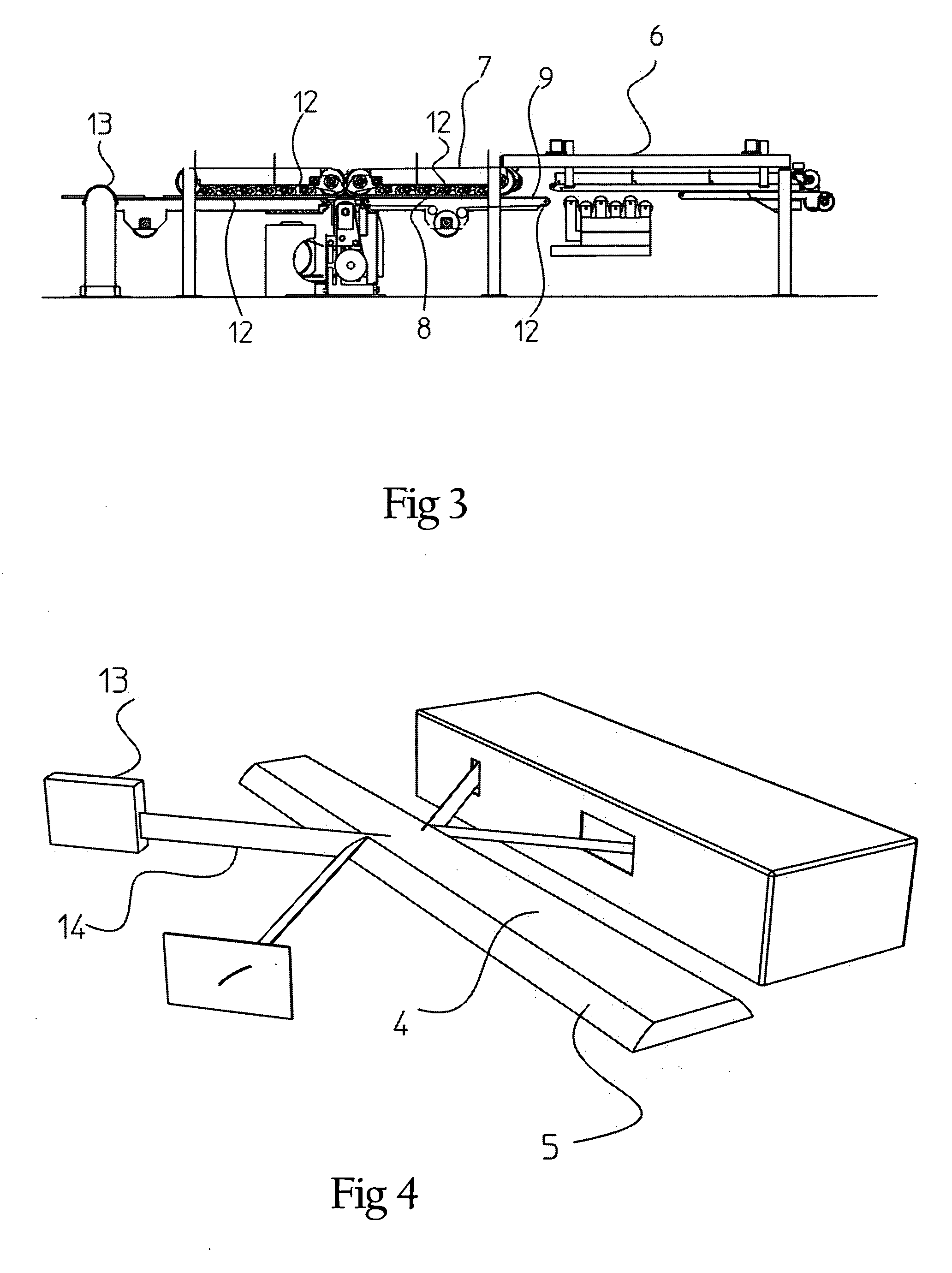
Figure 3
Abstract
Description
TECHNICAL FIELD
[0001] The present invention relates to a method of manufacturing edge glued laminated panels, preferably of timber, and edge glued laminated panels manufactured according to the method.
[0002] The manufacture of edge glued laminated panels represents a known technology that has long been in widespread use. The term edge glued laminated panels in this context relates to panels, preferably of timber material, which have been manufactured by gluing a number of laminations together widthways into larger panels. The laminations in question are known as edge glued laminations and usually have a width of 20-100 mm and a thickness of 10-50 mm. In this way it is possible, from wood of relatively small dimensions, to manufacture high-quality timber panels with widths of up to 1000 mm and more.PRIOR ART
[0003] The starting point in the conventional manufacturing process for the production of glue-laminated panels is usually sawn wood with a rectangular cross section of thicker dimen...
Examples
Embodiment Construction
[0028]In a preferred embodiment for the production of glue laminated panels the method proceeds from relatively thin timber of preferably bare wood having a top diameter of 80-140 mm, which has been cut to logs 2 with a length of 3.5-5.1 m. The exact set length of the logs must be adjusted according to the length of the end product, so as to make maximum use of the raw material. In the example, set lengths of 3.5 m, 4.3 m and 5.1 m have been selected. The taper of the timber of sawn dimensions may be assumed to be approximately 11 mm / m. In cutting up the log 2, larger root members must be milled away. The logs are sawn through in parallel sections 1 without edging to wood 3 with a thickness of approximately 20 mm and a total width preferably greater than 80 mm. After sawing, the wood 3 must be spread for drying to a moisture content of approximately 8% in the conventional way.
[0029]After drying, the wood must first be planed and then cut to form lamination pieces 4 with a length of ...