
Compositions and processes for fracturing subterranean formations
Patent Information
- Authority / Receiving Office
- US · United States
- Current Assignee / Owner
- Publication Date
- 2011-01-13
Smart Images
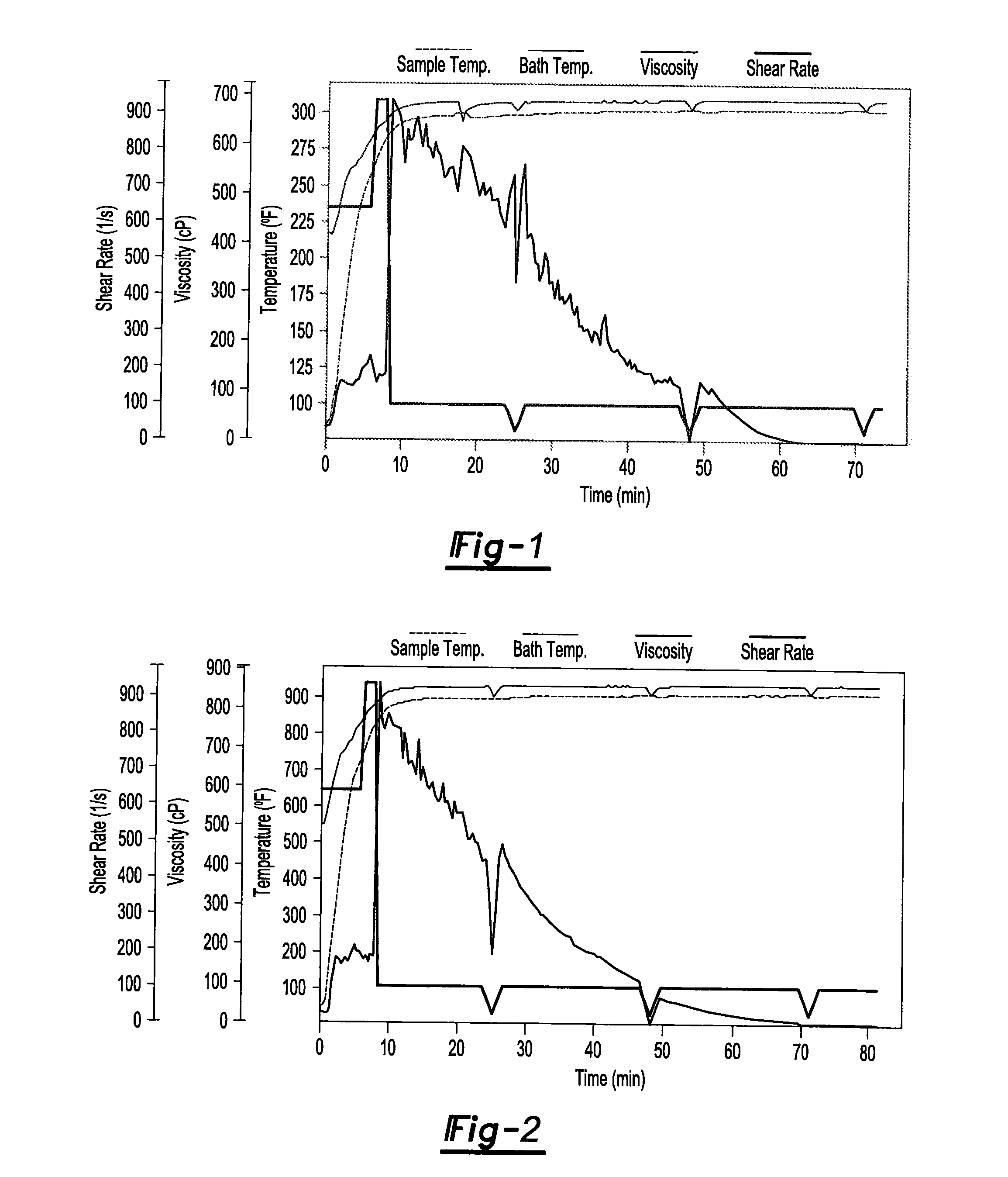
Figure 1 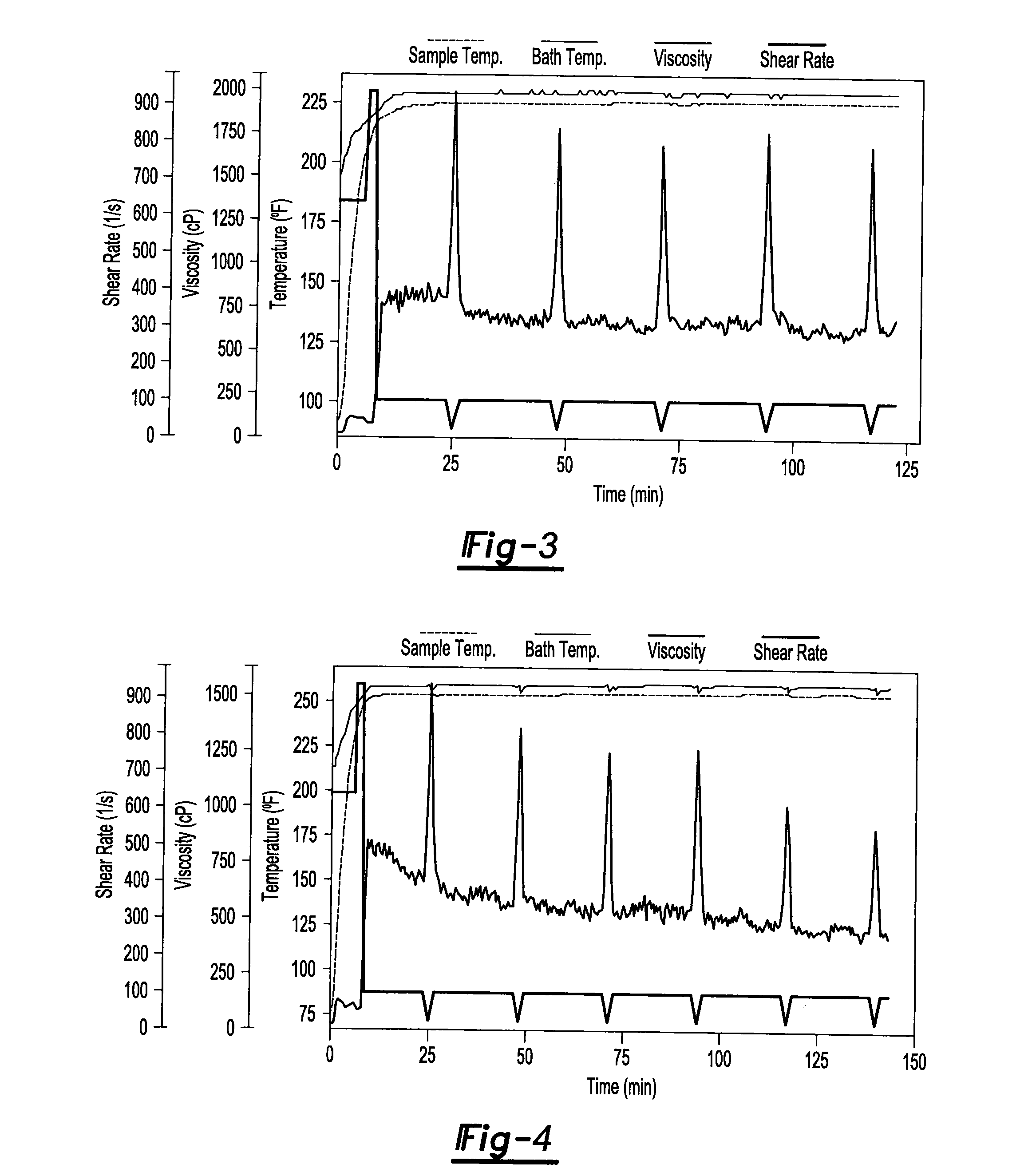
Figure 2 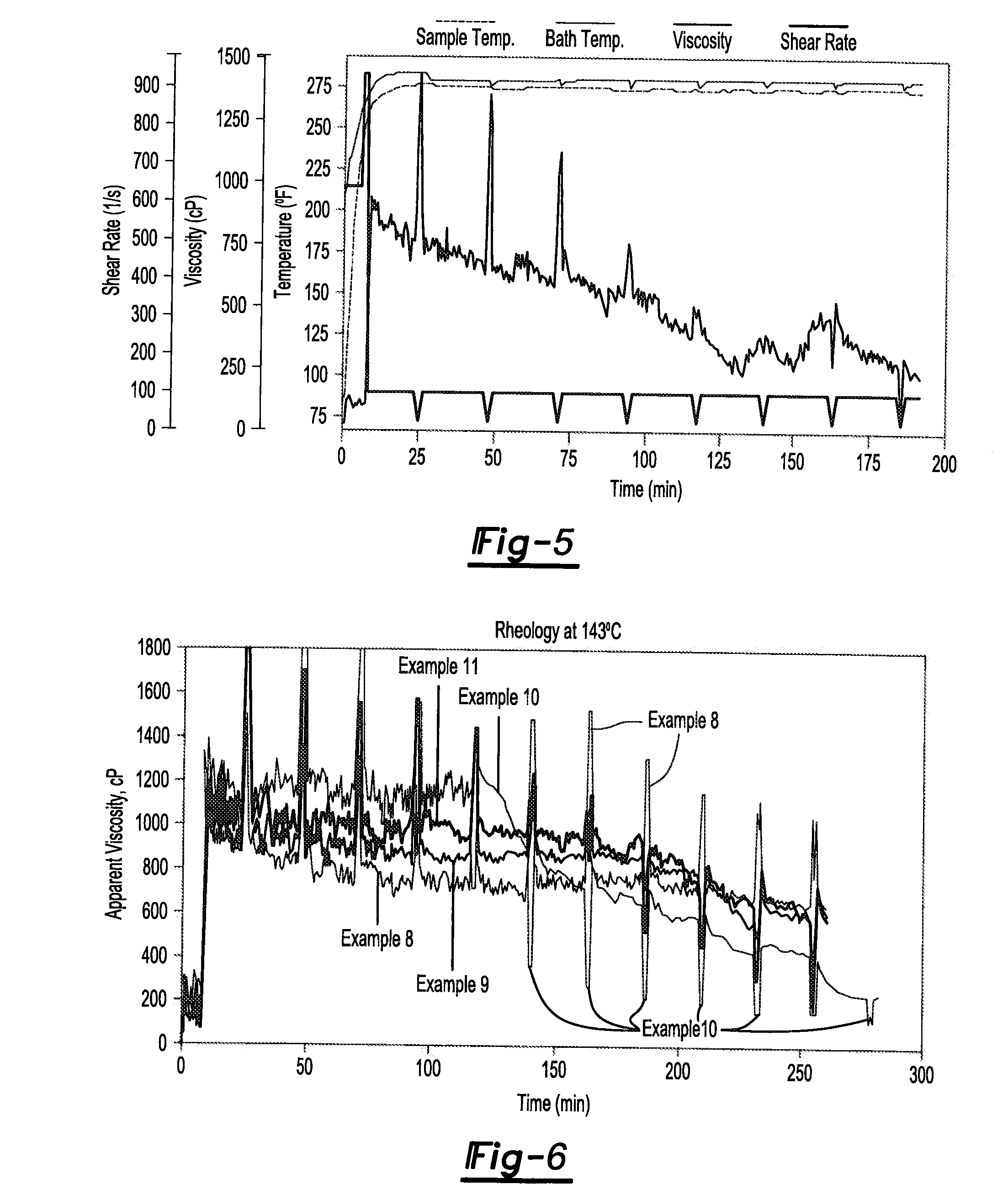
Figure 3
Abstract
Description
CLAIM OF PRIORITY
[0001] The present application claims the benefit of U.S. Provisional Patent Application Nos. 61 / 224,305 (filed on Jul. 9, 2009), 61 / 233,289 (filed on Aug. 12, 2009), and 61 / 321,660 (filed on Apr. 7, 2010), which are hereby incorporated by reference in their entirety for all purpose.FIELD OF THE INVENTION
[0002] The present invention relates generally to compositions and process for use in fracturing subterranean formations, and particularly to compositions and processes that enhance oil recovery.BACKGROUND
[0003] Fracturing is a process of injecting large volumes of fluid having a suitable fluid composition into a well at high pressures to crack rock formations and create fissures for increased production of oil and gas.
[0004] Examples of processes and compositions that have been used for fracturing are described in U.S. Pat. No. 6,599,863, filed on Aug. 20, 1999 (issued on Jul. 29, 2003), U.S. Pat. No. 4,843,118, filed on Jun. 19, 1987 (issued on Jun. 27, 1989), and U.S...
Examples
example 1
[0086]A fluid composition is prepared by mixing water with about 167 pounds per thousand gallons of total fluid (i.e., ppt) of potassium chloride, about 40 ppt hydroxyl propyl guar, about 9 ppt sodium hydroxide, about 30 ppt sodium gluconate, about 40 ppt sodium thiosulfate, and about 5 gallons per thousand gallons of fluid (i.e., gpt) of a boron salt.
example 2
[0087]A fluid composition is prepared by mixing water with about 167 pounds per thousand gallons of total fluid (i.e., ppt) of potassium chloride, about 40 ppt hydroxyl propyl guar, about 9 ppt sodium hydroxide, about 25 ppt sodium gluconate, about 35 ppt sodium thiosulfate, and about 5 gallons per thousand gallons (i.e., gpt) of a boron salt.
example 3
[0088]A fluid composition including the fluid composition of Example 1 is mixed with about 1 ppt of a sodium borate. The solution is evaluated in a rheometer at a temperature of about 149° C. (about 300° F.). The rheometer (a Grace High Temperature High Pressure rheometer) allows for testing at water based compositions at temperatures above 100° C., by using nitrogen to maintain an elevated pressure. A pressure of about 400 psi is maintained in the cylinder containing the test fluid. The initial shear rate is about 650 s−1 and is increased to about 950 s−1 at a time of about 6 minutes (about when the fluid reaches a temperature within about 5° C., preferably within about 2° C. of the test temperature). After about 8 minutes the shear rate is reduced to about 100 s−1. The shear rate is maintained at 100 s−1, except for short reductions (e.g., about 3 minutes in duration) in the shear rate to about 30 s−1 every 20 to 30 minutes. Thus evaluated, the initial viscosity of the fluid compo...