
Ballast removal process
Patent Information
- Authority / Receiving Office
- US · United States
- Current Assignee / Owner
- Publication Date
- 2011-10-13
- Estimated Expiration
- Not applicable · inactive patent
Smart Images
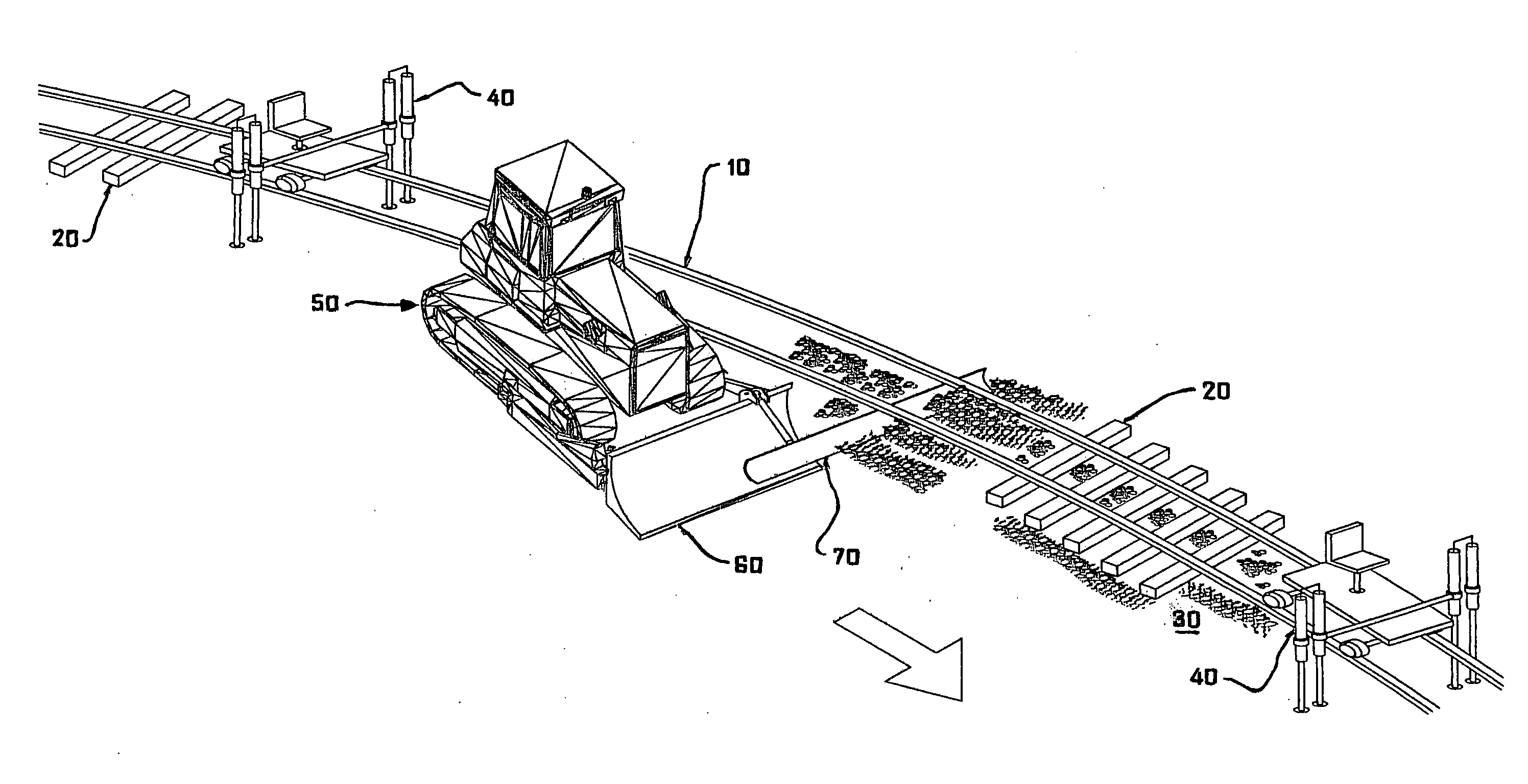
Figure 1 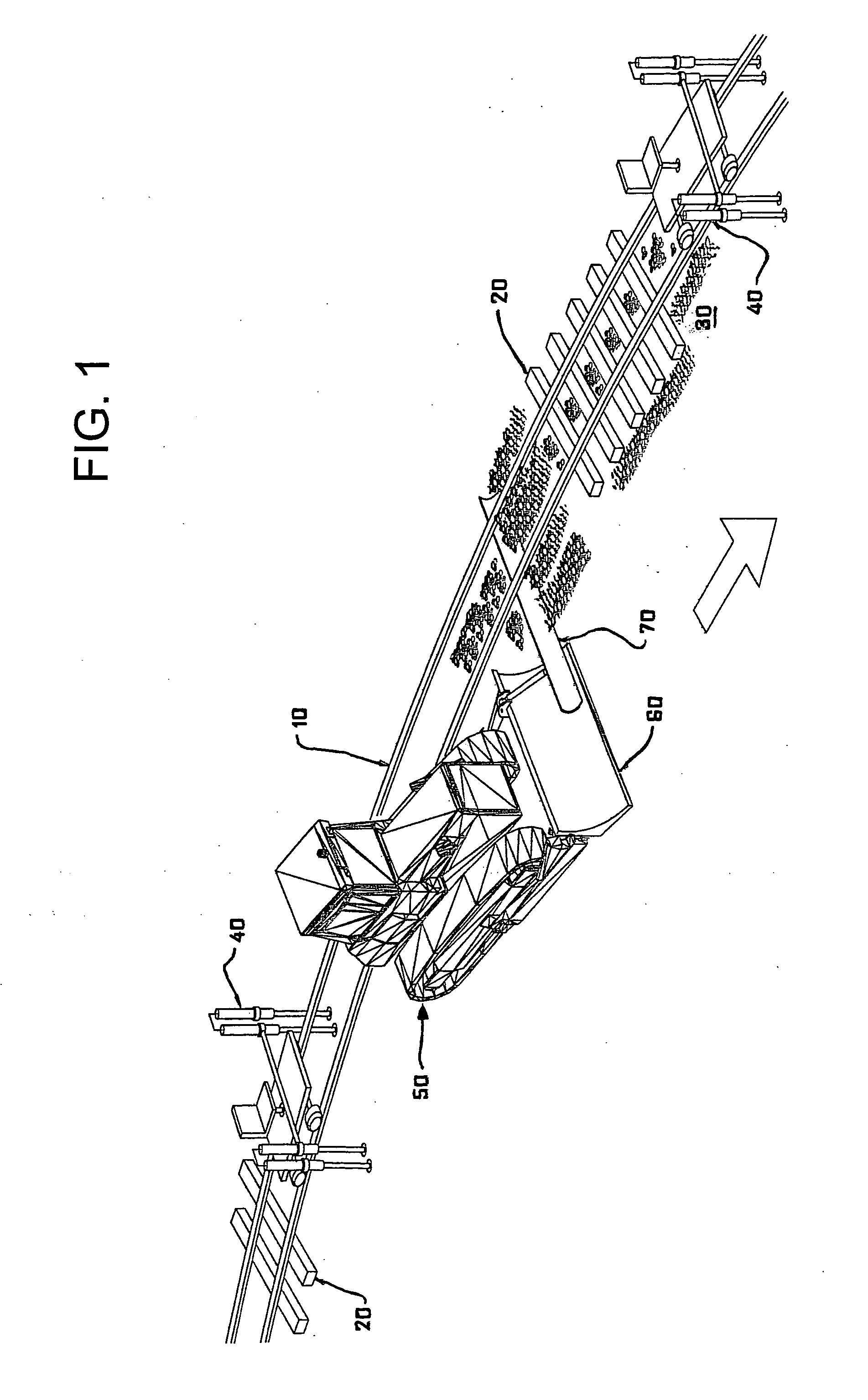
Figure 2 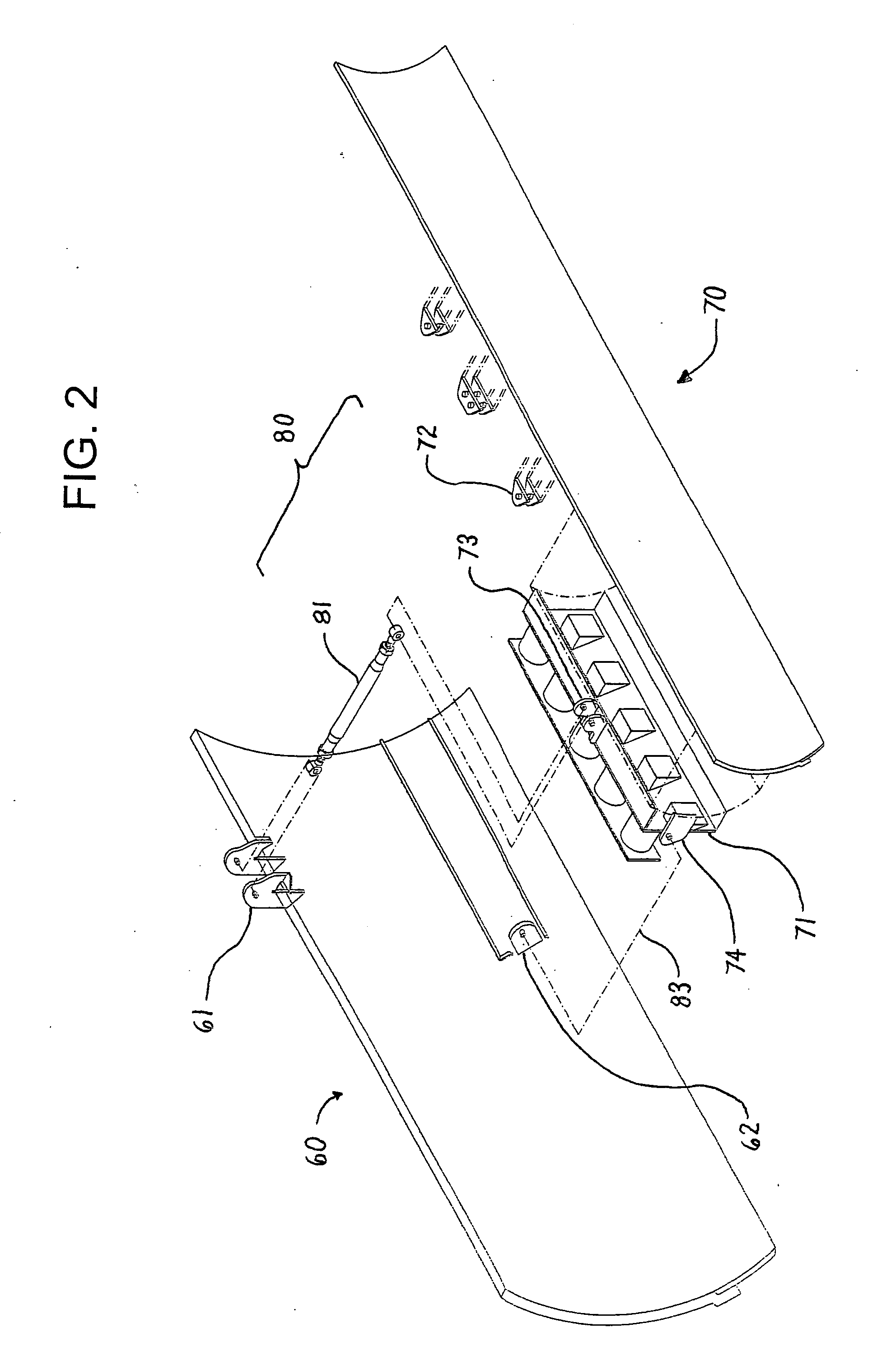
Figure 3
Abstract
Description
FIELD OF THE INVENTION
[0001] This invention relates to railways. More particularly, this invention relates to a process for removing railway ballast.BACKGROUND OF THE INVENTION
[0002] Railways consist of track (two parallel steel rails attached to transverse wooden ties) that rests upon a base of crushed rock known as ballast. The ballast serves several purposes. Its primary purpose is to provide an easily leveled base for the track. Additional purposes are achieved because the ballast is compressible. The compressibility provides cushioning as the train passes, accommodates the expansion and contraction of the track at temperature extremes, and avoids vertical movement caused by freeze-thaw cycles.
[0003] Fine materials from coal, grain, and other bulk solids frequently leak from railroad cars. Over time, these fine materials build up in the ballast directly under the tracks. The presence of these fine materials reduces the compressibility of the ballast. Accordingly, it is necessary to...
Examples
Embodiment Construction
[0013]This invention is best understood by reference to the drawings. Referring to FIG. 1, a section of railway track consisting of rails 10 and ties 20 (only portions of which are shown for clarity) is elevated above a bed of ballast 30 by two railway jacks 40 that are spaced about 50 to 200 feet apart. Suitable railway jacks are well known in the industry and are available from many different manufacturers.
[0014]A bulldozer 50 having a front blade 60 is positioned alongside the section of elevated railway track. The position of the blade is controllable by the operator from inside the cab. The bulldozer is conventional except for an elongated rake 70 attached to the front blade. The means for attachment 80 is a matter of choice and can be permanent (e.g., the rake can be welded to the blade) or temporary (i.e., the rake is able to be attached to and removed from the blade in a relatively short time). The means for attachment is preferably temporary so the bulldozer can be used in ...