

Catheter assembly with seal member
a technology of seal member and catheter, which is applied in the field of catheter assembly with seal member, can solve the problems that none seems to have garnered commercial acceptance, and achieve the effect of improving the hemostasis seal arrangemen
Patent Information
- Authority / Receiving Office
- US · United States
- Patent Type
- Applications(United States)
- Current Assignee / Owner
- Publication Date
- 2011-12-29
Smart Images
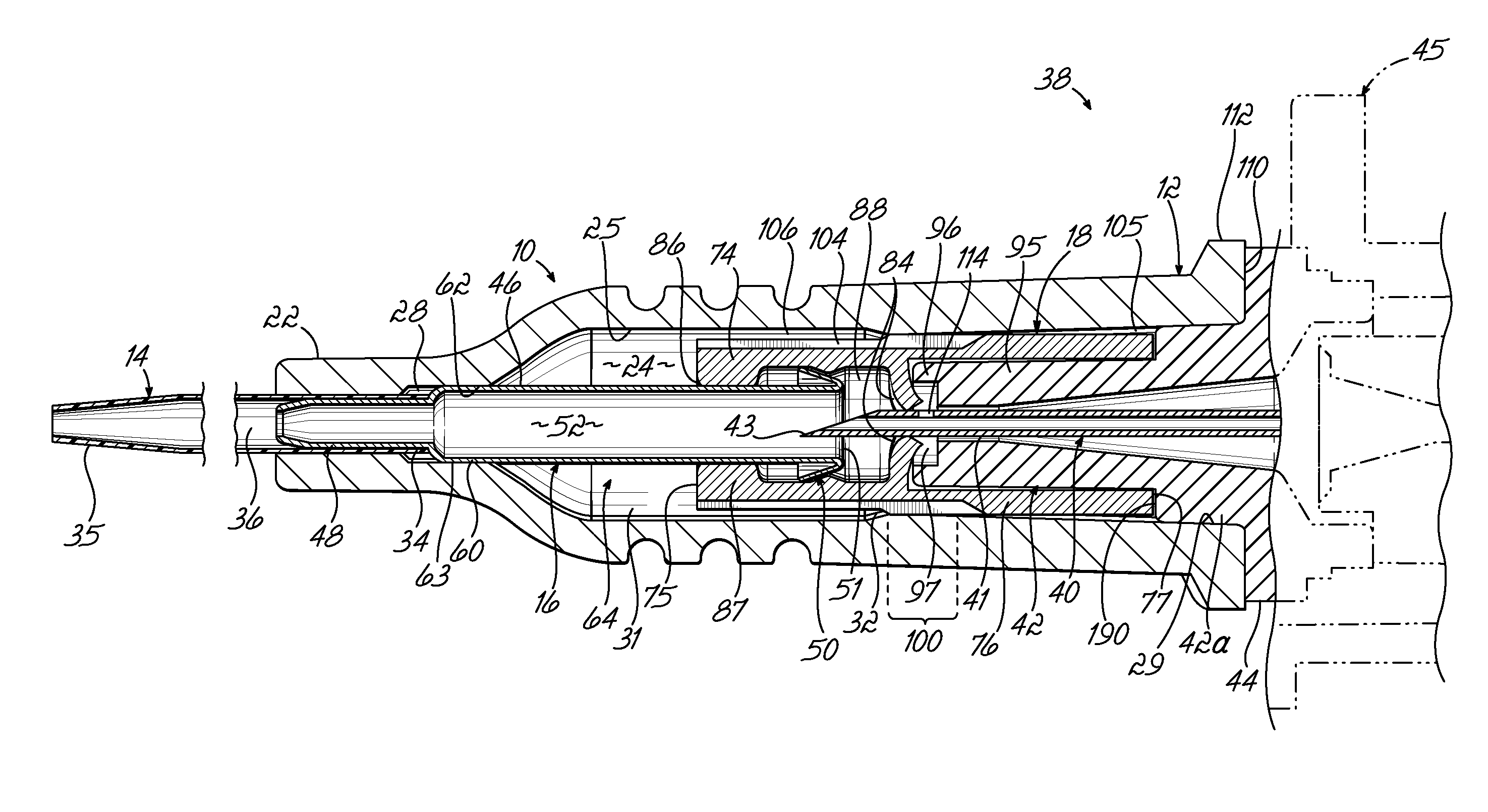
Figure 1 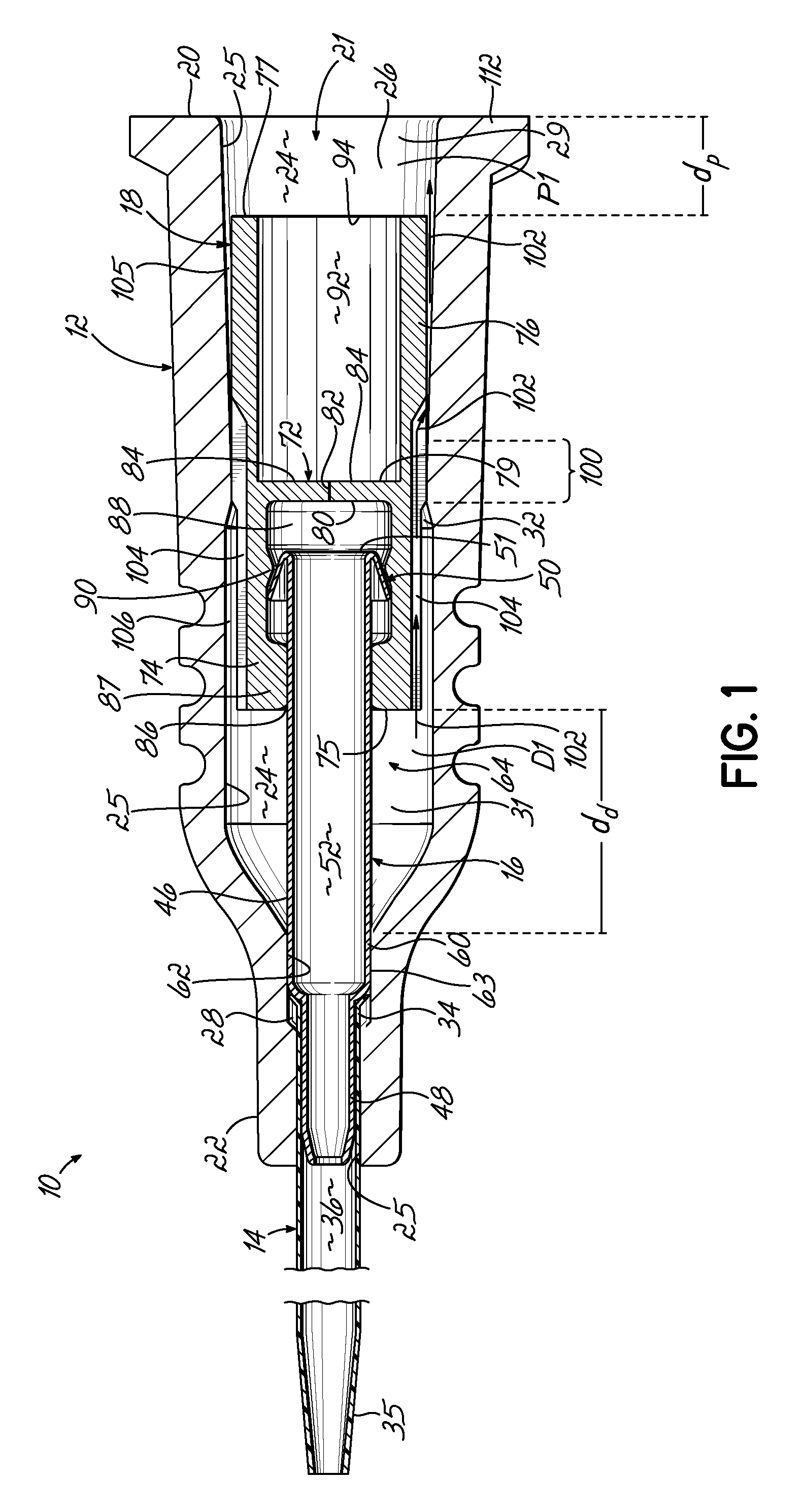
Figure 2 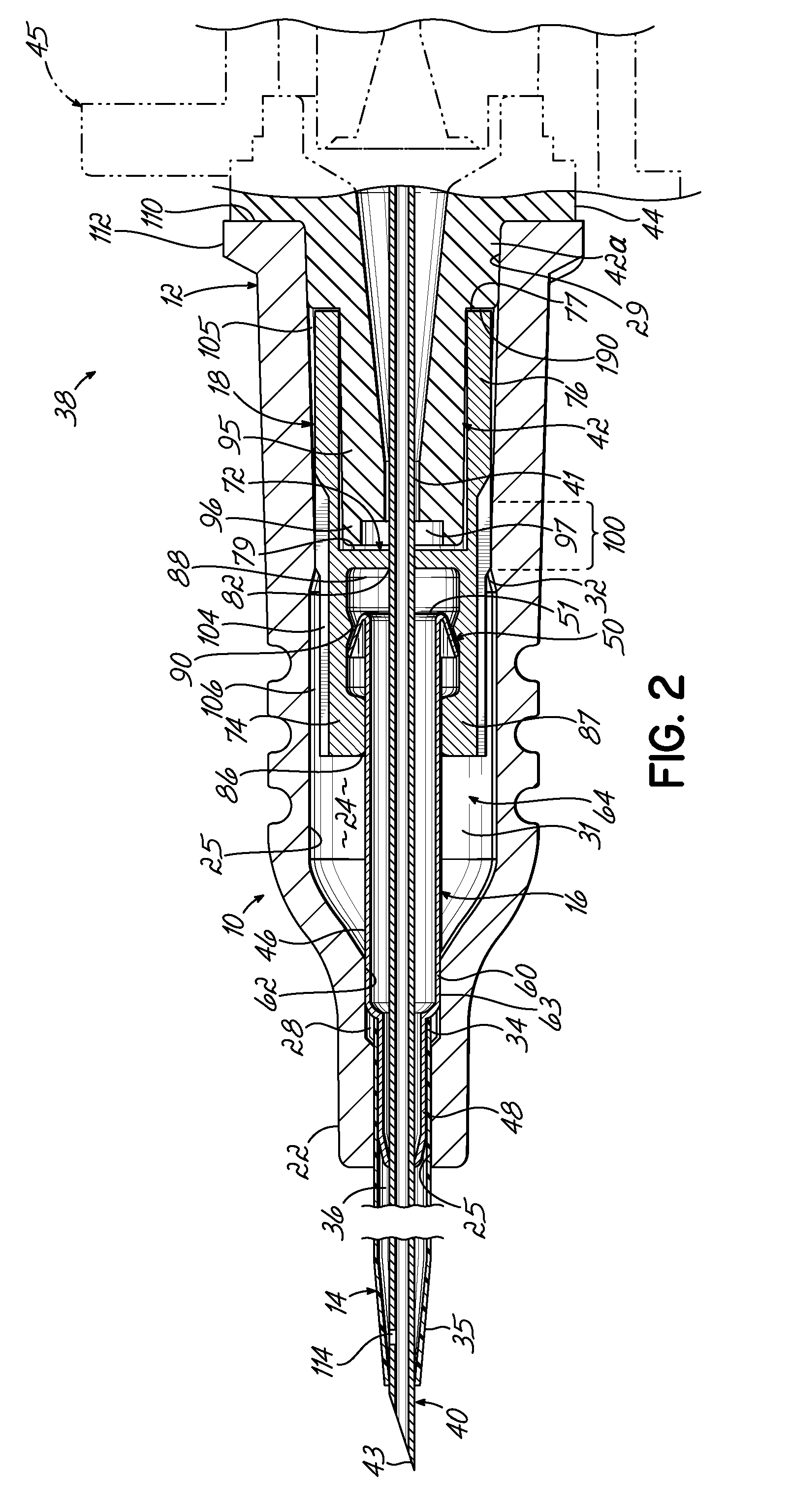
Figure 3
Abstract
Description
TECHNICAL FIELDThe present invention relates to over-the-needle catheters such as peripheral intravascular catheters or PIVC's and, more particularly, to a catheter assembly used with such catheters having a seal disposed in a hub thereof for enhanced blood control.BACKGROUNDBy way of background, conventional PIVC's include a catheter assembly, typically having a catheter hub and a catheter tube extending distally thereof, and a needle assembly mounted together in an over-the-needle fashion. The needle assembly typically includes a needle hub or support and a needle cannula extending distally thereof and, in a ready position of the PIVC, extending through the catheter tube to expose a sharp tip thereof distal of the tube and used to penetrate tissue for insertion of the catheter tube within the vascular system of a patient. Once the catheter tube is disposed within the vasculature, the needle cannula is withdrawn proximally from the catheter assembly and the catheter assembly remain...
Examples
Embodiment Construction
In reference to FIG. 1, a catheter assembly 10 in accordance with various features of the present invention includes a catheter hub 12, a catheter tube 14 secured to and extending distally of the catheter hub 12, an actuator 16 secured to the catheter hub 12 and extending axially therewithin, and a seal member 18 disposed in the catheter hub 12 and movably supported on the actuator 16. The seal member 18 is axially shiftable relative to the actuator 16, such as by sliding axially therealong, between a closed or sealed position shown in FIG. 1 and an opened or actuated position (shown, for example, in FIG. 10). In the closed position, the catheter hub 12 is substantially sealed off from the catheter tube 14 such that blood flow into the catheter hub 12 is restricted. In the opened position, however, and as will be discussed in more detail below, the seal member 18 is pushed over the actuator 16 such that the catheter hub 12 and catheter tube 14 are in open fluid communication.
The cat...