
Dry powder formulations and methods for treating pulmonary diseases
a technology of pulmonary diseases and formulations, applied in the direction of biocide, antibacterial agents, drug compositions, etc., can solve the problems of significant recirculation of bulk drug solutions, lack of uniform size of liquid aerosol droplets, and low pressure at the exit region, so as to reduce the risk of pulmonary disease, prevent and/or reduce the contagion of infectious diseases, and treat the effect of preventing and/or reducing the contagion
Patent Information
- Authority / Receiving Office
- US · United States
- Current Assignee / Owner
- Publication Date
- 2012-03-15
- Estimated Expiration
- Not applicable · inactive patent
Smart Images
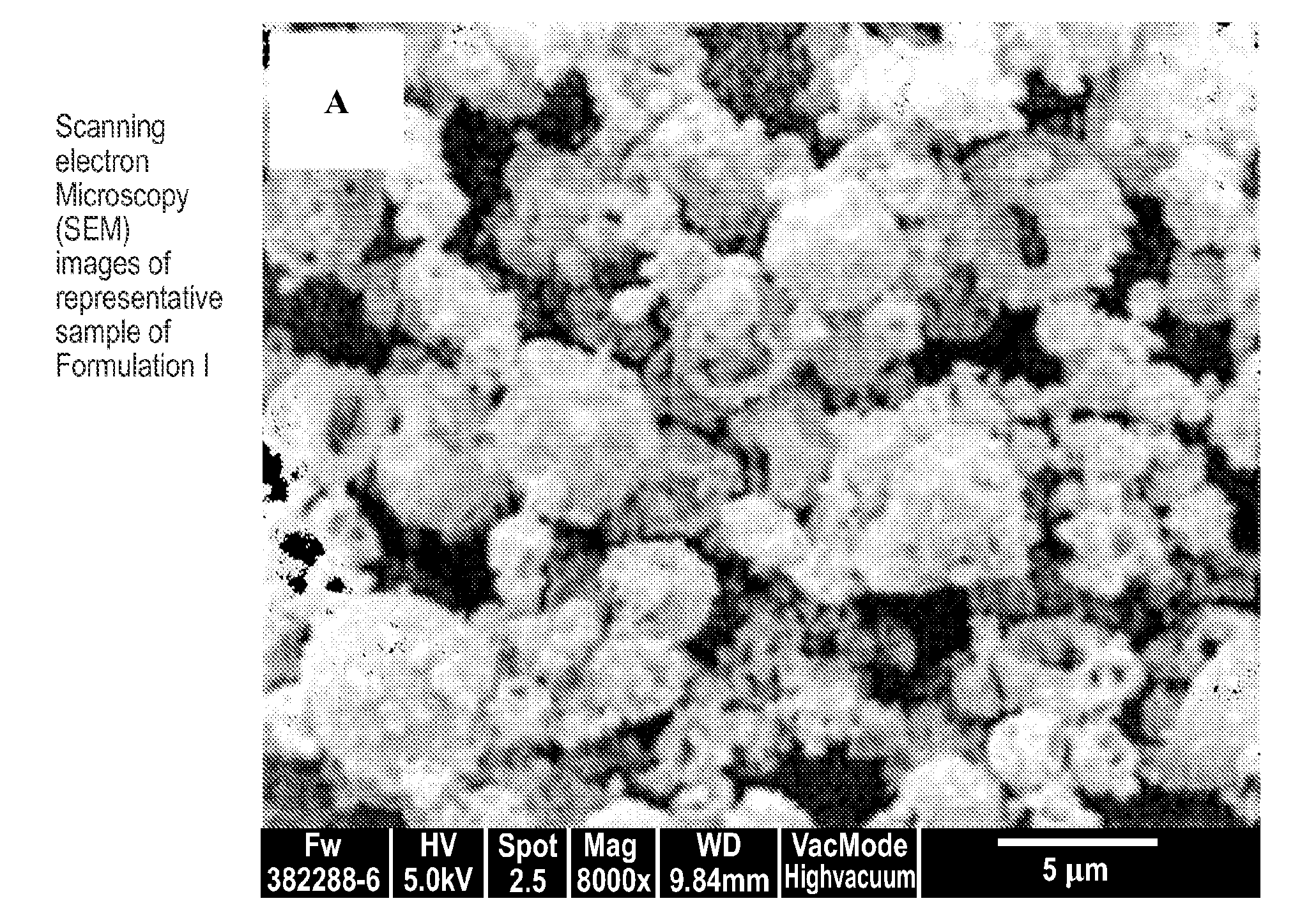
Figure 1 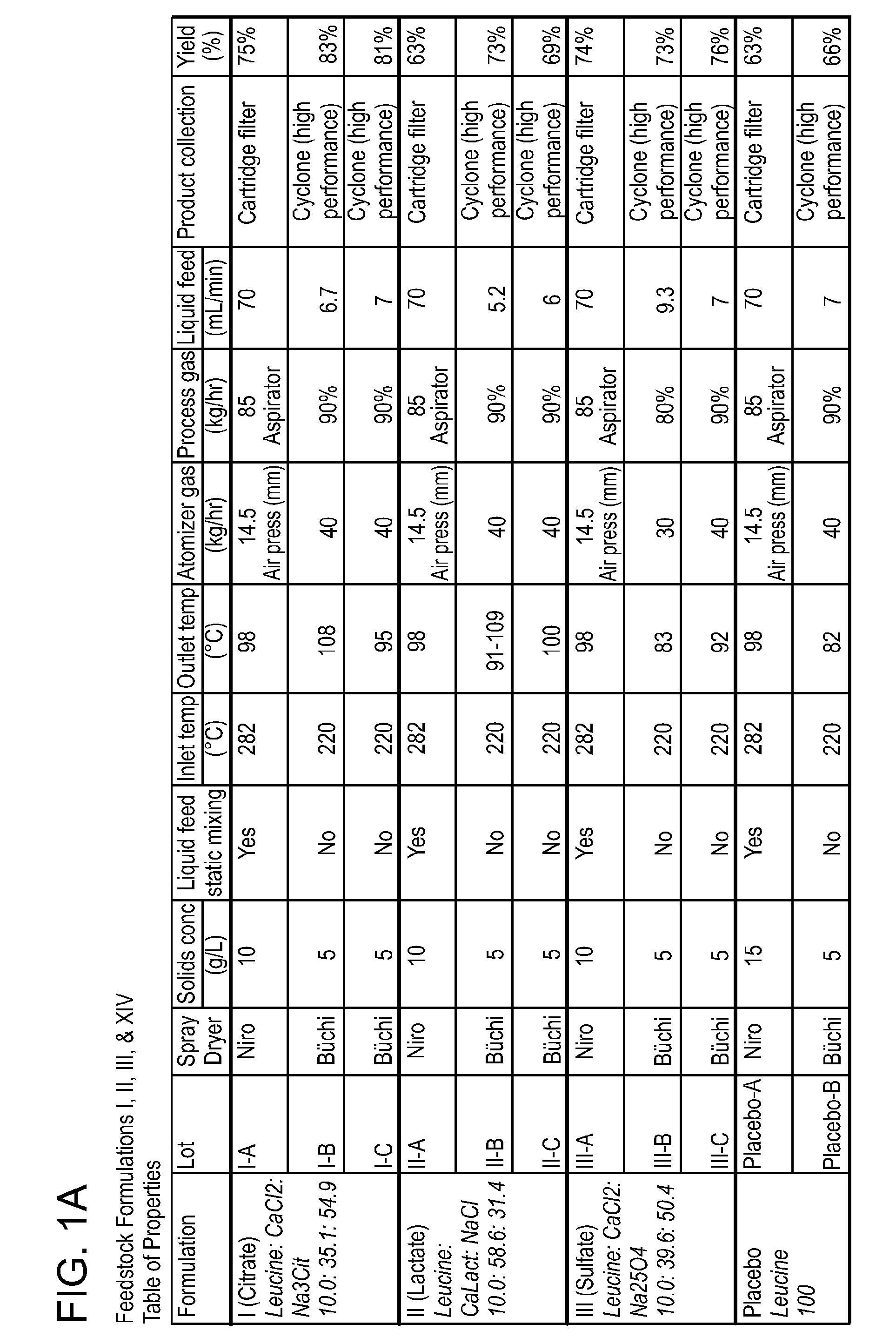
Figure 2 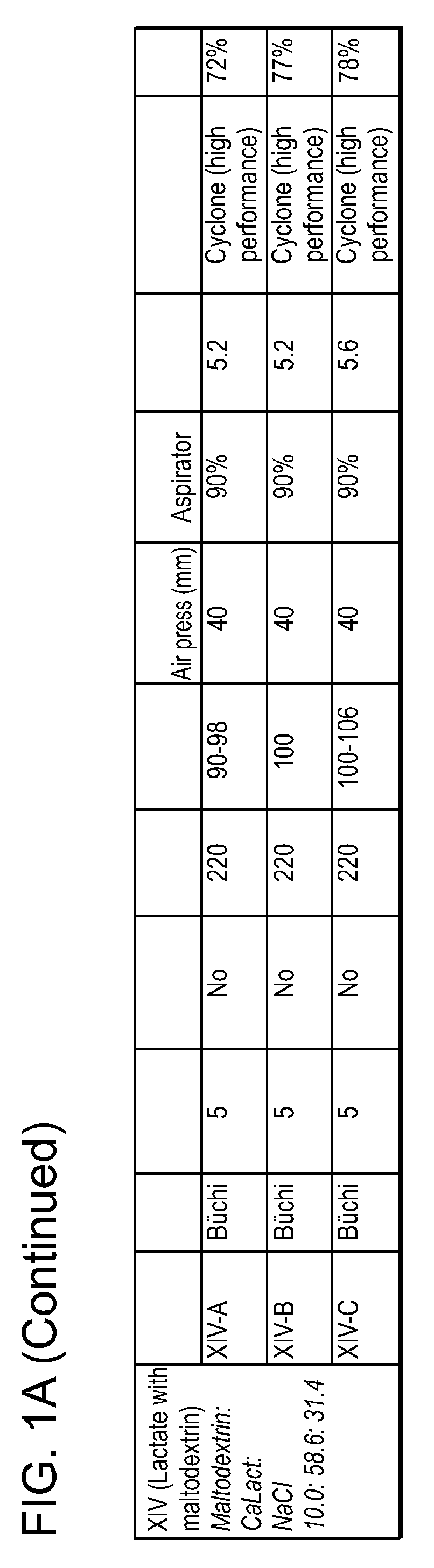
Figure 3
Abstract
Description
RELATED APPLICATIONS
[0001] This application claims the benefit of U.S. Provisional Application No. 61 / 305,819, filed on Feb. 18, 2010, U.S. Provisional Application No. 61 / 298,092, filed on Jan. 25, 2010, U.S. Provisional Application No. 61 / 267,747, filed on Dec. 8, 2009, U.S. Provisional Application No. 61 / 255,764, filed on Oct. 28, 2009, U.S. Provisional Application No. 61 / 163,772, filed on Mar. 26, 2009, U.S. Provisional Application No. 61 / 163,767, filed on Mar. 26, 2009 and U.S. Provisional Application No. 61 / 163,763, filed on Mar. 26, 2009. The entire contents of each of the foregoing applications are incorporated herein by reference.BACKGROUND OF THE INVENTION
[0002] Pulmonary delivery of therapeutic agents can offer several advantages over other modes of delivery. These advantages include rapid onset, the convenience of patient self-administration, the potential for reduced drug side-effects, ease of delivery by inhalation, the elimination of needles, and the like. Inhalation the...
Examples
example 1
[0243]This example describes the preparation of dry powders using feedstock of Formulation I: 10.0 weight percent leucine, 35.1 weight percent calcium chloride and 54.9 weight percent sodium citrate.
[0244]An aqueous phase was prepared for a batch process by dissolving leucine in ultrapure water, then sodium citrate dihydrate, and finally calcium chloride dihydrate. The solution or suspension was kept agitated throughout the process until the materials were completely dissolved in the water at room temperature. For a static mixing process, the sodium salt and calcium salt were kept in separate solutions. The ultrapure water was divided in half and half of the total required leucine was dissolved in each volume of water. The sodium citrate dihydrate was dissolved in one aqueous phase and the calcium chloride dihydrate dissolved in the second aqueous phase. The solutions or suspensions were kept agitated throughout the process until the materials were completely dissolved in the water ...
example 2
[0251]This example describes the preparation of dry powders using feedstock of Formulation II: 10.0 weight percent leucine, 58.6 weight percent calcium lactate and 31.4 weight percent sodium chloride.
[0252]An aqueous phase was prepared for a batch process by dissolving leucine in ultrapure water, then sodium chloride, and finally calcium lactate pentahydrate. The solution was kept agitated throughout the process until the materials were completely dissolved in the water at room temperature. For the calcium lactate formulation, four batches (A, B, C and D) of feedstock were prepared and spray dried. Details on the liquid feedstock preparations for each of the four batches are shown in Table 7, where the total solids concentration is reported as the total of the dissolved anhydrous material weights. Batch A and D particles were prepared using batch A and D feedstock, respectively on a Niro spray dryer. The process conditions used for spray drying Batch A (II-A) were similar to the con...
example 3
[0256]This example describes the preparation of dry powders using feedstock of Formulation III: 10 weight percent leucine, 39.6 weight percent calcium chloride and 50.4 weight percent sodium sulfate.
[0257]An aqueous phase was prepared for a batch process by dissolving leucine in ultrapure water, then sodium sulfate, and finally calcium chloride dihydrate. The solution or suspension was kept agitated throughout the process until the materials were completely dissolved in the water at room temperature. For a static mixing process, the sodium salt and calcium salt were kept in separate solutions. The ultrapure water was divided in half and half of the total required leucine was dissolved in each volume of water. The sodium sulfate was dissolved in one aqueous phase and the calcium chloride dihydrate dissolved in the second aqueous phase. The solutions or suspensions were kept agitated throughout the process until the materials were completely dissolved in the water at room temperature....