
Method for the treatment of cancer
a cancer and prognosis technology, applied in the field of female cancer prognosis and male cancer treatment, can solve the problems of insufficient surgery alone, insufficient chemotherapy, inability of these patients to achieve conventional treatment, and insufficient translational studies on tubb6, etc., and achieve good prognosis and poor prognosis
Patent Information
- Authority / Receiving Office
- US · United States
- Current Assignee / Owner
- Publication Date
- 2012-11-22
- Estimated Expiration
- Not applicable · inactive patent
Smart Images
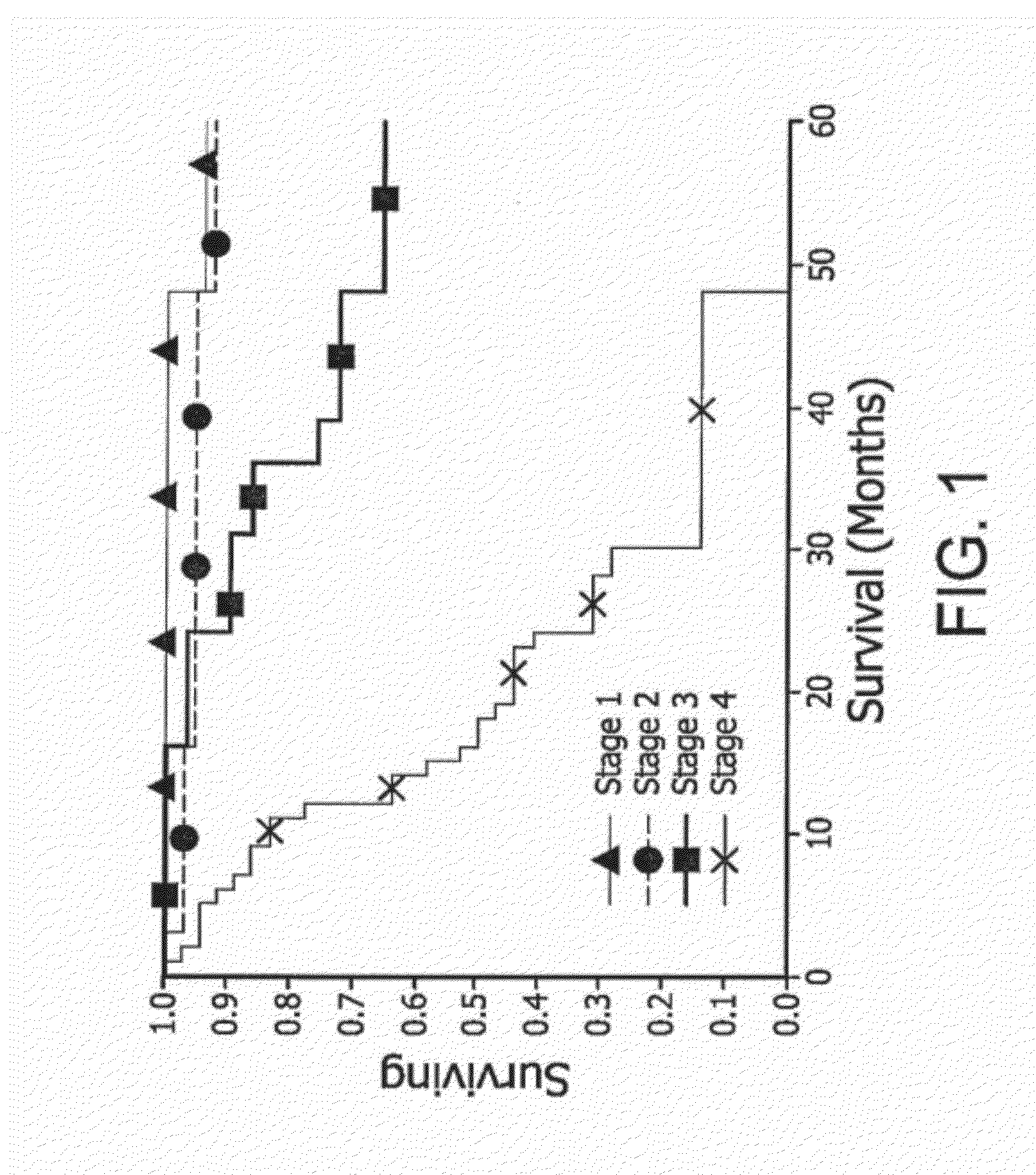
Figure 1 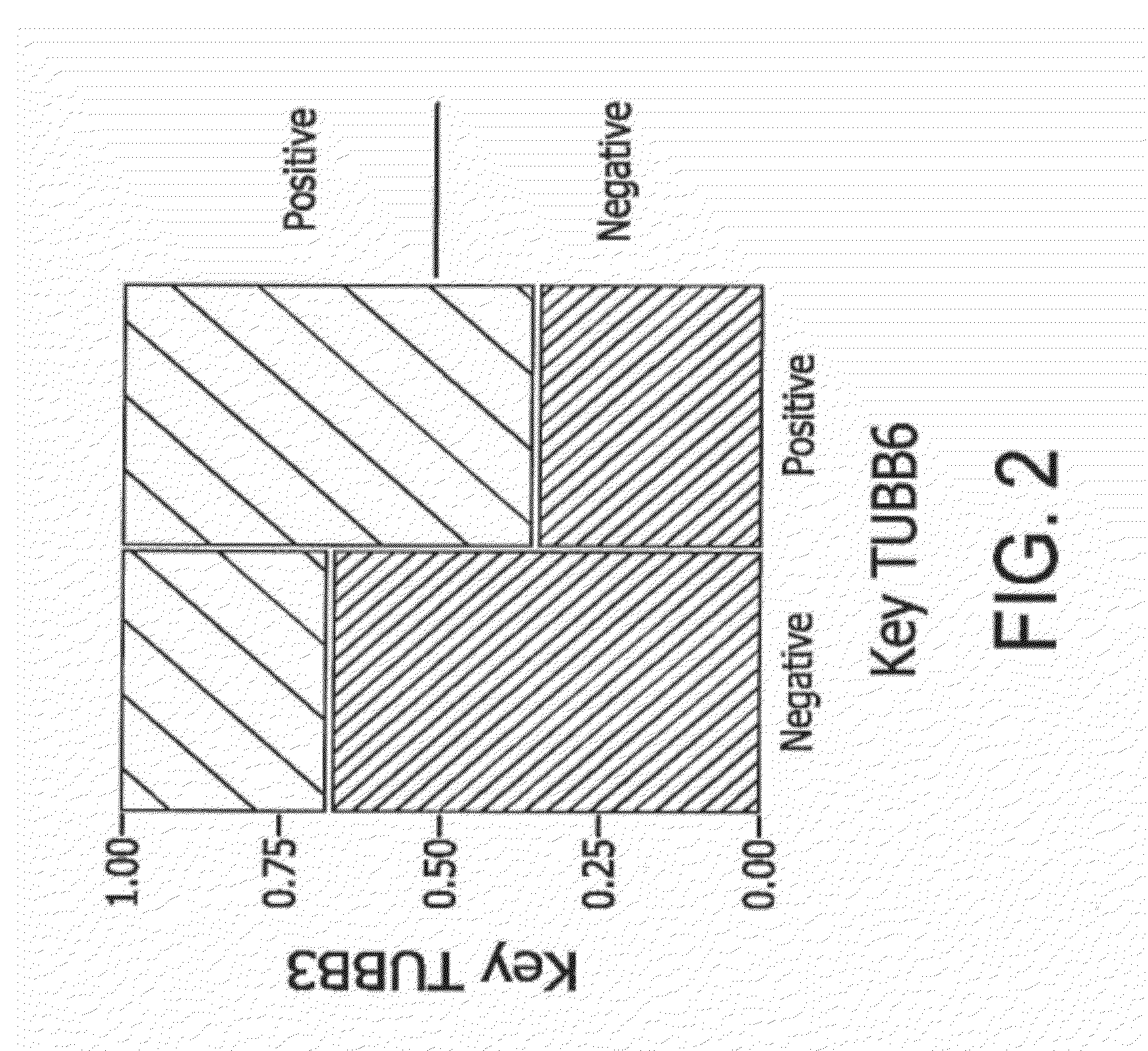
Figure 2 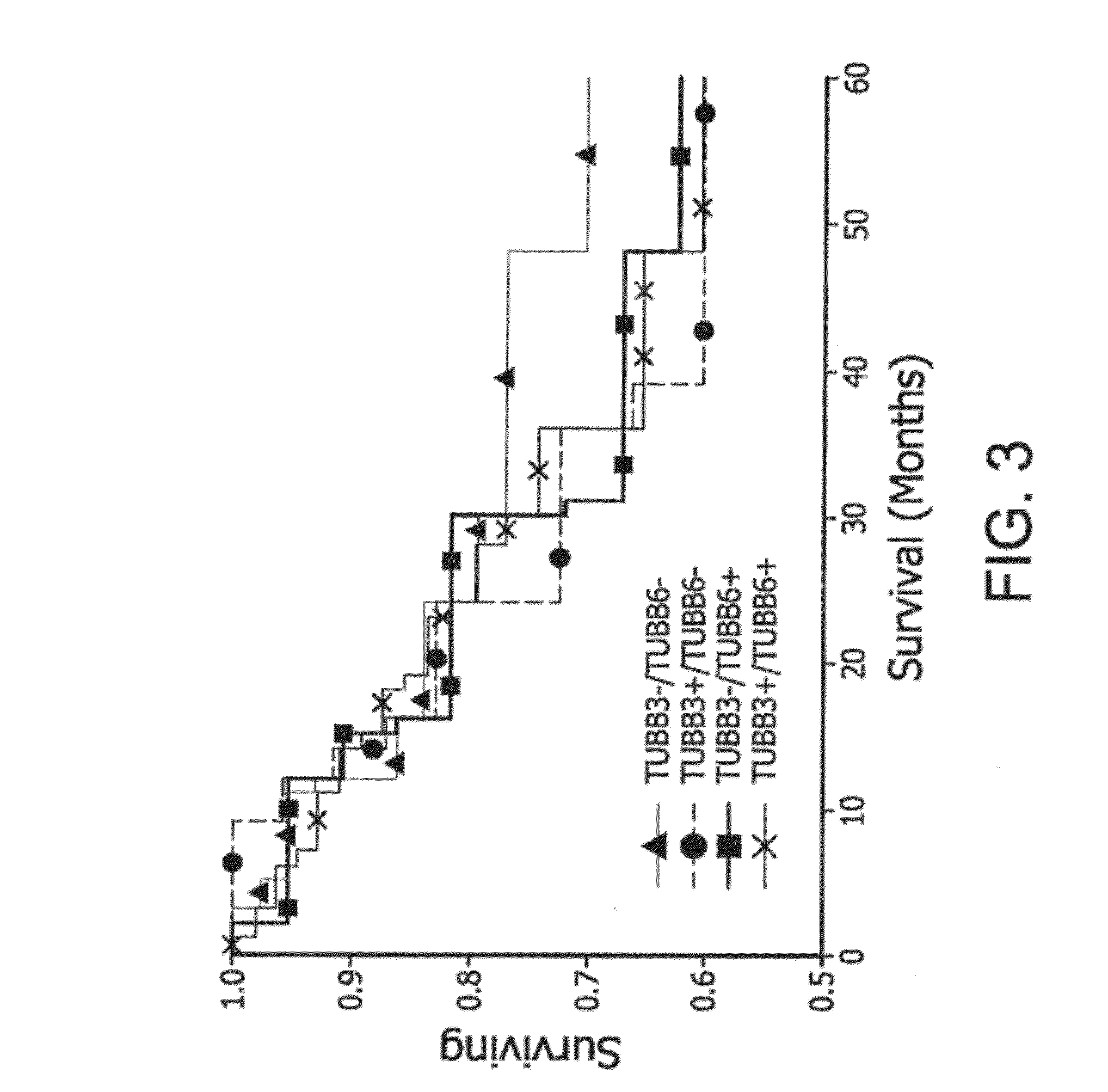
Figure 3
Abstract
Description
CROSS-REFERENCE TO RELATED APPLICATIONS
[0001] This application is a continuation-in-part of application Ser. No. 13 / 109,128, filed May 17, 2011, which is hereby incorporated by reference in its entirety.FIELD OF THE INVENTION
[0002] The invention relates to a method for the prognosis of cancer in females and a method for the treatment of cancer in males.BACKGROUND OF THE INVENTION
[0003] Colorectal cancer is one of the deadliest diseases in western countries. Its incidence in the United States is about 140,000 novel cases per year. It is the third leading cause of cancer-related deaths when men and women are considered separately, and the second when both genders are combined. It is expected to cause about 51,370 deaths (26,580 in men and 24,790 in women) during 2011. Although this number has improved in the last two decades, particularly due to a wider use of early surgery and endoscopic techniques combined with screening campaigns, there is an urgent need to improve our knowledge regar...
Examples
example 1
Predictive Value of TUBB3 / TUBB6 Immunostaining
Patients
[0147]A study included 180 colorectal cancer patients. For 147 patients, the full clinical history was available and the median follow up for them was three years. Analysis of the expression of TUBB3 and TUBB6 was performed in primary tumors from all 180 patients, resected at the first surgery before the patients had undergone any treatment for the disease. Clinical data were collected from an archive.
[0148]Tumor tissues biopsies were obtained during the first surgery in all cases. Tissue specimens were fixed in 10% formalin and paraffin embedded according to standard procedures. Immunostaining was done on 3 μm tissue sections mounted on poly-l-lysine-coated slides and dried at 37° C. overnight. After the slides were deparaffinized in xylene and rehydrated conventionally, the endogenous peroxidase activity was blocked with 3% H2O2 in TBS for 5 minutes. Antigen retrieval procedure was done by microwave oven hea...
example 2
Gender Influences Status of TUBB3 / TUBB6 Pathway Activation
[0155]A panel of 22 colorectal cancer cell lines was used to analyze the expression of both TUBB3 and TUBB6 in basal conditions and after serum starvation, as a stressor capable of activating the TUBB3 pathway. Nine cell lines came from female patients (WiDR, HT29, LS-174T, SW48, RKO, CO115, SW403, Colo320 and KM12) while 13 were from males (HCT116, SW480, SW837, SW116, SK-CO-1, DLD1, HCT15, LoVo, Colo201, Colo205, SW620, T84 and CACO2). This analysis was performed at the gene and protein level.
Cell Cultures
[0156]Cell lines used in this study were obtained as standard tissue bank cells, such as ATCC and ECACC cells. Nine cell lines originated from female patients (WiDR, HT29, LS-174T, SW48, RKO, CO115, SW403, Colo320 and KM12) while 13 cell lines originated from males (HCT116, SW480, SW837, SW116, SK-CO-1, DLD1, HCT15, LoVo, Colo201, Colo205, SW620, T84 and CACO2). All cell lines were grown in DMEM medium supplemented with 10...
example 3
Combination of Antiandrogens With Chemotherapy in Colorectal Cancer Cell Lines
[0161]The expression of Androgen Receptor (AR, isoforms 1 and 2) was investigated in the panel of cell lines of Example 2 at the gene level using qPCR. Male cell lines with the highest expression of AR (SW480 and Caco-2) exhibited also the highest TUBB6 expression, in keeping with the hypothesis linking TUBB6 to AR. (FIG. 11). Importantly, in females, the cell line COLO-320 exhibited a dramatic upregulation of AR, and this fact explains the high expression of TUBB6 noticeable in this cell line (FIG. 11).
[0162]Oxaliplatin and irinotecan are the most important chemotherapeutics used today in the treatment of advanced colorectal cancer. The following experiment illustrates that treatment with antiandrogens can enhance efficacy of chemotherapy using those agents. A 14-day clonogenic assay of RKO (female) and SW480 (male) cells was performed with and without combination of the antiandrogen bicalutamide at a fix...