
Manufacturing method of (METH) acrylic polymer
Patent Information
- Authority / Receiving Office
- US · United States
- Current Assignee / Owner
- Publication Date
- 2013-08-01
Smart Images
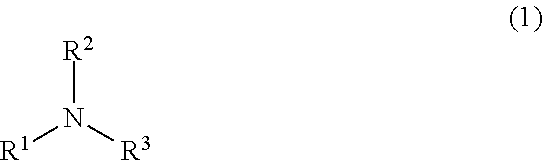
Figure 1 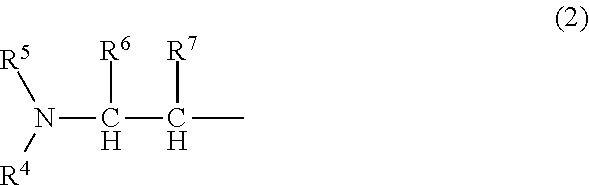
Figure 2 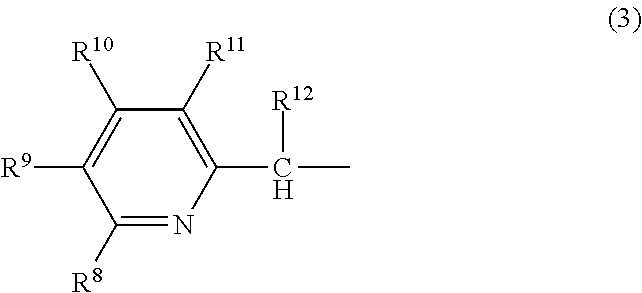
Figure 3
Abstract
Description
TECHNICAL FIELD
[0001] The present invention relates to a living radical polymerization method for polymerizing a (meth)acrylic monomer.BACKGROUND ART
[0002] As a method for producing a (meth)acrylic polymer, atom transfer radical polymerization (ATRP) has been found which is a living radical polymerization process that uses, for example, a transition metal complex consisting of a transition metal or transition metal compound and a multidentate amine as the polymerization catalyst (see Patent Literatures 1 and 2). However, these patent literatures disclose no means for reducing the amount of the polymerization catalyst to the order of several hundred ppm based on the monomer weight. In the case of using the above-mentioned technique industrially, since the large amount of transition metal or transition metal compound and transition metal complex used as the catalyst, for example, causes discoloration of the polymer, inhibits a reaction for introducing functional groups, or causes a cont...
Examples
example 1
[0126]100 parts of n-butyl acrylate, 80 parts by volume of methanol (MeOH), 1.76 parts of diethyl 2,5-dibromoadipate and 955 ppm of N,N,N′N′-pentamethyldiethylenetriamine (PMDETA) were introduced and stirred at 55° C. in the presence of flowing nitrogen. A solution obtained by dissolving 107 ppm of copper (Ii) bromide (CuBr2) (copper content: 30 ppm) in 109 ppm (equimolar amount relative to Cu) of hexamethyltris(2-aminoethyl)amine (Me6TREN) having a purity of 96% and 0.54 parts by volume of N,N-dimethylacetoamide, and a solution obtained by dissolving 17 ppm of ascorbic acid (VC) in 0.12 parts by volume of methanol, were separately prepared, and then added to the mixture to start the reaction. Heating and stirring were continued in such a manner that the temperature of the reaction solution was 50° C. to 60° C., during which the solution obtained by dissolving ascorbic acid in methanol was appropriately added along the way. Once the reaction rate of n-butyl acrylate reached 92 mol %...
example 2
[0127]100 parts of n-butyl acrylate, 80 parts by volume of methanol, 1.76 parts of diethyl 2,5-dibromoadipate and 955 ppm of triethylamine (Et3N) were introduced and stirred at 45° C. in the presence of flowing nitrogen. A solution obtained by dissolving 107 ppm of copper (II) bromide (copper content: 30 ppm) in 109 ppm (equimolar amount relative to Cu) of hexamethyltris(2-aminoethyl)amine having a purity of 96% and 0.54 parts by volume of N,N-dimethylacetoamide, and a solution obtained by dissolving 17 ppm of ascorbic acid in 0.13 parts by volume of methanol, were separately prepared, and then added to the mixture to start the reaction. Heating and stirring were continued in such a manner that the temperature of the reaction solution was 45° C. to 60° C., during which the solution obtained by dissolving ascorbic acid in methanol was appropriately added along the way. Once the reaction rate of n-butyl acrylate reached 94 mol % at 153 minutes after the start of polymerization, the pr...
example 3
[0128]100 parts of n-butyl acrylate, 80 parts by volume of methanol, 1.76 parts of diethyl 2,5-dibromoadipate and 955 ppm of triethylamine were introduced and stirred at 45° C. in the presence of flowing nitrogen. A solution obtained by dissolving 53 ppm of copper (II) bromide (copper content: 15 ppm) in 54 ppm (equimolar amount relative to Cu) of hexamethyltris(2-aminoethyl)amine having a purity of 96% and 0.27 parts by volume of N,N-dimethylacetoamide, and a solution obtained by dissolving 17 ppm of ascorbic acid in 0.13 parts by volume of methanol, were separately prepared, and then added to the mixture to start the reaction. Heating and stirring were continued in such a manner that the temperature of the reaction solution was 45° C. to 60° C., during which the solution obtained by dissolving ascorbic acid in methanol was appropriately added along the way. Once the reaction rate of n-butyl acrylate reached 94 mol % at 175 minutes after the start of polymerization, the pressure in...