
Method and device for determining a motion vector for a current block of a current video frame
a motion vector and video frame technology, applied in the field of motion estimation in video, can solve the problems of loss of quality and diminishing the quality of experience of users, and achieve the effects of loss of quality, different quality, and diminishing the quality of experien
Patent Information
- Authority / Receiving Office
- US · United States
- Patent Type
- Applications(United States)
- Current Assignee / Owner
- Publication Date
- 2013-09-26
- Estimated Expiration
- Not applicable · inactive patent
Smart Images
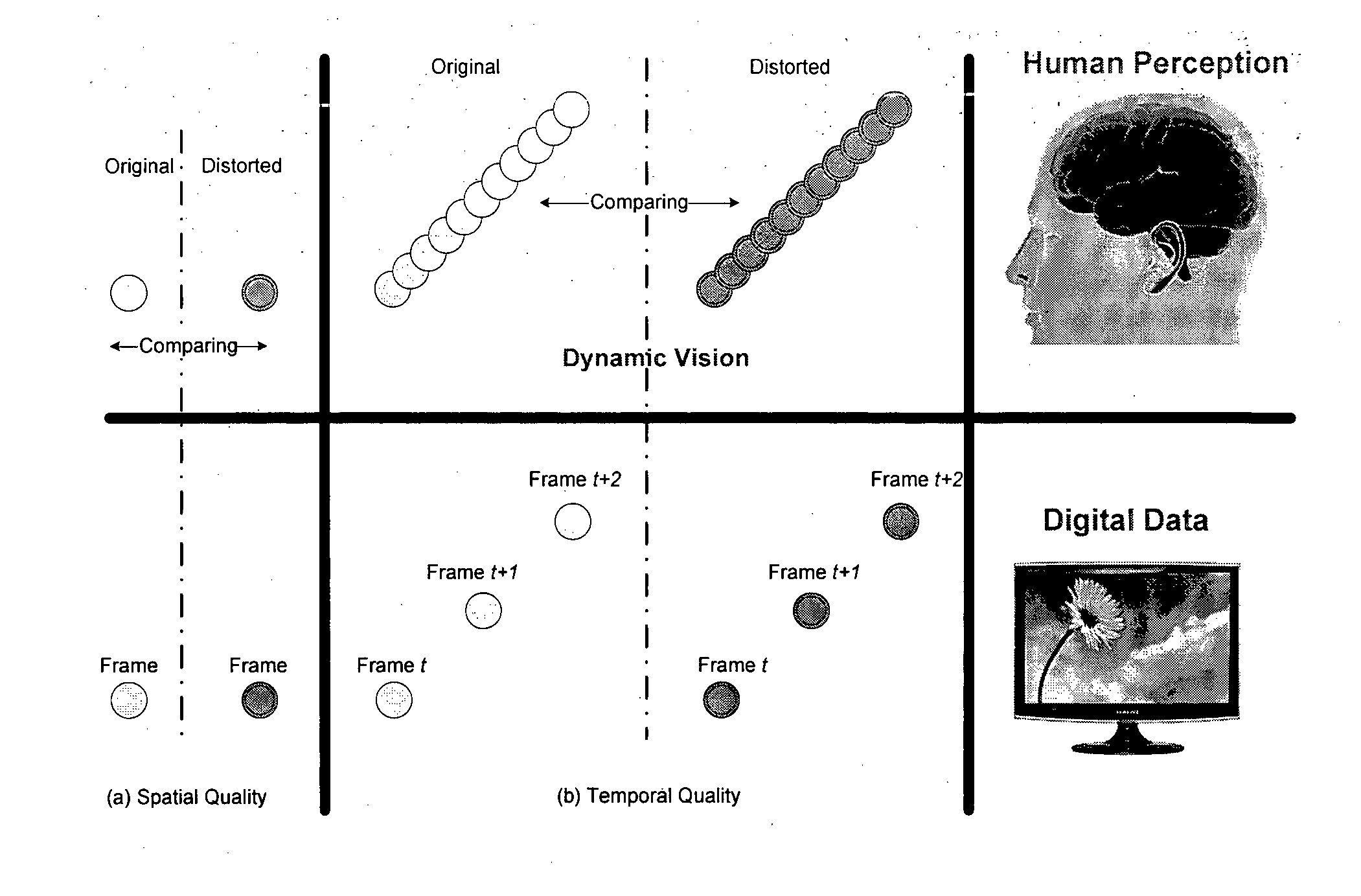
Figure 1 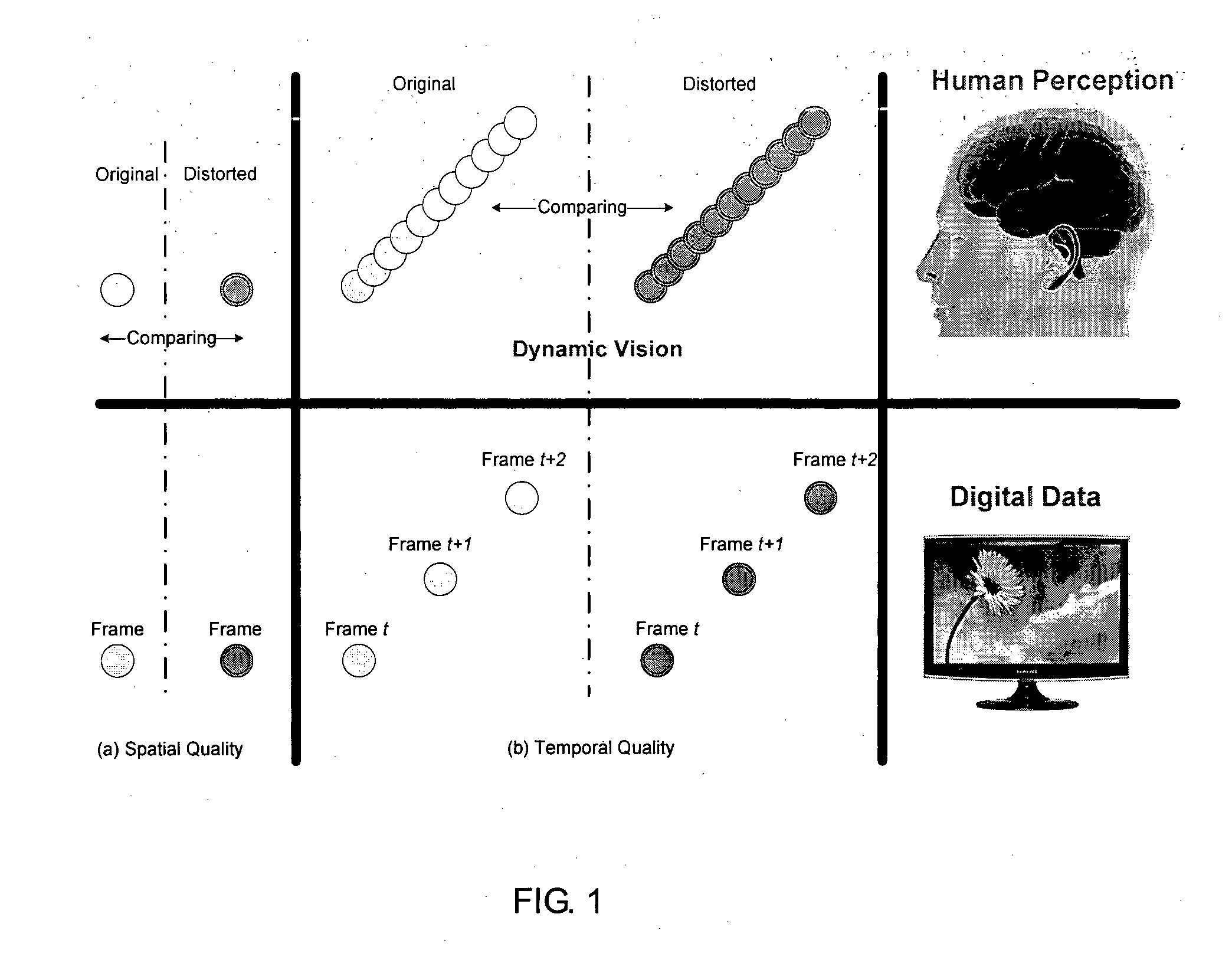
Figure 2 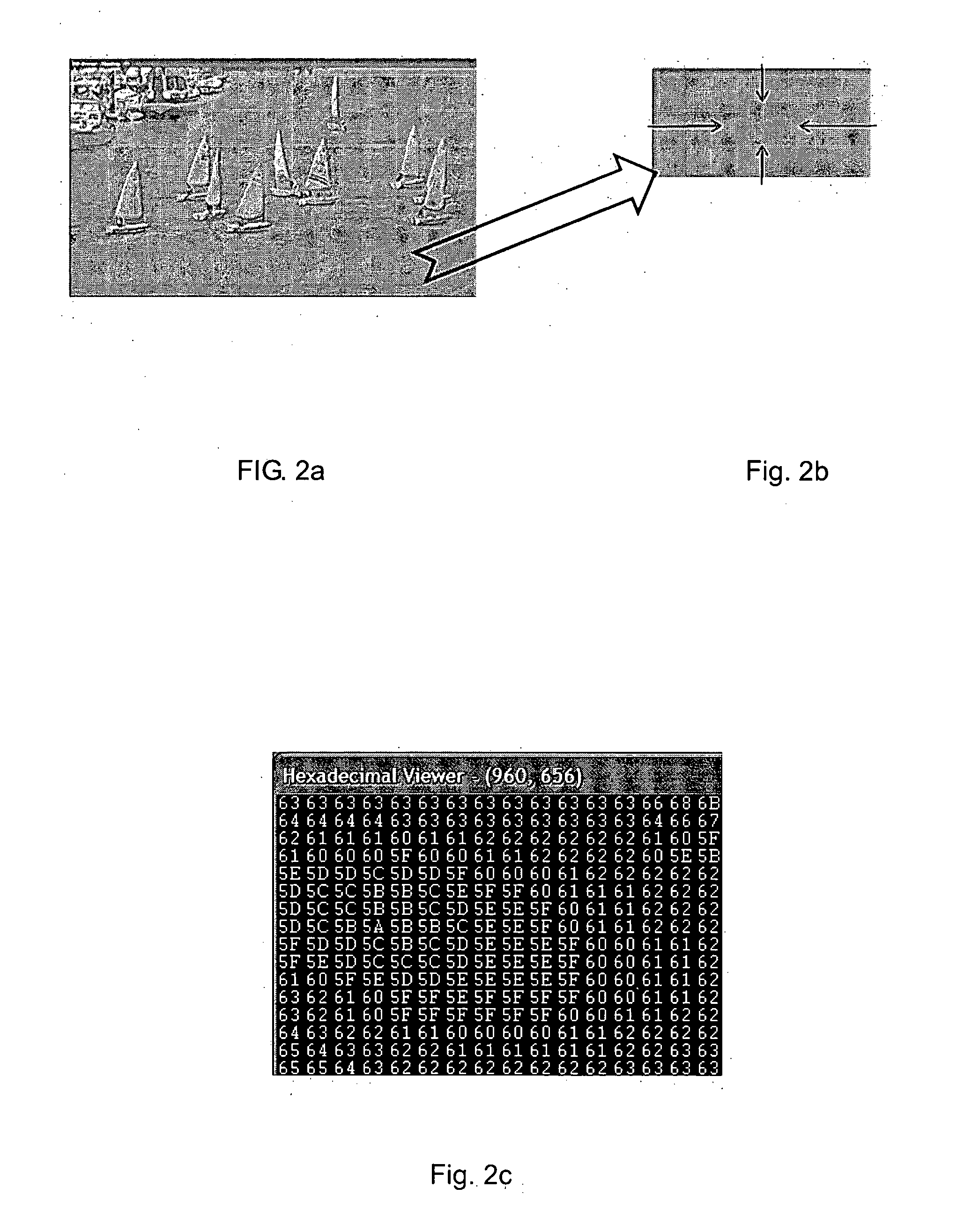
Figure 3
Abstract
Description
TECHNICAL FIELD
[0001] The invention is made in the field of motion estimation in video.BACKGROUND OF THE INVENTION
[0002] Motion estimation in video is useful for, a variety of purposes. A common application of motion estimation is for residual encoding of the video.
[0003] Prior to encoding the residual is quantized wherein a quantization parameter is commonly controlled by rate-distortion-optimization (RDO) wherein distortion refers to spatial distortion i.e. the difference between the original block and the block reconstructed from a reconstructed reference block and the quantized residual.
[0004] In natural video, neighbouring blocks belonging to a same object have similar or smoothly changing motion vectors. The same is true for neighbouring blocks belonging to a background. Only for edges between objects and background or between different objects, motion vectors can be discontinuous or non-smooth. i.e. not similar. In such case, discontinuous motion is semantically natural.
[0005] Dis...
Examples
Embodiment Construction
[0022]Digital video is composed by a number of discrete frames. In browsing, a continuous video perception is generated in human brain with the received discrete frames by eyes. So in temporal quality evaluation, the evaluated target is the virtual “generated continuous video perception in human brain” while not the physical “discrete frames”.
[0023]As exemplarily shown in FIG. 1, the human perceived dynamic vision is quite different from the digital data in the computer in that human brain linked the discrete frames into continuous video (according to “apparent movement” theory). The video quality is recognized by the comparing between original and distorted dynamic vision in human brain.
[0024]There is still ongoing research regarding the mechanisms of human brain involved in generation of video perception. However, the proposed invention enables, based on the digital data, evaluation of the temporal quality.
[0025]In an exemplary embodiment of the invention, the evaluation of tempor...