
Ultrasonic transducers
a transducer and ultrasonic technology, applied in the field of ultrasonic transducers, can solve the problems of increasing ultrasonic output power, and achieve the effect of improving the ultrasonic output power and improving the receiving sensitivity
Patent Information
- Authority / Receiving Office
- US · United States
- Current Assignee / Owner
- Publication Date
- 2016-02-25
- Estimated Expiration
- Not applicable · inactive patent
Smart Images
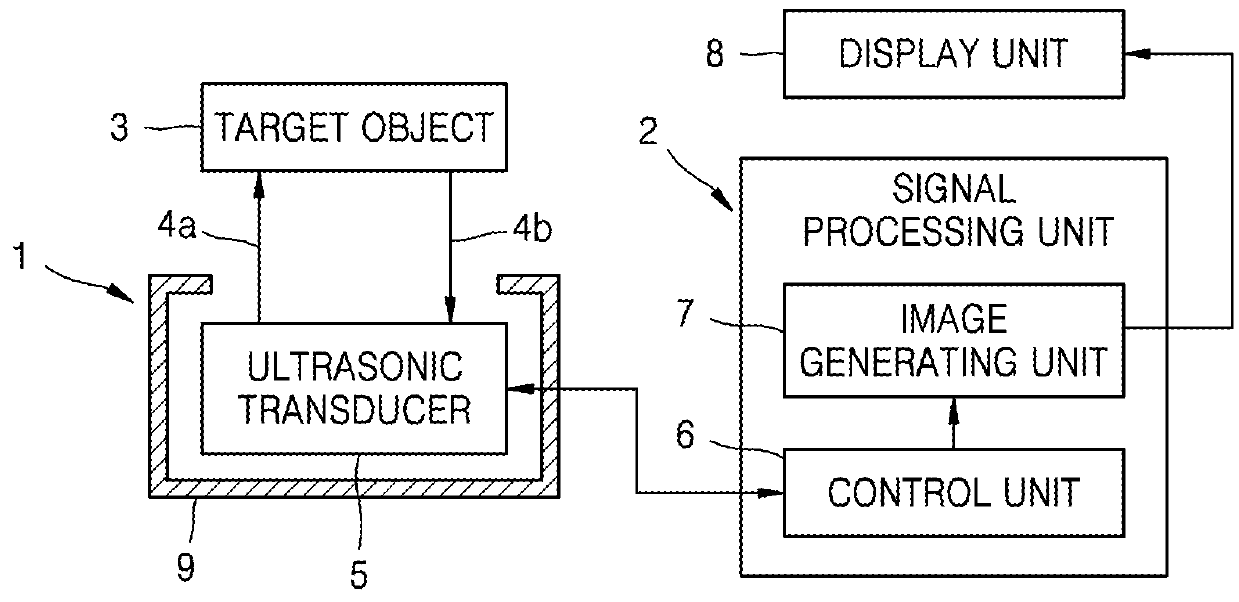
Figure 1 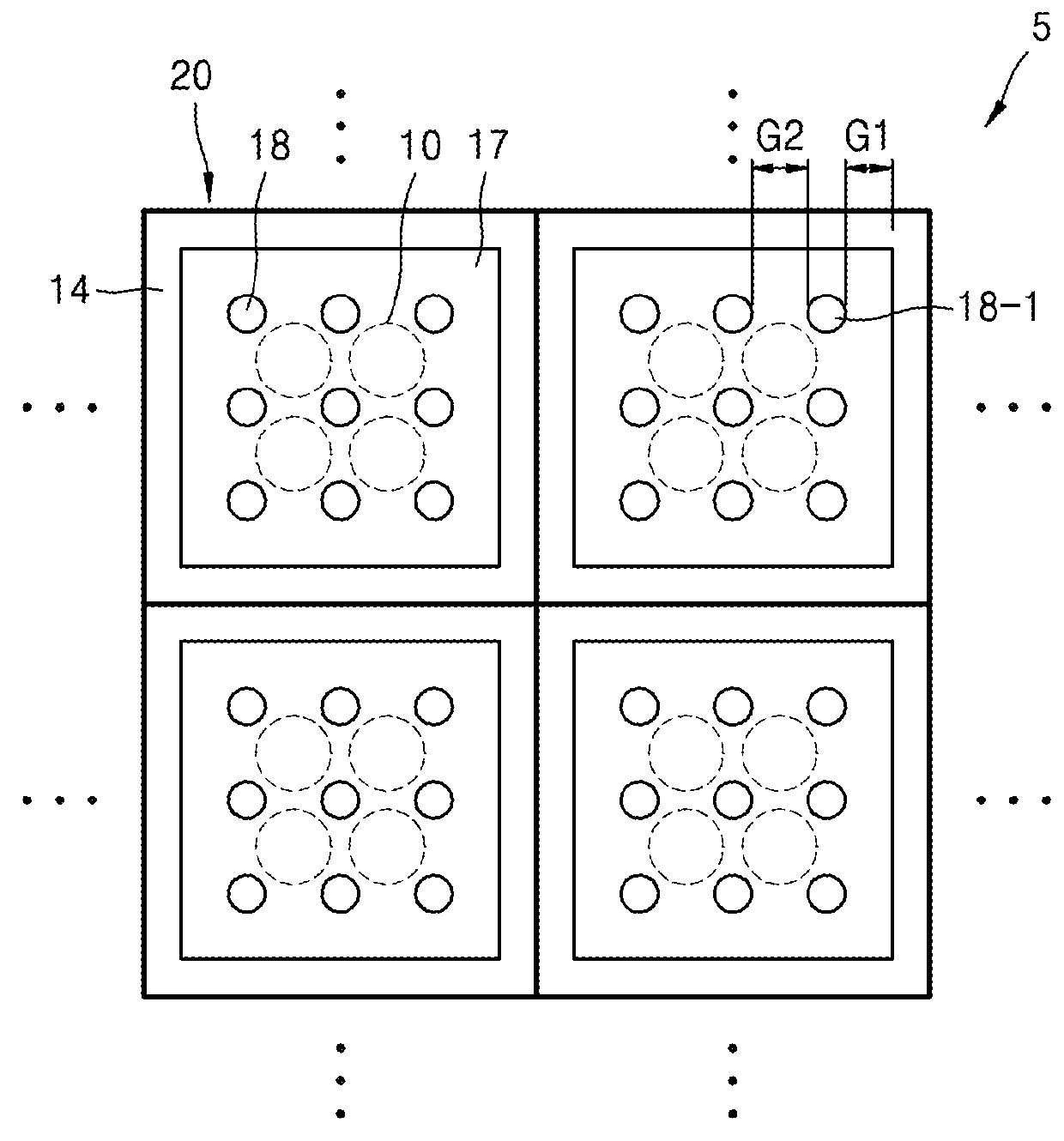
Figure 2 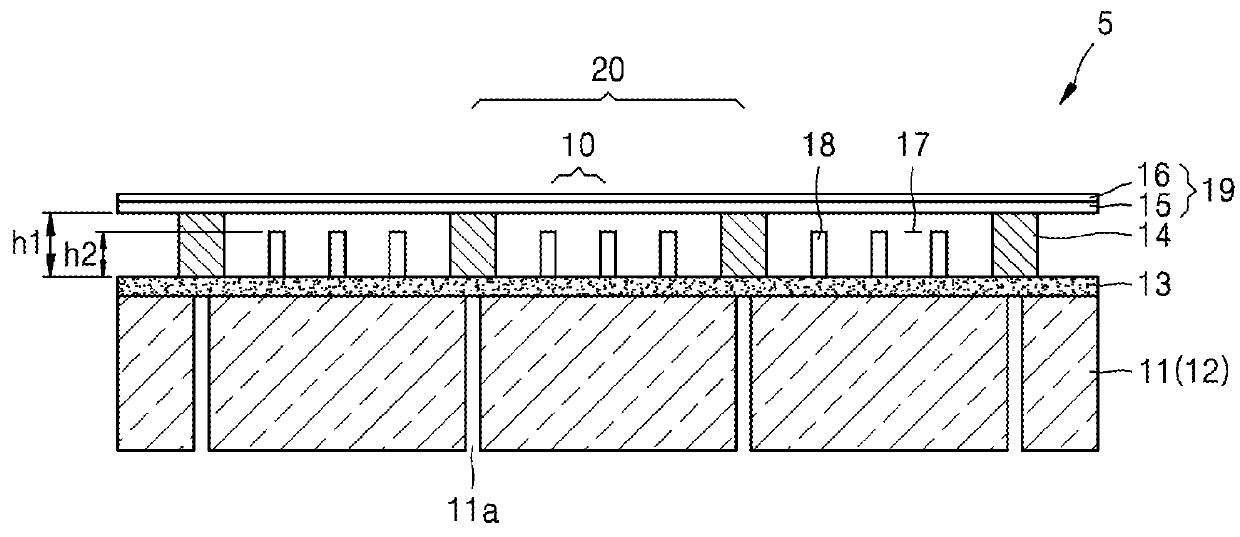
Figure 3
Abstract
Description
CROSS-REFERENCE TO RELATED APPLICATION(S)
[0001] This application claims priority from Korean Patent Application No. 10-2014-0109043, filed on Aug. 21, 2014, in the Korean Intellectual Property Office (KIPO), the entire contents of which are incorporated herein by reference.BACKGROUND
[0002] 1. Field
[0003] Some example embodiments may relate generally to ultrasonic transducers for transmitting ultrasonic waves and / or for receiving ultrasonic waves.
[0004] 2. Description of Related Art
[0005] Ultrasonic devices such as ultrasonic diagnosis devices may display tomograms of a target object, such as a person or an animal, on a monitor and may provide information necessary for diagnosis of the target object by radiating ultrasonic waves toward the target object and / or detecting echo signals reflected from the target object.
[0006] Probes of ultrasonic diagnosis devices may be equipped with ultrasonic transducers capable of converting electric signals into ultrasonic signals and vice versa. Such an ...
Examples
Embodiment Construction
[0041]Example embodiments will now be described more fully with reference to the accompanying drawings. Embodiments, however, may be embodied in many different forms and should not be construed as being limited to the embodiments set forth herein. Rather, these example embodiments are provided so that this disclosure will be thorough and complete, and will fully convey the scope to those skilled in the art. In the drawings, the thicknesses of layers and regions may be exaggerated for clarity.
[0042]It will be understood that when an element is referred to as being “on,”“connected to,”“electrically connected to,” or “coupled to” to another component, it may be directly on, connected to, electrically connected to, or coupled to the other component or intervening components may be present. In contrast, when a component is referred to as being “directly on,”“directly connected to,”“directly electrically connected to,” or “directly coupled to” another component, there are no intervening c...