

Method of Treating Intracellular Infection
a technology of intracellular infection and treatment method, which is applied in the direction of viruses, peptides, drug compositions, etc., can solve the problems of long-term, expensive, and low treatment effect of existing drug regimens, and achieves the effects of low cost, low treatment efficiency, and low cos
Patent Information
- Authority / Receiving Office
- US · United States
- Patent Type
- Applications(United States)
- Current Assignee / Owner
- Publication Date
- 2016-05-26
Smart Images
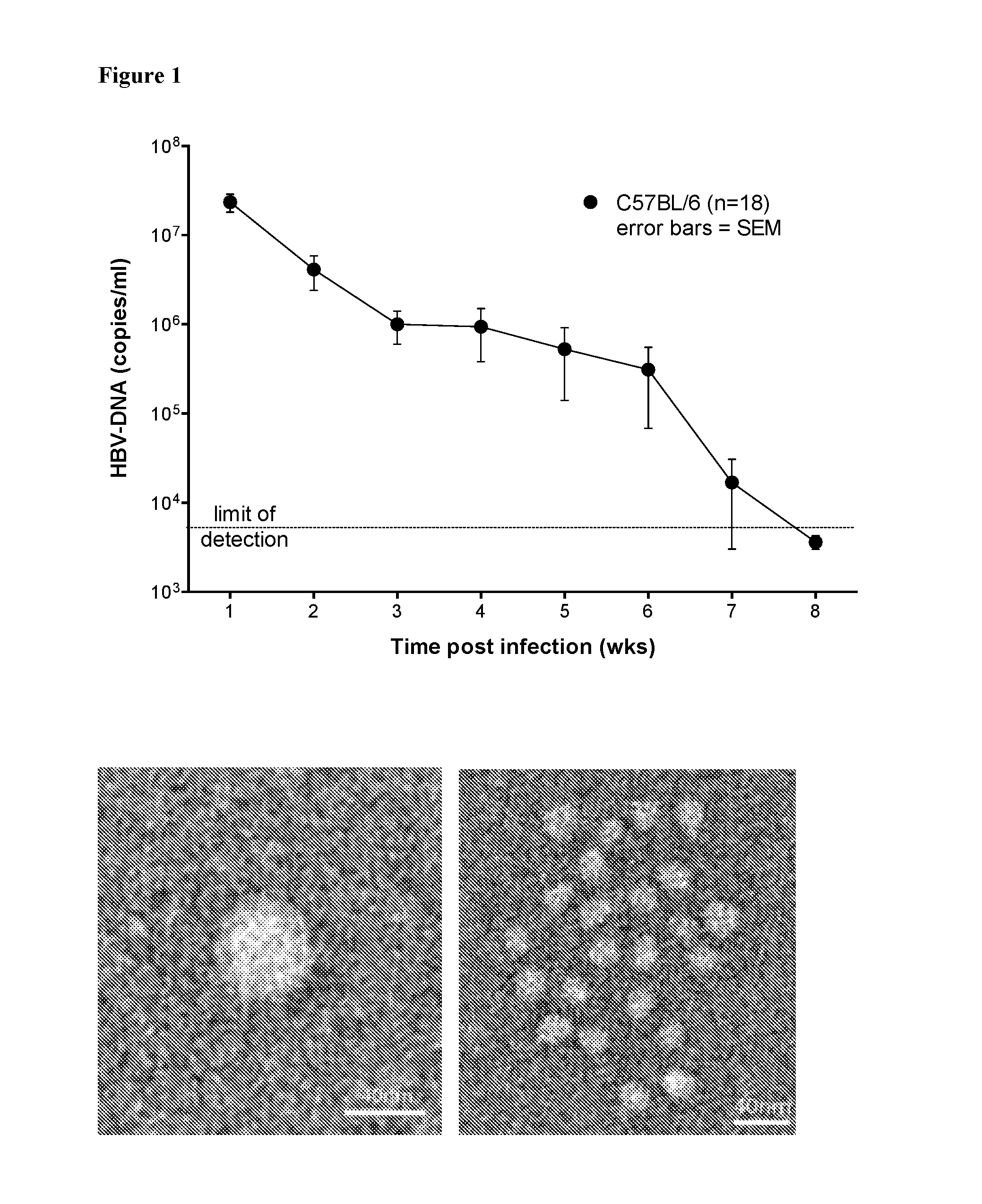
Figure 1 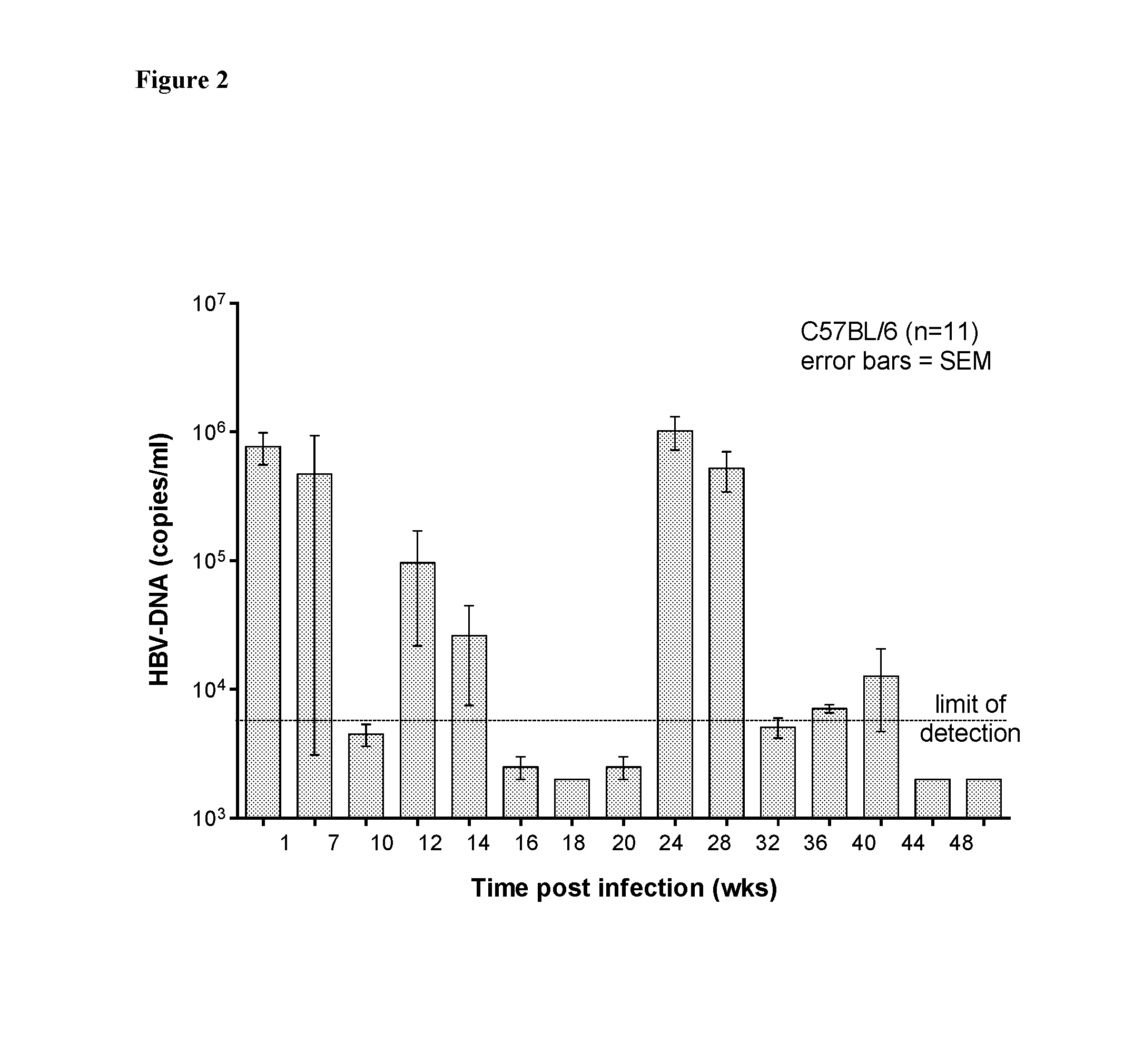
Figure 2 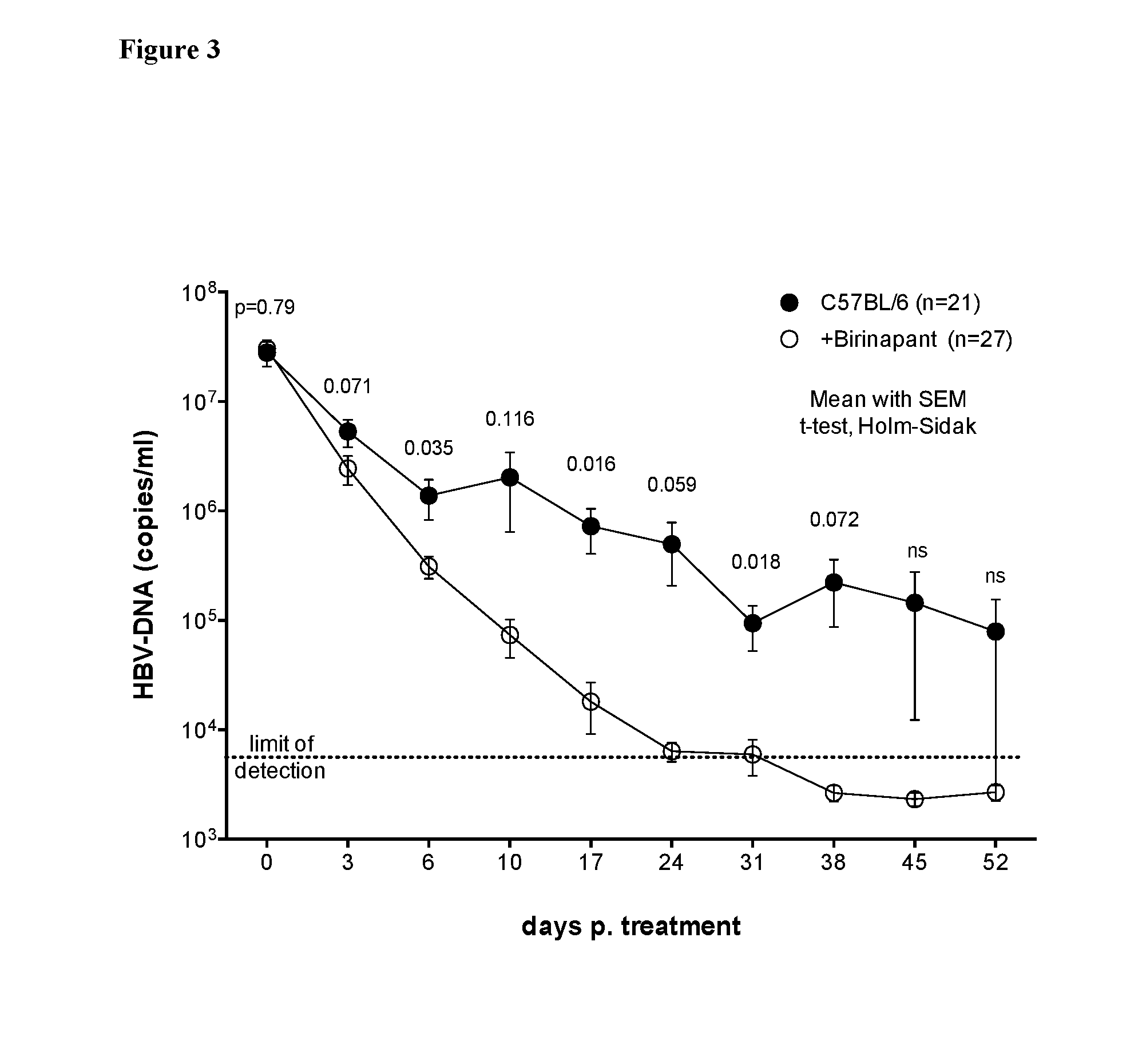
Figure 3
Abstract
Description
FILING DATA
[0001] This application claims priority from Australian patent application numbers 2013902327, 2014901029 and 2014901977 filed 25 Jun. 2013, 24 Mar. 2014 and 26 May 2014, respectively. The disclosure of each of these applications is included herein by reference.FIELD OF INVENTION
[0002] The present invention relates to a method of treating intracellular infections. The method involves the administration of an Inhibitor of Apoptosis (IAP) antagonist.BACKGROUND OF INVENTION
[0003] Chronic overwhelming infections by pathogens such as hepatitis B virus (HBV), human immunodeficiency virus (HIV), Human papilloma virus (HPV), Mycobacterium tuberculosis, Histoplasma spp. and Plasmodium spp. are associated with a deficiency in pathogen-specific immunity and an aberrant non-specific inflammatory response that is deleterious in causing collateral host cell damage. Whilst various treatment strategies have been developed over the years, they have had little impact.
[0004] Hepatitis B is a co...
Examples
example 1
Hepatitis B Infection of Mice
[0143]The present inventors adapted a technique7,8 that can be used to cause HBV infection in mice. Naked plasmid DNA containing greater than genome length HBV1.2 flanked by the inverted terminal repeats of adeno-associated virus is injected hydrodynamically to cause substantial inferior vena caval pressures to force DNA into the liver where it is incorporated into hepatocytes7,8. Importantly, the DNA injected into animals does not contain any adeno-associated viral coding sequences. The plasmid is not encapsulated so there are no viral structural or non-structural proteins in the injected preparation.
[0144]Mice were bled intermittently and their serum was isolated. Qiagen viral DNA extraction kit was used to purify viral DNA. Absolute quantification of HBV genome was achieved by RT-PCR, as described previously9.
[0145]Using this technique, C57BL / 6 mice (6-12 weeks old of either gender) were infected with HBV and they expressed surface antigen, core antig...
example 2
Treatment of Mice with Birinapant
[0146]C57BL / 6 mice were infected with HBV and 6 days after infection were treated with weekly doses of birinapnat (30 mg / kg administered intraperitoneally) or vehicle control (DMSO) for a total of 3 weeks (3 doses).
[0147]Six days post-HBV infection, mice were treated with birinapant or vehicle control. After a three doses of birinapant, HBV viral load was reduced by 2 logs compared to viral loads in mice treated with vehicle control. All birinapant-treated, HBV-infected mice had no detectable HBV DNA in their serum 39 days after the first dose of birinapant. On average, mice treated with vehicle control still had approximately 106 copies of HBV DNA in their serum at this time point (see FIG. 3). It was found that 3 doses of birinapant had equivalent efficacy as 6 doses of birinapant in promoting HBV clearance. Birinapant treatment achieved HBV clearance as early as 10 days after the first treatment dose (see FIG. 4).
example 3
Genetic Targeting of cIAP1 and cIAP2 recapitulated the HBV clearance kinetics seen with birinapant treatment.
[0148]Gene targeted mice, which had a deficiency of cIAP1 (liver-specific deficiency) together with a deficiency of cIAP2 in all tissues, were able to clear HBV infection with similar kinetics to mice treated with birinapant (see FIG. 5).