
Bent, veneer-encapsulated heat-treated safety glass panels and methods of manufacture
Patent Information
- Authority / Receiving Office
- US · United States
- Current Assignee / Owner
- Publication Date
- 2016-12-08
Smart Images
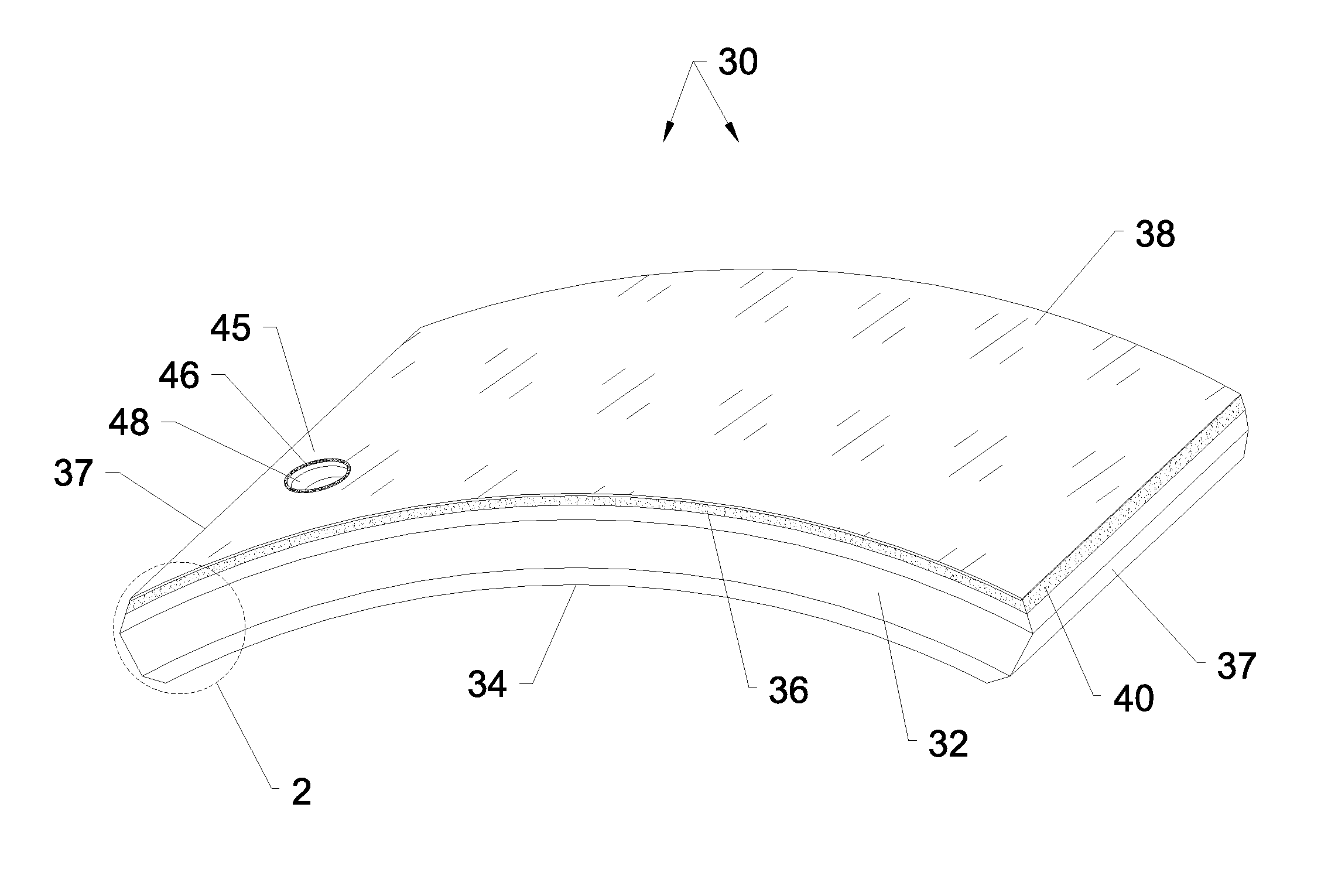
Figure 1 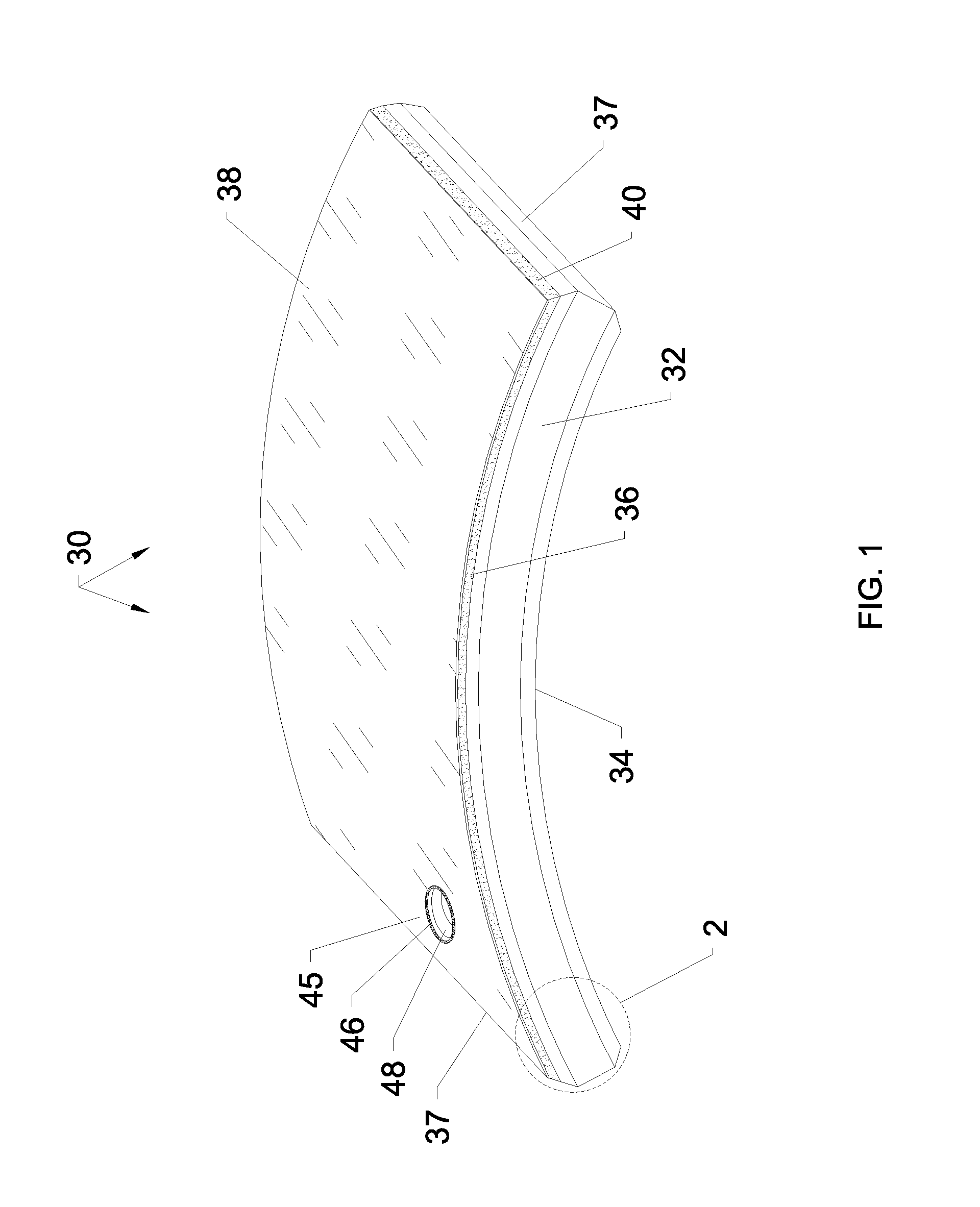
Figure 2 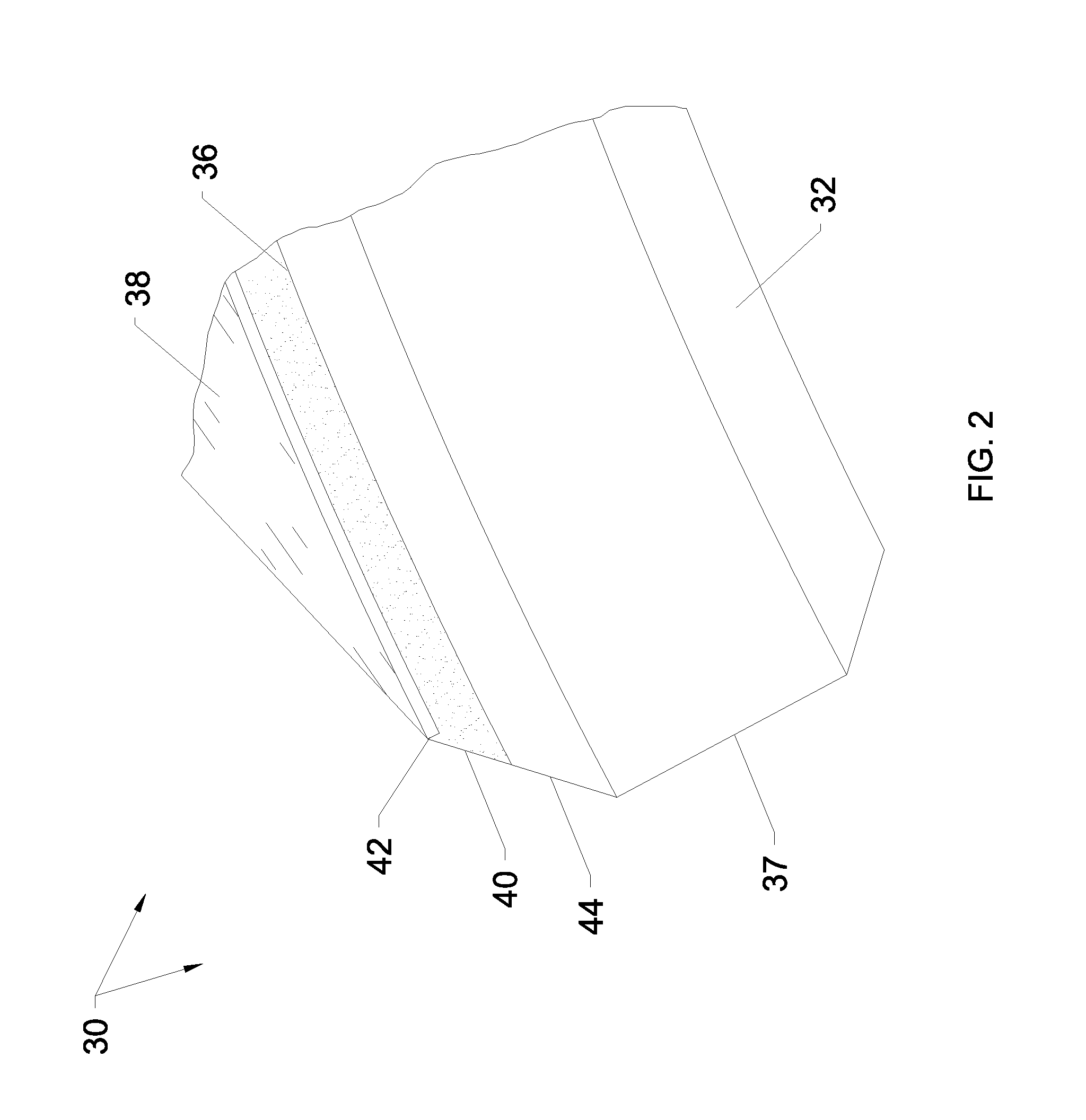
Figure 3
Abstract
Description
CROSS-REFERENCE TO RELATED APPLICATION
[0001] This application is based upon, and claims priority from, pending U. S. Provisional Application entitled “Bent Safety Glass Panel For Architectural Or Interior Uses with a Thin, Cold-Bent Glass Veneer Laminated to Encapsulate Stress in a Single Bent Heat-Treated Substrate, and Method of Making Same,” by inventors Russell Ashley Alder and Richard Ashley Alder, Ser. No. 62 / 170,240, filed in the U. S. Patent and Trademark Office Jun. 3, 2015.BACKGROUND OF THE INVENTION
[0002] I. Field of the Invention
[0003] The present invention relates generally to heat-treated, bent laminated glass products, including bent, laminated, fully-tempered or heat-strengthened glass panels for use as enhanced safety glazing material in architectural and interior applications, and a method of manufacturing them. More particularly, the invention relates to veneered, fully-tempered or heat-strengthened glass panels comprising an alkali-aluminosilicate, glass layer cold-...
Examples
Example
DETAILED DESCRIPTION OF THE DRAWINGS
[0105]Turning now to FIGS. 1 and 2 of the appended drawings, a bent, laminated, glass panel constructed in accordance with the best mode of invention has been generally designated by the reference numeral 30. The panel 30 is ideal for use as an enhanced safety glazing material in architectural and interior applications. A generally arcuate, heat-treated and fully-tempered bent glass substrate 32, which comprises a single sheet of glass, has a lower exterior, major concave surface 34 spaced from an upper, exterior convex major surface 36. The perimeter edges 37 are preferably tapered. The single, thick bent, glass sheet forming the bent glass substrate 32 has a preferred thickness of between 5.5 mm. and 19.9 mm., but may be as thin as 3.2 mm. thickness. For maximum strength the bent glass substrate 32 is fully-tempered and characterized as having a surface compressive stress of at least 69 MPa. If less strength in the final panel is required, then ...