
Devices and methods for generation of subsurface micro-disruptions for biomedical applications
Patent Information
- Authority / Receiving Office
- US · United States
- Current Assignee / Owner
- Publication Date
- 2020-03-17
Smart Images
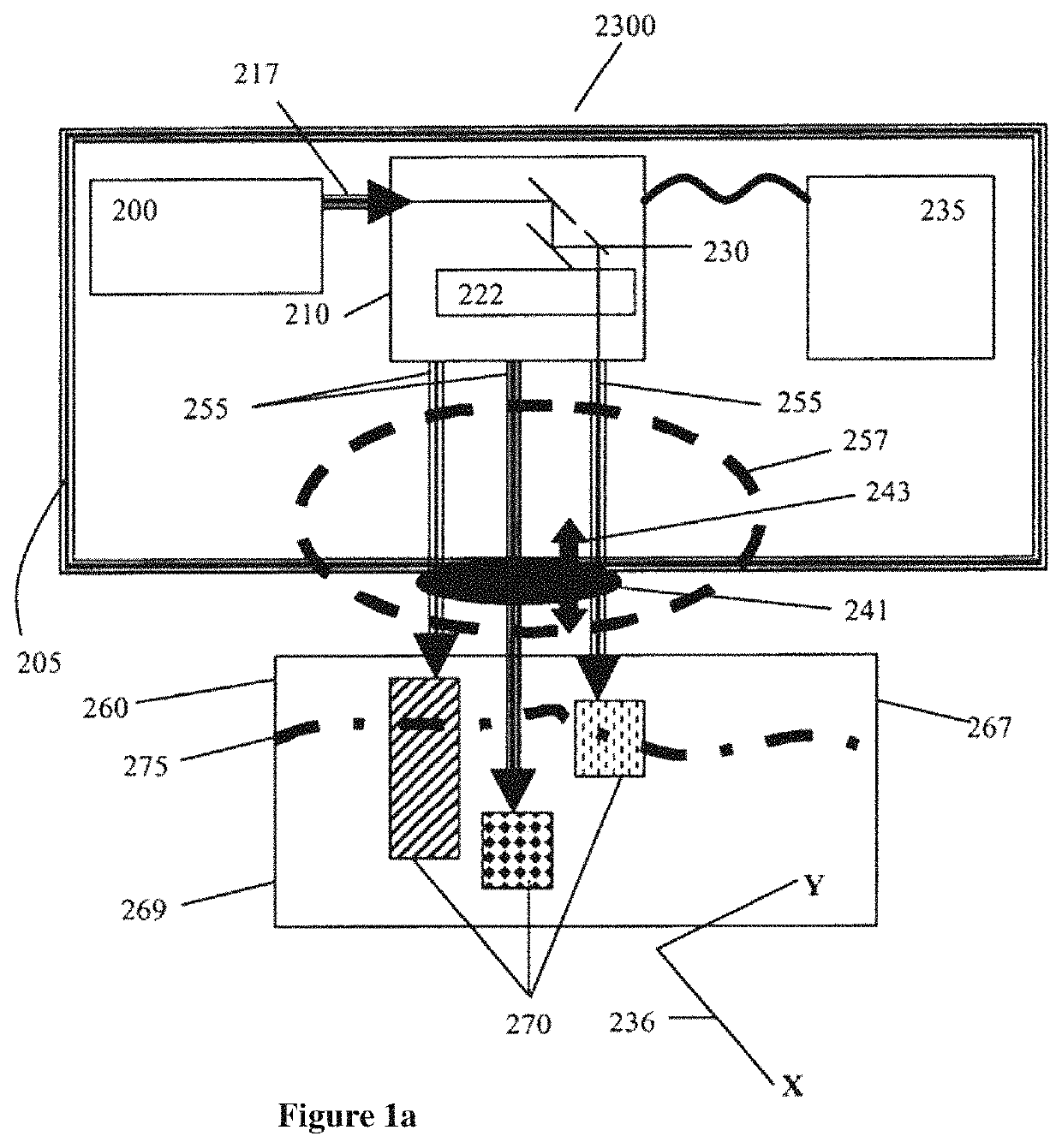
Figure 1 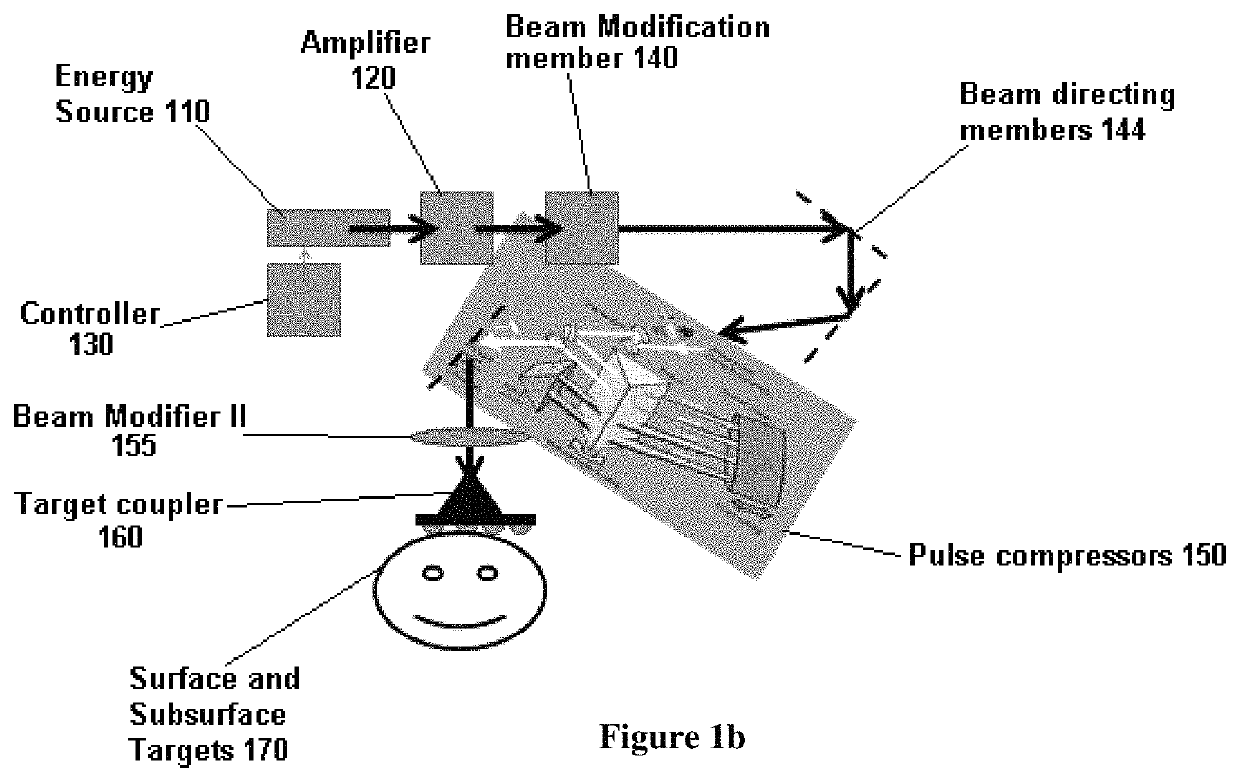
Figure 2 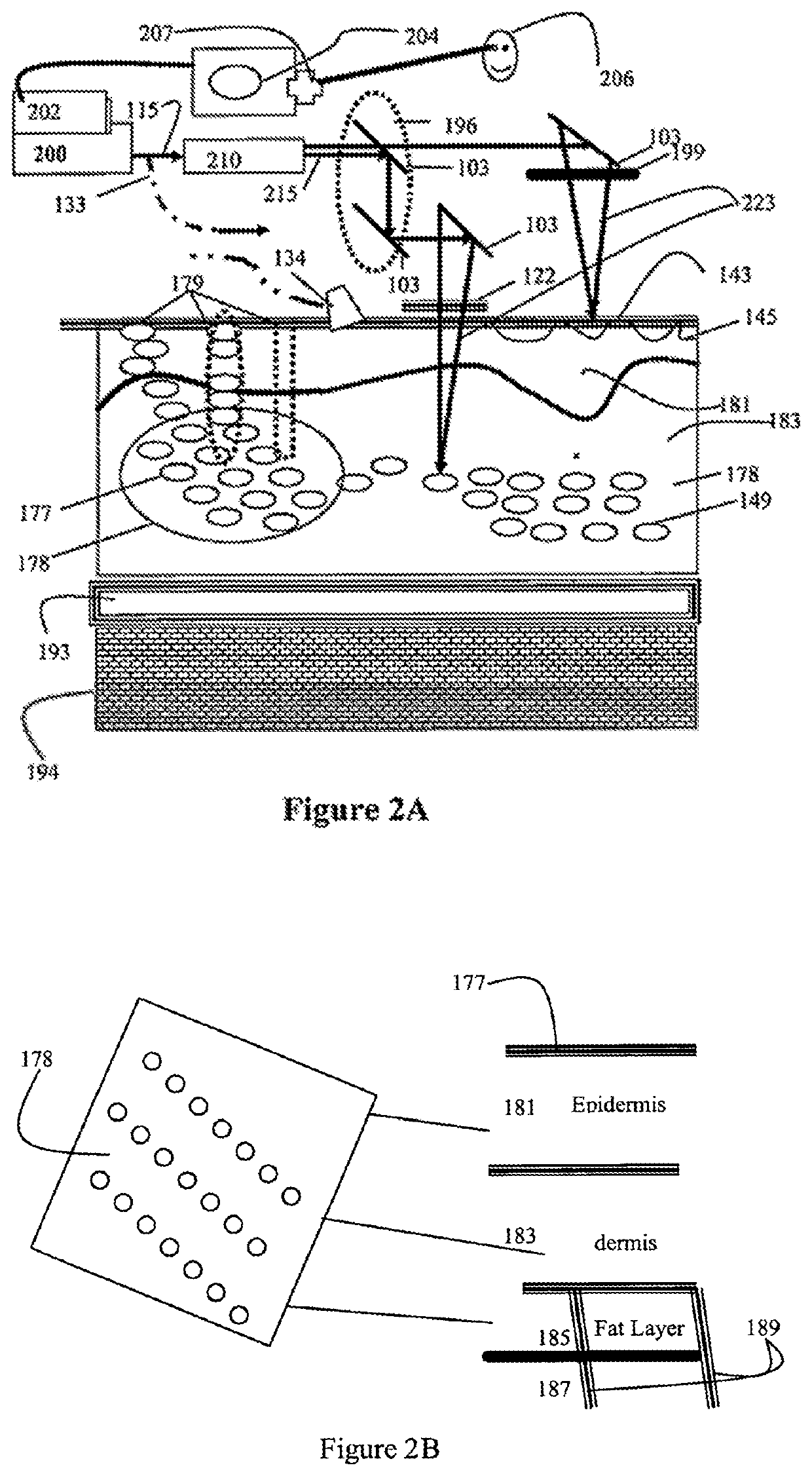
Figure 3
Abstract
Description
CROSS-REFERENCE TO RELATED APPLICATIONS
[0001] This application is a continuation-in-part of U.S. patent application Ser. No. 12 / 448,987, filed Jul. 17, 2009, which is a U.S. national stage of PCT / US2008 / 051337, filed Jan. 17, 2008, which claims priority to U.S. Provisional Application No. 60 / 885,852, filed Jan. 19, 2007, and U.S. Provisional Application No. 60 / 888,258, filed Feb. 5, 2007, and U.S. Provisional Application No. 60 / 901,950, filed Feb. 17, 2007, and U.S. Provisional Application No. 60 / 904,247, filed Feb. 28, 2007, and U.S. Provisional Application No. 60 / 904,415, filed May 27, 2007, and U.S. Provisional Application No. 60 / 946,944, filed Jun. 28, 2007, and U.S. Provisional Application No. 60 / 978,189, filed Oct. 8, 2007, and this application is a continuation-in-part of U.S. patent application Ser. No. 13 / 248,001, filed Sep. 28, 2011, which claims priority to U.S. Provisional Patent Application Ser. No. 61 / 387,010, filed Sep. 28, 2010, all which are hereby incorporated by re...
Examples
example 1.88
Example 1. 88 MHz Device and Method for Non-Ablative Skin Rejuvenation
[0257]In turbid media such as the skin, multi-photon processes with low energy and high pulse repetition rate (PRR) (e.g. 88 MHz) can be used to create a non-ablative skin rejuvenation but with a higher precision targeting at the designated depth. Instead of heating the bulk of the skin, one can target the skin at a predetermined depth through multi-photon (MP) non-linear absorption at that depth due to the high photon density of the ultrashort pulses. At high PRR, sufficient heat accumulates to create a controlled thermal damage at that particular depth and that particular target location. Through scanning or other means of moving the beam (e.g. diffractive optics or Kinoform waveplate), a pattern of focal spots is produced where controlled thermal damage will occur. Using MP absorption based selective heating, no surface cooling is needed. Selective damage can thus happen without cooling of the surface, or at le...
example 2
hoton (MP) for Protecting Fruit Seeds and Vegetables
[0258]Here, a train of ultrashort laser or other energy pulses can be used to make the pattern and fill it with an insulating material. Protection can be achieved from bacterial agents, worms, biohazards, chemicals, pesticides (for organic-like material protection), from temperature variations, from mechanical disruption, from moisture, salts, contaminants, etc.
example 3
hoton (MP) Method and Device for Treating Acne
[0259]Here one targets sebaceous glands using a multi-photon process with low energy and a high pulse repetition rate (e.g. 88 MHz), reduce or eliminate acne. The effect can be either ablative, by focusing ultrashort pulses below the surface of the skin into the region of the sebaceous gland, or non-ablative, for example by using an ultrashort pulse laser (USPL) train of pulse and creating subsurface cumulative thermal modification processes such as heat accumulation by targeting ultrashort pulse (USP). Alternatively, one could create MP processes below the surface of the skin at the region close to or on the vicinity of the sebaceous glands thus partially or fully destroying or affecting the sebaceous gland so that over production of sebum or fat is reduced or eliminated.
[0260]An OCT, CDT, ultrasound, or any other guiding method can be used to help focus the beam onto the targeted region.