
Extended analytical performance of continuous glucose monitoring devices via nitric oxide
a monitoring device and nitric oxide technology, applied in the field of extended analytical performance of continuous glucose monitoring devices via nitric oxide, can solve the problems of inability to perform in vivo amperometric glucose biosensors for 1 week, limited utility of in vivo amperometric glucose biosensors, and high blood pressure, so as to reduce the foreign body response
Patent Information
- Authority / Receiving Office
- US · United States
- Patent Type
- Applications(United States)
- Current Assignee / Owner
- Publication Date
- 2017-08-24
- Estimated Expiration
- Not applicable · inactive patent
Smart Images
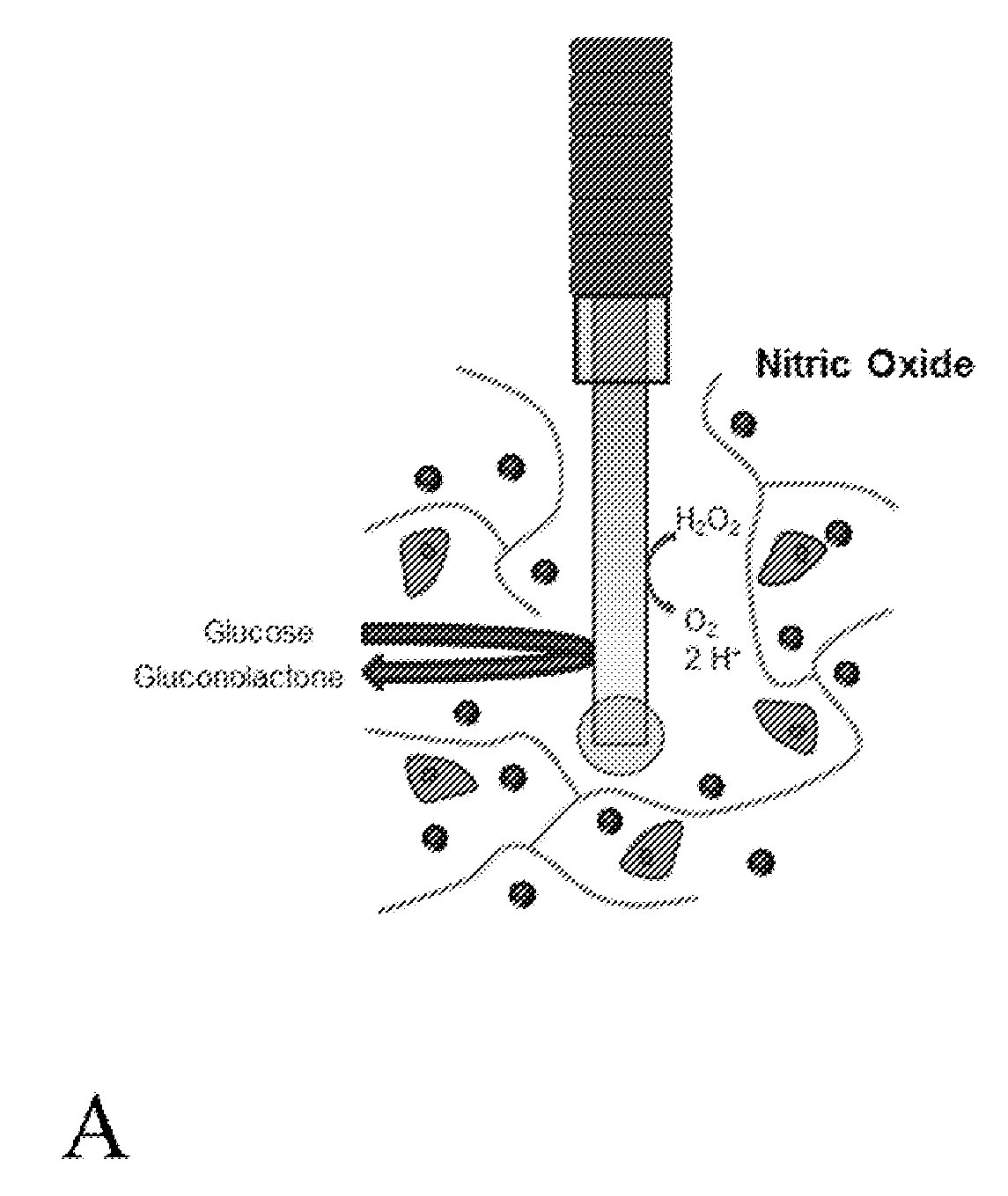
Figure 1 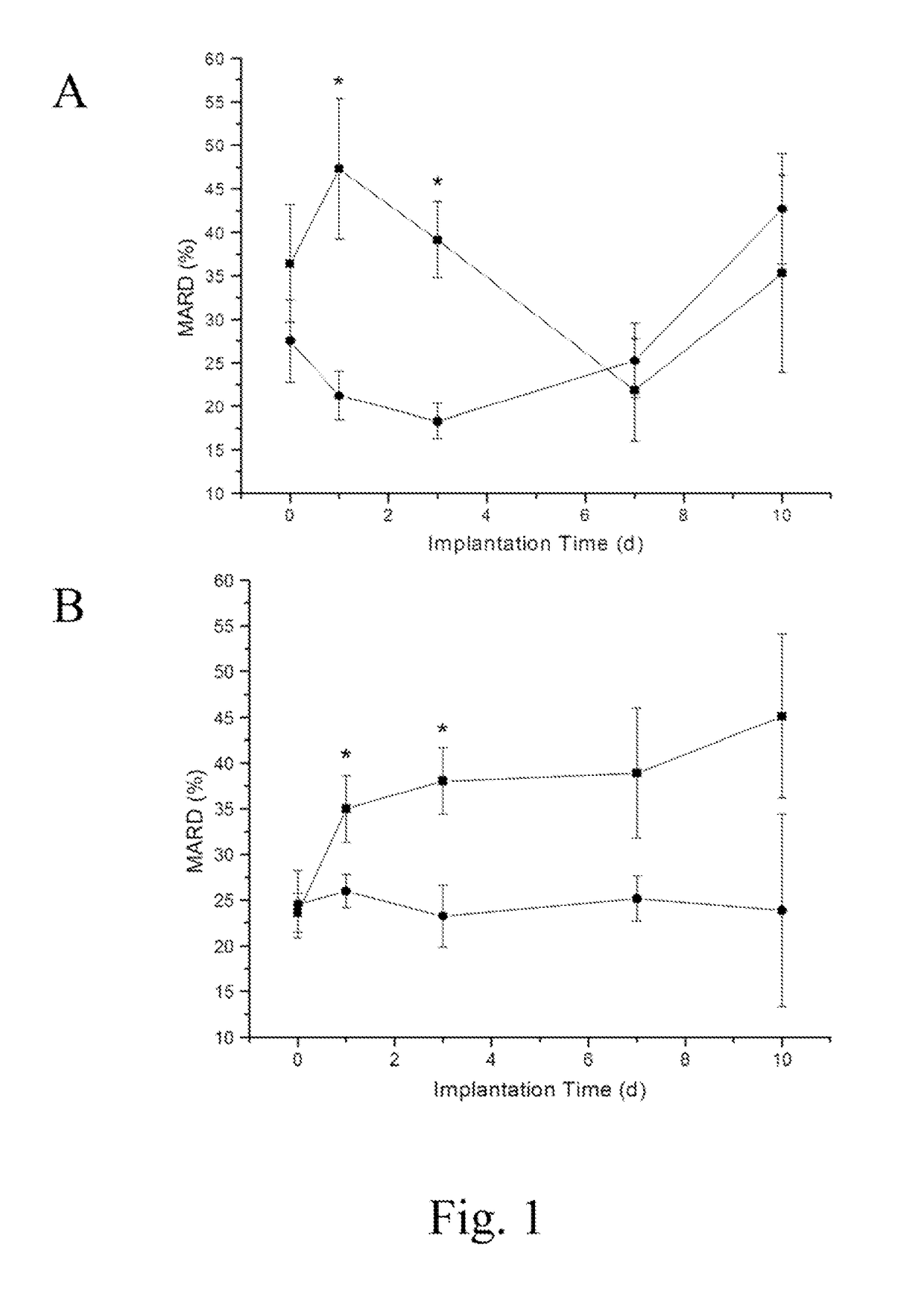
Figure 2 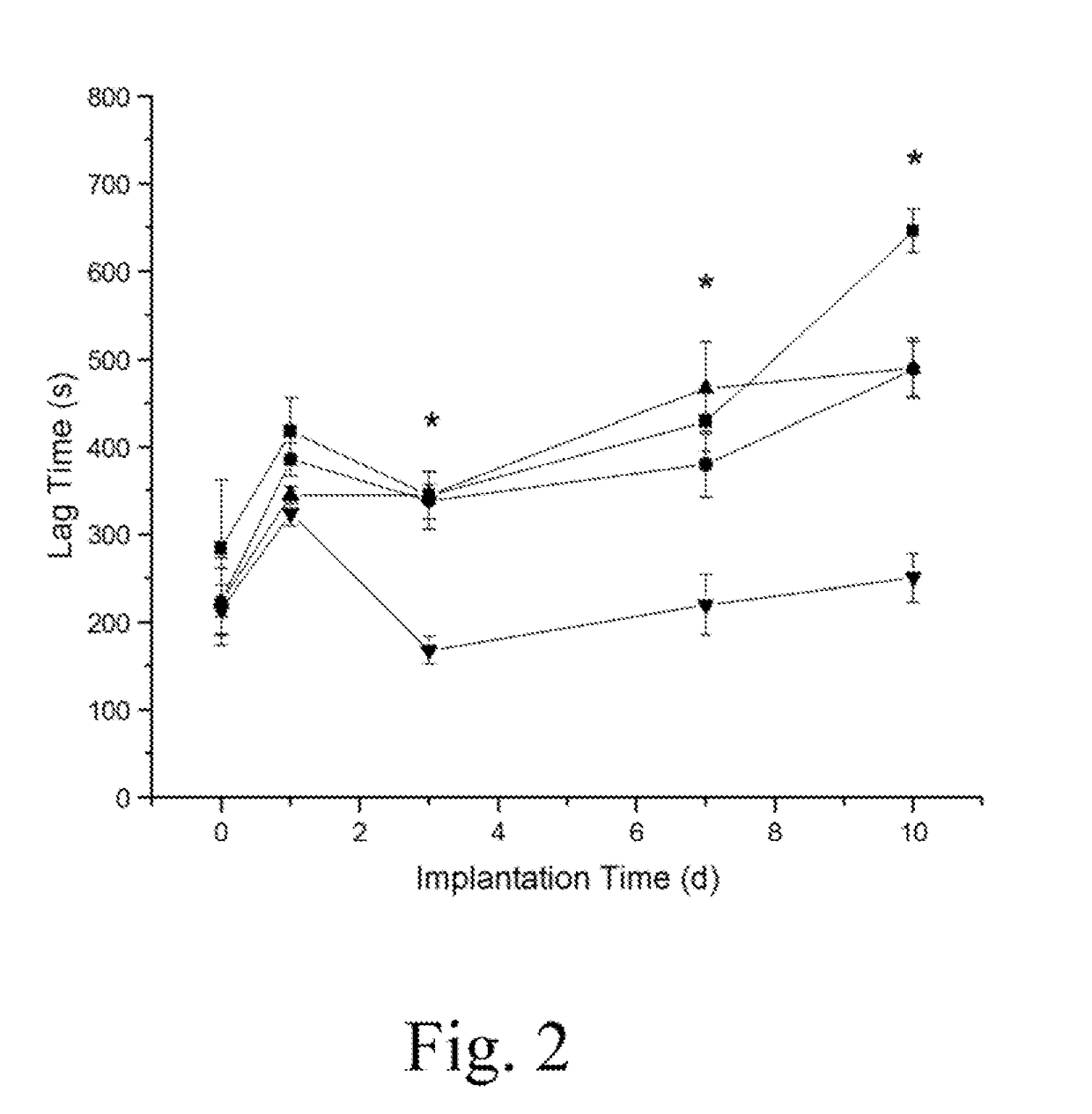
Figure 3
Abstract
Description
[0001] The present application claims priority under 35 USC 119(e) to U.S. Provisional Application No. 62 / 015,508 filed Jun. 22, 2014, the entire contents of which is incorporated by reference in its entirety.
[0002] The present invention is supported at least in part by the National Institutes of Health Grant Numbers R01 EB000708 and R43DK093119. Thus, the Federal Government has rights in the present invention.BACKGROUND OF THE INVENTION
[0003] Diabetes mellitus is a worldwide epidemic characterized by chronic hyperglycemia that results from either a deficiency or tolerance in insulin. In the United States, 8.3% of the population currently has diabetes and that number is projected to increase to 1 in 3 adults by 2050 if current trends continue. Blood glucose levels in diabetics fluctuate significantly throughout the day, resulting in serious complications including heart attacks, strokes, high blood pressure, kidney failure, blindness and limb amputation. Portable glucose sensors give p...
Examples
Embodiment Construction
[0024]The present invention relates to instruments and methods for in vivo analysis and the associated performance of percutaneously implanted nitric oxide (NO)-releasing amperometric glucose biosensors.
[0025]In an embodiment, the present invention relates to nitric oxide releasing glucose concentration determining biosensors that are improved relative to the biosensors that are presently available. In some embodiments the biosensors of the present invention are improved over those currently available because they are able to release nitric oxide at levels that are above those currently available. Alternatively and / or additionally, the biosensors of the present invention are improved over the biosensors that are available because the nitric oxide is released over a longer duration of time. In both instances, these improvements lead to one being able to make more precise and / or more accurate measurements, leads to greater sensitivity, allows the biosensor to detect concentrations of ...