
Method for Improving Aircraft Engine Operating Efficiency
a technology for aircraft engines and operating efficiency, applied in the direction of machines/engines, mechanical equipment, transportation and packaging, etc., can solve the problems of reducing the time available for warming up and cooling down aircraft engines, reducing engine operating efficiency, and minimizing this clearance, so as to increase the time aircraft spend on the ground, the effect of longer warm up and cooling down times
Patent Information
- Authority / Receiving Office
- US · United States
- Patent Type
- Applications(United States)
- Current Assignee / Owner
- Publication Date
- 2017-08-24
- Estimated Expiration
- Not applicable · inactive patent
Smart Images
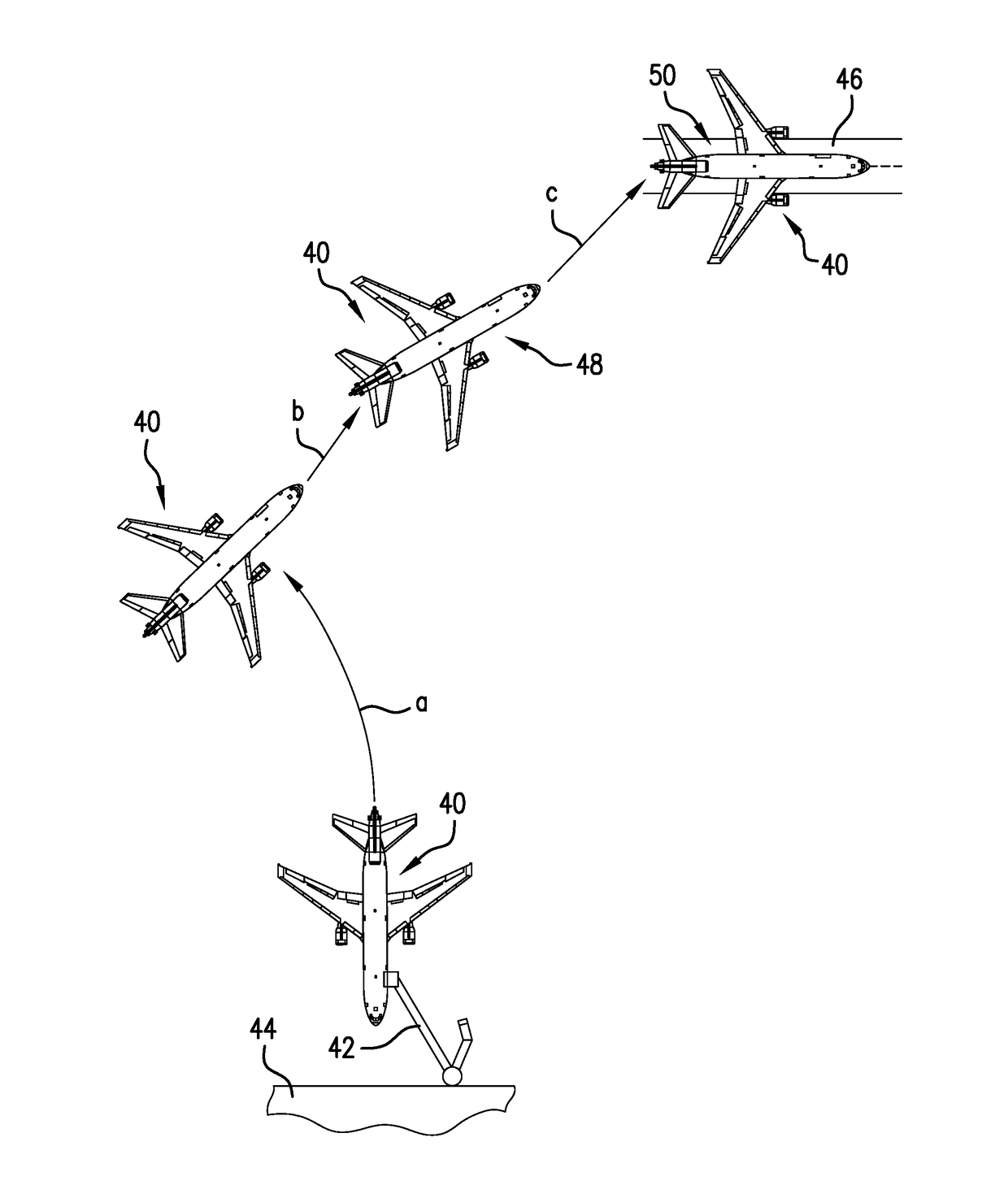
Figure 1 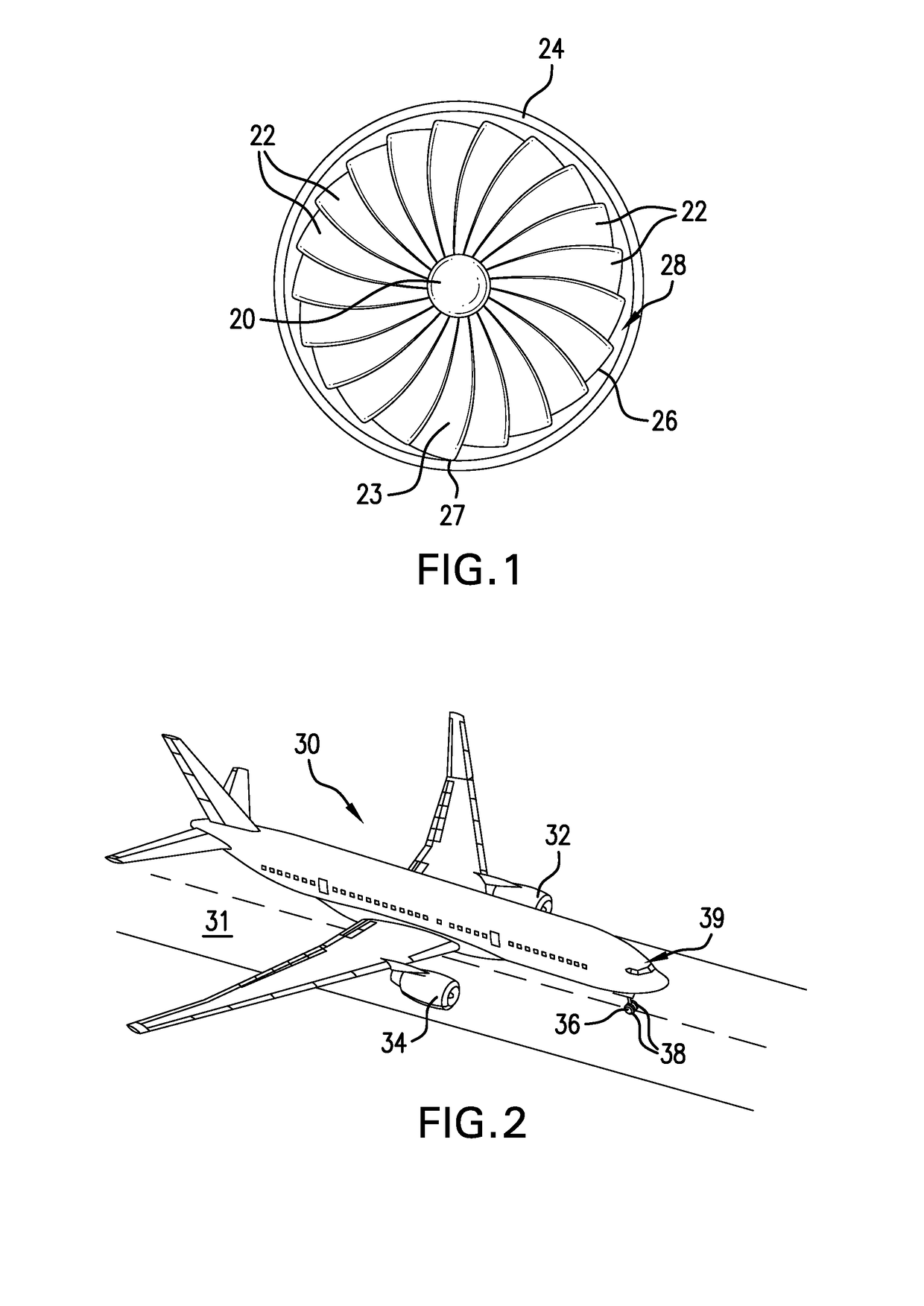
Figure 2 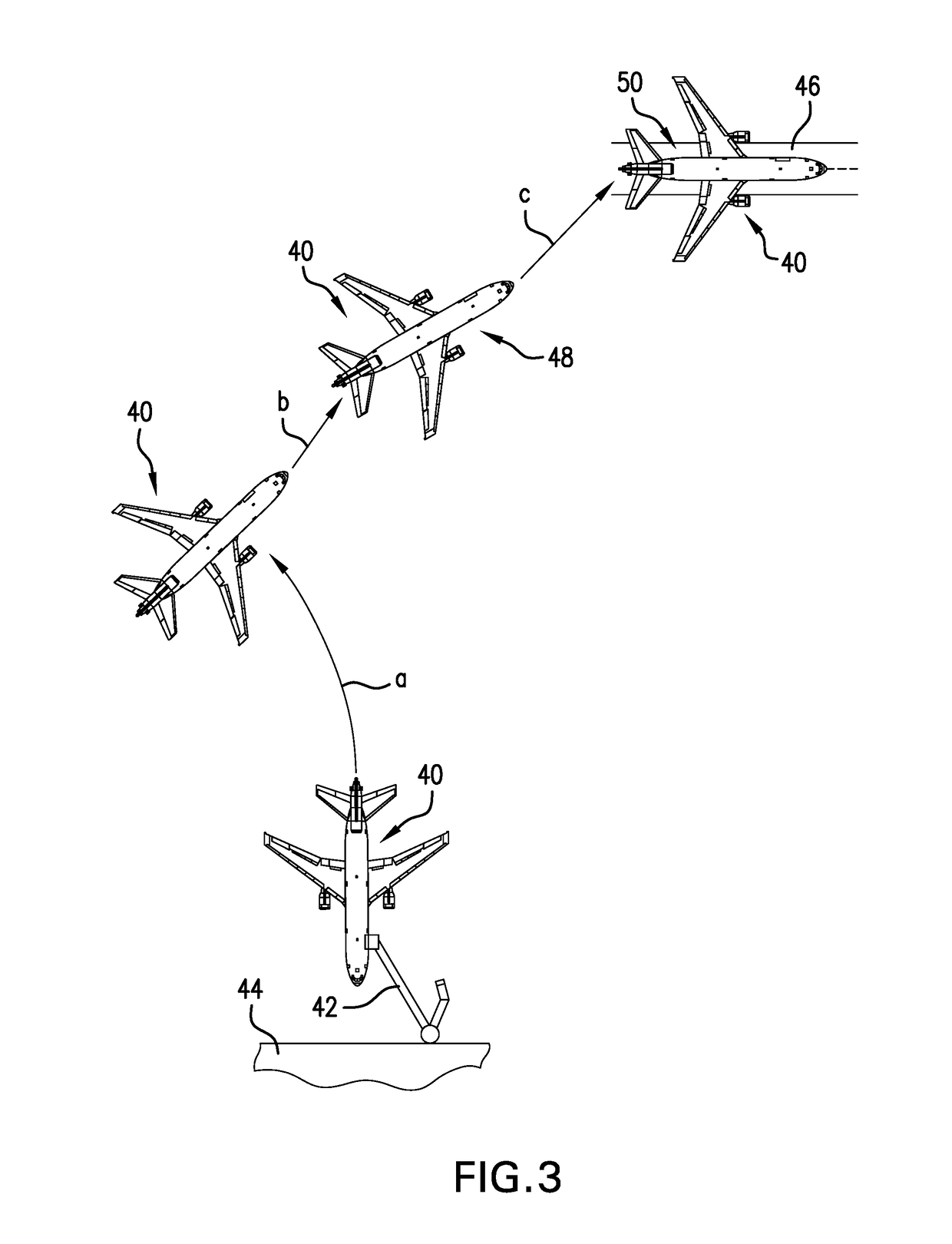
Figure 3
Abstract
Description
PRIORITY CLAIM
[0001] This application claims priority from U.S. Provisional Patent Application No. 62 / 299,475, filed 24 Feb. 2016, the disclosure of which is hereby fully incorporated herein by reference.TECHNICAL FIELD
[0002] The present invention relates generally to producing improvements in operating efficiency and performance of aircraft engines and specifically to a method for improving the operating efficiency and performance of aircraft engines in aircraft equipped with electric taxi systems for autonomous ground movement.BACKGROUND OF THE INVENTION
[0003] Increasing aircraft engine operating efficiency and performance has many benefits. When aircraft engines operate with optimum efficiency during flight, not only is fuel saved, but engine life may also be extended. The frequency of required engine repairs and the cost of engine maintenance may also be reduced. A primary cause of engine damage that interferes with engine operating efficiency is associated with a reduction in the ...
Examples
Embodiment Construction
[0025]As discussed above, current airport ground operating procedures and the pressures resulting from minimizing aircraft time on the ground between landing and take off may not provide an optimum, or even a sufficient, amount of time to adequately warm up aircraft engines. An adequate engine warm up time prevents damage to engine components, for example rotor bowing where distorted rotors cannot maintain optimum rotor blade tip clearance during flight. Engine operating efficiency may be reduced when aircraft engine components are damaged or distorted as a result of an improperly warmed up or cooled down engine. Aircraft engine designers must presently design and configure aircraft engines to conform to engine start times imposed by airport operators. At most airports, the time between when an aircraft engine is started prior to take off and the subsequent application of idle thrust or take off thrust is currently about 150 seconds, although engine start times may be shorter. While...